
Exam
Online exam ID checks: when is a face photo biometric data, and what does the law require?
Online exams check identity with an ID card, a live photo or a biometric scan, and many record video, audio and the screen. In Illinois a scan of face geometry is a biometric identifier and a photograph is not; before collecting a scan, a company must give written notice of the purpose and term and obtain a signed release. Texas sets a one-year destruction deadline, and a federal court held a home room scan unreasonable.
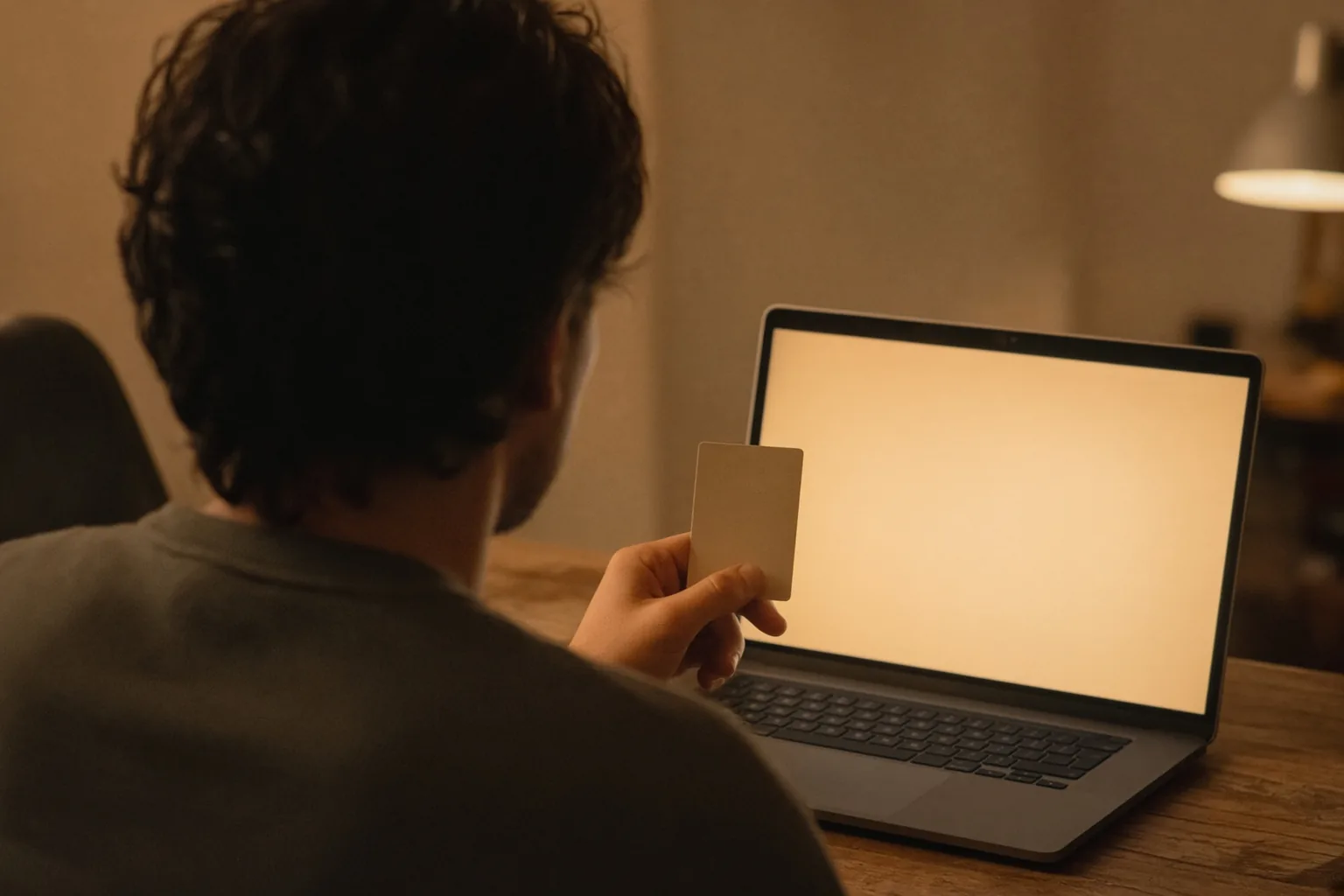
How do online exams check who is taking them?
Before the exam most systems check an ID card, a live photo or both, by a person or by software. Some use biometric models, and many record video, audio, the screen, the keyboard and the mouse.
A detailed public survey of these systems is "A Systematic-Narrative Review of Online Proctoring Systems and a Case for Open Standards," published in the journal Open Praxis, volume 17, issue 3, in 2025. Its author examined 33 online proctoring systems between September 2023 and December 2024, working from the vendors' public descriptions, and could not test the systems directly.
Identity checks before the exam use an ID card, a live photo, or both, and the comparison is made by a person or by software. Some vendors add biometric models: the review names knuckle scans in Proctortrack and voice matching in Talview. During the exam the sessions capture "video, audio, screen, keyboard and pointing devices" for later analysis, and some systems use "two video cameras to gain a 360-degree view" of the room.
The supervision itself comes in three modes: a live human proctor, a recording reviewed by a person afterwards, and automated monitoring. "Most systems provide both modes," the review notes of live and recorded supervision. Of 24 systems described in enough detail, 21 set automated flags on suspicious behavior, and three showed some automated decision-making.
The same pattern appears in court records. In the Cleveland State University case discussed below, the student first showed an ID next to his face, and the proctor then asked for a scan of the room. The session was recorded and kept by a third-party vendor.
Is a photo of your face biometric data?
Not under Illinois law. BIPA lists a scan of face geometry as a biometric identifier and expressly excludes photographs. Texas law covers a record of face geometry and has no express exclusion for photographs.
The Illinois Biometric Information Privacy Act, 740 ILCS 14, known as BIPA, defines a biometric identifier as "a retina or iris scan, fingerprint, voiceprint, or scan of hand or face geometry." The same section lists what is not a biometric identifier: "Biometric identifiers do not include writing samples, written signatures, photographs," as well as human biological samples used for valid scientific testing or screening, demographic data, tattoo descriptions and physical descriptions such as height, weight, hair color or eye color.
A second term covers data derived from those identifiers. Biometric information means "any information, regardless of how it is captured, converted, stored, or shared," based on an individual's biometric identifier "used to identify an individual." The words "regardless of how it is captured, converted, stored, or shared" reach data computed from a scan of face geometry and kept to identify the person later.
Texas Business and Commerce Code Section 503.001 uses nearly the same list: "a retina or iris scan, fingerprint, voiceprint, or record of hand or face geometry." Unlike BIPA, the Texas definition does not exclude photographs.
For an exam the difference is practical. A photo of the candidate and a photo of an ID card are photographs. Software that matches faces automatically works from measurements of the face, and both statutes attach their rules to a scan or record of face geometry. Whether a particular product measures faces is a fact about that product, stated in the exam terms and the vendor's privacy policy.
What must an exam provider do before collecting biometric data in Illinois?
Inform the candidate in writing that biometric data is being collected, state in writing the specific purpose and the length of term, and receive a written release, which may be an electronic signature.
Section 15(b) of BIPA lists three steps that a private entity takes before it collects, captures, purchases or otherwise obtains a person's biometric identifier or biometric information. First, it "informs the subject or the subject's legally authorized representative in writing that a biometric identifier or biometric information is being collected or stored."
Second, it informs the person in writing "of the specific purpose and length of term for which a biometric identifier or biometric information is being collected, stored, and used." Third, it "receives a written release executed by the subject of the biometric identifier or biometric information or the subject's legally authorized representative."
The current text defines a written release as "informed written consent, electronic signature, or, in the context of employment, a release executed by an employee as a condition of employment." An electronic signature is "an electronic sound, symbol, or process attached to or logically associated with a record and executed or adopted by a person with the intent to sign the record." Both definitions appear in the text of Public Act 103-0769, enacted from Senate Bill 2979, which took effect upon becoming law.
For an exam that an employer assigns to its staff, the release may be one executed by the employee as a condition of employment.
How long may an exam provider keep biometric data under BIPA?
Until the purpose of collection is satisfied, or for 3 years after the candidate's last interaction with the provider, whichever comes first. The provider must publish a written retention and destruction policy.
Section 15(a) requires a private entity in possession of biometric data to "develop a written policy, made available to the public, establishing a retention schedule and guidelines for permanently destroying biometric identifiers and biometric information." Destruction is due "when the initial purpose for collecting or obtaining such identifiers or information has been satisfied or within 3 years of the individual's last interaction with the private entity, whichever occurs first."
If the stated purpose of an identity check is to confirm that the person who sat the exam is the person who booked it, that purpose is met once the check is done, and the 3-year limit is only the outer bound.
Public retention schedules are what the Open Praxis review could not find in vendor materials. It reports "no details on how decisions are recorded or how or for how long the preliminary data are kept."
May an exam provider sell or share biometric data?
BIPA bars selling, leasing, trading or otherwise profiting from biometric data, and permits disclosure only in listed cases, such as a valid warrant or subpoena. Storage must meet the industry's reasonable standard of care.
Section 15(c) states that no private entity in possession of a biometric identifier or biometric information may "sell, lease, trade, or otherwise profit from" a person's or a customer's biometric identifier or biometric information.
Section 15(d) bars disclosure, redisclosure or other dissemination unless one of the listed exceptions applies. Among them is the case where "the disclosure is required pursuant to a valid warrant or subpoena issued by a court of competent jurisdiction."
Section 15(e) sets the standard for storage. The entity must "store, transmit, and protect from disclosure all biometric identifiers and biometric information using the reasonable standard of care within the private entity's industry."
For online exams the question of disclosure often concerns the vendor. The Open Praxis review states that the institution is the data controller and the vendor the processor, but that "those lines are blurred," and it asks whether institutions have enough insight into how vendors process the data.
What can a candidate recover for a BIPA violation?
Liquidated damages of $1,000 for a negligent violation or $5,000 for an intentional or reckless one, or actual damages if greater. Repeated collection of the same identifier by the same method counts as one violation.
Section 20 gives a right of action to any person aggrieved by a violation. Against a private entity that negligently violates the Act, the prevailing party may recover "liquidated damages of $1,000 or actual damages, whichever is greater." Against an entity that intentionally or recklessly violates it, the figure is "liquidated damages of $5,000 or actual damages, whichever is greater."
Public Act 103-0769 amended Section 20, which now limits how violations are counted. A private entity that, "in more than one instance," collects or obtains the same biometric identifier or biometric information from the same person using the same method of collection "has committed a single violation of subsection (b) of Section 15," and the person is entitled to "at most, one recovery under this Section." The same rule applies to repeated disclosures of the same data under subsection (d).
For a candidate who sits several exams with the same vendor, face scans taken at each session by the same method count as a single violation of the consent rule, with at most one recovery.
What does Texas law require for face geometry?
Notice before capture and the person's consent, when the capture is for a commercial purpose. The data may not be sold or disclosed except in listed cases and must be destroyed within one year after its purpose expires.
Section 503.001(b) of the Texas Business and Commerce Code reads: "A person may not capture a biometric identifier of an individual for a commercial purpose unless the person: (1) informs the individual before capturing the biometric identifier; and (2) receives the individual's consent to capture the biometric identifier."
A person who holds the identifier "may not sell, lease, or otherwise disclose the biometric identifier to another person unless" an exception in the section applies. It must protect the identifier "using reasonable care and in a manner that is the same as or more protective than the manner in which the person stores, transmits, and protects any other confidential information the person possesses."
The destruction rule is tied to the purpose, as in Illinois, with a fixed outer limit: the holder "shall destroy the biometric identifier within a reasonable time, but not later than the first anniversary of the date the purpose for collecting the identifier expires," with exceptions in subsection (c-1).
Enforcement goes through the state. "A person who violates this section is subject to a civil penalty of not more than $25,000 for each violation," and "The attorney general may bring an action to recover the civil penalty."
Can an online exam require a scan of your room?
A federal court in Ohio held that a room scan of a student's bedroom before a remote exam at Cleveland State University was an unreasonable search under the Fourth Amendment.
The case is Ogletree v. Cleveland State University, No. 1:21-cv-00500, in the Northern District of Ohio, decided by Judge J. Philip Calabrese; the amended opinion and order is dated December 20, 2022. The student took a remote General Chemistry II test scheduled for 12:30 p.m. on February 17, 2021. About two hours before the exam the university emailed him that the proctor would check his surroundings; the professor had earlier removed a similar policy from the syllabus.
Before the test the student showed an ID next to his face, and the proctor asked him to scan the room. The scan lasted under a minute, perhaps 10-20 seconds. The scan and the test were recorded and kept by a third-party vendor, and other students could see room scans. The university had no written policy requiring or recommending scans, and faculty decided how to run remote tests.
The court held that the scan was a search: "it is well settled that the home lies at the core of the Fourth Amendment's protections," and the scan reached into the student's bedroom. It then weighed the interests. The university's interest in the integrity of tests was legitimate, and the court wrote: "These considerations weigh in favor of Defendant." But room scans were not shown to be uniquely effective, and the university already used other safeguards: lockdown browsers, monitoring software and proctors. The conclusion: "Mr. Ogletree's privacy interest in his home outweighs Cleveland State's interests in scanning his room."
What did the court order in the room scan case?
A declaration that the student's Fourth Amendment rights apply to the university's room scans, and an injunction barring a room scan of him without a reasonable alternative or his express consent.
The court granted the student's motion for summary judgment and denied the university's. It declared that the student has Fourth Amendment rights that apply to the university's room scans, and the declaration applies to him as the party who sued.
The permanent injunction bars the university from scanning the room of this student unless it offers a reasonable alternative or obtains his express consent. The court declined to extend relief to other students, finding a broader remedy overly broad and premature, and it did not consider the policy changes that the university made after the ruling, because the record on them was not developed.
The appeal of Cleveland State, its president and its board of trustees was docketed in the Sixth Circuit on February 1, 2023, as No. 23-3081. On February 23, 2023, the court held briefing in abeyance pending further order; the docket on Justia, last updated that day, shows no decision on the appeal.
The proctor testified that no student had ever refused a scan in her sessions, and that if one did she would let the student take the test and notify the professor.
How reliable are automated proctoring flags?
No one has measured it across vendors. The Open Praxis review says flags are set to be overcautious, which produces a large share of false positives, and warns of profiling students on flagged behavior.
The Open Praxis review is based on vendor descriptions, so it reports no measured error rates. It states that flags must be "overcautious, necessitating a large proportion of false positives," and it warns of "the danger of profiling students based on flagged suspicious behaviours."
The review cites Paul and colleagues (2024): "False positives and negatives are seen as one of the open problems in existing systems." Testing the accuracy of commercial proctoring, the review notes, is "something currently not possible" from outside. It also cites Swauger (2020) on possible discrimination against non-traditional students.
The review recommends two open standards: a "proctoring profile identity standard," with a profile "owned and controlled by the student," and a "proctoring flag standard" that gives "a transparent basis for capturing data related to potential exam rule violations" and would let students see the flags raised against them. Its key recommendation to the education sector is to "demand more transparency from proctoring systems providers."
What should exam terms tell a candidate about the ID check?
What is collected, for what purpose, for how long, who sees it and when it is destroyed. BIPA requires written notice of purpose and term and a public retention schedule; Texas requires notice before capture.
The two statutes turn into a short list of facts that a provider using biometrics has to give. Under BIPA Section 15(b) the candidate learns in writing that a biometric identifier or biometric information is being collected or stored, and the specific purpose and length of term. Under Section 15(a) the provider publishes its retention schedule and destruction guidelines. Under Texas Section 503.001(b) the candidate is informed before capture.
Two more facts decide whether those rules apply at all. The first is whether the check uses a photograph only or measures face geometry. The second is whether a person or software compares the images. BIPA excludes photographs from biometric identifiers, and both statutes attach their duties to a scan or record of face geometry.
The Ogletree case adds a third question for exams taken at home: whether the candidate must show the room, and what happens if he or she declines. The court's injunction turned on a reasonable alternative or express consent.
How does the IAE exam check a candidate's identity?
The candidate uploads a photo of an ID document and takes a camera picture. The Secretariat compares them manually, with no automatic face recognition, and the files are deleted 30 days after the result.
Section 13 of the IAE exam terms reads: "Before the exam the candidate uploads a photo of an ID document and takes a picture with the camera. The document number may be covered. The Secretariat compares the photos manually, with no automatic face recognition. The certificate is issued after the photo check. The files are deleted 30 days after the result."
The Privacy Policy adds the details. The document is a passport, an ID card or a driver's license with the holder's photo, and the candidate may cover the number with a finger or paper, because the check needs the name and the photo. If there was an appeal, the 30 days run from the date the appeal is closed. The document number is not stored.
During the exam the controls are built into the form. The IAE exam is written and online, up to 2 hours in one sitting: 5 questions of 10 minutes, 2 cases of 25 minutes and a 10-minute question about the candidate's own project. Pasting is disabled, the system records a typing log and tab switches, each candidate gets individual case data, and a doubtful answer triggers one additional written question with 5 minutes to answer. Reference materials are allowed; outside help and handing tasks over to third parties are prohibited.
The candidate consents to the typing log. Answers and the log are kept for 3 years, the validity of the certificate, and then deleted. A company that invited the candidate sees the status, the total score, the rubric scores and the certificate, after the candidate consents on screen, and does not receive the questionnaire, the CV or the reason for a refusal. The result comes within 5 business days, the pass mark is 70 of 100, and an appeal is filed within 30 days and reviewed by a Council member who did not score the work. IAE membership is not required, and IAE does not promise that the certificate will affect a USCIS decision.
Sources
- Illinois Biometric Information Privacy Act, 740 ILCS 14 (Illinois General Assembly)
- Illinois Public Act 103-0769 (SB 2979), amending the Biometric Information Privacy Act (Illinois General Assembly)
- Texas Business and Commerce Code, Chapter 503, Section 503.001, Capture or use of biometric identifier
- Ogletree v. Cleveland State University, No. 1:21-cv-00500 (N.D. Ohio Dec. 20, 2022), amended opinion and order
- Aaron Ogletree v. Cleveland State University, et al., No. 23-3081 (6th Cir.), docket (Justia Dockets)
- A Systematic-Narrative Review of Online Proctoring Systems and a Case for Open Standards, Open Praxis, 17(3), 485-499 (2025), via ERIC
Read also
All articles

How many times can you retake a certification exam, and how long do you wait between attempts?
Every certification body writes its own retake rule. AWS and The Open Group set no cap on attempts, Microsoft permits five in 12 months, PMI three Sergei Voronin

Do professional certifications expire, and how does recertification work?
Most professional certifications are issued for a fixed period, often three years, and renewed through continuing education or a new exam. ASQ, NICETSergei Voronin
Can a professional certification count as degree equivalency for an H-1B?
Yes, in one narrow way. Under 8 CFR 214.2(h)(4)(iii)(D)(4), certification or registration from a nationally-recognized professional associationSergei Voronin
Book the exam
The questionnaire takes 15 minutes. Admission decision in 1 business day, exam on any of 14 days.