
Expert witnesses
Forensic musicologist expert witness: what does the musicologist compare in a song copyright case, and what have courts accepted?
In a song copyright case the musicologist decides what the court sees: which notes, chords and rhythms the two works share and whether those elements belong to the plaintiff or to everyone. In four song cases decided on appeal by the Ninth and Second Circuits between 2018 and 2024, musicologists testified for both sides. Juries found infringement in two of them, and only the Blurred Lines infringement verdict survived.
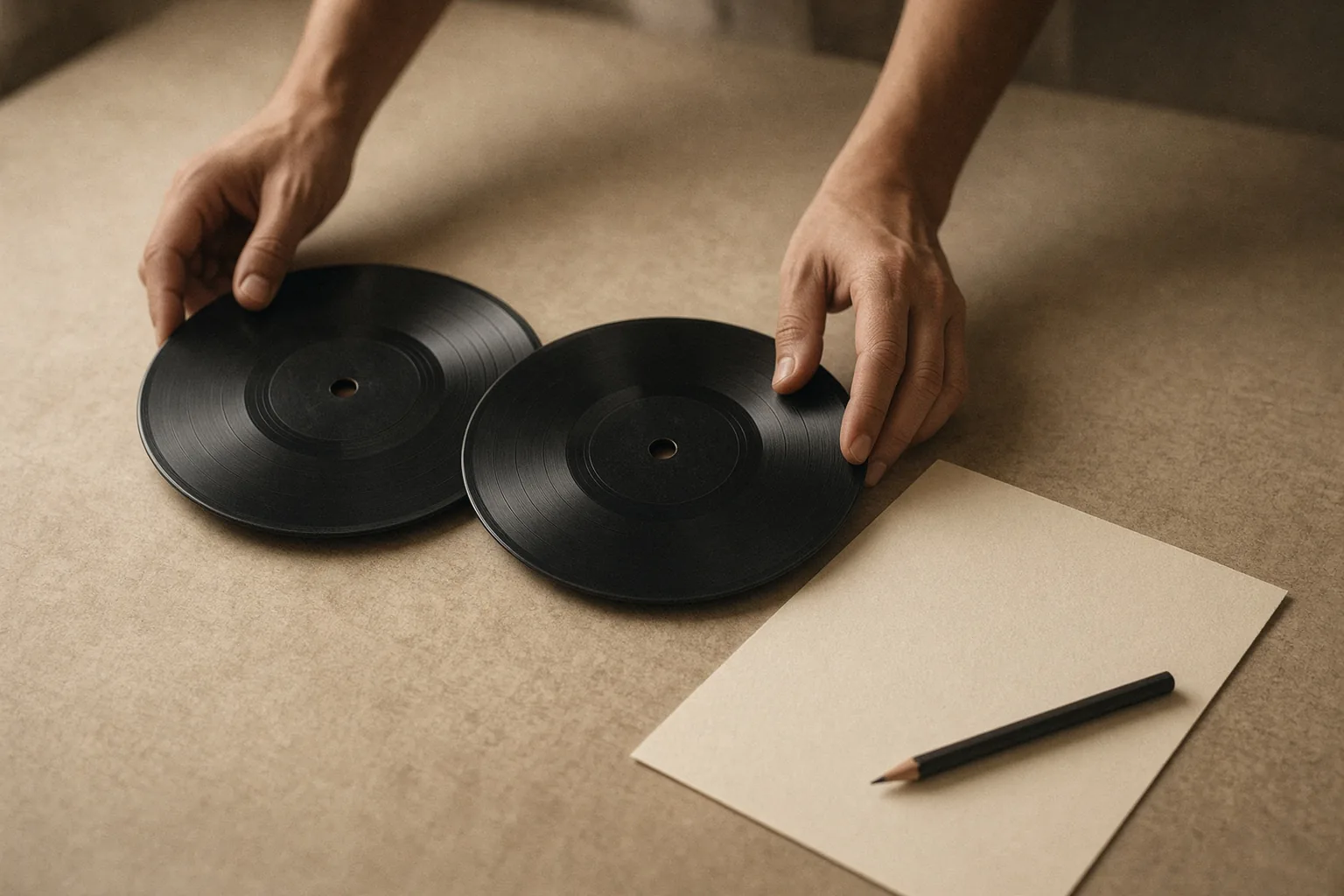
What does a forensic musicologist do in a copyright case?
The musicologist transcribes both works, lists the shared elements, checks each against earlier music and tells the court which similarities are protected expression and which are common building blocks. Infringement itself is for the jury.
A music copyright claim compares two works that a judge or juror cannot read side by side without help. The musicologist reduces each work to notation, identifies the melody, harmony, rhythm and structure, and lines up the passages the plaintiff says were copied.
The comparison has three layers. First, what the two works have in common. Second, which of those elements are original to the plaintiff's work. Third, whether the protected elements that remain are similar enough to matter under the test the court applies. Two of the four appellate decisions discussed below, Gray and Sheeran, turned on the second layer: whether the shared material was protectable.
Experts testify on both sides. In Skidmore v. Led Zeppelin the plaintiff's expert was Dr. Alexander Stewart and the defendants' expert Dr. Lawrence Ferrara. In Structured Asset Sales v. Sheeran Dr. Ferrara appeared again, for Ed Sheeran, against John Covach for the plaintiff. In Gray v. Hudson Dr. Todd Decker testified for the plaintiffs and Dr. Ferrara for Katy Perry and the other defendants. In Williams v. Gaye the Gaye family called Dr. Ingrid Monson and Judith Finell, and the Thicke parties called Sandy Wilbur.
What does the plaintiff have to prove in a music copyright case?
Ownership of a valid copyright and copying of protected expression. Copying is shown through access to the work and substantial similarity, and in the Ninth Circuit substantial similarity requires both an extrinsic and an intrinsic test.
Section 102(a) of the Copyright Act lists "musical works, including any accompanying words" and "sound recordings" as separate categories of works of authorship. A song and a particular recording of it are two different works, often with different owners, and the musicologist has to know which one the plaintiff owns.
Section 102(b) sets the outer limit: "In no case does copyright protection for an original work of authorship extend to any idea, procedure, process, system, method of operation, concept, principle, or discovery, regardless of the form in which it is described, explained, illustrated, or embodied in such work." Judge Nguyen's dissent in Williams v. Gaye, quoted below, argued that the verdict in that case protected a musical style.
Access is usually the easier half. In Skidmore the jury found that Jimmy Page and Robert Plant "had access to the musical composition Taurus before Stairway to Heaven was created," and the plaintiff still lost because the jury found the songs "not substantially similar under the extrinsic test."
The en banc Ninth Circuit also wrote in Skidmore that "it is not difficult to meet the famously low bar for originality." The question in these cases was whether the particular elements that were copied are original.
What is the extrinsic test, and why does it need an expert?
The extrinsic test compares the objective similarities of specific expressive elements in the two works. The intrinsic test asks whether an ordinary reasonable observer, with no expert assistance, finds the expression similar. Musicologists testify on the first.
Judge McKeown, writing for the eleven-judge en banc court in Skidmore on March 9, 2020, described the two parts. "The first part, the extrinsic test, compares the objective similarities of specific expressive elements in the two works." The intrinsic test is for similarity of expression "from the standpoint of the ordinary reasonable observer, with no expert assistance."
The extrinsic test is where unprotected elements are filtered out. If the shared material consists of scales, common chord progressions or rhythms in general use, the comparison under the extrinsic test fails even when the two songs sound alike to a listener.
A plaintiff needs both tests. In Gray v. Hudson the Ninth Circuit affirmed judgment for the defendants because the plaintiffs did not show the works were extrinsically similar in "any musical features protectible under copyright law." The intrinsic test was never reached.
Which musical elements are not protected by copyright?
Elements in common use: scales, arpeggios, short note sequences, common chord progressions and uniform rhythms. The Ninth Circuit has called them common musical building blocks belonging to the public domain.
In Skidmore the en banc court wrote that "descending chromatic scales and arpeggios cannot be copyrighted by any particular composer." The plaintiff's main claim rested on a descending chromatic line, so this holding went to the core of the case.
In Gray v. Hudson, decided on March 10, 2022, Judge Milan D. Smith, Jr. wrote for a panel with Judges Clifton and Watford that the elements of the plaintiffs' ostinato were "common musical 'building blocks' belonging to the public domain." Skidmore had used the same words: "These building blocks belong in the public domain." The court added that no one may copyright the minor scale.
The Second Circuit reached the same point for harmony. In Structured Asset Sales v. Sheeran it held that "Even when combined, the four-chord progression and syncopated harmonic rhythm at issue are too unoriginal" to be protected.
For the musicologist this list sets the work plan. Each element the plaintiff claims has to be checked against earlier songs, standard harmony and rhythm patterns, and teaching material. An element that turns up in earlier works is evidence that it belongs to the shared vocabulary of music.
When does a combination of common elements become protectable?
Only when the elements are numerous enough and their selection and arrangement original enough. Courts rejected combinations of two elements in Sheeran and of an eight-note figure with a uniform rhythm in Gray.
Skidmore quoted the Ninth Circuit's earlier decision in Satava v. Lowry: protection extends to "a combination of unprotectable elements" only "if those elements are numerous enough and their selection and arrangement original enough" that their combination is an original work of authorship.
In Gray the Dark Horse ostinato "is made up of eight notes (sixteen, when repeated)," and both ostinatos were built on the minor scale with "a completely uniform rhythm." The plaintiffs relied on a shared 3-3-3-3-2-2 pattern of notes. The court found it was "really nothing more than a two-note snippet of a descending minor scale, with some notes repeated," and pointed to "the limited number of expressive choices available" for a short repeated figure.
In Sheeran the plaintiff claimed the "selection and arrangement of two musical elements," the chord progression of Let's Get It On and its syncopated harmonic rhythm. Two elements were not enough.
The plaintiff's musicologist in Gray, Dr. Todd Decker, identified five or six similarities: length, rhythm, scale degrees, melodic shape, timbre and placement. He testified that "[a]ny single one of those [elements] would not have been enough" on its own. The court took that concession as the starting point: if each element is commonplace, the plaintiff has to prove that their arrangement is original; the fact that they occur together is not enough.
What happened to the experts' testimony in Skidmore v. Led Zeppelin?
The jury heard Stewart on five categories of similarity and Ferrara on common elements, found access but no substantial similarity, and returned a verdict for Led Zeppelin. The en banc Ninth Circuit affirmed in 2020.
Randy Wolfe, professionally known as Randy California, wrote the instrumental Taurus in 1966 or 1967. In December 1967 its copyright was registered as an unpublished musical composition. Led Zeppelin released its fourth album, with Stairway to Heaven, in late 1971. Michael Skidmore sued as trustee of the Randy Craig Wolfe Trust.
Dr. Stewart testified that the songs were similar in five categories of musical elements, which the opinion lists as the "minor chromatic line and associated chords," the "duration of pitches of minor chromatic line," the "melody placed over the descending chromatic line," the "rhythm of steady eighth note beats" and the "pitch collection." Dr. Ferrara testified that the claimed similarities either involved unprotectable common musical elements or were random.
On appeal the en banc court made two rulings of general importance. It abrogated the inverse ratio rule, under which a high degree of access lowered the required similarity: "we take this opportunity to abrogate the rule in the Ninth Circuit and overrule our prior cases to the contrary." It also reviewed the absence of a selection and arrangement instruction for plain error and found none, because the plaintiff had not presented that theory at trial.
Judge McKeown wrote for the majority, joined in full by Chief Judge Thomas and Judges W. Fletcher, Rawlinson, Murguia and Nguyen, and in part by Judges Watford, Hurwitz and Bade. Judge Watford also wrote a concurrence. Judge Ikuta, joined by Judge Bea, dissented in part. The judgment for Led Zeppelin was affirmed.
Why does the deposit copy matter for older songs?
For a song registered under the 1909 Copyright Act, protection covers only what was deposited with the Copyright Office, usually sheet music. The musicologist compares the deposit copy with the accused song, not the famous recording.
In Skidmore the court held: "The inescapable conclusion is that the scope of the copyright is limited by the deposit copy." The deposit copy of Taurus was one page of music. The opinion states that "the deposit copy defines the four corners of the Taurus copyright" and that it was not error for the district court to decline Skidmore's request to play the sound recordings to the jury.
The Second Circuit agreed in Sheeran, decided on November 1, 2024 in an opinion by Judge Park for a panel with Judges Calabresi and Parker: "The 1909 Act protects only what was submitted to the Copyright Office at the time of registration."
Williams v. Gaye shows the practical effect. The district court limited the case to the deposit copy of Got to Give It Up, excluded the commercial recording from trial, and repeatedly instructed counsel to keep the experts' testimony tied to the sheet music. A bass line, a vocal effect or a production detail that is on the record but not on the deposit copy is outside the claim.
For the expert this changes the source material. The analysis starts from a certified copy of the deposit, and every element in the report has to be traceable to that page. In Sheeran the district court excluded testimony by the plaintiff's expert about an inferred bass line, and the Second Circuit held that this decision "was not manifestly erroneous."
Why was the Dark Horse verdict set aside?
The jury awarded about $2.8 million, but the district court granted judgment as a matter of law because the shared ostinato consisted entirely of commonplace elements. The Ninth Circuit affirmed on March 10, 2022.
The plaintiffs in Gray v. Hudson owned Joyful Noise and claimed that Katy Perry's Dark Horse copied its ostinato, a short repeated musical figure. The jury found infringement and returned damages of about $2.8 million in total, including 22.5 percent of the net profits of Dark Horse.
The district court vacated the award and granted judgment as a matter of law to the defendants. It also conditionally granted a new trial and, in the alternative, denied prejudgment interest.
On appeal the plaintiffs relied on Dr. Decker's testimony. The Ninth Circuit found that his own concessions made the case: the elements he identified were commonplace, and the combination of them was not original. The court concluded that "the ostinatos at issue here consist entirely of commonplace musical elements."
Why did Ed Sheeran win in the Second Circuit?
His expert found the same chord progression and harmonic rhythm in earlier songs, and the plaintiff's expert offered no evidence against that analysis. The court held the two-element combination too unoriginal and affirmed summary judgment.
Structured Asset Sales claimed that Ed Sheeran's Thinking Out Loud copied Let's Get It On. In Covach's testimony the chords were E-flat, G minor, A-flat and B-flat 7, played with a syncopated harmonic rhythm.
Dr. Ferrara found that the same combination "was previously embodied in well-known songs," including Georgy Girl and Since I Lost My Baby. The plaintiff's expert, John Covach, did not dispute that Ferrara had identified at least two earlier songs with the same combination, and the court noted that "Covach did not provide any affirmative evidence to counter Ferrara's analysis."
The panel held: "We affirm the district court's entry of summary judgment in Sheeran's favor." The case ended without a jury.
A musicologist for a defendant looks for earlier recordings and published music with the same elements; a musicologist for a plaintiff has to answer each example, either by showing a difference in the claimed combination or by showing that the earlier work does not contain it.
What did the Blurred Lines appeal decide about the experts?
The Ninth Circuit affirmed the verdict for the Gaye family on July 11, 2018. Admitting portions of the Gayes' experts' testimony was within the district court's discretion, and the sufficiency of the evidence could not be reviewed.
The jury awarded the Gayes $4 million in actual damages, $1,610,455.31 in infringer's profits from Williams and More Water, and $1,768,191.88 in profits from Thicke. The district court reduced actual damages to $3,188,527.50, because the jury had been told publishing revenues were $8 million when the parties had stipulated to $6,377,055. It reduced the profits award against Williams and More Water to $357,630.96, kept Thicke's at $1,768,191.88 and ordered a running royalty of 50 percent of future songwriter and publishing revenues.
Judge Milan D. Smith, Jr. wrote the amended opinion. On the experts the court held: "The district court did not abuse its discretion in admitting portions of the Gayes' experts' testimony." On the strength of the evidence it could say little. "Ortiz forecloses our review of the district court's denial of summary judgment," and the Thicke parties "failed to make a Rule 50(a) motion for judgment as a matter of law at trial."
Judge Nguyen dissented: "The majority allows the Gayes to accomplish what no one has before: copyright a musical style."
Two procedural facts in Williams matter to experts. The case went to the jury on competing musicologist testimony after summary judgment was denied, and the failure to file a Rule 50(a) motion meant the appellate court could not test the expert evidence the way the Ninth Circuit later did in Gray.
How are damages proved, and where does the musicologist fit?
The owner recovers actual damages and the infringer's profits attributable to the infringement, or statutory damages instead. The infringer must prove the share of profit due to factors other than the copied work, and a musicologist can address that share.
Under 17 U.S.C. 504(b), "The copyright owner is entitled to recover the actual damages suffered by him or her as a result of the infringement, and any profits of the infringer that are attributable to the infringement and are not taken into account in computing the actual damages."
The same subsection allocates the burden. "In establishing the infringer's profits, the copyright owner is required to present proof only of the infringer's gross revenue, and the infringer is required to prove his or her deductible expenses and the elements of profit attributable to factors other than the copyrighted work."
For a song the other factors can be the performer's name, the production, other musical material and the marketing. A damages economist computes the split, and the musicologist describes how much of the accused song consists of the copied material. The Williams figures show the scale: the profits awarded against two groups of defendants differed by more than $1.4 million after the district court's reduction.
Statutory damages under section 504(c)(1) are "not less than $750 or more than $30,000" per work, as the court considers just. For willful infringement the court may raise the award "to a sum of not more than $150,000"; for innocent infringement it may reduce it "to a sum of not less than $200." Under section 507(b) a civil action must be commenced "within three years after the claim accrued."
Do dueling musicologists change what jurors decide?
An experiment by Edward Lee and Andrew Moshirnia, posted in 2022, found that a battle of party musicologists had little to no effect on mock jurors, while a court-appointed expert affected jurors without musical training.
The study, "Do Experts Matter? A Study of the Effect of Musicologist Testimony in Music Cases," by Edward Lee and Andrew Moshirnia of Chicago-Kent College of Law, is listed as forthcoming in the University of Illinois Law Review (2022). According to its abstract, the authors ran a behavioral experiment with mock jurors in a simulated music copyright case.
The abstract reports that expert musicologists presented as a battle of experts of the parties had "little to no effect on jurors," while "a court-appointed expert had a significant effect on subjects who lacked training or knowledge in music." The authors consider greater use of court-appointed experts, a stronger gatekeeping role for judges, or the rejection of expert testimony altogether. They write that the need to hire a musicologist "becomes a barrier to entry for new artists."
The study measured jurors. In Sheeran and Gray the musicologists' testimony was weighed by judges, at summary judgment and on a post-trial motion.
What goes into a musicologist's report?
A transcription of each work from the right source, the claimed similarities element by element, a prior art analysis for each element, an assessment of any claimed combination, and no opinion on the legal question of infringement.
The source comes first. For a song registered under the 1909 Act, the deposit copy defines the claim, so the report transcribes from it and notes which elements of the famous recording are absent from it. For a later work the report identifies whether the claim is to the musical work, the sound recording or both.
The element list follows the categories courts use. Stewart's five categories in Skidmore and Decker's five or six in Gray are examples: pitch content, duration, melody, rhythm, harmony, timbre and placement in the song.
Prior art is the third part. Ferrara's identification of Georgy Girl and Since I Lost My Baby decided Sheeran, and Decker's concessions decided Gray. Each claimed element needs a search of earlier music and a statement of what was found.
The report also avoids testimony the court will strike. In Sheeran the plaintiff's expert's opinion about an inferred bass line was excluded. Opinions grounded in material outside the deposit copy, or in elements the expert did not transcribe from the work, invite the same result.
What should counsel check before retaining a forensic musicologist?
Training in music theory and transcription, prior testimony and how courts treated it, experience with prior art searches in the genre, and ties to the parties, their labels and publishers.
Prior testimony is public and searchable. Dr. Ferrara testified for the defendants in Skidmore, Gray and Sheeran, and the defendants won all three; Judith Finell testified in Williams. The opinions in these cases describe what each expert said and how the court received it, and opposing counsel will read them.
Prior art searches depend on the repertoire of the genre. A candidate who knows the earlier music of the genre in dispute knows which catalogs to search for the claimed elements.
Counsel can ask the candidate for a list of testimony in the last 4 years and publications in the last 10 years before retention and read the opinions in those cases.
Conflicts in music cases can reach beyond the named parties to the publishers and labels connected with the two works, so counsel lists them for the conflict check.
Can a songwriter copy a song without knowing it?
Yes. In Three Boys Music v. Bolton the Ninth Circuit upheld a $5.4 million award against Bolton and co-defendants based on subconscious copying, radio and TV play of the Isley Brothers' song and five shared elements a musicologist identified.
In 1964 the Isley Brothers wrote and recorded Love is a Wonderful Thing for United Artists, which released it in 1966. On September 17, 1966 Billboard listed it at number 110 on a chart titled "Bubbling Under the Hot 100." The song was never on any other Top 100 chart and was not released on an album or compact disc until 1991. Michael Bolton and his co-author, Andrew Goldmark, wrote a song with the same title in early 1990. Bolton released it as a single in April 1991 and on his album Time, Love and Tenderness.
Judge D.W. Nelson wrote the Ninth Circuit opinion for a panel with Judges Fletcher and Brunetti. It was filed on May 9, 2000 in Nos. 97-55150 and 97-55154. The opinion notes that subconscious copying "has been accepted since Learned Hand embraced it in a 1924 music infringement case" and quotes Hand: "It is no excuse that in so doing his memory has played him a trick." It also cites ABKCO Music v. Harrisongs Music, where the Second Circuit affirmed the finding that George Harrison, in writing My Sweet Lord, subconsciously copied The Chiffons' He's So Fine, released six years earlier. Three Boys calls that ruling "a jury's verdict," but in the Harrison case Judge Owen of the Southern District of New York made the finding himself, in findings of fact and conclusions of law dated September 1, 1976.
The court called Bolton's case "a more attenuated case of reasonable access and subconscious copying than ABKCO." The Isley song was played five or six times during a 13-week period on the television show The Discophonic Scene, and WVON radio in Chicago played it "a minimum of four times a day during an eight to 14 to 24 week period." Ronald Isley testified that Bolton had said "I have all his stuff." On a tape made while Bolton and Goldmark were writing, Bolton asked Goldmark if the song they were composing was Marvin Gaye's "Some Kind of Wonderful." The court held that "the jury's conclusion about access is supported by substantial evidence."
Dr. Gerald Eskelin, the plaintiffs' musicologist, identified five shared elements: "(1) the title hook phrase (including the lyric, rhythm, and pitch); (2) the shifted cadence; (3) the instrumental figures; (4) the verse/chorus relationship; and (5) the fade ending." The defense musicologist, Anthony Ricigliano, "conceded that there were similarities between the two songs" and had not found the Isley combination of elements in earlier music. The court held: "It is well settled that a jury may find a combination of unprotectible elements to be protectible under the extrinsic test."
The trial was split into three phases, and in the second the jury apportioned the profits. "The jury found that 28% of the album's profits derived from the song" and "that 66% of the song's profits resulted from infringing elements." Judgment was entered for $4,218,838 against Sony Music, $932,924 against Bolton, $220,785 against Goldmark and $75,900 against the publishing companies. On access, the court described the circuit's inverse ratio rule, which lowered the required similarity after a strong showing of access, and added: "We have never held, however, that the inverse ratio rule says a weak showing of access requires a stronger showing of substantial similarity." Skidmore abrogated the rule in 2020.
When can a court exclude or discount a musicologist's analysis?
Rule 702 admits the opinion only if it is more likely than not that it is helpful and rests on sufficient facts and reliable methods, reliably applied. Swirsky v. Carey reversed a judgment that discounted such an analysis.
Rule 702 of the Federal Rules of Evidence lets a qualified expert testify only when the party offering the expert persuades the court that it is "more likely than not" that four conditions are met. The expert's specialized knowledge "will help the trier of fact to understand the evidence or to determine a fact in issue"; "the testimony is based on sufficient facts or data"; "the testimony is the product of reliable principles and methods"; and the opinion is a reliable application of those principles and methods to the facts of the case.
The Committee Note on the 2023 amendment says that courts which treated the sufficiency of an expert's basis and the application of the method as questions of weight rather than admissibility applied Rules 702 and 104(a) incorrectly. The note adds that qualification and helpfulness are decided under the same Rule 104(a) standard.
In Swirsky v. Carey, No. 03-55033, the plaintiffs claimed that Mariah Carey's Thank God I Found You copied their One of Those Love Songs. Their expert, Dr. Robert Walser, was chair of the Musicology Department at UCLA. The district court granted summary judgment to the defendants and discounted Walser's analysis because he did not "adequately explain, based on objective criteria, why [his] particular subset of notes is more important" than other notes.
Judge Canby wrote for the Ninth Circuit in an opinion filed on July 12, 2004 and amended on August 24, 2004. The court found "nothing inherently unsound" about Walser's methodology and held that the district court erred in "completely discounting" his opinion and in basing its comparison of the two choruses almost entirely on a measure-by-measure comparison of melodic note sequences. It wrote that "no approach can completely divorce pitch sequence and rhythm from harmonic chord progression, tempo, and key." On length it held: "It cannot be said as a matter of law that seven notes is too short a length to garner copyright protection." The summary judgment was reversed and the case remanded.
When is the musicologist's report due, and what must it contain?
In federal court a retained musicologist signs a written report with every opinion, its basis, the data considered, exhibits, qualifications, prior testimony and compensation. Absent a stipulation or court order it is due at least 90 days before trial.
Rule 26(a)(2)(A) of the Federal Rules of Civil Procedure requires each party to identify any witness it may use at trial to present expert evidence under Federal Rules of Evidence 702, 703 or 705. For an expert retained for the case, Rule 26(a)(2)(B) adds a written report "prepared and signed by the witness," unless the parties stipulate or the court orders otherwise.
The report contains "a complete statement of all opinions the witness will express and the basis and reasons for them," "the facts or data considered by the witness in forming them" and "any exhibits that will be used to summarize or support them." In a song case the deposit copy, the recordings and the earlier songs searched for prior art are facts or data considered, and the transcriptions and comparison charts shown to the jury are exhibits.
The report also states the witness's qualifications, including publications from the previous 10 years, lists the cases in the previous 4 years in which the witness "testified as an expert at trial or by deposition," and gives "a statement of the compensation to be paid for the study and testimony in the case."
Without a court order or stipulation, Rule 26(a)(2)(D) sets the deadline at least 90 days before the trial date or the date the case must be ready for trial. Evidence intended solely to contradict or rebut the other side's expert evidence is due within 30 days after the other party's disclosure.
Rule 26(b)(4)(B) and (C) protect drafts of the report and communications between the party's attorney and the expert. The protection does not cover communications that relate to the expert's compensation, that identify facts or data the attorney provided and the expert considered, or that identify assumptions the attorney provided and the expert relied on. A list of earlier songs that counsel sends to the musicologist, and that the musicologist then considers, falls into the second group.
Can the court appoint its own musicologist?
Yes. Federal Rule of Evidence 706 lets the court appoint an expert the parties agree on or one of its own choosing, if the expert consents. In a copyright case the parties pay in proportions the court sets.
Under Rule 706(a) the court may act on a party's motion or on its own, order the parties to show cause why experts should not be appointed, and ask them for nominations. "The court may appoint any expert that the parties agree on and any of its own choosing," but "only someone who consents to act."
Under Rule 706(b) the court informs the expert of the expert's duties, in writing or orally at a conference in which the parties have an opportunity to participate. The expert advises the parties of any findings, may be deposed by any party, "may be called to testify by the court or any party," and "may be cross-examined by any party, including the party that called the expert."
"The expert is entitled to a reasonable compensation, as set by the court." In a civil case other than one for just compensation under the Fifth Amendment, the parties pay it in the proportion and at the time the court directs, and the payment is then treated like other costs.
Rule 706(d) leaves to the judge whether the jury learns who appointed the expert: "The court may authorize disclosure to the jury that the court appointed the expert." Rule 706(e) keeps each party's right to call its own experts.
How does IAE find a forensic musicologist?
In the request choose the case type Intellectual property and write forensic musicology in the field line, with the songs and the court. Within 1 business day IAE replies whether it can search in that field by the deadline.
The IAE page on intellectual property expert witnesses lists six specialties: electrical and mechanical engineers, chemists, software engineers, damages economists and consumer survey experts. A musicologist is not among them. The request form takes the field of expertise as free text, and IAE chooses the specialty by the question the firm needs to prove.
The form asks for the field of expertise, the case type, the state and court, the firm's side, the expert disclosure deadline, the parties and their counsel for the conflict check, and a short description of the case. For a song case the description can name both works, the registration year of the plaintiff's work and whether the claim is to the composition or the recording. A damages economist for the profits apportionment under section 504(b) can be named in the same request. The form asks not to include privileged or sealed information.
Within 1 business day IAE replies whether it can search in that field by the deadline. The search is paid in advance, and candidate names and CVs come after payment. Each candidate confirms in writing that he or she has no ties to the parties or their counsel. Within 5 business days the firm receives 2-3 candidates with CVs, hourly rates, testimony in the last 4 years and publications in the last 10 years. If no candidate fits, the second search is free; if IAE finds no candidates, it refunds the fee.
The firm chooses the expert, who bills the firm directly or through IAE under the agency option. The expert's hourly rate never depends on the outcome of the case or on the content of testimony. IAE is not a law firm: case strategy and the decision to retain an expert stay with the attorney.
Sources
- 17 U.S.C. § 102, Subject matter of copyright: In general (LII, Cornell Law School)
- 17 U.S.C. chapter 5, Copyright infringement and remedies, including §§ 504 and 507 (U.S. Code 2021, govinfo.gov)
- Skidmore v. Led Zeppelin, Nos. 16-56057, 16-56287 (9th Cir. Mar. 9, 2020) (en banc), slip opinion (copy at copyrightlately.com)
- Skidmore v. Zeppelin, No. 16-56057 (9th Cir. 2020) (Justia)
- Gray v. Hudson, No. 20-55401 (9th Cir. Mar. 10, 2022)
- Structured Asset Sales, LLC v. Sheeran, No. 23-905 (2d Cir. Nov. 1, 2024)
- Williams v. Gaye, No. 15-56880 (9th Cir. July 11, 2018) (amended opinion) (Justia)
- Edward Lee and Andrew Moshirnia, Do Experts Matter? A Study of the Effect of Musicologist Testimony in Music Cases, University of Illinois Law Review (forthcoming 2022) (Chicago-Kent Scholarly Commons)
- Federal Rules of Civil Procedure, Rule 26. Duty to Disclose; General Provisions Governing Discovery (LII, Cornell Law School)
- Federal Rules of Evidence, Rule 702. Testimony by Expert Witnesses, with Committee Notes including the 2023 amendment (LII, Cornell Law School)
- Federal Rules of Evidence, Rule 706. Court-Appointed Expert Witnesses (LII, Cornell Law School)
- Three Boys Music Corp. v. Bolton, 212 F.3d 477 (9th Cir. 2000), Nos. 97-55150, 97-55154, filed May 9, 2000, reporter text (copy at law.berkeley.edu)
- Swirsky v. Carey, 376 F.3d 841 (9th Cir. 2004), No. 03-55033, filed July 12, 2004, amended Aug. 24, 2004, reporter text (copy at cyber.harvard.edu)
- Bright Tunes Music Corp. v. Harrisongs Music, Ltd., 420 F. Supp. 177 (S.D.N.Y. 1976) (Justia)
Read also
All articles
Patent eligibility under section 101: when does an expert declaration change the outcome of an Alice motion?
Whether a patent claims eligible subject matter under 35 U.S.C. 101 is a question of law, and district courts often decide it on a motion to dismiss Sergei Voronin
Trademark damages expert: how are the defendant's profits and actual damages proved under the Lanham Act?
Under 15 U.S.C. 1117(a), a trademark owner who wins on liability may recover the defendant's profits, its own damages and the costs of the actionSergei Voronin
FRAND royalty expert witness: how is a rate for standard-essential patents calculated and tested in US courts?
A patent that a standard requires, such as a Wi-Fi or video coding patent, is usually subject to a promise to license on reasonableSergei VoroninExpert witnesses
Need an expert witness for your case?
Describe the question, the case type and the court. Within 5 business days you receive 2-3 candidates with CVs, hourly rates and lists of prior testimony.
