
Expert report review
Can the prosecution use a toolmark or footwear report without calling the examiner who did the comparison?
A toolmark or footwear report rests on a comparison that a particular examiner made, and the case file can show who else made test marks, verified the conclusion or reviewed the file. If the prosecution offers the report through someone else, the Sixth Amendment decides whether it comes in. Melendez-Diaz (2009), Bullcoming (2011) and Smith v. Arizona (2024) set the limits, and a review of the bench notes tells defense counsel who did which step.
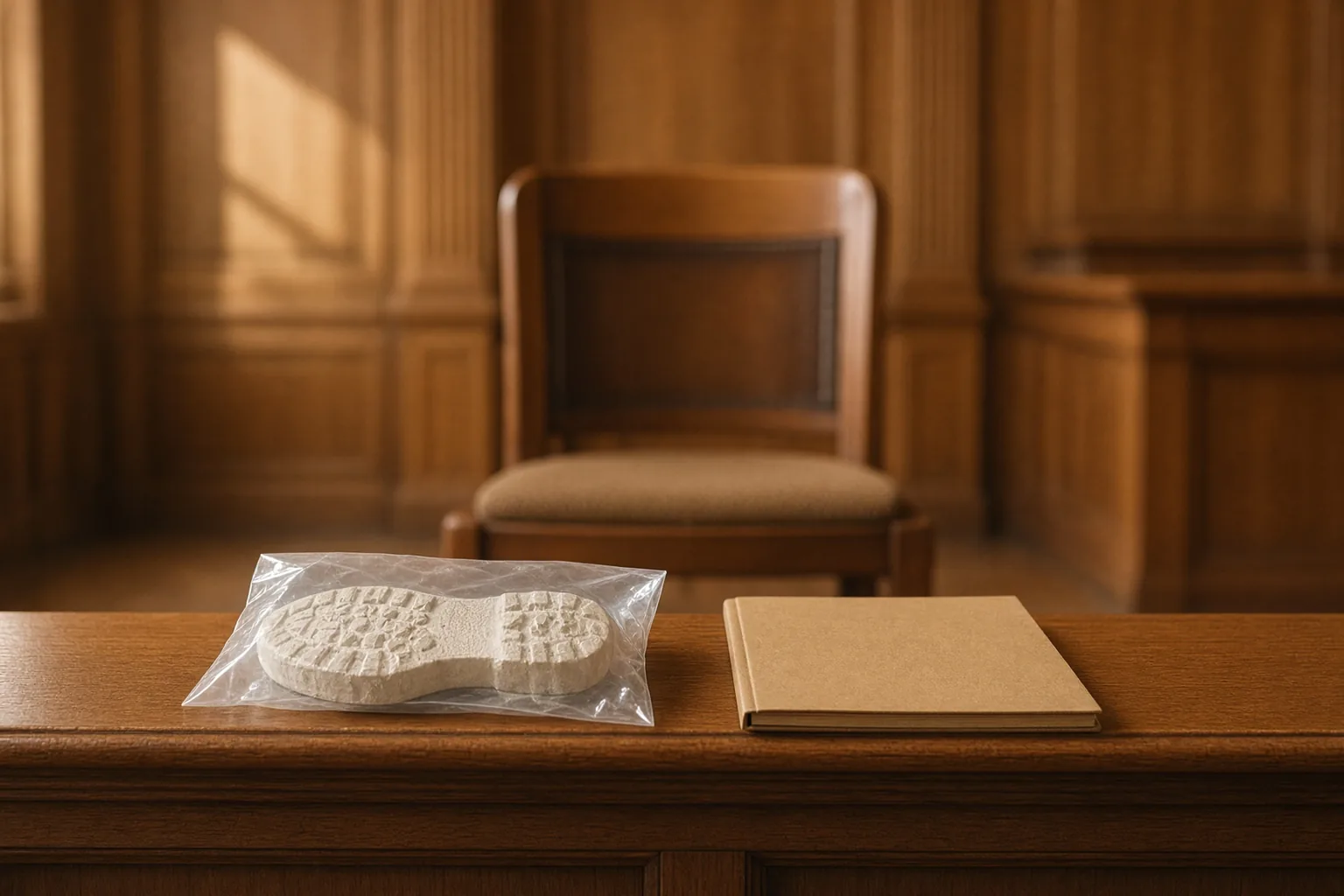
Can a forensic report be put before the jury with no analyst in court?
Not over the defendant's objection, if the report is testimonial. In Melendez-Diaz v. Massachusetts (2009) the Supreme Court held that analysts who certified drug test results were witnesses the defendant had a right to confront.
In Melendez-Diaz v. Massachusetts, 557 U.S. 305, decided June 25, 2009, the prosecution introduced three certificates of analysis at a drug trial. The certificates reported the weight of seized bags and stated that the substance contained cocaine. Analysts at a state laboratory had sworn to them before a notary, and under Massachusetts law they were admitted as prima facie evidence with no analyst on the stand.
Justice Scalia wrote for a 5-4 majority that the certificates were affidavits and that the analysts were "witnesses" for Sixth Amendment purposes. Absent a showing that the analysts were unavailable and that the defendant had an earlier opportunity to cross-examine them, the defendant was entitled to "be confronted with" them at trial. The Court rejected the argument that laboratory results are neutral enough to do without cross-examination: "Forensic evidence is not uniquely immune from the risk of manipulation."
A signed report stating that a seized tool made the marks on a door, or that a shoe made an impression at the scene, is written for the same use as those certificates: proof at a criminal trial. Defense counsel who receives such a report therefore asks two questions at once. Is the conclusion sound? And who will be in court to answer for it?
Can a colleague in the same laboratory testify in place of the report's author?
Not as a channel for the author's report. In Bullcoming v. New Mexico (2011) the Court held that an analyst who had neither performed nor observed the test could not stand in for the analyst who signed the certification.
Bullcoming v. New Mexico, 564 U.S. 647, was decided on June 23, 2011. A state laboratory report certified a blood-alcohol concentration of 0.21 in a prosecution for aggravated driving while intoxicated. The certifying analyst, Curtis Caylor, was not called; the State said only that he had been placed on unpaid leave. Another analyst, Gerasimos Razatos, testified. He knew the equipment and the laboratory's procedures, but he had not taken part in the test on the defendant's sample and had not observed it.
Justice Ginsburg wrote that such surrogate testimony "does not meet the constitutional requirement." The opinion states: "The accused's right is to be confronted with the analyst who made the certification." The opinion names one exception: that analyst is unavailable at trial and the accused had an opportunity before trial to cross-examine that particular scientist.
The Court explained what a surrogate cannot supply. Razatos could not convey "what Caylor knew or observed about the events his certification concerned," and his testimony could not "expose any lapses or lies on the certifying analyst's part." In a comparison discipline those events are the examination itself: which test marks were made, which areas were compared, what was seen under the microscope and what was set aside.
What did Smith v. Arizona add about a substitute expert who gives an independent opinion?
If the substitute relays the absent analyst's statements as the basis of the opinion, and they support it only if true, the statements come in for their truth. The Confrontation Clause then applies if they are testimonial.
Smith v. Arizona, No. 22-899, was decided on June 21, 2024, in an opinion by Justice Kagan. Analyst Elizabeth Rast of the Arizona Department of Public Safety crime laboratory tested items seized in a drug case and prepared typed notes and a signed report. She stopped working at the laboratory before trial. The State called Greggory Longoni, an analyst with no earlier connection to the case. He reviewed her notes and report, told the jury what those records said about the testing of each item, and then gave what was presented as his independent opinion.
The Arizona Court of Appeals had accepted this on the theory that Rast's statements were offered only to explain the basis of Longoni's opinion. The Supreme Court disagreed. When an expert conveys an absent analyst's statements in support of an opinion, and the statements provide that support only if true, then "the statements come into evidence for their truth." For this kind of basis testimony, the Court wrote, "truth is everything." Rules of evidence that admit basis material for a limited purpose do not settle the constitutional question.
The Court did not decide whether Rast's records were testimonial. That question turns on the primary purpose of the statements, and the Court sent it back to the Arizona Court of Appeals, vacating the judgment. It noted that some laboratory records, such as those created for accreditation or internal quality control, may not be testimonial.
Who did the work in a toolmark or footwear case, and how does a review find out?
A reviewer reads the bench notes, photographs and review records for the people who made the test marks, compared them, verified the conclusion and reviewed the file, and matches each step to a name and a date.
A drug test in the three cases above produced a result that one analyst certified. A toolmark or footwear examination has more steps, and several people may take them. Someone receives and photographs the items. Someone makes test marks with the seized tool or test impressions with the seized shoe. An examiner compares questioned and test marks and records the areas of agreement. Where the laboratory's procedure calls for it, a second examiner verifies the conclusion and a supervisor or peer reviews the file before the report is released.
A reviewer reads the file for each of these steps and writes down who performed it, when, and what record of it exists. The result is a short table. For counsel it answers the question the Supreme Court cases pose: whose observations does the report contain? If the examiner listed as the trial witness signed the report but the comparison notes are in another person's handwriting, or the verification entry shows only initials and a date, the table shows it.
The same table tells counsel what a testifying witness can describe at first hand. An examiner who repeats the comparison on the original items and test marks, and testifies about that work, speaks about his or her own observations. An examiner who has read a colleague's notes and adopts the conclusion is in the position the Court examined in Smith.
How does the defense learn before trial who will testify and on what basis?
In federal cases, by a request under Rule 16(a)(1)(F) and (G) of the Federal Rules of Criminal Procedure. The government must produce test reports and a signed disclosure of each expert's opinions, bases, reasons and qualifications.
Rule 16(a)(1)(F) requires the government, on the defendant's request, to let the defense inspect and copy "the results or reports of any physical or mental examination and of any scientific test or experiment" that are in its possession and are material to preparing the defense or intended for use in its case-in-chief.
Rule 16(a)(1)(G) adds a written disclosure for each expert the government plans to use. It must contain "a complete statement of all opinions that the government will elicit from the witness," the bases and reasons for them, the witness's qualifications with a list of publications authored in the previous 10 years, and a list of cases in which the witness testified as an expert during the previous 4 years. The witness must approve and sign the disclosure, unless the government explains why it could not obtain the signature or has already produced a signed report with all the required opinions, bases and reasons.
A reviewer compares three documents: the signed disclosure, the laboratory report and the bench notes. A mismatch between the person who signed the disclosure and the person whose notes record the comparison is the first sign of a substitute witness. The bases and reasons in the disclosure are then checked against the notes: does the witness cite his or her own observations, or the entries of an examiner who will not be called?
Does the defense have to demand the examiner's presence?
Where a state has a notice-and-demand statute, yes, within its deadline. Melendez-Diaz accepted such statutes in their simplest form: the prosecution gives notice that it will use a report, and the defendant objects within a set time.
The Court in Melendez-Diaz addressed the practical concern that analysts would have to appear in every case. It pointed to notice-and-demand statutes: the prosecution notifies the defendant that it intends to use an analyst's report, and the defendant then has a period in which to object and require live testimony. The Court wrote that such statutes "simply govern the time within which he must do so."
The deadline, the form of the demand and the consequence of silence are set by each state's statute and court rules, and counsel checks them when the report arrives. A review that is finished after the period has run can still be used for cross-examination of whoever testifies, but it comes too late for the demand itself. For that reason the reviewer needs the report, the notice and the date of service at the start of the work.
What may a substitute witness still say after Smith?
The Court listed examples: testimony based on personal knowledge about how the laboratory operates, general testimony about forensic guidelines and techniques, and answers to hypothetical questions when the State proves the assumed facts separately.
Smith did not bar substitute witnesses. According to the opinion, an analyst who works in the laboratory may testify, on personal knowledge, about its standards, practices, procedures and chain-of-custody methods. An expert may describe forensic guidelines and techniques in general terms, including what accreditation requires. And an expert may answer a hypothetical question that assumes an out-of-court statement is true, with the State proving the assumed fact by other evidence.
A review turns these categories into a cross-examination outline. For each sentence the substitute is expected to say about the comparison, the reviewer notes its source: the witness's own examination, the laboratory's general procedure, or an entry made by the absent examiner. Sentences of the third kind are the ones Smith addresses. Whether a given entry is testimonial is a legal question for counsel and the court; the reviewer supplies the facts about who wrote it, when and for what stated purpose.
What does IAE do when the examiner behind a toolmark or footwear report may not testify?
IAE reviews the opposing examiner's report and case file in US criminal defense cases, including whether the verification is recorded and who performed it. The review takes up to 5 business days, or 48 hours on rush.
The IAE review of impression and toolmark reports is for cases where the other side's examiner links a shoe, a tire or a tool to a mark. The review checks the case file against the standard for that kind of mark, including whether the verification is recorded and who performed it. Each point is tied to a page of the report or the bench notes.
The client sends the report, the notes and photographs received in discovery, any expert disclosure and the trial date, and describes the task. IAE confirms the questions with the client before work starts. The secretariat confirms receipt the same day, and within one business day IAE confirms the format, the cost, the deadline and the specialist in its registry. The client approves the candidate and the CV before work starts.
Every specialist is a member of the public IAE registry, verified by Member ID or QR code, and confirms in the document that he or she has no interest in the outcome. The court weighs a review with the other evidence, and neither IAE nor the reviewer guarantees the outcome. IAE is not a law firm: whether to demand the examiner's presence or to object to a substitute is counsel's decision.
Sources
- Melendez-Diaz v. Massachusetts, 557 U.S. 305 (2009) (Justia)
- Bullcoming v. New Mexico, 564 U.S. 647 (2011) (Justia)
- Smith v. Arizona, No. 22-899 (U.S. June 21, 2024), slip opinion (Supreme Court of the United States)
- Federal Rules of Criminal Procedure, Rule 16. Discovery and Inspection (LII, Cornell Law School)
Read also
All articles
Footwear and toolmark conclusion scales: what do identification, probably made and inconclusive mean in the examiner's report?
A footwear report can end with one of seven conclusions under the SWGTREAD standard of 2013 or one of six under the Department of Justice language Sergei Voronin
Contextual bias in footwear and toolmark examinations: what was the examiner told, and what does a reviewer check?
A footwear or toolmark examiner who knows that the suspect confessed, has a record or was linked by other evidence has received informationSergei Voronin
Who can review a toolmark or footwear examiner's report, and what qualifies an impression examiner?
A review of a toolmark or footwear report is written by an examiner trained and certified in the same discipline as the opposing opinions. Rule 702Sergei VoroninExpert report review
Ready to discuss your case?
Send the materials: the secretariat will confirm the format, cost, deadline and the specialist within one business day.
