
Expert report review
Is testimony about a cell phone extraction expert testimony?
Courts disagree on whether the officer who ran a phone extraction must qualify as an expert. In United States v. Williams (2023) the Fifth Circuit held that running Cellebrite and reading its report is lay testimony under Rule 701. The Sixth Circuit in Ganier (2006) treated testimony about forensic software reports as Rule 702 testimony, and a federal court in California barred a lay agent from describing a Cellebrite extraction in 2023.
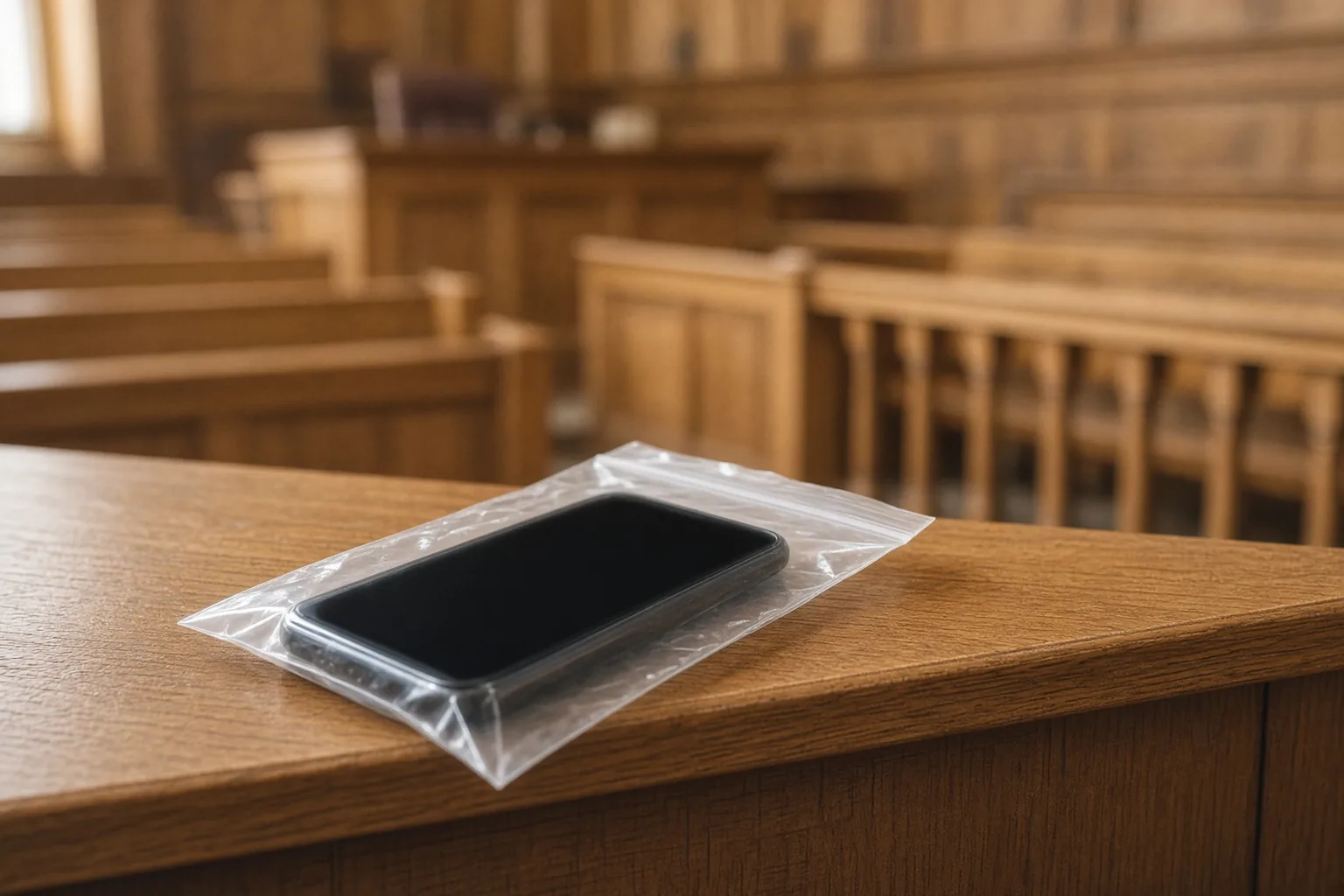
When is testimony about a phone extraction lay testimony, and when is it expert testimony?
It depends on what the witness says. Describing the steps taken with the tool and reading its output has been admitted as lay testimony; explaining how the tool works or interpreting its reports falls under Rule 702.
Under Federal Rule of Evidence 701, a witness who is not testifying as an expert may give an opinion only if it is "rationally based on the witness's perception," helpful to understanding the testimony or a fact in issue, and "not based on scientific, technical, or other specialized knowledge within the scope of Rule 702."
The third condition was added in 2000. The committee note says the amendment was made to "eliminate the risk that the reliability requirements set forth in Rule 702 will be evaded through the simple expedient of proffering an expert in lay witness clothing." It also says a party will not evade the expert disclosure rules of civil and criminal procedure "by simply calling an expert witness in the guise of a layperson."
The note adopts the distinction drawn in State v. Brown. Lay testimony "results from a process of reasoning familiar in everyday life," while expert testimony "results from a process of reasoning which can be mastered only by specialists in the field."
For phone evidence the test is applied sentence by sentence. A witness who says which phone he connected, which program he started and what appeared on the screen reports what he perceived. A witness who explains why a report lists no deleted messages, or why its timestamps are correct, relies on how the program reads the phone's file system, and that knowledge does not come from everyday life.
What did the Fifth Circuit decide in United States v. Williams?
On October 13, 2023 it held that an investigator who ran Cellebrite and read its report gave lay testimony. Without a showing of specialized knowledge, use and understanding of a Cellebrite extract did not require an expert.
United States v. Williams, No. 22-10316, came from the Northern District of Texas. Judge Jerry E. Smith wrote the opinion for a panel with Judges Southwick and Higginson. The court reviewed the evidentiary ruling for abuse of discretion.
The witness was a police investigator certified as a Cellebrite Operator and a Cellebrite Physical Analyzer. He plugged each phone into the Cellebrite device and ran the program, which extracted user data and apps into a readable format; one Alcatel phone required an additional file system extraction. He checked some reports against the source material on the phones. On voir dire he disavowed any particular knowledge of Cellebrite's technology or of malware that might have affected the extraction. At trial he testified: "As an operator, I purely operate the machine. I am not privy to the programming or how it extracts data."
The defendant argued that Cellebrite is complex and that its reports need a witness qualified under Rule 702 and a reliability finding. The panel held that "the district court properly ruled that Rule 701 governs here" and wrote that "[w]ithout a showing of specialized knowledge, the mere use and understanding of a Cellebrite extract at trial is insufficient to require an expert." Requiring an expert, it said, would be like requiring "a mechanic to qualify as an expert just to testify that a car with a flat tire ran a red light."
The opinion cited decisions of three other circuits. In United States v. Chavez-Lopez (4th Cir. 2019) the testimony "didn't require a technical understanding of Cellebrite, and he made no claims about the program's effectiveness or reliability." In United States v. Marsh (2d Cir. 2014) the witness described his training and his use of the software and confirmed the results by checking the messages on the phone. In United States v. Ovies (9th Cir. 2019) the witness "testified only about the steps he took using the Cellebrite program."
Footnote 1 kept a limit. Quoting Judge St. Eve's concurrence in United States v. Wehrle (7th Cir. 2021), the panel noted that some collections of digital data would require expert testimony because of "the sophisticated nature of the particular forensic analysis or the equipment deployed."
Why did the Sixth Circuit treat forensic software reports as expert testimony?
In United States v. Ganier (2006) the court held that reading reports produced by forensic software required knowledge of computers and the software well beyond that of the average layperson, so the testimony fell under Rule 702.
United States v. Ganier, 468 F.3d 920, No. 05-6350, was decided on November 15, 2006; Judge Karen Nelson Moore wrote the opinion. An IRS special agent had used forensic software to determine what searches were run on three computers. The reports included Internet Explorer registry entries.
The government had not provided a Rule 16 summary of the agent's testimony, and the district court excluded the agent's testimony and the reports under Criminal Rule 16(a)(1)(G). The government compared the software to programs such as Microsoft Word and Outlook that a layperson can use. The Sixth Circuit compared the reports instead to specialized medical tests run by physicians and held: "This constitutes 'scientific, technical, or other specialized knowledge' within the scope of Rule 702."
Expert status did not end the case for the government. The court held that exclusion was too severe because the district court had not weighed the reasons for the delay, the prejudice to the defendant or lesser sanctions. It vacated the exclusion and remanded.
In Williams the Fifth Circuit said the defendant "misreads Ganier," because Ganier does not mention Cellebrite and involved dissimilar reports. The Sixth Circuit has kept its rule. In United States v. Eby, No. 24-3716, a 2025 opinion by Judge Jane B. Stranch marked not recommended for publication, it wrote: "We have determined that a law enforcement agent provided expert testimony" in Ganier, and treated an FBI agent who testified about the forensic analysis of a laptop as an expert witness. The government had argued that "the forensic software [the agent] utilized is the expert."
Eby still lost his appeal. To reverse on a deficient Rule 16 notice he had to show that he was surprised at trial and that a more detailed notice would have changed the outcome. The court noted that the forensic case file "remained available to him for viewing for the next eleven months leading up to trial" and affirmed.
Has a court barred a lay witness from describing a Cellebrite extraction?
Yes. In United States v. Daniels (S.D. Cal. 2023) Judge Linda Lopez held that using Cellebrite required specialized knowledge and barred a lay FBI agent from describing the extraction or introducing data obtained through it.
The ruling is an order of January 23, 2023 clarifying rulings on the government's motions in limine in United States v. Daniels, No. 22cr2505-LL-1. The government planned to have an FBI special agent testify that she took the phone to the RCFL, retrieved an extraction and extraction report, and could select through Cellebrite what data to extract.
The government filed a declaration from an FBI master digital forensic examiner. He wrote that "Cellebrite extractions do not require the same expertise," called a basic extraction a "user level task" and stated that "every law enforcement agent is qualified to perform basic Cellebrite phone extractions." The court found that the declaration undercut the government's position and held that "specialized knowledge beyond the common knowledge of the jury was required" to use the program.
The court found no binding Ninth Circuit answer. Ovies, it wrote, declined "to reach the question whether the introduction of Cellebrite evidence requires expert testimony"; in United States v. McLeod (2019) any error was harmless; in United States v. Seugasala (2017) the evidence survived plain error review.
The agent could not testify "as to the general use and purpose of Cellebrite" or how it was used to extract data, "including the inputs or outputs of the program," and the government could not introduce "any evidence obtained from the Cellebrite extraction, such as images or other data." Contents of the phone "acquired by manual review of the phone" remained admissible with a proper foundation. The order expressed no view on Cellebrite's reliability or on whether the agent could qualify under Rule 702.
How have state courts treated the officer who copied the phone data?
The Texas Court of Appeals at Fort Worth held in Wright v. State (2021) that a detective who copied phone data with Cellebrite gave lay testimony, so the State did not need an expert reliability showing.
Wright v. State, No. 02-19-00395-CR, was decided on February 4, 2021 by the Court of Appeals for the Second Appellate District of Texas at Fort Worth, in an opinion by Justice Birdwell. A detective used Cellebrite to copy the defendant's phone data onto a memory stick.
The defendant argued that the State had to lay a reliability predicate under Kelly, the Texas rule for scientific evidence. The court explained that under Texas Rule 702 the proponent of scientific evidence "must show by clear and convincing proof" that it is reliable. That burden never arose: the detective's "testimony before the jury rested almost solely on his personal experience," and copying data with Cellebrite was "like the common exercise of using a thermometer."
The court held that "it is enough that the extracted data was authenticated by lay testimony" and affirmed the conviction. In Texas the label decides whether the State must meet the clear and convincing standard for the extraction at all.
Which statements about an extraction need a qualified expert?
The decisions draw the line at opinions on how the tool works, whether it is reliable or complete, and what its reports mean. In the Fifth Circuit, the steps a witness took and the screens he read remain lay testimony.
The witnesses whose testimony stayed under Rule 701 limited themselves in the same way. The Chavez-Lopez witness made no claims about the program's reliability. The Ovies witness spoke only about his steps. The Williams investigator disclaimed knowledge of the technology and of malware.
The testimony that crossed into Rule 702 interpreted output. In Ganier the agent read registry entries to say which searches had been run. In Daniels the court counted the selection of data to extract and the program's inputs and outputs as matters for an expert. The Wehrle concurrence quoted in Williams pointed to sophisticated analysis and equipment.
On that line, a lay extraction witness can say which device he connected, which tool and version he started, which extraction type he chose, and that the report he produced is the exhibit. Statements that the extraction captured everything on the phone, that no data was deleted, that a file was opened on a given date, or that the tool decoded a third-party app correctly rest on knowledge of how the software parses the device. Counsel who hears such a statement from a witness offered under Rule 701 has the objection that Rule 701(c) provides.
What must be disclosed when the extraction witness is an expert?
In criminal cases, Rule 16(a)(1)(G) requires on request a signed, complete statement of the expert's opinions, bases, qualifications and prior testimony. In civil cases, Rule 26(a)(2) requires identifying the witness and serving a report or summary.
Criminal Rule 16(a)(1)(G) was rewritten by amendments that the Supreme Court adopted on April 11, 2022 and that took effect on December 1, 2022. At the defendant's request the government must disclose "a complete statement of all opinions that the government will elicit from the witness," "the bases and reasons for them," the witness's qualifications "including a list of all publications authored in the previous 10 years," and a list of cases in which the witness testified as an expert during the previous 4 years. The court sets the deadline by order or local rule, and the witness must approve and sign the disclosure unless an exception applies.
The 2022 committee note says the amendment addresses "the lack of adequate specificity regarding what information must be disclosed" and "the lack of an enforceable deadline for disclosure." Ganier was decided under the older text, which required only a written summary.
In civil cases Rule 26(a)(2)(A) requires disclosure of "the identity of any witness it may use at trial to present evidence under Federal Rule of Evidence 702, 703, or 705." A witness who does not provide a written report is disclosed under Rule 26(a)(2)(C) with "the subject matter" and "a summary of the facts and opinions to which the witness is expected to testify." Absent a stipulation or order, expert disclosures are due "at least 90 days before the date set for trial."
Under Rule 37(c)(1), a party that fails to identify a witness as Rule 26(a) requires "is not allowed to use that information or witness to supply evidence on a motion, at a hearing, or at a trial, unless the failure was substantially justified or is harmless." The court may instead order expenses, inform the jury of the failure or impose other sanctions.
How can the opposing party test a witness offered as a lay extraction witness?
Through a motion in limine before trial, voir dire on what the witness knows about the tool, and objections under Rule 701(c) when an answer moves beyond the steps the witness personally took and observed.
Daniels was decided on motions in limine, before any juror heard the extraction. The order fixed in advance what the agent could say and excluded the data that came only through the tool.
In Williams the district court allowed voir dire on whether the investigator would impart specialized knowledge. His answers on voir dire and at trial kept his testimony within Rule 701, and they also put on the record what he could not explain: the programming, the extraction method and the possible effect of malware.
If the court treats a statement as expert testimony, Rule 702 as amended in 2023 applies in full. The proponent must show the court that it is "more likely than not" that the opinion rests on sufficient facts or data and reliable methods reliably applied. The 2023 committee note calls rulings that sent the sufficiency of an expert's basis to the jury as a matter of weight "an incorrect application of Rules 702 and 104(a)."
What can a rebuttal examiner add when the extraction comes in through a lay witness?
The examiner can testify to what the lay witness disclaimed: how the tool decoded the data, what the extraction type could not reach, and whether the report matches the device on the messages the case turns on.
The investigator in Williams checked some reports against the phones, and the witness in Marsh confirmed results by reading the messages on the device. A rebuttal examiner can repeat that comparison for the specific messages, images or call records in dispute and report each difference with its location in the extraction.
Under Rule 26(a)(2)(D)(ii), evidence "intended solely to contradict or rebut evidence on the same subject matter" identified by the other side is due within 30 days after that disclosure, absent a stipulation or order. When the other side has disclosed no expert at all, a defense examiner's report is an ordinary expert disclosure: in civil cases it is due at least 90 days before trial absent a stipulation or order, and in criminal cases Rule 16(b)(1)(C)(ii) requires the court, "by order or local rule," to set a time for the defendant's disclosures.
A rebuttal examiner works from the same extraction file, verified by hash value, or from a new extraction where the device is available. The opposing witness's description of the steps, the tool name and the version becomes the starting point of the rebuttal report.
What does IAE do when the other side's extraction evidence needs review?
IAE prepares reviews of the opposing digital forensics report and rebuttal expert reports on messages, files, phones and computers, and deposition questions. The document is issued in up to 5 business days.
The reviewer checks whether another examiner could repeat the opposing work: whether the hash values match, which tool and version extracted the data, in which time zone each timestamp was read and whether each conclusion follows from the data.
Work can start without the forensic image. The review can rest on the report, its exhibits and the facts or data the expert must list under Rule 26(a)(2)(B)(ii). With a second copy of the image verified by hash value, the reviewer can repeat the extraction.
Before work starts IAE confirms the review questions, the devices or images involved and how the data reach the reviewer.
If the court admits the opposing report, the review stays in use. Daubert v. Merrell Dow Pharmaceuticals (1993) describes vigorous cross-examination, presentation of contrary evidence and careful instruction on the burden of proof as the traditional means of attacking shaky but admissible evidence. A disclosed rebuttal report is that contrary evidence, and its findings give the questions for the expert's deposition under Rule 26(b)(4)(A).
Sources
- Federal Rules of Evidence, Rule 701, Opinion Testimony by Lay Witnesses, with Committee Notes on the 2000 Amendment (LII)
- Federal Rules of Evidence, Rule 702, Testimony by Expert Witnesses, with Committee Notes on the 2023 Amendment (LII)
- United States v. Williams, No. 22-10316 (5th Cir. Oct. 13, 2023) (Justia)
- United States v. Ganier, No. 05-6350, 468 F.3d 920 (6th Cir. Nov. 15, 2006) (Justia)
- United States v. Eby, No. 24-3716, File Name 25a0592n.06 (6th Cir. 2025), not recommended for publication (court PDF)
- United States v. Daniels, No. 22cr2505-LL-1 (S.D. Cal. Jan. 23, 2023), Order Clarifying Rulings on Motions in Limine (FindLaw)
- Wright v. State, No. 02-19-00395-CR (Tex. App. Fort Worth Feb. 4, 2021)
- Federal Rules of Criminal Procedure, Rule 16, Discovery and Inspection, with Committee Notes on the 2022 Amendment (LII)
- Supreme Court of the United States, Order of April 11, 2022 amending the Federal Rules of Criminal Procedure
- Federal Rules of Civil Procedure, Rule 26, Duty to Disclose; General Provisions Governing Discovery (LII)
- Federal Rules of Civil Procedure, Rule 37, Failure to Make Disclosures or to Cooperate in Discovery; Sanctions (LII)
- Daubert v. Merrell Dow Pharmaceuticals, Inc., 509 U.S. 579 (1993) (LII)
Read also
All articles

Cell tower location evidence: how does a reviewer test the other side's cell-site analysis?
A cell-site report plots the towers a phone used and argues that the phone, and its owner, were near a place at a certain time. The records behind Sergei Voronin
Does an IP address identify a person, and how does a reviewer test the other side's expert who ties an IP address to a defendant?
An IP address identifies a network connection at a moment in time. The internet service provider can name the subscriber who pays for thatSergei Voronin
Who pays for a review of the opposing digital forensics report, and can the fee be recovered?
The party that retains a reviewer of the opposing digital forensics report pays the reviewer. The other side pays only for the time it spendsSergei VoroninExpert report review
Ready to discuss your case?
Send the materials: the secretariat will confirm the format, cost, deadline and the specialist within one business day.
