
Examinations
Cell phone forensic examination for court: what can an examiner extract, and how?
A forensic examination of a phone copies the data stored on the device, verifies the copy and answers the questions in the case: who sent a message, when a photo was taken, what was deleted. An abstract presented to the American Academy of Forensic Sciences in 2006 named three basic acquisition methods. In federal civil cases, Rule 34 and its committee note set the terms for access to the other side's phone.
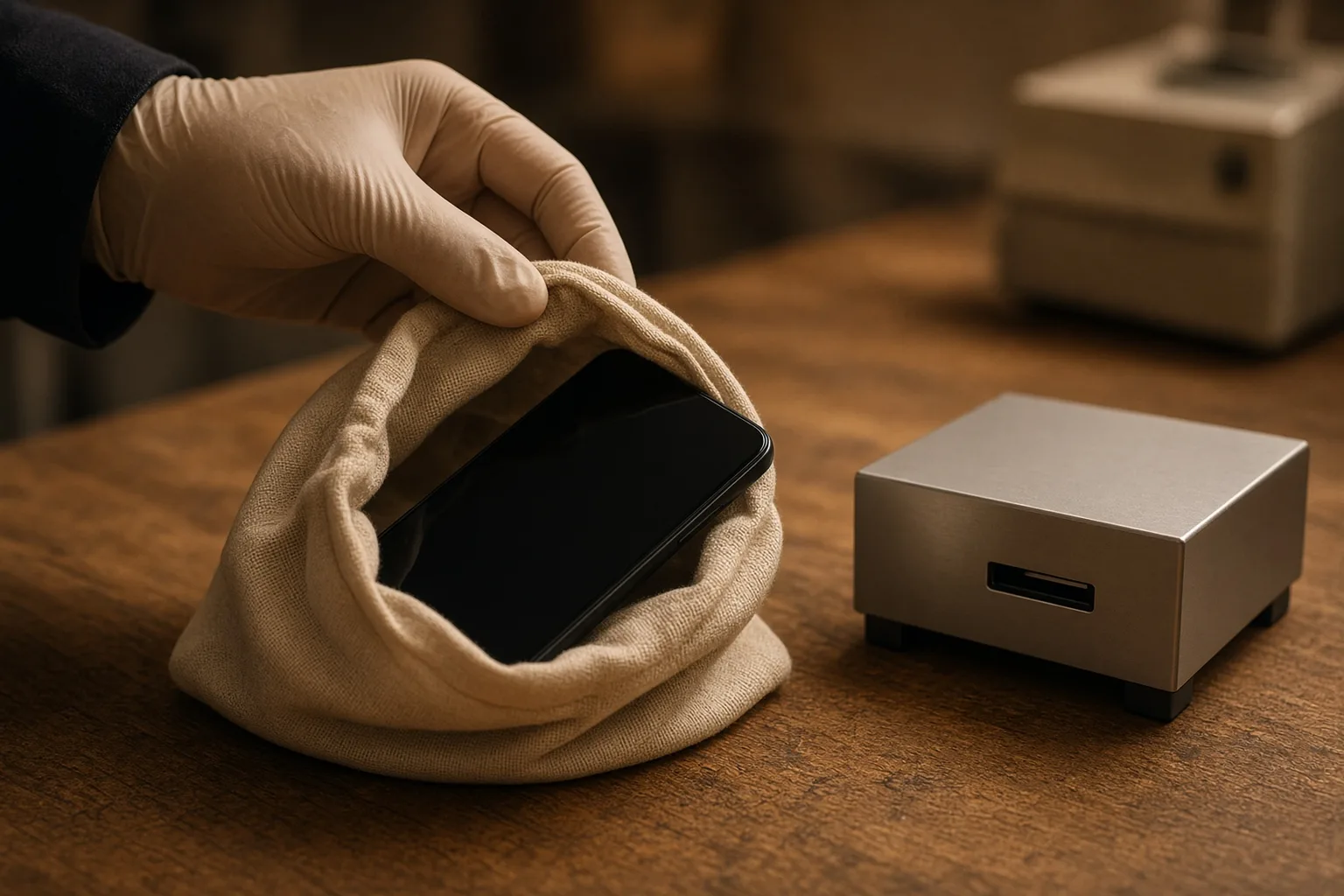
What does a phone forensic examination involve?
Acquiring the data stored on the phone, verifying the copy, examining it for the questions in the case and writing a report. A 2007 NIST review describes forensic tools as acquiring, examining and reporting data from the device.
The National Institute of Standards and Technology published NISTIR 7387, an overview and analysis update of cell phone forensic tools, on March 21, 2007. The report surveyed tools for acquiring, examining and reporting data from cell phones and smart phones, with their capabilities and limitations. Its abstract notes that these devices handle messaging, email, web browsing and personal information applications, and that they can store sensitive data apart from a computer and synchronize it later.
The NIST authors also wrote that the technology changes quickly, so examiners need tools to retrieve and review device data efficiently. That observation still governs the work. A tool that supports one model and operating system version may not support the next, so the report names the tool and its version.
The examination starts with questions. The IAE digital forensics page frames them by the device, the application and the event the case needs to establish: whether a chat thread on the phone matches the screenshots filed in court, when a file was created, whether messages were deleted. The questions decide which data the examiner extracts and which parts of the extraction go into the report.
What data can an examiner recover from a phone?
Call logs, contacts, messages, email, browsing history, application data, photos, audio and video. What comes out of a given phone depends on the model, its software and the tool used for the extraction.
The 2006 abstract by Peter V. Mosher, Scott Thompson and Greg Hudson of the Centre of Forensic Sciences in Toronto opens with the point that the modern cellular telephone can contain a significant amount of information. Their list includes call logs, phonebooks and multimedia data such as audio, images and video. The NIST abstract names SMS and MMS messaging, instant messaging, electronic mail and web browsing, along with basic personal information management applications such as contacts and calendars, and notes that phones other than the simplest models let users load additional applications.
For messages, the IAE digital forensics page describes the examiner's task this way: the examiner extracts the messaging app database from the phone or computer and compares screenshots with it, checking the sender, timestamps, deleted and edited messages and attachments. A screenshot shows how a conversation looked on one screen at one moment. The database holds the record the application kept, with its own timestamps and identifiers.
Data can also sit outside the phone. Because a phone can synchronize with a computer, as the NIST abstract notes, a backup on a laptop may hold messages that are no longer on the device. An examiner who is asked whether a message existed on a given date will ask where the phone was backed up.
Added applications matter for the extraction. NIST reviewed the forensic tools for their capabilities and limitations, and a tool that reads the phone's built-in messages may not read a messaging application the user installed later. The report therefore lists which applications the extraction covered, so that a finding about one application is not read as a finding about the whole phone.
How is data extracted from a phone?
By one of three basic methods named in the 2006 AAFS abstract: imaging the memory, sometimes after removing the chip from the circuit board; downloading through a cable with forensic software; or photographing each screen by hand.
Memory imaging can capture all stored data, the Toronto authors wrote, but it may require physically removing the internal memory from the telephone's circuit board, work that needs specialized skills and equipment. A phone examined this way is taken apart and does not come back in the state it was received, so in a civil case the owner's consent or a court order for that step comes before the work.
Cable downloading uses software that reads the phone through its data port. The authors cautioned that this software may lag behind new devices and must be verified as reliable. Matthew Meyers and Marc Rogers of Purdue University's CERIAS made a related point about forensic software in general in a 2004 technical report: the vendors have not published information relating to error rates.
The manual method means operating the phone and recording each screen. The Toronto authors described the risk of the earlier approach as the possibility of altering data by accidentally initiating a call or deleting records. Their laboratory replaced the still camera with a digital video camera connected to a workstation, wrote that the risk of transcription errors had been removed, and reported a turnaround of one day instead of one week. The result of this method is a set of images of what the phone displayed, so data that no screen shows, such as deleted records, stays outside it.
Why does handling before the examination matter?
A phone that is switched on and used keeps changing. Calls, messages and application updates write new data, and a manual review can alter data by accidentally initiating a call or deleting records.
SWGDE, the Scientific Working Group on Digital Evidence, wrote in its 2006 document on data integrity that digital evidence submitted for examination should be maintained in such a way that the integrity of the data is preserved. The same document states that the hash value of data changes dramatically if any data is altered or a file is accessed. A phone that keeps running before it is imaged will not give the same value twice.
The practical consequence is a record of handling. Who held the phone after the event in question, whether it stayed switched on, whether anyone scrolled through the messages and when it reached the examiner all go into the examiner's notes. The IAE digital forensics page states that the questions, the devices and how the data reach the examiner are confirmed before work starts.
Loss of data before the examination has its own rule in federal civil cases. Under Rule 37(e), when electronically stored information that should have been preserved is lost because a party failed to take reasonable steps to preserve it, and it cannot be restored or replaced through additional discovery, the court, upon finding prejudice to another party, may order measures no greater than necessary to cure the prejudice.
How does the examiner verify that the extraction is accurate?
By hashing the extraction when it is made, before analysis and at the end of the work, by naming the tool and version, and by checking disputed results against the phone or a second tool.
The SWGDE document sets three points for hash values: an acquisition hash when the copy is created, a verification hash after acquisition and before analysis, and a rehash at the end of the examination to prove that no alterations have occurred to the data. The values tie the report to the extraction file that the other side can later receive and check.
A hash proves that a copy matches the extraction. It does not prove that the tool read the phone correctly. Meyers and Rogers wrote that hash verification can determine if an error occurred but provides no information related to actual or potential error rates. Where a result matters to the case, the examiner can compare the decoded message with the raw database record or with the screen of the phone.
For a review of the opposing report, the IAE page lists what the reviewer checks: whether the image and the source have matching hash values, which tool and version extracted the data, whether timestamps were read in the right time zone and whether each conclusion follows from the data.
Can you get the other side's phone examined in a civil case?
A party can serve a Rule 34 request to inspect, copy, test or sample the other side's electronically stored information. Access to the phone itself is not automatic, and the court sets the limits under Rule 26.
Rule 34 reaches electronically stored information in the other party's possession, custody or control; the request names a reasonable time, place and manner, and the written answer is due within 30 days. The 2006 committee note treats direct inspection of a party's own system as the exception, and Rule 26 lets the court weigh proportionality and set terms by protective order. For a phone, a request limited to the applications and dates in dispute is easier to justify than one for the whole device.
What should a phone forensic report contain?
The Rule 26(a)(2)(B) items: opinions with their basis and reasons, facts or data considered, exhibits, qualifications, prior testimony and compensation. For a phone the facts include the device, extraction method, tool, version and hash values.
Rule 26(a)(2)(B) requires a retained expert's written report to contain a complete statement of all opinions and the basis and reasons for them, the facts or data considered, any exhibits, the witness's qualifications including publications from the previous 10 years, a list of cases in which the witness testified as an expert during the previous 4 years, and a statement of the compensation.
Rule 702 sets the test the court applies. The proponent must show the court that it is more likely than not that the testimony is based on sufficient facts or data and is the product of reliable principles and methods applied reliably to the facts of the case. The 2023 committee note adds that each expert opinion must stay within the bounds of what can be concluded from a reliable application of the expert's basis and methodology.
For a phone that means stating what was extracted and what was not reached. A report that says a message was never sent, when the extraction did not include the application that sent it, goes beyond what the data can support. When the other side serves its report, Rule 26(a)(2)(D)(ii) gives 30 days after that disclosure for evidence intended solely to rebut it, unless the parties stipulate or the court orders otherwise.
How does a phone extraction come into evidence?
Through a witness, or since December 1, 2017, through a Rule 902(14) certificate of a qualified person that the copy matches the original data, served with written notice. Who wrote the messages stays open to challenge.
Rule 902(14) makes self-authenticating data copied from an electronic device, storage medium, or file, if authenticated by a process of digital identification, as shown by a certification of a qualified person. The committee note states that if the hash values for the original and copy are the same, it is highly improbable that the original and copy are not identical. Rule 902(13) covers a record generated by an electronic process or system that produces an accurate result, on the same kind of certification.
Both paragraphs require the notice of Rule 902(11): before the trial or hearing, the proponent gives an adverse party reasonable written notice and makes the record and certification available for inspection, so that the party has a fair opportunity to challenge them.
The certificate settles authenticity of the copy and nothing more. The committee note states that the opponent remains free to object to admissibility on other grounds, and gives an example from a criminal case: the defendant can still challenge whether the information on the hard drive was placed there by the defendant. For a phone shared in a family or handed to a colleague, the certificate leaves that question to the content of the messages and the circumstances.
What does IAE do when phone data are disputed in a US case?
An IAE examiner prepares a digital forensics report on your questions about messages, files and device data, or reviews the opposing forensic report. The signed document is issued in up to 5 business days.
The IAE digital forensics page covers messages, documents and files, and software and devices. For a phone the examiner extracts the messaging database and compares screenshots with it, establishes file dates from metadata, compares a copy with the original by hash value, and looks at event logs, browser history and traces of connected devices. For a review, the examiner checks whether another examiner could repeat the work from the opposing report.
To start, send a description of the device and the questions, and say whether you hold the phone, an extraction file or only screenshots. IAE confirms the questions, the devices and how the data reach the examiner before work starts. The secretariat confirms receipt the same day, and within one business day IAE confirms the format, the cost, the deadline and the specialist from its public registry; the client approves the candidate and the CV.
The signed document is issued in up to 5 business days, with a 48-hour rush for tight deadlines. The examiner confirms in the document that he or she has no interest in the outcome and can be verified by Member ID or QR code. Materials are not passed to third parties without the client's consent. IAE is not a law firm, and whether the extraction is admitted is decided by the court.
Sources
- NIST, NISTIR 7387, Cell Phone Forensic Tools: An Overview and Analysis Update, March 21, 2007 (publication page)
- Mosher P. V., Thompson S., Hudson G., A Methodology for the Forensic Examination of Cellular Telephones, AAFS Jurisprudence Section abstract E23, 2006 (PDF)
- SWGDE Data Integrity Within Computer Forensics, document 06-f-001, version 1.0, April 12, 2006 (PDF)
- Meyers M., Rogers M., Computer Forensics: Meeting the Challenges of Scientific Evidence, CERIAS Tech Report 2005-18, Purdue University
- Federal Rules of Civil Procedure, Rule 34, with the 2006 committee note (LII, Cornell Law School)
- Federal Rules of Civil Procedure, Rule 26, Duty to Disclose; General Provisions Governing Discovery (LII, Cornell Law School)
- Federal Rules of Civil Procedure, Rule 37, Failure to Make Disclosures or to Cooperate in Discovery; Sanctions (LII, Cornell Law School)
- Federal Rules of Evidence, Rule 902, Evidence That Is Self-Authenticating, with the 2017 committee notes (LII, Cornell Law School)
- Federal Rules of Evidence, Rule 702, Testimony by Expert Witnesses (LII, Cornell Law School)
Read also
All articles
Electronic signature disputed: how do you prove who signed, and what does a forensic examiner check?
An electronic signature has legal effect, but the party that relies on it must show that it was the act of the person named. In Fabian v. Renovate Sergei Voronin
How do you authenticate social media posts for court, and what does a forensic examiner add when the account is disputed?
A printout of a social media page proves that the page existed. It does not prove who wrote the post. In 2014 the Second Circuit vacated a convictionSergei Voronin
Spyware on a phone: how does a forensic examiner find it, and what can the evidence be used for?
A forensic examination for spyware establishes whether a monitoring app is on the phone, when it appeared, what it collected and where it sentSergei VoroninExpert examinations
Ready to discuss your case?
Send the materials: the secretariat will confirm the format, cost, deadline and the specialist within one business day.
