
Expert report review
What should a reviewer check in a Cellebrite or other phone extraction report?
A phone extraction report is the output that a forensic tool such as Cellebrite generates from the data it pulled from a device. A reviewer checks which extraction was obtained, which hash values tie the file to the copies produced, which tool and version did the work, in which time zone the times are shown and what the tool could not reach, then tests each conclusion against Rule 702.
What is in a phone extraction report?
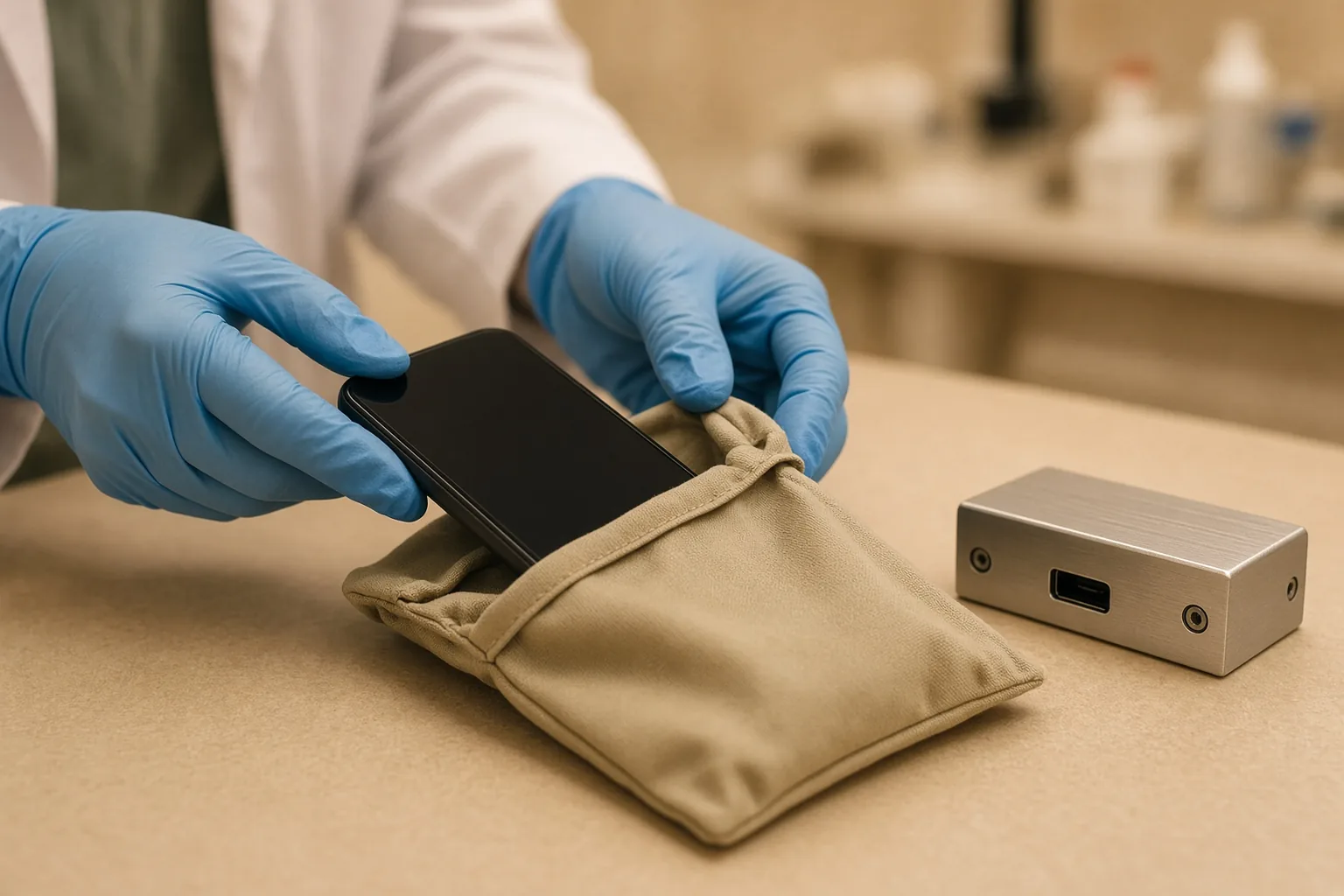
Device data that a forensic tool extracted and processed, presented as reports. A state crime laboratory's procedure requires a Cellebrite device information report and a Cellebrite reader report in a portable case when Cellebrite is used.
The procedure is the Technical Procedure for Mobile Device Extraction of the Digital Evidence Section of a State Crime Laboratory, version 7, effective August 2, 2024; a copy is posted by Forensic Resources. Section 5.11 has the examiner extract the data onto a target or transfer drive with an approved tool and "Document the methods used to extract data from the device." Under section 5.12 the extraction is moved to a forensic tower and processed with the proper tool, and reports are created with an approved tool.
Section 5.14 requires that all reports and extractions be copied to digital media and returned to the submitting agency at the completion of the examination. The reports and the extraction are two separate items. The reports are generated after processing; the extraction is the data acquired from the device.
A reviewer who holds only the reports sees what the tool produced from the extraction. Under Rule 703 an expert may base an opinion on facts or data in the case that the expert has been made aware of or personally observed, and under Rule 705 the expert may be required to disclose those facts or data on cross-examination. For a phone examination the extraction file is part of those facts or data.
Which type of extraction was obtained?
The report should name it: physical, full file system, partial file system or advanced logical. The laboratory procedure lists the type of extraction obtained among the required contents of the narrative report.
Section 5.8 tells the examiner to determine the best extraction supported by the approved tools, to check each tool's support documentation for the individual device, and states: "The level of extraction will depend on the support for the device." Section 5.15 lists the contents of the narrative report: the methodology, the items examined and removable media present, the type of examination requested, the authority for the examination, the type of extraction obtained, whether a passcode was identified and the result, and the reports generated.
The standard report wording in section 5.15.3 covers four outcomes: a physical extraction, a full file system extraction, a partial file system extraction, and no support. For the partial outcome it reads: "Currently, only a partial extraction is available for this device." The item may be resubmitted if vendor support for another extraction becomes available or the agency obtains the passcode. Section 6.2.1 also refers to AXIOM and Cellebrite UFED 4PC Advanced Logical extractions.
The type sets the limits of every negative finding. A statement that no messages were found for a period describes the data acquired, and a partial extraction acquires less. Rule 702(b) requires that testimony be based on sufficient facts or data, and the 2023 committee note keeps each opinion within the bounds of what can be concluded from a reliable application of the expert's basis and methodology.
What do the hash values in the report prove?
That a file is identical to the extraction file it was copied from. They do not cover the phone itself: the laboratory procedure states that hashes of mobile device storage are typically not consistent.
Section 12.8 gives the reason: "Due to the solid state storage in mobile devices, hashes of mobile device storage will typically not be consistent due to file system and medium optimization (i.e. garbage collection and wearleveling)," which makes it impractical to hash mobile devices during the examination. Hash values for removable media should be consistent.
Appendix A lists the hashes for a mobile device: an extraction hash, a verification hash if more than one employee is involved in the extraction, and a post-examination extraction hash. Section 6.2.1 makes an exception: "If an AXIOM or Cellebrite UFED 4PC Advanced Logical extraction is obtained, hashing is not required."
Rule 902(14) and its 2017 committee note describe what a match proves. A hash value is produced by an algorithm based on the digital contents of a drive, medium or file, and identical hash values for the original and copy "reliably attest to the fact that they are exact duplicates." The reviewer compares the hash in the report with the hash of the extraction copy produced in discovery. A match ties the copy to the extraction file. It says nothing about what happened to the phone before the extraction, and when the extraction type needed no hash there is nothing to compare.
In proficiency test No. 20-5551 of Collaborative Testing Services (CTS) the participants received a logical extraction of an iPhone in .TAR format, made with Cellebrite software, and one question asked for the SHA-256 hash of the extracted file.
Does the report name the tool and its version?
It should. Support for a device depends on the tool, and the laboratory procedure states that vendors keep updating their tools as new devices and operating systems are released.
The version can be read from the extraction. In the CTS test 20-5551 participants were asked for the version of the extraction software from the data they received, and the expected answer was 7.35.1.15. The list of narrative report contents in section 5.15 of the laboratory procedure does not include the tool version. Section 15.0 requires that a report generated by the examination tool containing device identification be kept in the case record.
Rule 702(c) requires that testimony be the product of reliable principles and methods. Daubert v. Merrell Dow Pharmaceuticals, decided on June 28, 1993, named the considerations a court weighs: whether the technique can be and has been tested, peer review and publication, the known or potential rate of error, the existence and maintenance of standards controlling its operation, and general acceptance. For an extraction tool these questions are asked about the version that ran, since the procedure ties the extraction obtained to the tool's support for the device.
When a device was not supported, section 5.15.3.4 has the report state that "there is no forensic tool support for this device at the Laboratory" and that the item may be resubmitted when vendor support becomes available. Section 12.1 adds that "Not all mobile devices are supported by forensic tools" and permits a manual examination, documented in the case notes, with isolation maintained.
Was more than one tool used, and do the results agree?
The laboratory procedure expects that several tools may be needed for a holistic view of the device and requires the examiner to document which additional tools were used. The reviewer compares what each tool reported.
Section 5.11.1 reads: "It may be necessary to use multiple mobile device tools on the same mobile device in order to get a holistic view of the data residing on the device and any removable storage media it may contain." In those instances the examiner shall document which additional tools were used.
If the report rests on one tool, the reviewer asks whether the data that matter to the case, such as a particular messaging application, were supported by that tool for that device and operating system, and whether a second tool was tried. If two tools were used and the report quotes only one, the reviewer asks for the other tool's output. A difference between them on the same extraction is a question for the examiner's deposition, which Rule 26(b)(4)(A) permits after the report is provided.
Section 5.13.1 adds a check inside the laboratory. When one member extracts the data and another analyzes it, "a verification of the extracted data shall be performed and documented in the examiner's notes," and a verification review is completed in the laboratory's case system. Appendix A adds the verification hash for that situation.
How does the reviewer check timestamps and the time zone?
By asking which time zone the report uses and comparing it with the phone's time zone setting. The CTS test asked for both: the extraction start time in the device's time zone and the device's time zone setting.
Test 20-5551 asked participants for the start date and time of the extraction in the device's time zone; the expected answer was 07/08/2020 09:01 PM. A separate question asked for the time zone set on the phone. Both answers come from the extraction data.
The reviewer checks whether the report states the time zone in which its times are shown. If it does not, one message can land on different calendar dates depending on the zone used: 9:01 PM on July 8, 2020 in New York, where daylight time is four hours behind UTC, is 1:01 AM on July 9 in UTC.
For each time the opinion relies on, the reviewer asks which record in the extraction it was read from and which conversion was applied. Rule 705 lets the other side require the expert to disclose the underlying facts or data on cross-examination, and the time records are part of them.
Can examiners reach different answers from the same extraction?
Yes. In the CTS proficiency test 20-5551, data came back from 87 participants who analyzed the same iPhone extraction, and the question on the date the device was erased and reset showed no clear consensus in preliminary review.
Collaborative Testing Services ran test No. 20-5551, Mobile Digital Evidence, iOS Analysis. An iPhone 6s was used to generate the artifacts, and the data were acquired through a logical extraction with Cellebrite software. The questions covered the extraction date and time, the hash of the extracted file, the type of extraction, the software version, the date the device was erased and reset, the phone model and iOS version, the time zone, the ICCID, the phone number, the language setting, whether iCloud backup was enabled, the Apple ID and the last Wi-Fi network the phone connected to.
The summary report marks the reset date question as one that "did not show a clear consensus during preliminary review." CTS states that the results "are not intended to be an overview of the quality of work performed in the profession."
The test gives the reviewer a concrete question for the opposing examiner: which record supports a date of reset or erasure, and was it checked by a second method. The 2023 committee note to Rule 702 says forensic experts should avoid assertions of absolute or one hundred percent certainty when the methodology is subjective and potentially subject to error, and that the judge should, where possible, receive an estimate of the known or potential rate of error of the method.
Does the extraction show who used the phone?
It shows accounts, identifiers and activity on the device. Who typed a message is a separate conclusion, and the committee note to Rule 902(14) keeps the challenge to who placed the information on a drive open after authentication.
The CTS questions name identifiers that an iPhone extraction carried: the ICCID of the SIM card, the phone number, the Apple ID associated with the device and the last Wi-Fi network it connected to. The laboratory procedure has the report state whether the device contained a SIM card (section 5.15.2) and identifies SIM cards by the ICCID or other identifiers (section 5.6.3).
The note to Rule 902(14) gives the example of a criminal case in which data copied from a hard drive is offered: the defendant "can still challenge whether the information on the hard drive was placed there by the defendant." The reviewer checks whether the report cites anything that links a particular person to the device at the time of a message, or treats the account holder as the author without it.
Rule 702(d) requires that the opinion apply the principles and methods reliably to the facts of the case. A login record supports a conclusion about the account. Without more evidence it does not support a conclusion about the person holding the phone.
How do you get the extraction file and the examiner's notes?
Through expert disclosure and discovery: the facts or data the expert considered must be listed in the report, the expert can be deposed after the report, and Rule 705 lets the other side require the underlying data on cross-examination.
In a civil case a retained expert's report under Rule 26(a)(2)(B) contains all opinions with the basis and reasons for them, the facts or data considered, the exhibits, the expert's qualifications with publications from the previous 10 years, the cases with testimony in the previous 4 years and the compensation. For a phone examination the reviewer checks that this list names the extraction file, the tool reports and the tool version.
When a report is required, Rule 26(b)(4)(A) permits the expert's deposition only after the report is provided. Under Rule 26(b)(4)(C) communications between the party's attorney and the expert are protected, except those about compensation, facts or data the attorney provided and the expert considered, and assumptions the attorney provided and the expert relied on.
The laboratory procedure names the records to ask for: the case notes with the methods used to extract the data (section 5.11), photographs of the front and back of the device (section 5.5), the verification note when two members worked on the device (section 5.13.1), the hash values of Appendix A and the reports generated (section 5.15). Section 5.14 requires all reports and extractions to be copied to digital media and returned to the submitting agency, so the full extraction exists outside the laboratory.
A report intended solely to contradict or rebut evidence on the same subject matter is due within 30 days after the other party's disclosure (Rule 26(a)(2)(D)(ii)).
What does IAE do when a phone extraction report is disputed?
IAE prepares reviews of the opposing forensic report and expert reports on the client's questions about messages, files, software and device data. The document is issued in up to 5 business days.
The reviewer checks whether another examiner could repeat the opposing work on messages, files or device data from the report alone: matching hash values, the tool and version that extracted the data, the time zone of each timestamp and whether the data support each conclusion. Each finding is tied to a page of the opposing report and to a rule or a published practice. The result can be a review of the opposing report, a rebuttal expert report or a set of deposition questions.
The reviewer does not need the forensic image to start. The review can rest on the report, its exhibits and the facts or data listed under Rule 26(a)(2)(B)(ii). With a second copy of the image, verified by hash value, the reviewer can repeat the extraction.
Before work starts IAE confirms the review questions, the devices or images involved and how the data reach the reviewer. Materials go through the contact form or to info@iaexperts.com. The secretariat confirms receipt the same day. Within one business day IAE confirms the format, the cost, the deadline and the specialist from its registry, and the client approves the candidate and the CV. The draft is checked for facts, and cases with tight deadlines have a 48-hour rush.
Every specialist is a member of the public IAE registry and passed the council's attestation under the published Criteria Matrix; the Member ID or QR code in the document opens the specialist's record. The specialist confirms in the document that he or she has no interest in the outcome of the case, and materials are not passed to third parties without the client's consent. A review is evidence that the court weighs together with the other materials. Neither IAE nor the reviewer guarantees the outcome or influences the decision. IAE is not a law firm and does not advise on case strategy.
Sources
- State Crime Laboratory, Digital Evidence Section, Technical Procedure for Mobile Device Extraction, version 7, effective 08/02/2024 (copy posted by Forensic Resources)
- Collaborative Testing Services, Test No. 20-5551, Mobile Digital Evidence, iOS Analysis, Summary Report (copy on Scribd)
- Federal Rules of Evidence, Rule 702, Testimony by Expert Witnesses, with Committee Notes on the 2023 Amendment (LII)
- Federal Rules of Evidence, Rule 703, Bases of an Expert's Opinion Testimony (LII)
- Federal Rules of Evidence, Rule 705, Disclosing the Facts or Data Underlying an Expert's Opinion (LII)
- Federal Rules of Evidence, Rule 902, Evidence That Is Self-Authenticating, with Committee Notes on the 2017 Amendment (LII)
- Federal Rules of Civil Procedure, Rule 26, Duty to Disclose; General Provisions Governing Discovery (LII)
- Daubert v. Merrell Dow Pharmaceuticals, Inc., 509 U.S. 579 (1993) (LII)
Read also
All articles

Cell tower location evidence: how does a reviewer test the other side's cell-site analysis?
A cell-site report plots the towers a phone used and argues that the phone, and its owner, were near a place at a certain time. The records behind Sergei Voronin
Does an IP address identify a person, and how does a reviewer test the other side's expert who ties an IP address to a defendant?
An IP address identifies a network connection at a moment in time. The internet service provider can name the subscriber who pays for thatSergei Voronin
Who pays for a review of the opposing digital forensics report, and can the fee be recovered?
The party that retains a reviewer of the opposing digital forensics report pays the reviewer. The other side pays only for the time it spendsSergei VoroninExpert report review
Ready to discuss your case?
Send the materials: the secretariat will confirm the format, cost, deadline and the specialist within one business day.
