
Expert report review
Destructive testing without notice: what does a review of the opposing product expert's testing check?
Destructive testing changes or uses up the product the case is about. ASTM E860-22 asks the practitioner to document the item first, keep destructive work to a minimum and recommend notice to other known interested parties. In 1994 a federal court in Virginia dismissed a ladder case because the plaintiff's engineer cut the ladder apart before the manufacturer heard of the claim. A review starts with the dates, the protocol and what is left of the item.
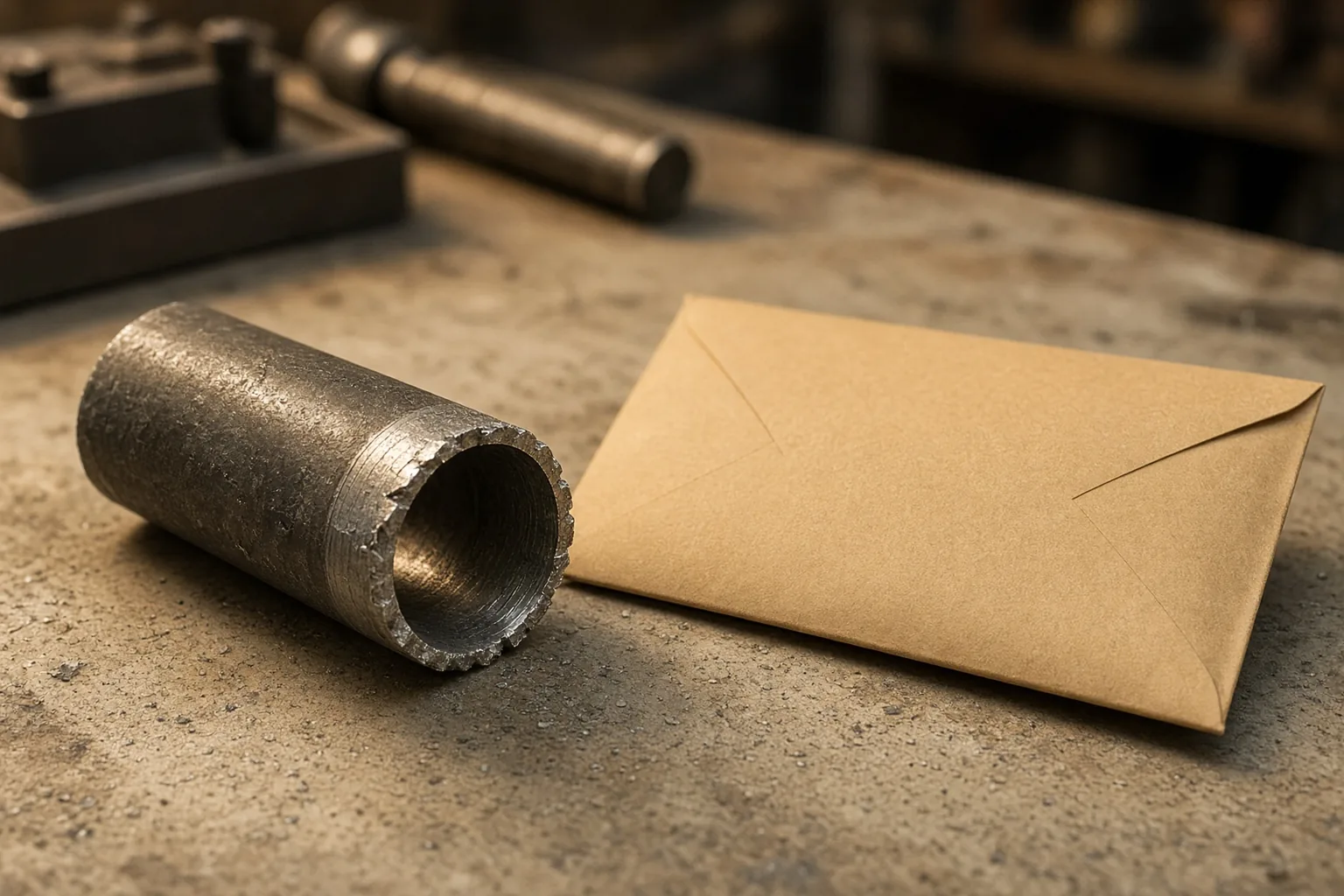
What counts as destructive testing of a product?
Any examination, disassembly or test that is likely to change the nature, state or condition of the item, or to use it up, so that the other side can no longer examine it as it was.
ASTM E860-22, Standard Practice for Examining and Preparing Items That Are or May Become Involved in Criminal or Civil Litigation, covers the examination and testing of evidence items tied to an incident that is, or may reasonably be expected to become, the subject of a lawsuit. Under section 1.2 it applies when examination or testing of the evidence is required and that work is likely to change the nature, state or condition of the evidence. The current edition was approved on September 1, 2022 and published in June 2023. The practice was first approved in 1982.
In product cases the change is usually physical and easy to date. In Cole v. Keller Industries the plaintiff's engineer ground off the heads of rivets on a six-foot aluminum ladder, forced other rivets to fail to remove a step, and cut out a section of the step with a hacksaw. In Bozick v. Conagra Foods the defendants asked to have an independent laboratory cut into the bottom of an aerosol can and measure the thickness of its steel.
Smaller changes count too. Section 5.1.2 of E860-22 asks the practitioner to document any change, alteration or contamination observed after the incident or after the item was collected. A review asks the same question of every step in the opposing report: what did the item look like before this step, and can anyone still see that?
Must the other side be notified before the product is tested destructively?
UCC 2-515(a) gives each party the right to inspect, test and sample the goods on reasonable notification to the other. Under ASTM E860-22 the practitioner recommends that other known interested parties be notified before destructive work.
Section 2-515 of the Uniform Commercial Code is titled Preserving Evidence of Goods in Dispute. Under subsection (a), in furtherance of the adjustment of a claim or dispute, either party on reasonable notification to the other has the right to inspect, test and sample the goods, including goods in the other party's possession or control. Under subsection (b) the parties may agree to a third party inspection or survey and agree that its findings will bind them.
Section 5.3 of ASTM E860-22 starts from the point that certain characteristics cannot be determined without destructive testing. Under 5.3.2, when destructive testing will preclude additional testing of the evidence, the practitioner notifies the client or current owner that the action may cause spoliation. Under 5.3.3 and 5.3.4 the practitioner recommends that the client notify other known interested parties and give them the opportunity to take part in the procedures or to witness and record them. If compelling reasons exist to proceed without notice, 5.3.5 says the practitioner should document those reasons in writing and preserve the documentation.
In Silvestri v. General Motors the Fourth Circuit placed the duty on the party itself: a party who cannot preserve evidence because he does not own or control it "still has an obligation to give the opposing party notice of access to the evidence."
What happened when the plaintiff's engineer cut the ladder apart without telling the manufacturer?
The Eastern District of Virginia dismissed the whole case in November 1994. Keller first heard of the claim about 16 months after the fall, and the plaintiff's lawyer did not tell Keller about the destructive testing.
David Cole fell on June 15, 1991 while using a Keller Model No. 926 six-foot aluminum ladder to install a ceiling fan, after one of its rivets broke. His lawyer obtained the ladder in 1991 and by early 1992 had hired an engineer, Kenneth Taber. Taber ground off the heads of the left front rivets, removed the step by forcing the right-side rivets to fail and cut out part of the step with a hacksaw. His report of June 27, 1992 attributed the failure to a manufacturing defect.
Keller first heard of the claim on October 12, 1992. The court found that the lawyer did not tell Keller about the destructive testing. Taber kept the ladder for more than two years, and in that time two more rivets were lost.
Cole argued that Keller's experts had photographs and could work with an exemplar ladder. Judge Spencer did not accept that and wrote that "there are no means of curing Defendant's prejudice short of granting summary judgment." The court quoted an Illinois decision holding that an expert "should not be permitted intentionally or negligently to destroy such evidence" and dismissed the case in toto. It also granted summary judgment on the warranty counts on a separate ground: Cole's notice of breach under the Virginia version of UCC 2-607(3)(a) came too late.
Can a court dismiss a product claim because the item was altered or lost?
Yes. In Silvestri v. General Motors the Fourth Circuit affirmed a dismissal under the court's inherent power, where the loss of the car substantially denied the defendant the ability to defend the claim.
Silvestri v. General Motors, decided by the Fourth Circuit on November 14, 2001, began with a 1995 Chevrolet Monte Carlo whose airbag did not deploy when the car hit a utility pole. The plaintiff's lawyer retained two accident reconstructionists, who inspected the car. One of them told the lawyer that General Motors needed to see it. Neither the lawyer nor Silvestri notified General Motors. In early 1995 title passed to an insurer, which sold the car to a company that repaired and resold it.
The court traced the power to sanction spoliation to "a court's inherent power to control the judicial process and litigation." Dismissal is "the ultimate sanction for spoliation" and may be justified when the conduct was so egregious that it amounts to forfeiture of the claim, or when its effect was so prejudicial that it substantially denied the defendant the ability to defend. With only one unreliable crush measurement on record, General Motors could not build an adequate crush model, and the court affirmed dismissal. Judge Traxler agreed that the duty was breached but dissented on the sanction and would have remanded for something short of dismissal.
Rule 37(e) of the Federal Rules of Civil Procedure does not reach a product. It deals with electronically stored information, and its 2015 committee note says that "The new rule applies only to electronically stored information." Sanctions for an altered physical item come from the court's inherent authority, as in Silvestri, or from Rule 37(b)(2)(A) when a party disobeys a discovery order. The sanctions listed there include treating facts as established, barring designated matters in evidence, striking pleadings and dismissing the action.
What if the other side was offered an inspection and did not take it?
Then a spoliation sanction is harder to justify. In Hamilton Mutual v. Ford an Ohio appellate court held in 1997 that excluding the insurer's expert as a sanction was an abuse of discretion, because Ford had several chances to inspect.
Hamilton Mutual paid its insureds $24,228.71 after their 1993 Ford Econoline conversion van caught fire at an I-75 rest stop on December 27, 1993 with the engine off. The insurer's complaint blamed the O-ring in the left front fuel injector. Its claims representative stated that between January 31 and May 6, 1994 she repeatedly told Ford the van was available for inspection. Ford asked for the parts instead, and the van was sold for salvage on May 16, 1994.
The trial court excluded the insurer's expert as a sanction for spoliation. On September 12, 1997 the Ohio Court of Appeals, in case No. WD-96-072 from Wood County, held that ruling an abuse of discretion because Ford had been given numerous chances to inspect. The insurer still lost. The same court upheld the exclusion of its expert, a fire investigator with no experience in automobile design or manufacturing, as unqualified, and affirmed summary judgment for Ford.
A review therefore collects the correspondence about access along with the report: each written offer of inspection, its date and the answer to it. Testing done after an offer that the other side declined and testing done with no notice at all lead to different arguments.
How does a party get permission for destructive testing during the case?
By agreeing a written protocol with the other side or by court order. Rule 34 covers testing and sampling of tangible things, and courts weigh necessity, prejudice, alternatives and safeguards before allowing destructive work.
Rule 34(a)(1)(B) lets a party request to inspect, test or sample designated tangible things in the responding party's possession, custody or control. The request must describe each item with reasonable particularity and specify a reasonable time, place and manner for the inspection and for performing the related acts. The written response is due within 30 days after service. Under Rule 26(c)(1)(B) the court may, for good cause, issue an order specifying terms, including time and place, for the discovery.
In Bozick v. Conagra Foods, a case over an exploding 12-ounce can of PAM cooking spray, Judge Lewis J. Liman of the Southern District of New York applied four factors from Mirchandani v. Home Depot (D. Md. 2006): whether the proposed testing is reasonable, necessary and relevant to proving the movant's case; whether the non-movant's ability to present evidence at trial will be hindered; whether there are less prejudicial alternative methods of obtaining the evidence; and whether there are adequate safeguards to minimize prejudice to the non-movant.
The defendants had given the plaintiff a technical protocol naming the measurement locations and the tools. She objected to the testing but not to any provision of the protocol. The court found that photographs of the can and the testimony of witnesses who saw it could serve in place of the intact can. The defendants knew of no other way to take the measurements, and the plaintiff proposed none. On November 30, 2020 the court granted the motion for limited destructive testing.
The four factors also give a reviewer a frame for unilateral testing done without any order. Was the test needed? Did it destroy what the other side needed to examine? Could non-destructive steps or an exemplar have answered the question? Which safeguards were used?
What should the record of a destructive test contain?
Documentation of the item before any step, a chain of custody, the protocol, photographs, the measured data and the remnants. ASTM E860-22 asks for condition records before any test, examination or alteration.
Section 5.1 of E860-22 has the practitioner document the nature, state and condition of the evidence as collected or received, by descriptive, photographic or other suitable methods, before any test, examination or alteration. Section 5.1.1 refers to the chain-of-custody record, which documents the movement, location and custodial status of the item through its final disposition, and notes that a break in the chain can be a ground to challenge admissibility.
Under section 5.3.1 non-destructive tests come first, destructive testing "should be kept to a minimum, and thoroughly documented," and exemplars are used instead of the subject item where possible. Section 5.2 asks the practitioner, whenever feasible, to leave enough of the substance intact to allow independent testing or reanalysis. After testing, section 5.5 requires each item to be preserved and labeled so that its identity and integrity are protected.
In litigation the record also has to reach the other side. Rule 26(a)(2)(B) requires the report of a retained testifying expert to contain a complete statement of all opinions with the basis and reasons for them, the facts or data considered in forming them and the exhibits that will be used to support them. When an opinion rests on a destructive test, the photographs, measurement sheets and test logs of that test are part of what the expert considered.
What does a review of the opposing expert's destructive testing check?
Whether notice was given and when, whether a protocol existed, what was documented before each step, whether non-destructive steps came first, what remains of the item, and which opinions rest on data nobody else can test.
The reviewer reads the opposing report with its exhibits and the correspondence about access, and builds a timeline of the item covering the time between the incident and the report.
Rule 702 in its current text requires the proponent to show the court that it is more likely than not that the testimony is based on sufficient facts or data and that the method was reliably applied to the facts of the case. Where the only data are the expert's own notes of a test the other side never saw, the review lists which observations can no longer be checked and which opinions depend on them.
- The reviewer compares the date of each test with the date the other side first learned of the claim, as the court did in Cole v. Keller.
- The reviewer checks whether a written protocol, an agreement or a court order existed before the item was cut, ground or taken apart.
- The reviewer looks for photographs and descriptions of the item as received, made before any step, as section 5.1 of ASTM E860-22 requires.
- The reviewer checks whether non-destructive tests and exemplars were used first, as section 5.3.1 describes.
- The reviewer lists what remains of the item, where it is kept and whether enough material was left for independent testing under section 5.2.
- The reviewer matches each opinion with the data from the test and marks the opinions that rest on observations nobody can now repeat.
What does IAE do when the opposing expert tested the product destructively?
IAE prepares a review of the opposing product defect report or an expert report on the client's questions for warranty and supply disputes in US courts, within up to 5 business days.
The review reads the other side's defect report against Rule 26(a)(2)(B) and Rule 702, lists the tests the expert did not run and the conclusions the data do not support, and checks the valuation under UCC 2-714(2). Where the item was tested destructively, the review adds the questions in this article: notice, protocol, documentation before each step, remnants and the data behind each opinion.
The client sends the opposing report with its exhibits and describes what to check. Letters about access to the item, any testing protocol and photographs taken before the test belong with the request.
IAE is not a law firm, and motions and case strategy stay with the client's attorney. A review is evidence, and the court decides how much weight to give it.
Sources
- UCC § 2-515, Preserving Evidence of Goods in Dispute (LII)
- ASTM E860-22, Standard Practice for Examining and Preparing Items That Are or May Become Involved in Criminal or Civil Litigation (preview of the standard text)
- Cole v. Keller Industries, Inc., 872 F. Supp. 1470 (E.D. Va. 1994) (Justia)
- Silvestri v. General Motors Corp., 271 F.3d 583 (4th Cir. 2001) (Justia)
- Hamilton Mutual Insurance Co. of Cincinnati v. Ford Motor Co., No. WD-96-072 (Ohio Ct. App. Sept. 12, 1997)
- Bozick v. Conagra Foods, Inc., No. 1:19-cv-04045-LJL, Opinion and Order (S.D.N.Y. Nov. 30, 2020) (Justia)
- Federal Rules of Civil Procedure, Rule 26, Duty to Disclose; General Provisions Governing Discovery (LII)
- Federal Rules of Civil Procedure, Rule 34, Producing Documents, Electronically Stored Information, and Tangible Things (LII)
- Federal Rules of Civil Procedure, Rule 37, Failure to Make Disclosures or to Cooperate in Discovery; Sanctions (LII)
- Federal Rules of Evidence, Rule 702, Testimony by Expert Witnesses (LII)
Read also
All articles
Warranty denied for liquid damage: how does a reviewer check the finding that water caused the failure?
A red liquid indicator records one fact: water touched the indicator. A warranty denial needs a second fact, that the liquid caused the failure Sergei Voronin
The shipment was rejected on a sample: how does a reviewer check whether the opposing expert's sample speaks for the whole lot?
Nobody tests 10,000 sweatshirts or 1,709 microprocessors one by one. A buyer who rejects a shipment, and a seller who sues for the price, both relySergei Voronin
Defect after the warranty expired: is there still a claim, and what must the expert prove about when it arose?
A defect that first shows up after the warranty period has ended is usually outside the express warranty, even if the cause was there from the startSergei VoroninExpert report review
Ready to discuss your case?
Send the materials: the secretariat will confirm the format, cost, deadline and the specialist within one business day.
