
Examinations
How much does a digital forensics expert cost, and who pays for each stage of the work?
A digital forensics bill is built from stages: collecting and imaging devices, processing and searching the data, analysis, the written report and testimony. In federal court each party first pays its own examiner. Rule 26 of the Federal Rules of Civil Procedure moves some of these costs to the other side, and 28 U.S.C. 1920 lets the winning party recover only the cost of making copies, which the Third Circuit read narrowly in 2012.
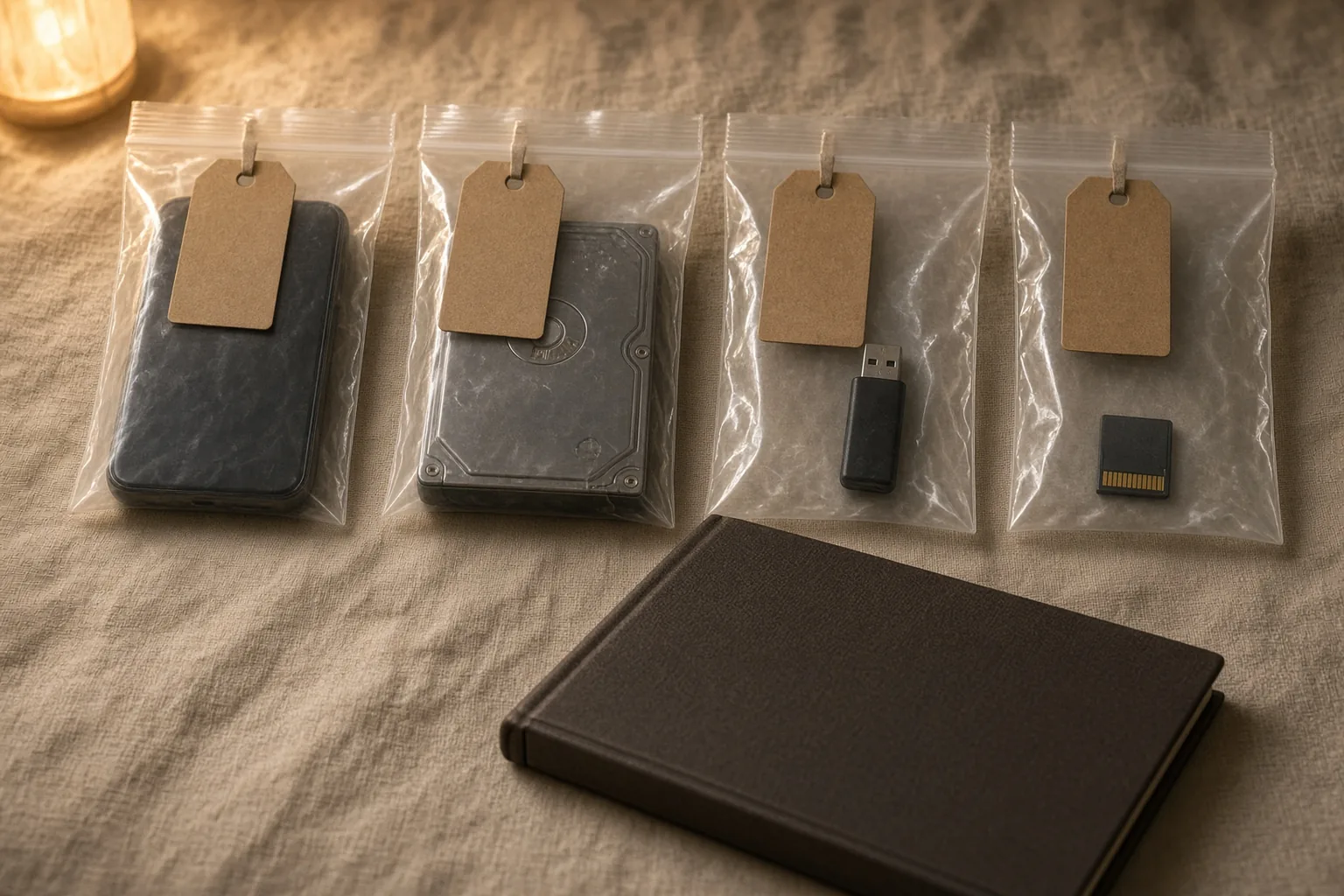
What does a digital forensics expert bill for?
For stages of work: collecting and imaging devices, processing and searching data, analysis, the report and testimony. The rules treat these stages differently when costs are shifted or taxed, so the invoice should list them separately.
The Third Circuit described the stages in Race Tires America, Inc. v. Hoosier Racing Tire Corp., decided on March 16, 2012. Electronic discovery vendors in that antitrust case were paid for "gathering, preserving, processing, searching, culling, and extracting ESI." The court added that "hard drives may need to be imaged, the imaged drives may need to be searched to identify relevant files." The costs awarded against the losing plaintiffs included more than $365,000 in such charges.
A forensic examiner retained as an expert witness adds the stages that follow collection. The examiner analyzes the artifacts, writes the report and answers questions at deposition and trial. Rule 26(a)(2)(B) lists six parts of a retained expert's report: all opinions with their basis and reasons, the facts or data considered, the exhibits, the witness's qualifications with publications from the previous 10 years, other cases with testimony in the previous 4 years, and "a statement of the compensation to be paid for the study and testimony in the case."
The stages are worth separating on paper. A party pays its own examiner for the study and the report. The party that deposes the examiner pays for the deposition time. The cost of making copies for production may come back at the end of the case as a taxable cost, while searching and culling the data did not in the Third Circuit. An invoice with separate lines for imaging, processing, analysis, the report and testimony lets counsel claim each item under the rule that covers it.
Will the other side learn what you pay your forensic examiner?
Yes. The report of a retained expert must state the compensation for the study and testimony, and communications between counsel and the expert about compensation are open to discovery under Rule 26(b)(4)(C)(i).
Item (vi) of Rule 26(a)(2)(B) puts the fee into the report itself. The other side reads the rate before it decides whether to depose the examiner.
Rule 26(b)(4)(C) protects communications between a party's attorney and an expert who must provide a report, "regardless of the form of the communications." The protection has three exceptions. Communications are discoverable to the extent they "relate to compensation for the expert's study or testimony," identify facts or data that the attorney provided and that the expert considered in forming the opinions, or identify assumptions that the attorney provided and that the expert relied on.
The second and third exceptions reach the instructions a forensic examiner usually receives. If counsel tells the examiner which devices, accounts, custodians or date ranges to examine, and the examiner considers that information in forming the opinions, the email that says so can be produced.
Who pays for the forensic examiner's deposition?
The party taking the deposition. Unless manifest injustice would result, Rule 26(b)(4)(E) requires it to pay the expert a reasonable fee for the time spent responding to discovery.
Rule 26(b)(4)(A) states: "A party may depose any person who has been identified as an expert whose opinions may be presented at trial." When the expert must provide a report, "the deposition may be conducted only after the report is provided."
Under Rule 26(b)(4)(E)(i), the court must require the party seeking discovery to "pay the expert a reasonable fee for time spent in responding to discovery under Rule 26(b)(4)(A) or (D)." The rule does not set a rate. The compensation statement in the report gives the deposing party the examiner's rate before the deposition is noticed.
A consulting examiner who will not testify is treated differently. Under Rule 26(b)(4)(D), a party ordinarily may not discover facts known or opinions held by an expert retained "in anticipation of litigation or to prepare for trial" who is not expected to testify. If the court orders that discovery, Rule 26(b)(4)(E)(ii) adds a second payment: the party seeking it must also pay the other party "a fair portion of the fees and expenses it reasonably incurred in obtaining the expert's facts and opinions."
Who pays to collect data from the other side's devices and accounts?
Ordinarily the party that holds the data. The 2015 committee note to Rule 26 tells courts and parties to assume that the responding party bears the costs of responding, though a court may allocate expenses by protective order.
The 2015 amendment added the words "or the allocation of expenses" to Rule 26(c)(1)(B). A protective order may now specify "terms, including time and place or the allocation of expenses, for the disclosure or discovery." The committee note calls this "an express recognition of protective orders that allocate expenses for disclosure or discovery" and adds that "courts already exercise this authority."
The same note limits the change: "Recognizing the authority does not imply that cost-shifting should become a common practice. Courts and parties should continue to assume that a responding party ordinarily bears the costs of responding." A party that must image its own laptops and phones in response to a request therefore starts from the position that it pays its own examiner for that work.
Cost enters the analysis earlier, through the scope of discovery. Rule 26(b)(1) limits discovery to what is proportional to the needs of the case, "considering the importance of the issues at stake in the action, the amount in controversy, the parties' relative access to relevant information, the parties' resources, the importance of the discovery in resolving the issues, and whether the burden or expense of the proposed discovery outweighs its likely benefit." A request to image every device of every employee is tested against that sentence before anyone discusses who pays.
What happens when the data are not reasonably accessible?
The holder need not produce them unless the court finds good cause. The court may then set conditions, and under the 2006 committee note these may include payment by the requesting party of part or all of the costs.
Rule 26(b)(2)(B) states that a party "need not provide discovery of electronically stored information from sources that the party identifies as not reasonably accessible because of undue burden or cost." On a motion to compel or for a protective order, the party from whom discovery is sought "must show that the information is not reasonably accessible because of undue burden or cost."
If that showing is made, the court "may nonetheless order discovery from such sources if the requesting party shows good cause, considering the limitations of Rule 26(b)(2)(C)." The rule ends with one sentence: "The court may specify conditions for the discovery." The 2006 committee note explains that "the conditions may also include payment by the requesting party of part or all of the reasonable costs of obtaining information from sources that are not reasonably accessible."
The showing of burden is made with evidence. A forensic examiner can describe, in steps and hours, what restoring, imaging and searching a source would take, and the requesting party's examiner can test that estimate. A court deciding whether to split the cost reads both declarations.
Where do the parties agree on the format of electronic production?
In the Rule 26(f) discovery plan. It must state the parties' views on issues about disclosure, discovery or preservation of electronically stored information, including the form or forms in which it should be produced.
Rule 26(f)(3)(C) requires the plan to address "any issues about disclosure, discovery, or preservation of electronically stored information, including the form or forms in which it should be produced." The agreement on format has a cost effect that appears only at the end of the case.
In Race Tires, the parties had agreed that TIFF was the default format for producing electronically stored information. The Third Circuit allowed the cost of converting native files to that agreed format as a cost of making copies. The format written into the plan decided which conversion counted as copying.
The plan is also where the parties can agree on search terms, custodians and the devices to be imaged. Each item on that list is a device or an account that an examiner will image or review.
Can the winning party recover forensic costs at the end of the case?
Only some of them. 28 U.S.C. 1920(4) lets the clerk tax the costs of making copies of materials necessarily obtained for use in the case, and the Third Circuit read that phrase narrowly for electronic data.
Section 1920 opens: "A judge or clerk of any court of the United States may tax as costs the following." Item (4) covers "fees for exemplification and the costs of making copies of any materials where the copies are necessarily obtained for use in the case." Item (6) covers "compensation of court appointed experts" and of interpreters. The statute ends: "A bill of costs shall be filed in the case and, upon allowance, included in the judgment or decree."
A forensic examiner retained by a party is not named in the list. The examiner's fee for analysis and for the report does not fit item (6), which speaks of experts appointed by the court, and the fight over electronic discovery costs therefore turns on item (4).
In Race Tires the clerk taxed $125,580.55 for Hoosier's vendor and $241,778.81 for the vendor of its co-defendant DMS, and the district court upheld the award. The Third Circuit vacated the award and remanded for the costs to be re-taxed.
Which forensic tasks did the Third Circuit treat as making copies?
Scanning paper documents, converting native files to the agreed TIFF format and transferring VHS tapes to DVD. Of more than $365,000 in vendor charges, $30,370.42 remained taxable; imaging, searching and deduplication did not count.
The court held that "only the conversion of native files to TIFF (the agreed-upon default format for production of ESI), and the scanning of documents to create digital duplicates are generally recognized as the taxable 'making copies of material.'" It allowed $20,083.51 for Hoosier's scanning and TIFF conversion and $10,286.91 for converting VHS tapes to DVD. None of the charges of DMS's vendor were taxable.
The opinion explains why the earlier steps fall outside the statute: "Section 1920(4) does not state that all steps that lead up to the production of copies of materials are taxable." The court accepted that "it may be that extensive 'processing' of ESI is essential to make a comprehensive and intelligible production," and still held that "gathering, preserving, processing, searching, culling, and extracting ESI simply do not amount to 'making copies.'" On searching, it wrote: "just as the cost of reviewers examining documents is not taxable, so too the task of keyword searching is not taxable."
The Federal Circuit read the same statute differently in CBT Flint Partners, LLC v. Return Path, Inc., decided on December 13, 2013, on appeal from the Northern District of Georgia and under Eleventh Circuit law. The clerk had taxed $49,824.60 for Return Path and $268,311.12 for Cisco, including $33,858.51 and $243,453.02 paid to their electronic discovery vendors. The court treated imaging a source drive and extracting the requested data as making copies and held that "the costs of copying responsive documents to production media are recoverable under section 1920(4)." It also held that "deduplication is not fairly covered by section 1920(4)," and it did not allow keyword searching or project management. The judgment was reversed in part, vacated in part and remanded.
For a party in the Third Circuit, Race Tires means that the cost of imaging and searching hard drives stays with the party that paid for it, even after a win; under CBT Flint, the imaging of source drives counted as copying. Fee-shifting under a contract or a statute is a separate question that the bill of costs does not decide.
How can a party plan a forensic budget before the first device is imaged?
By fixing the questions, the devices and the production format first. The Rule 26(f) plan, proportionality under Rule 26(b)(1) and the deposition fee rule decide which hours each side will carry.
The examiner's questions come first. A question such as whether a contract file was edited after a given date needs one file and its metadata; a question about everything a former employee did on a laptop needs a full image and an analysis of logs.
The devices and accounts come next. A list agreed in the discovery plan keeps both sides' examiners away from sources nobody needs, and a source that is truly hard to reach can be handled under Rule 26(b)(2)(B), with the court setting conditions and, if it chooses, sharing the cost.
Testimony is the last line of the budget. A retained examiner who signs a report can be deposed only after the report is served, and the party that deposes the examiner pays for that time under Rule 26(b)(4)(E). The examiner's rate for that time is the rate stated in the report.
What does IAE do when a party needs a digital forensics examiner?
IAE prepares a digital forensics expert report on the client's questions or a review of the opposing forensic report. The cost, deadline and specialist are confirmed within one business day; the signed PDF follows in up to 5 business days.
The examiner answers questions about messages, documents and files, and software and devices: whether a chat thread matches the messaging app database, when a file was created and edited according to document and file system metadata, whether a copy matches the original by hash value, what a device stored and who logged in. IAE frames the questions by the device, the application and the event the case needs to establish, and confirms the questions, the devices and how the data reach the examiner before work starts.
The client sends the materials and describes the task. The secretariat confirms receipt the same day. Within one business day IAE confirms the format, the cost, the deadline and the specialist from its registry, so the budget is known before any work is billed. The client approves the candidate and the CV before work starts. The signed PDF is issued in up to 5 business days after the format and cost are confirmed, depending on the volume of data, and cases with tight deadlines have a 48-hour rush.
Every specialist is a member of the public IAE registry and can be verified by Member ID or QR code. The specialist confirms in the document that he or she has no interest in the outcome of the case. IAE is not a law firm and does not advise on case strategy; whether to seek cost-shifting or to file a bill of costs is a question for the client's attorney. A report is evidence that the court weighs with the rest of the record, and neither IAE nor the examiner guarantees the outcome.
Sources
- Federal Rules of Civil Procedure, Rule 26, Duty to Disclose; General Provisions Governing Discovery, with committee notes (LII, Cornell Law School)
- 28 U.S.C. 1920, Taxation of costs (LII, Cornell Law School)
- Race Tires America, Inc. v. Hoosier Racing Tire Corp., No. 11-2316 (3d Cir. Mar. 16, 2012)
- CBT Flint Partners, LLC v. Return Path, Inc., No. 13-1036 (Fed. Cir. Dec. 13, 2013), slip opinion (full text)
Read also
All articles
Electronic signature disputed: how do you prove who signed, and what does a forensic examiner check?
An electronic signature has legal effect, but the party that relies on it must show that it was the act of the person named. In Fabian v. Renovate Sergei Voronin
How do you authenticate social media posts for court, and what does a forensic examiner add when the account is disputed?
A printout of a social media page proves that the page existed. It does not prove who wrote the post. In 2014 the Second Circuit vacated a convictionSergei Voronin
Spyware on a phone: how does a forensic examiner find it, and what can the evidence be used for?
A forensic examination for spyware establishes whether a monitoring app is on the phone, when it appeared, what it collected and where it sentSergei VoroninExpert examinations
Ready to discuss your case?
Send the materials: the secretariat will confirm the format, cost, deadline and the specialist within one business day.
