
Expert witnesses
Dram shop expert witness: what can a toxicologist prove about visible intoxication, and what do courts require of the opinion?
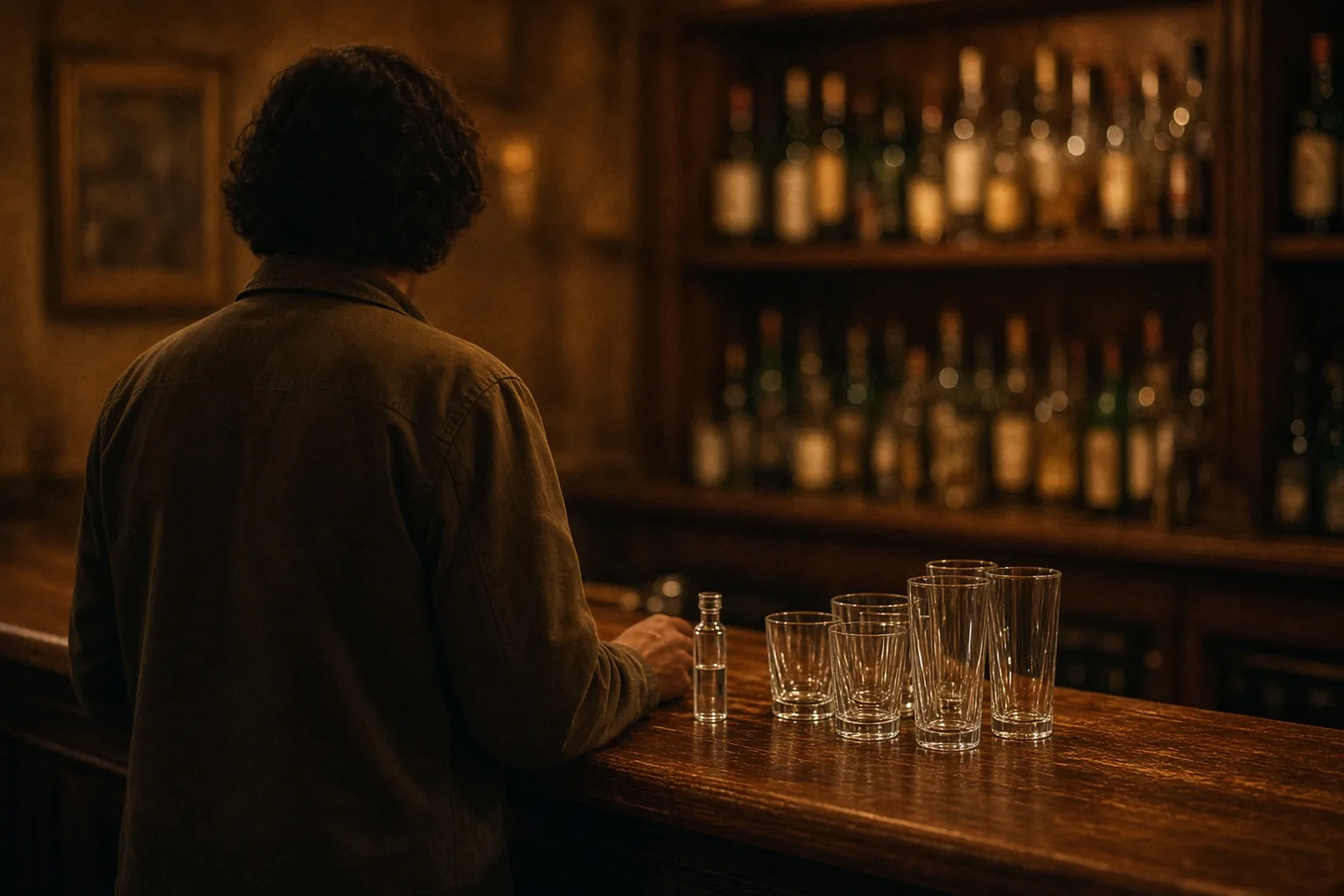
A dram shop claim asks a court to hold a bar or restaurant liable for what an intoxicated patron did after leaving. The crash is usually undisputed. The contested fact is how the patron looked and acted at the moment of the last sale, hours earlier, and it is often proved through a toxicologist. New York's highest court rejected one such opinion in 1997 and upheld a verdict built on another in 1998.
Which experts does a dram shop case need?
A toxicologist or forensic pathologist on the patron's blood alcohol level and its outward signs, a witness on alcohol service practices and staff training, and the usual personal injury experts on the crash and the damages.
The first group addresses the patron. A toxicologist, pharmacologist or forensic pathologist starts with a measured blood alcohol content, taken at a hospital, by police or at autopsy, and works back to the hours of service. The same witness is asked which outward signs a person at that level would show.
The second group addresses the seller: what the staff were trained to observe, whether the establishment had a policy on cutting off service, and whether the server completed a state-approved training course. In Texas that last fact can decide the employer's liability, as described below.
The third group is the same as in any road injury case: accident reconstruction for the mechanics of the collision, physicians for causation and prognosis, and an economist or vocational expert for the losses.
What does the plaintiff have to prove about the patron's condition?
It depends on the state. New York requires a sale to a visibly intoxicated person. Texas requires that obvious intoxication and clear danger were apparent to the provider. Florida limits liability to minors and known habitual drinkers.
New York General Obligations Law 11-101(1) gives a right of action to any person injured "by any intoxicated person, or by reason of the intoxication of any person" against anyone who "by unlawful selling to or unlawfully assisting in procuring liquor for such intoxicated person" caused or contributed to the intoxication. The plaintiff may recover "actual and exemplary damages."
What makes a sale unlawful is found in Alcoholic Beverage Control Law 65. No person shall sell, deliver or give away alcoholic beverages to a person "actually or apparently" under twenty-one, to a "visibly intoxicated person," or to a habitual drunkard known to be such to the person dispensing.
Texas uses different words. Under Alcoholic Beverage Code 2.02(b) a statutory cause of action exists upon proof that "at the time the provision occurred it was apparent to the provider" that the recipient "was obviously intoxicated to the extent that he presented a clear danger to himself and others," and that the intoxication was a proximate cause of the damages.
Florida starts with immunity. Section 768.125 states that a person who sells or furnishes alcoholic beverages to a person of lawful drinking age "shall not thereby become liable for injury or damage caused by or resulting from the intoxication of such person." Two exceptions follow: a person who "willfully and unlawfully" sells or furnishes alcohol to someone not of lawful drinking age, and a person who "knowingly serves a person habitually addicted to the use of any or all alcoholic beverages."
Is a high blood alcohol level enough to prove visible intoxication?
Generally not. In Romano v. Stanley (1997) the New York Court of Appeals held that circumstantial evidence may prove visible intoxication, but a high blood alcohol count alone may not support an inference about how the person looked.
Romano v. Stanley, 90 N.Y.2d 444, was decided July 1, 1997, in an opinion by Judge Titone for a unanimous court. On January 18, 1991, at about 10:30 p.m. in the Town of Colonie, a car driven by Nancy Stanley crossed the center line and struck the car of Marie Romano. Romano was injured and Stanley was killed. Toxicology showed a blood alcohol level of 0.26% and a urine alcohol level of 0.33% at Stanley's death.
Stanley had been drinking that afternoon and evening at three establishments. Witnesses at the first two saw no signs of intoxication. An acquaintance at the third, where she arrived around 9:15 to 9:30 p.m., thought she appeared intoxicated. Romano sued Stanley's estate and the three bars. The first two moved for summary judgment.
The court made two points. The statutory word "visibly" does not create a rigid requirement that this element "be established by direct proof," so circumstantial evidence can suffice. But the effects of alcohol differ greatly between individuals, because tolerance varies, and a high blood alcohol count "may not provide a sound basis" for an inference about a person's appearance or demeanor. The statute aims at the seller who had notice of the patron's condition.
Why did the expert affidavit fail in Romano?
The affidavit stated conclusions without a scientific foundation. It did not cite the expert's professional knowledge, studies or literature linking the estimated blood alcohol level to the specific signs he said the driver must have shown.
The plaintiff relied on Dr. Thomas Oram, a forensic pathologist and the Schenectady County medical examiner. His affidavit estimated that Stanley's blood alcohol level was about 0.15% or more four to five hours before the crash. He concluded that at the first two establishments she must have shown gaze nystagmus, glassy eyes, motor impairment and difficulty controlling her speech, signs that a trained bartender "could and should" have recognized.
The Court of Appeals called the expert's ultimate conclusions "both speculative and conclusory." The underlying facts, Stanley's blood and urine alcohol counts and her physical characteristics, were set forth in detail. What was missing was the bridge. The affidavit, the court wrote, "was devoid of any reference to a foundational scientific basis for its conclusions." The court also observed that individuals in a forensic pathologist's field "are not ordinarily called upon to make judgments about the apparent manifestations of intoxication in live individuals."
The court reversed and granted summary judgment to the two establishments. It noted that the two defendants had not questioned the reliability or scientific accuracy of the expert's relation back estimate, the calculation of an earlier blood alcohol level from a later test, and it did not rule on that point.
When did the same kind of testimony support a verdict?
In Adamy v. Ziriakus (1998), where the expert testified at trial, was cross-examined on his foundation, and his estimate stood beside police observations of the driver shortly after he left the restaurant.
Adamy v. Ziriakus, 92 N.Y.2d 396, was decided November 18, 1998, in an opinion by Chief Judge Kaye. Lieutenant Joseph Adamy, a Town of Amherst police officer, died on January 27, 1990, when his cruiser collided with a pickup driven by Mark Ziriakus, who had left a T.G.I. Friday's restaurant shortly before. The jury awarded $5,505,474.96 and apportioned fault 40% to the driver, 30% to the restaurant and 30% to the decedent.
No one testified to seeing signs of intoxication inside the restaurant. The evidence was that Ziriakus arrived at 10:30 p.m. having had nothing to drink earlier, drank for about two and a half hours, and had a blood alcohol content of 0.17 at 3:00 a.m. The plaintiff's expert, forensic pathologist Dr. Michael Baden, testified that this meant 12 drinks and a level of 0.20 when Ziriakus left, and that at that level he would have been visibly intoxicated when last served.
The Court of Appeals distinguished Romano on three grounds. There the affidavit had been the sole evidence offered to defeat summary judgment; here the expert testified at trial. The restaurant did not object to his qualifications. And the court wrote that at trial the technical or scientific basis for a testifying expert's conclusions "ordinarily need not be adduced as part of the proponent's direct case": the points the restaurant raised against him "affect the weight to be accorded his views, not their admissibility."
The opinion also relied on what police saw at the scene: alcohol on the driver's breath, glassy and bloodshot eyes, slurred speech, swaying or staggering. Because those observations came a short time after he left, the court held that it was not irrational for the jury to find that he was visibly intoxicated when served. The restaurant had not called the bartender on duty that night, who was still in its employ at the time of trial, and the jury was permitted to draw the strongest inferences against the restaurant that the opposing evidence permitted.
How do opposing experts differ on the blood alcohol level at the time of service?
They start with the same test result and reach different numbers. In Adamy the plaintiff's expert put the driver at 0.20 when he left; the restaurant's expert put him between 0.08 and 0.12. The jury chose.
The measured value in Adamy was 0.17 at 3:00 a.m. Dr. Baden's estimate for the time of departure was 0.20. The restaurant's expert, Dr. Francis Michael Gengo, testified that the level was 0.08 to 0.12 at that time. The Court of Appeals treated the conflict as a question of credibility for the jury.
Both estimates rested on facts in the record. In Romano the affidavit recited the test results and the driver's physical characteristics. In Adamy the record gave the time of arrival, the absence of earlier drinking, the length of the stay and the time of the test. Each fact the expert assumes has to be found in the record, because the opposing expert will work with the same test result and different assumptions.
A defense expert has a second line. Even if the number is accepted, Romano holds that it does not by itself establish what a server could see, because tolerance varies.
What does Texas require, and what is the safe harbor?
Proof that obvious intoxication and clear danger were apparent to the provider at the time of service. An employer is shielded if it required commission-approved seller training, the employee attended it, and the employer did not encourage violations.
The Texas statute is the only route against a provider for serving a person 18 or older. Section 2.03(c) of the Alcoholic Beverage Code states: "This chapter provides the exclusive cause of action for providing an alcoholic beverage to a person 18 years of age or older." Section 2.03(a) adds that the liability of providers under the chapter is in lieu of common law or other statutory duties.
The standard in 2.02(b)(1) has two parts that an expert addresses separately: that the recipient "was obviously intoxicated to the extent that he presented a clear danger to himself and others," and that this was "apparent to the provider." A toxicologist speaks to the first. Receipts, video and the testimony of staff and companions speak to the second.
Section 106.14(a) then gives the employer a defense. The actions of an employee "shall not be attributable to the employer" if three conditions are met: "the employer requires its employees to attend a commission-approved seller training program," "the employee has actually attended such a training program," and "the employer has not directly or indirectly encouraged the employee to violate such law." An expert on alcohol service practices reviews training records, certificates and the establishment's written and unwritten policies against those three conditions.
Why do most Florida claims against bars fail at the outset?
Because section 768.125 bars liability for serving an adult unless the seller knowingly served a person habitually addicted to alcohol. The other exception covers willful and unlawful sales to persons under the lawful drinking age.
The Florida section is one sentence, enacted in 1980. Its general rule protects a person who sells or furnishes alcohol "to a person of lawful drinking age." A plaintiff injured by an adult patron therefore has to fit the second exception: the seller "knowingly serves a person habitually addicted to the use of any or all alcoholic beverages."
The questions for experts change accordingly. Visible intoxication on the night of the crash is not the statutory test. The evidence concerns the patron's history of drinking and what the seller knew of it.
For a patron under the lawful drinking age the statute requires a sale that was willful and unlawful.
Can the establishment's share of the damages be reduced?
Yes, in New York. In Adamy the jury assigned 30% of the fault to the restaurant, 40% to the driver and 30% to the deceased officer, and the verdict was reduced by the decedent's share.
The decedent in Adamy had been speeding. The Court of Appeals upheld the reduction of the verdict by his 30% share, reasoning that his fault had nothing to do with the service of alcohol and that the reduction applied the comparative fault statute without undermining the Dram Shop Act.
The point matters for expert selection on both sides. The defense needs an accident reconstruction expert to establish the injured person's speed, position and reaction. The plaintiff needs one to answer that evidence. The toxicologist's testimony on the patron's impairment does not resolve how the collision itself happened.
How do federal courts test the toxicologist's opinion?
Under Rule 702 the proponent must show that the testimony rests on sufficient facts or data and reliable principles and methods, reliably applied to the case. The written report must state the basis for every opinion.
Dram shop claims arise under state law but reach federal court in diversity cases. There the admissibility of the expert is governed by Federal Rule of Evidence 702. The proponent must show the court that it is more likely than not that the expert's knowledge will help the trier of fact, that the testimony is based on sufficient facts or data, that it is the product of reliable principles and methods, and that the opinion applies them reliably to the facts of the case.
The defect that the New York court found in Romano, a conclusion about outward signs with no stated basis connecting it to the data, is the subject of the same requirements in Rule 702: sufficient facts or data, reliable principles and methods, and a reliable application of them. A report under Rule 26(a)(2)(B) of the Federal Rules of Civil Procedure must contain "a complete statement of all opinions the witness will express and the basis and reasons for them," the facts or data considered, the exhibits, the witness's qualifications with publications of the previous 10 years, cases in which the witness testified in the previous 4 years, and the compensation.
Counsel can screen a candidate on four points: training in pharmacology or toxicology as distinct from pathology alone, published or cited literature on the relation between alcohol level and observable signs, prior rulings that limited the candidate's testimony, and ties to the parties or their insurers.
How does IAE find an expert for a dram shop case?
In the request choose the case type Personal injury and name the field: toxicology, alcohol service practices or accident reconstruction. Within 5 business days IAE sends 2-3 candidates with CVs, hourly rates and lists of prior testimony.
The IAE personal injury expert witness page covers car and truck crashes, falls, workplace injuries and wrongful death and lists eight personal injury specialties in three groups: accident mechanics, medicine, and damages and falls. IAE chooses the specialty by the question the firm needs to prove, so the request should say whether the open question is the patron's condition at the time of service, the seller's training and policies, or the collision. The page notes that state courts apply their own rules on expert admissibility, so the request names the state and the court.
The request form asks for the field of expertise, the case type, the state and court, the firm's side, the expert disclosure deadline, the parties and their counsel for the conflict check, and a short description of the case. For a dram shop case the description can give the measured blood alcohol level, the time of the test and the times of service. The form asks not to include privileged or sealed information.
Within 1 business day IAE replies whether it can search by the deadline. The search is paid in advance, and candidate names and CVs come after payment. Each candidate confirms in writing that he or she has no ties to the parties or their counsel. Within 5 business days the firm receives 2-3 candidates with CVs, hourly rates, testimony in the last 4 years and publications in the last 10 years. If no candidate fits, the second search is free; if IAE finds no candidates, it refunds the fee.
IAE is not a law firm, and case strategy and the decision to retain an expert stay with the attorney.
Sources
- New York General Obligations Law § 11-101, Compensation for injury caused by the illegal sale of intoxicating liquor (New York State Senate)
- New York Alcoholic Beverage Control Law § 65, Prohibited sales (New York State Senate)
- Romano v. Stanley, 90 N.Y.2d 444 (N.Y. 1997) (LII, Cornell Law School)
- Adamy v. Ziriakus, 92 N.Y.2d 396 (N.Y. 1998) (LII, Cornell Law School)
- Texas Alcoholic Beverage Code, chapter 2, sections 2.01 to 2.03 (Texas Legislature)
- Texas Alcoholic Beverage Code, chapter 106, section 106.14 (Texas Legislature)
- Florida Statutes § 768.125, Liability for injury or damage resulting from intoxication (Florida Senate, 2025)
- Federal Rules of Evidence, Rule 702 (LII, Cornell Law School)
- Federal Rules of Civil Procedure, Rule 26 (LII, Cornell Law School)
Read also
All articles

Construction accident expert witness: which safety rules does the expert apply, and when do they decide the case?
A fall from a scaffold, a collapsed trench or a ladder that kicked out ends up in court as a question about safety rules. The construction safety Sergei Voronin
Traumatic brain injury expert witness: what can a neuropsychologist and brain imaging prove in court?
A mild traumatic brain injury often leaves nothing a standard scan can show, so the case turns on experts: the treating physiciansSergei Voronin
Negligent security expert witness: what does the security expert assess, and when do courts admit the opinion?
A negligent security case asks whether a property owner should have foreseen a crime and taken measures that would have prevented it. The securitySergei VoroninExpert witnesses
Need an expert witness for your case?
Describe the question, the case type and the court. Within 5 business days you receive 2-3 candidates with CVs, hourly rates and lists of prior testimony.
