
Expert witnesses
Traumatic brain injury expert witness: what can a neuropsychologist and brain imaging prove in court?
A mild traumatic brain injury often leaves nothing a standard scan can show, so the case turns on experts: the treating physicians, a neuropsychologist who tests memory, attention and processing, and sometimes a neuroradiologist who reads advanced imaging. Courts have admitted a psychologist's causation opinion, admitted diffusion tensor imaging, and excluded the same imaging when it was the only basis for causation. What decides each ruling is the basis of the opinion.
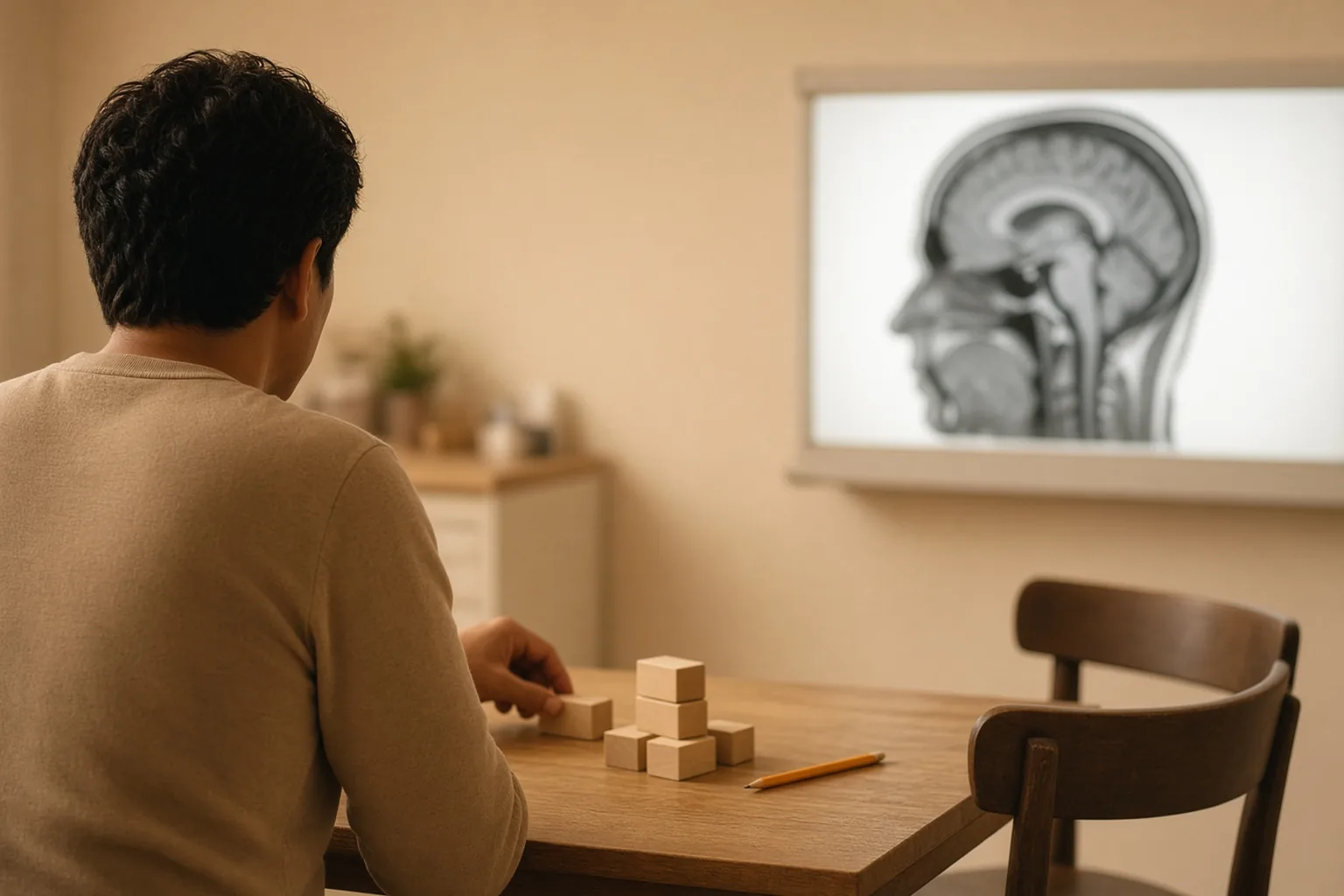
What is a mild traumatic brain injury?
An injury caused by a bump, blow or jolt to the head, or by a hit to the body that moves the head and brain quickly back and forth. CDC states a CT scan is not needed to identify it.
The Centers for Disease Control and Prevention describe mild TBI and concussion together. They are caused by a bump, blow or jolt to the head, or by a hit to the body that causes the head and brain to move quickly back and forth. The motion can make the brain bounce or twist in the skull, cause chemical changes and stretch or damage brain cells. Most traumatic brain injuries each year are mild.
CDC states that a brain scan such as a CT is not needed to spot a mild TBI or concussion, although it may be used for patients at risk of bleeding on the brain. It also states that a person may have a mild TBI or concussion even if the injury does not show up on neuropsychological tests. The brain changes can affect how a person thinks, learns, feels, acts and sleeps, and repeated mild TBIs may lead to longer recovery and long-term problems with concentration, memory, headache or balance.
For litigation this means that a normal CT does not end a brain injury claim, and that an abnormal test result does not prove one. The proof is built from the history of the injury, the clinical findings, testing and, in some cases, advanced imaging, and each piece comes through an expert.
Which experts does a brain injury case need?
Usually a treating or retained physician for diagnosis and treatment, a neuropsychologist for cognitive testing, sometimes a neuroradiologist for advanced imaging, and damages experts for care, earning capacity and economic loss.
The physician, often a neurologist, addresses diagnosis, treatment and prognosis. The neuropsychologist administers standardized tests of memory, attention, processing speed, language and executive function and interprets the pattern of results against the person's history. Where advanced imaging is used, a neuroradiologist reads it and explains what it can and cannot show.
Damages follow from the deficits. In Hogland v. Town & Country Grocer of Fredericktown Missouri, Inc., No. 3:14-cv-00273, the Eastern District of Arkansas ruled on June 22, 2015, on challenges to three experts in a brain injury case: a neuropsychologist, a vocational expert and life care planner, and an economist. Each opinion was tested separately, and parts of each were admitted while other parts were excluded.
The experts depend on one another. A life care plan that prices therapy the neuropsychologist did not recommend, or an economist's projection based on a career theory the court excludes, falls with its foundation. Hogland excluded the economist's lost earnings calculation that rested on the vocational expert's excluded career mobility theory.
Can a neuropsychologist testify about what caused the brain injury?
Courts have allowed it. In 2012 the Indiana Supreme Court held that a psychologist is not barred from giving a causation opinion on a brain injury if qualified under Rule 702 and if the opinion rests on reliable methods.
In the Bennett case, 960 N.E.2d 782, No. 20S03-1105-CV-293, decided January 31, 2012, Henry Bennett, driving a 42,000-pound roll-off container truck, rear-ended the plaintiff's van in May 2004. At trial a psychologist, Dr. Sheridan McCabe, testified that the plaintiff experienced a traumatic brain injury in the accident, over the objection that he was not qualified to render an opinion on a medical diagnosis of a brain injury. The jury returned a $200,000 verdict for the plaintiff. The Court of Appeals reversed and ordered a new trial, and the Supreme Court granted transfer.
Justice Sullivan wrote for the court that under Indiana Evidence Rule 702 a witness may qualify by knowledge, skill, experience, training or education, that only one of these is necessary, and that neither the rule's criteria nor its purpose supports a per se rule banning psychologists' testimony on the cause of a brain injury. The court wrote that the Court of Appeals had imposed more stringent requirements on Dr. McCabe than Rule 702 requires. The opinion rested on the undisputed rear-end collision and on reliable testing methods. Dr. McCabe did not call himself a neuropsychologist; the court found that his practice related to neuropsychology and that the lack of neuropsychologist credentials went to weight, not admissibility. The judgment for the plaintiff was affirmed.
The Eastern District of Arkansas reached a similar result in Hogland. Magistrate Judge J. Thomas Ray held that the neuropsychologist, Dr. Dan Johnson, was qualified to opine on a causal relationship between the accident and the plaintiff's current neurocognitive and psychological difficulties.
What limits do courts put on a neuropsychologist's recommendations?
They have to state what is probable, not what is possible. In Hogland a recommendation that the plaintiff could benefit from speech therapy was excluded as speculative, while recommendations stated as likely benefits were admitted.
Dr. Johnson's report in Hogland recommended several kinds of future care. The court admitted his recommendation of cognitive behavioral therapy, which he described as a likely benefit, because that met the standard that an expert's opinion must state professional judgment about the probable result rather than a possible one. It excluded his recommendation of speech therapy, stated as something the plaintiff could benefit from, as speculative.
The court also admitted his recommendation of psychotropic medication monitoring, relying on the Arkansas statute that defines the practice of psychology, and his recommendations of a vocational rehabilitation assessment and in-home assistance, holding that weaknesses there went to weight and that cross-examination was the remedy. It wrote that gaps in an expert's qualifications or knowledge generally go to the weight of the testimony, not its admissibility, and that Rule 702 favors admissibility.
The excluded recommendation carried into the damages case. The court also struck speech language therapy from the life care plan and excluded the lost earnings figure built on an excluded vocational theory. A brain injury expert's words, could versus likely, decide which costs reach the jury.
Is diffusion tensor imaging admissible to show a brain injury?
Federal courts have admitted it. In Ruppel v. Kucanin (2011) a court admitted DTI-based diagnosis and causation testimony; in Gregg v. Covert (2021) a court admitted DTI findings of abnormality but excluded a causation opinion based on DTI alone.
In Ruppel v. Kucanin, No. 3:08 CV 591, Judge James T. Moody of the Northern District of Indiana denied a motion on June 20, 2011, to exclude Dr. Randall Benson's diagnosis of diffuse axonal injury, which relied on diffusion tensor imaging and fractional anisotropy measured against comparison scans. The court cited peer-reviewed studies on DTI for detecting traumatic brain injury, clinical use at some hospitals, FDA marketing approval for a DTI software option and decisions of other courts admitting DTI. Benson cited peer-reviewed articles on DTI and mild TBI and presented evidence of test-retest reliability, and he normalized for age and considered other causes.
The court in Ruppel emphasized that DTI was not the only basis for the diagnosis. Benson also relied on the patient's history, the neurologic examination, neuropsychological results and other imaging. His wording that the findings suggested an injury did not bar admission: the court treated his degree of certainty as a question for the jury.
Gregg v. Covert, No. 4:20-cv-00871, shows the other side of the line. On November 4, 2021, Judge Amos L. Mazzant III of the Eastern District of Texas admitted a neuroradiologist's testimony about brain abnormalities identified by DTI, noting that DTI has been peer reviewed and published and that criticisms about age correction, scanners and control data could be met with cross-examination and contrary evidence. He excluded the causation opinion. The DTI was the only basis for it, the scan was done about a year and a half after the accident, the expert did nothing to rule out other causes, and he conceded that DTI cannot provide causation information.
How do courts treat SPECT and similar functional imaging?
With limits on wording. In Blotcher v. Stewart (2014) the court allowed testimony that SPECT images were consistent with a traumatic brain injury but barred any statement or implication of a probable diagnosis from the scan.
In Blotcher v. Stewart, No. 12-cv-00484, Judge R. Brooke Jackson of the District of Colorado ruled on May 30, 2014, on a motion to preclude the brain SPECT opinions of Dr. S. Gregory Hipskind and the part of neuropsychologist Dr. Dennis A. Helffenstein's supplemental report that relied on them. The court found Hipskind qualified and SPECT reliable for detecting abnormalities and relevant to the jury.
The court drew the line at diagnosis. Hipskind's phrase most consistent with was, in substance, a diagnosis. The Society of Nuclear Medicine guidelines caution against implying cause and effect and call for differential diagnosis, and Hipskind had obtained minimal patient history, so the scan was functioning as a standalone diagnostic tool. He could testify that the images were consistent with traumatic brain injury but could not express or imply a probable diagnosis. Criticisms of the 64-person control group and of the error rate went to weight.
The ruling reached the neuropsychologist too. Helffenstein was told not to repeat Hipskind's wording about what the images were most consistent with and not to attribute a diagnosis to Hipskind. Quoting the advisory committee note, the court wrote that the rejection of expert testimony is the exception rather than the rule, and used limits on wording instead of exclusion.
Can the defense have the plaintiff examined by its own neuropsychologist?
Yes, on court order. Rule 35 lets the court order a party whose mental condition is in controversy to submit to an examination by a suitably licensed or certified examiner, on motion for good cause.
Rule 35(a)(1) of the Federal Rules of Civil Procedure provides that the court where the action is pending may order a party whose mental or physical condition is in controversy to submit to a physical or mental examination by a suitably licensed or certified examiner. Under Rule 35(a)(2) the order may be made only on motion for good cause and on notice to all parties and the person to be examined, and it must specify the time, place, manner, conditions and scope of the examination and the person who will perform it.
Under Rule 35(b) the party examined can request the examiner's written report, which must set out in detail the examiner's findings, including diagnoses, conclusions and the results of any tests. A party who requests and obtains the report, or deposes the examiner, waives any privilege it may have concerning testimony about all examinations of the same condition.
In a brain injury case the defense examination is often a full neuropsychological battery. The scope and conditions in the order, such as which tests may be given and how long the session lasts, are negotiated or set by the court before it takes place.
What should counsel give the brain injury expert?
The records that establish the injury and the baseline: emergency and treatment records, the imaging itself and its reports, prior school, work and medical records, and the other side's testing data where available.
The injury record comes first: emergency medical services and emergency department records describing the person's condition at the scene and on arrival, follow-up neurology and therapy notes, and every imaging study. For advanced imaging, the expert needs the image data as well as the report, because the analysis in cases such as Ruppel and Gregg turned on how the scans were processed and compared.
The baseline is the second part. Neuropsychological results are read against what the person could do before the injury. School transcripts, standardized test scores, work evaluations and prior medical records show that baseline, and prior injuries or conditions that might explain the results.
The mechanism is the third. The collision or fall itself is evidence of causation, as the undisputed rear-end collision was in the Indiana case. Crash data and the accident reconstruction, where there is one, describe the forces involved, and the brain injury expert reads them with the treating physicians' findings.
How does Rule 702 apply to brain injury experts?
The proponent must show that the opinion rests on sufficient facts or data and on reliable methods reliably applied. The cases admit opinions that combine history, examination, testing and imaging and limit those that rest on a single test.
Federal Rule of Evidence 702 requires the proponent to show the court that it is more likely than not that the expert's knowledge will help the trier of fact, that the testimony is based on sufficient facts or data, that it is the product of reliable principles and methods, and that the opinion applies those methods reliably to the facts of the case.
The cases above apply those conditions in a consistent way. Ruppel admitted a DTI-based diagnosis that also rested on history, examination and testing. Gregg excluded a causation opinion that rested on DTI alone. Blotcher allowed SPECT findings but not a diagnosis drawn from the scan without history and differential diagnosis. Hogland admitted recommendations stated as likely and excluded one stated as possible.
The committee note to the 2023 amendment of Rule 702 says that some challenges go to weight rather than admissibility once the court finds the rule's requirements met. In each of these cases the court sent the remaining disputes, such as control groups, scanners and the expert's degree of certainty, to cross-examination.
How does IAE find a brain injury expert for a personal injury case?
In the request choose the case type Personal injury and name the specialty in the field: neuropsychology, neurology or neuroradiology. Within 5 business days IAE sends 2-3 candidates with CVs, hourly rates and lists of prior testimony.
The IAE personal injury expert witness page covers car and truck crashes, falls, workplace injuries and wrongful death and lists eight personal injury specialties in three groups. Its medicine group names orthopedic surgeons, neurologists and neurosurgeons for cause of injury, treatment and prognosis, and life care plans built on physicians' opinions; its damages group names vocational assessment and economists on lost earnings.
The request form asks for the field of expertise, the case type, the state and court, the firm's side, the expert disclosure deadline, the parties and their counsel for the conflict check, and a short description of the case. For a brain injury claim the description can say whether advanced imaging has been done and whether a Rule 35 examination is expected. The form asks not to include privileged or sealed information.
Within 1 business day IAE replies whether it can search by the deadline. Each candidate confirms in writing that he or she has no ties to the parties or their counsel. Within 5 business days the firm receives 2-3 candidates with CVs, hourly rates, testimony in the last 4 years and publications in the last 10 years. The search costs $2,000 per case, paid in advance, and candidate names and CVs come after payment. If no candidate fits, the second search is free; if IAE finds no candidates, it refunds the fee.
The expert bills the firm directly or through IAE under the agency option at +$100 per hour. IAE is not a law firm, and case strategy and the decision to retain an expert stay with the attorney.
Sources
- Centers for Disease Control and Prevention, About Mild TBI and Concussion
- Indiana Supreme Court, Bennett, 960 N.E.2d 782, No. 20S03-1105-CV-293 (Jan. 31, 2012), full opinion (Hall Approved)
- Hogland v. Town & Country Grocer of Fredericktown Missouri, Inc., No. 3:14-cv-00273, Doc. 50 (E.D. Ark. June 22, 2015) (Justia)
- Ruppel v. Kucanin, No. 3:08 CV 591, Doc. 65 (N.D. Ind. June 20, 2011) (Justia)
- Gregg v. Covert, No. 4:20-cv-00871, Doc. 25 (E.D. Tex. Nov. 4, 2021) (Justia)
- Blotcher v. Stewart, No. 12-cv-00484, Doc. 60 (D. Colo. May 30, 2014) (Justia)
- Federal Rules of Civil Procedure, Rule 35 (LII, Cornell Law School)
- Federal Rules of Evidence, Rule 702, with committee notes (LII, Cornell Law School)
Read also
All articles

Dram shop expert witness: what can a toxicologist prove about visible intoxication, and what do courts require of the opinion?
A dram shop claim asks a court to hold a bar or restaurant liable for what an intoxicated patron did after leaving. The crash is usually undisputed Sergei Voronin

Construction accident expert witness: which safety rules does the expert apply, and when do they decide the case?
A fall from a scaffold, a collapsed trench or a ladder that kicked out ends up in court as a question about safety rules. The construction safetySergei Voronin
Negligent security expert witness: what does the security expert assess, and when do courts admit the opinion?
A negligent security case asks whether a property owner should have foreseen a crime and taken measures that would have prevented it. The securitySergei VoroninExpert witnesses
Need an expert witness for your case?
Describe the question, the case type and the court. Within 5 business days you receive 2-3 candidates with CVs, hourly rates and lists of prior testimony.
