
Examinations
Goods damaged in a warehouse: who is liable, and what does the goods expert establish?
Goods go into a warehouse sound and come out wet, crushed, spoiled or short. Under UCC 7-204 the warehouse answers for damage caused by its failure to use reasonable care, and its receipt usually caps what it pays. In I.C.C. Metals v. Municipal Warehouse Co. (N.Y. 1980) a $50 cap fell away and the owner recovered the stipulated $100,000 because the warehouse could not explain the loss of 845 pounds of indium. A goods expert supplies the facts in between.
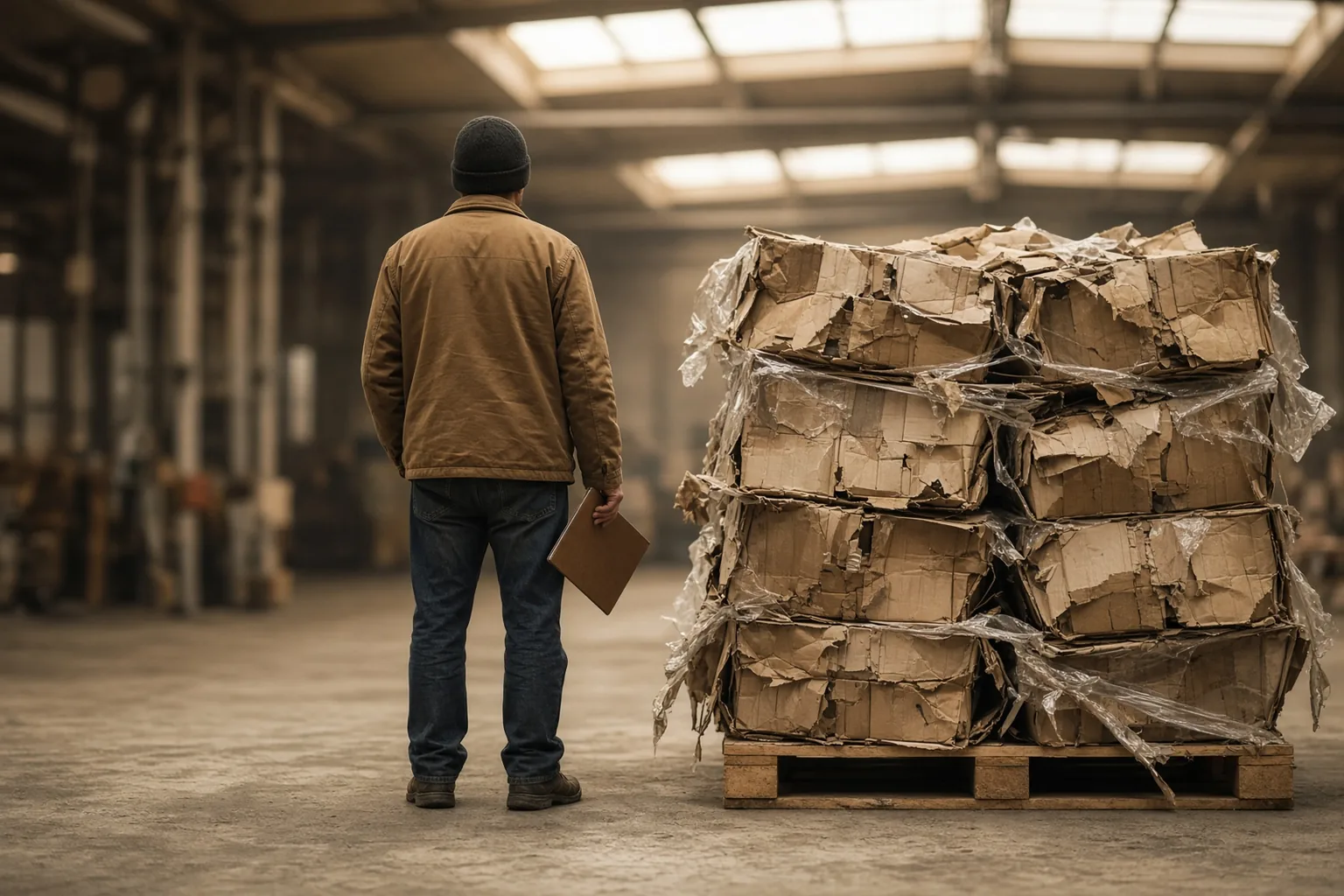
Who is liable when goods are damaged in a warehouse?
The warehouse, if the damage was caused by its failure to use the care a reasonably careful person would use in similar circumstances. It is not an insurer and does not answer for damage such care could not avoid.
Section 7-204(a) of the Uniform Commercial Code, enacted in the states with local variations, makes a warehouse liable for damages for loss of or injury to the goods caused by its failure to exercise the care that a reasonably careful person would exercise under similar circumstances. The same subsection adds that, unless otherwise agreed, the warehouse is not liable for damages that could not have been avoided by the exercise of that care.
New York's Appellate Division stated both halves of the rule in Northbrook Property & Casualty Insurance Co. v. D.J.L. Warehouse Corp., 160 A.D.2d 917 (2d Dep't Apr. 23, 1990). Absent an agreement to the contrary, "the owner of a warehouse is not an insurer of goods." As a bailee it must "exercise reasonable care so as to prevent loss or damage to stored goods." The court affirmed summary judgment for the warehouse.
Other parties can stand behind the same damaged pallet. A carrier may have delivered the goods already wet or crushed. The seller may have shipped goods with a defect that only showed during storage. The owner may have packed the goods in a way that could not survive stacking, or failed to tell the warehouse that they needed a temperature range. Which of these explanations fits the physical evidence is a question of fact, and it is the question the goods expert answers.
Who has to prove what happened to the goods?
The owner proves delivery to the warehouse, a proper demand and a failure to return the goods as delivered. The warehouse must then come forward with an explanation backed by evidence, because it had exclusive possession.
I.C.C. Metals, Inc. v. Municipal Warehouse Co., 50 N.Y.2d 657 (July 1, 1980), is the New York Court of Appeals decision on the point. A metals trader delivered three lots of indium, about 845 pounds in aggregate and stipulated to be worth $100,000, to a commercial warehouse in the autumn of 1974. The warehouse billed for storage for almost two years. In May 1976 the owner asked for one lot, and the warehouse said it could not locate any of the metal.
Judge Gabrielli wrote that delivery, a proper demand and a failure to return make out a prima facie case, and that the warehouse then "must come forward and explain the circumstances of the loss." The burden of proof does not shift, and the warehouse does not have to prove that it acted properly. If its explanation is supported well enough to raise a question of fact and the fact-finder accepts it, the owner must prove fault. If the explanation is inadequate, the owner recovers without more.
The warehouse in I.C.C. Metals said the indium had been stolen. The court found the evidence short: "Defendant proved only that theft was possible, and presented no proof of an actual theft." An explanation of damage is tested the same way. A statement that a roof may have leaked or that a pallet may have arrived weak is a possibility. A dated roof repair invoice, a moisture reading or an inbound inspection note is proof.
The statute frames the warehouse's side as an excuse. Under UCC 7-403(a) a bailee must deliver the goods to the person entitled under a document of title unless it establishes one of the listed grounds, and the second is "damage to or delay, loss, or destruction of the goods for which the bailee is not liable."
Can the warehouse limit what it pays in the receipt?
Yes. Section 7-204(b) permits a term in the warehouse receipt or storage agreement that limits the amount of liability for loss or damage. The cap does not apply to conversion of the goods to the warehouse's own use.
Under subsection (b) damages may be limited by a term limiting the amount of liability in case of loss or damage, beyond which the warehouse is not liable. The bailor has a way out: on a request made in a record at the time of signing the storage agreement or within a reasonable time after receipt of the warehouse receipt, the warehouse's liability may be increased, and the warehouse may then charge increased rates based on the increased valuation of the goods.
Courts enforce such caps against negligence claims. In Feldman v. Maffucci Storage Corp., 33 A.D.3d 337 (1st Dep't Oct. 3, 2006), household property moved into a warehouse was destroyed in a fire there several months later. The Appellate Division stated the rule that a warehouse may limit its liability for damage to stored goods even where the damage is attributable to its negligence, so long as the bailor is given the opportunity to increase the limit by paying a higher storage fee, and cited UCC 7-204(2) and I.C.C. Metals. The bill of lading and the invoice showed that the owners had chosen $20,000 of coverage for transport and storage, and the court affirmed the order that capped the warehouse's liability at that amount.
The cap does not survive conversion. In I.C.C. Metals the receipts limited liability to $50 unless the owner asked in writing for an increase, and the owner had neither asked nor disclosed the value of the metal. Because the warehouse failed to return the goods and gave no adequate explanation, the Court of Appeals treated the loss as a conversion, held that the limitation did not apply and let the owner recover the actual value of the indium.
For the owner the practical points are in the paperwork. What is the cap per unit or per pound? Was a higher valuation ever declared? Does the storage agreement set a time for claims? Under subsection (c) the receipt or storage agreement may contain reasonable provisions as to the time and manner of presenting claims and commencing actions based on the bailment, so the claim period written in the document is the first date to check.
What does the goods expert establish in a storage damage dispute?
The condition of the goods at receipt and at release, how and when the damage occurred, whether storage conditions or the goods and their packaging caused it, and how much value was lost.
The first task is the two end points. The expert compares the inbound documents, such as the receiving report, the count and the notes on visible condition, with the condition found at release, and lists every difference with photographs and measurements. Damage that the inbound notes already record points away from the warehouse. Damage that appears on goods received clean points at the storage period.
The second task is the mechanism. Water marks, mold, corrosion, heat distortion, crushing and pest damage each leave a pattern, and the pattern can be matched to a place and a period. Staining that follows the outline of a pallet stored under a known leak, or corrosion limited to the bottom tier on a floor that flooded, ties the damage to a location inside the building. Temperature and humidity logs are read against the range the goods required under the contract, the label or the product specification.
The third task is to separate storage conditions out of the goods' own properties. Section 7-204(a) asks what a reasonably careful person would have done under similar circumstances, so the expert states what the goods needed and whether the warehouse had been told. Packaging that fails under a normal stacking load, a product that degrades within its stated shelf life at room temperature and a latent manufacturing defect are explanations that do not involve the warehouse's care.
The fourth task is value. The expert sorts the lot into sound, repairable and unusable units, states the cost and time of repair or reconditioning, and sets the value of the damaged goods at the time and place of release. Testing that is likely to change the goods is done after notice to the other side and after the condition has been documented.
Which records and inspections decide a warehouse damage claim?
The warehouse receipt and storage agreement, inbound and release documents, temperature and humidity logs, inventory movement records and incident reports, together with a joint inspection of the goods and the storage location.
The owner's first steps are simple and time-bound. The goods are inspected at release, exceptions are written on the release document, and the damaged units are set aside and photographed before anything is reworked or sold. The claim is presented in the manner and within the time that the receipt or storage agreement states.
In litigation the records come through discovery. Rule 34(a)(1)(B) of the Federal Rules of Civil Procedure covers designated tangible things, and Rule 34(a)(2) lets a party request entry onto land or other property possessed or controlled by the responding party. The response is due in writing within 30 days after being served. A request for entry lets the owner's expert see the racking, the roof, the dock doors and the place where the lot stood, and a request for documents reaches the logs and the incident reports.
A retained expert's report under Rule 26(a)(2)(B) contains a complete statement of all opinions with the basis and reasons for them, the facts or data considered and the exhibits. Under Rule 702 of the Federal Rules of Evidence the proponent must show the court that it is more likely than not that the testimony is based on sufficient facts or data and is the product of reliable principles and methods reliably applied to the facts of the case. For an opinion that the damage happened in storage, the facts or data are the inbound record on one side and the release inspection on the other.
What does IAE do in a dispute over goods damaged in storage?
IAE prepares an expert report on the client's questions or a review of the opposing expert's report on the condition, cause of damage and value of goods, in up to 5 business days.
The product defect page lists the questions the expert answers: whether the goods were defective when delivered, whether the failure came out of manufacturing or misuse, and what the goods were worth as accepted. Each question is tied to the warranty rule or the testing standard behind it. The report answers the questions agreed with the client, and in a storage dispute those questions concern the period between the inbound receipt and the release.
A review of the opposing report looks for gaps between the data and the conclusions and lists the tests the expert did not run. A party may ask to inspect, test or sample goods held by the other side under Rule 34, and when testing is likely to change the item the page refers to ASTM E860-22 for the steps required before destructive testing. A report that only rebuts the opposing expert on the same subject is due within 30 days after the other party's disclosure under Rule 26(a)(2)(D)(ii), unless the parties stipulate or the court orders otherwise.
The client sends the warehouse receipt and storage agreement, the inbound and release documents, photographs, any logs the warehouse has produced, the opposing report if there is one, and the questions. The secretariat confirms receipt the same day. Within one business day IAE confirms the format, the cost, the deadline and the specialist chosen in its registry, and the client approves the candidate and the CV before work starts. Cases with tight deadlines have a 48-hour rush.
Registry members passed the collegial attestation of the council under the published Criteria Matrix, and the Member ID or QR code in the document opens the specialist's record. The specialist confirms in the document that he or she has no interest in the outcome of the case. The report is evidence the court weighs with the other materials. Neither IAE nor the specialist guarantees the outcome, and IAE is not a law firm.
Sources
- Uniform Commercial Code, section 7-204, Duty of care; contractual limitation of warehouse's liability (LII, Cornell Law School)
- New York Uniform Commercial Code, section 7-204 (New York State Senate)
- Uniform Commercial Code, section 7-403 (LII, Cornell Law School)
- I.C.C. Metals, Inc. v. Municipal Warehouse Co., 50 N.Y.2d 657 (N.Y. July 1, 1980), full text
- Feldman v. Maffucci Storage Corp., 33 A.D.3d 337 (N.Y. App. Div. 1st Dep't Oct. 3, 2006), Leagle
- Northbrook Property & Casualty Insurance Co. v. D.J.L. Warehouse Corp., 160 A.D.2d 917 (N.Y. App. Div. 2d Dep't Apr. 23, 1990), Leagle
- Federal Rules of Civil Procedure, Rule 34 (LII, Cornell Law School)
- Federal Rules of Civil Procedure, Rule 26 (LII, Cornell Law School)
- Federal Rules of Evidence, Rule 702 (LII, Cornell Law School)
- Feldman v. Maffucci Storage Corp. (N.Y. App. Div. 1st Dep't 2006), full text, CourtListener
Read also
All articles

How do you prove goods are counterfeit, and what does the product expert compare?
Under the Lanham Act a counterfeit is a spurious mark that is identical with, or substantially indistinguishable from, a registered mark. Whether Sergei Voronin
Goods damaged in shipping: who bears the loss, and what does the expert establish?
When goods arrive damaged, three questions decide who pays: when the risk of loss passed to the buyer under UCC 2-509, whether the goods were alreadySergei Voronin
Implied warranty of fitness for a particular purpose: what must the buyer prove, and what does the expert test?
Under UCC 2-315 a seller that has reason to know the buyer's particular purpose, and that the buyer is relying on the seller's skill to pick suitableSergei VoroninExpert examinations
Ready to discuss your case?
Send the materials: the secretariat will confirm the format, cost, deadline and the specialist within one business day.
