
Expert report review
Gunshot audio analysis in the opposing report: how many shots, from where, and what does a reviewer check?
Recordings from phones, body cameras and dispatch systems can be the only timeline of a shooting. Research funded by the National Institute of Justice shows what they can carry: the bang of the muzzle blast, the crack of a supersonic bullet, echoes. The same research shows the limits: microphones overload, files are compressed, and a model that guesses caliber well on training data did much worse on new shots.
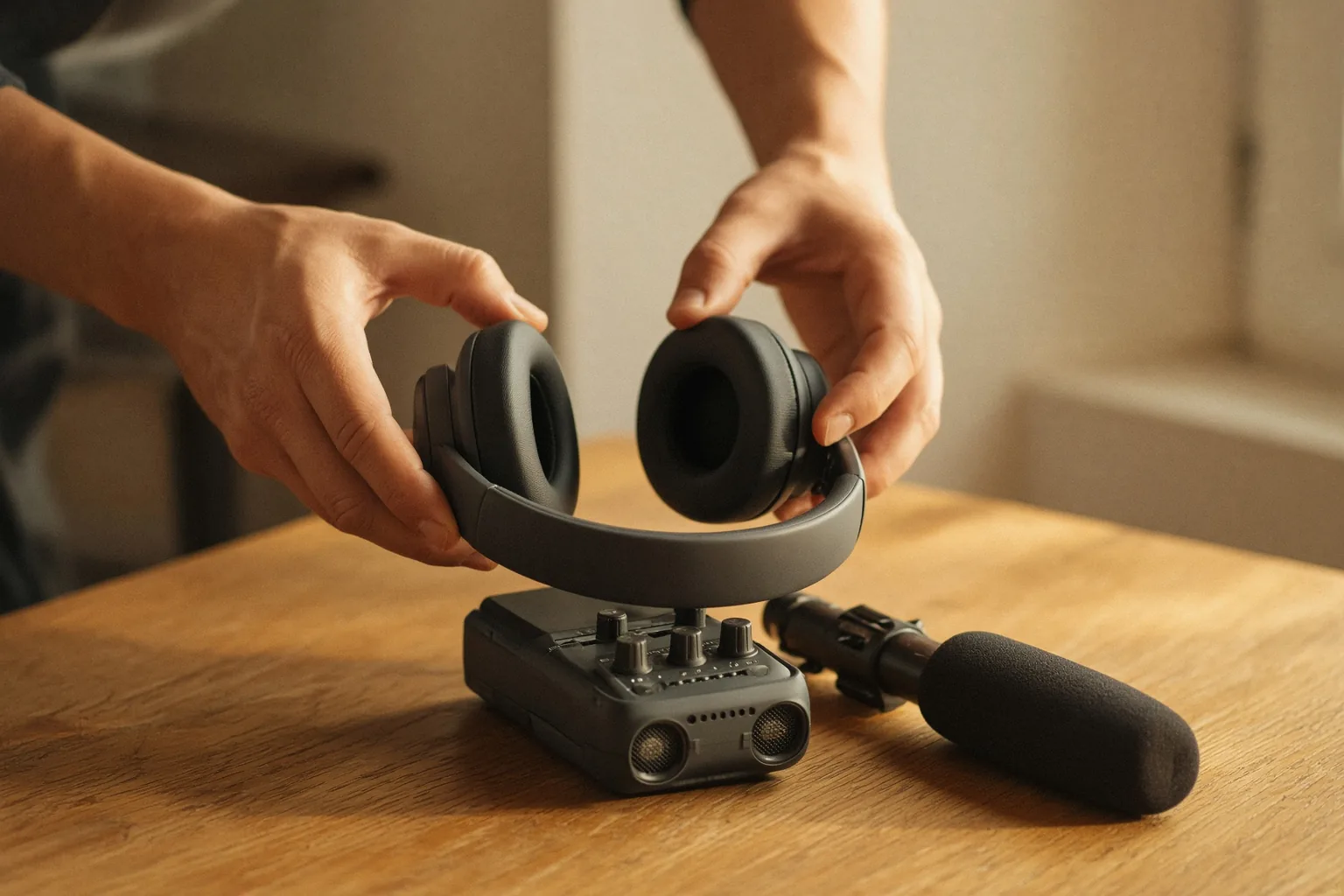
What can a recording of a shooting show?
Under good conditions the sequence and timing of shots, how many guns fired, and from the delay between sounds sometimes the distance to the shooter. Each claim depends on the recording position, the device and the number of recordings.
Steven Beck of Beck Audio Forensics summarized it for the 186th meeting of the Acoustical Society of America: "Analysis of the recorded audio can help determine who fired first, how many guns were fired". In the same paper he wrote that recording the components of a shot "are very position dependent, and require the recording system to be close to the source."
The National Institute of Justice published an article on August 7, 2023, about eight years of research by Robert Maher of Montana State University under three NIJ grants. It names the devices that commonly capture such events: cellphones, land-mobile radios, personal audio recorders, emergency call centers and dispatch center recording systems. In the tests, signals were compared at 11 microphone and personal recorder locations, on a body camera worn by the marksman and on an internal recording system in a law enforcement vehicle. The article says Maher examined recordings with distortion, coding artifacts and other nonideal features.
NIJ program manager Gregory Dutton is quoted in that article: "we need a foundation of research to help the courts assess the value and limits of an expert's testimony." A review of an opposing gunshot report applies that research to one report.
Which sounds make up a recorded gunshot?
The muzzle blast, the shock wave of a supersonic bullet, echoes from the ground and nearby surfaces, and mechanical sounds of the firearm. Which of them a device captures depends on its position relative to the shooter.
Ryan Lilien of Cadre Research Labs described the muzzle blast in his 2018 final report to NIJ, "Development of Computational Methods for the Audio Analysis of Gunshots" (grant 2016-DN-BX-0183): "It is short (on the order of milliseconds) and loud (typically 120-160dB)." Elsewhere the report says muzzle blasts are "typically shorter than 5ms".
A bullet faster than sound produces a shock wave that propagates outward from its path, and depending on the geometry of the scene "the supersonic shock wave may arrive before the muzzle blast." The report names the echo of the muzzle blast from the ground as the commonest of these; on one iPhone recording of a Colt 1911, sound continued for about 500 milliseconds after the blast.
Beck lists the components by firearm type. Revolvers have "the primer blast, chamber gas jet, muzzle blast, mechanical sounds"; pistols have "the primer blast, muzzle blast, slide/bolt sound, mechanical sounds". He adds that "the primer blast can only be recorded behind or to the side of a close-by shooter." A report that relies on a component the device could not have captured from its position has a problem the reviewer will name.
What happens when the shot overloads the microphone?
The waveform is cut off at the maximum level. Lilien's report says gunshots almost invariably saturate the recording device unless recorded at a distance; Beck found a body camera clipped every gunshot sound except the primer blast.
Lilien wrote that "the volume of the blast may overwhelm the recorder resulting in saturation" and that gunshots, except those recorded at a significant distance, almost invariably saturate the recording device. A clipped shot loses its true peak and part of its waveform.
Beck reported the same on a body camera recording: "The primer blast is very clear, but the other gunshot sounds are clipped". He also wrote that "These very loud sounds often obscure other gunshot sounds that can provide important forensic evidence."
Compression adds another layer. Lilien notes that "The audio file format may employ lossy compression methods which introduce sound artifacts", and that information is difficult to extract from lower-quality recordings such as cell phones and body cameras. In his tests a handheld Zoom recorder collected significantly cleaner recordings than the cell phones. A reviewer checks whether the opposing report states the format and sampling rate of the file it measured and whether it identified clipped segments before counting peaks.
How reliable is a shot count from audio?
It can be reliable when several recordings agree and the examiner separates shots from echoes. In two analyses described by Maher and NIJ, shot counts were matched across recordings or corroborated by other evidence.
For the July 13, 2024 rally shooting, Maher used the podium microphones and "More than two dozen mobile phone videos from rally attendees." He wrote that "Audio forensic science identified a total of ten gunshots": eight, labeled A to H, came from the identified perpetrator's location because their timing matched across recordings, and two came from law enforcement at other locations.
The NIJ article describes the 2015 trial of Cleveland officer Michael Brelo. Maher concluded that 15 of 18 rapid shots came from Brelo's gun, and independent FBI work corroborated the result.
Both examples rest on agreement between recordings, and on a second source. A count from one clipped phone recording, with ground echoes that extend each shot, is a different kind of result. The reviewer checks how many recordings were used, how echoes were distinguished from shots, and whether the count was compared with casings, wounds or other physical evidence.
Can a recording show how far away the shooter was?
Sometimes, from the delay between the crack of a supersonic bullet and the bang of the muzzle blast. Maher estimated 130 meters from the podium microphones in the 2024 rally analysis.
The method uses two sounds that travel by different paths and at different speeds: the shock wave from the bullet's path and the muzzle blast from the gun. In Maher's account, the estimate of 130 meters was confirmed when the presumed perpetrator's body was found on a nearby rooftop at that distance from the podium.
The estimate depends on conditions that the report must state: that the bullet was supersonic, where the microphone was, and what the geometry of the line of fire was. Lilien's statement that the shock wave may arrive before or after the muzzle blast depending on geometry shows why a delay alone, without the positions, does not fix the distance.
Can the recording identify the type or model of gun?
Only weakly in published work. Lilien's model separated revolvers, pistols and rifles fairly well, but for pistols caliber accuracy was 69% on training data and 43% on test data, and make or model reached 25%.
The report gives chance levels of 33% for class, 10% for caliber and 5.5% for make and model. The model did better than chance on both, and the report calls the class prediction "fairly decent on both the training and testing sets." It also reports overfitting for caliber and make or model, which is the gap between 69% and 43%.
The recording device was never moved during the experiments, and in most setups the shooter stood still, and the report warns that its method for counting firearms "will not yet generalize to success in random crime scene videos." Lilien calls the work "a small step" toward a usable tool. A report that names the make of a gun on the basis of a phone recording has to show validation data for comparable recordings.
How are several recordings put on one timeline?
By finding a common event in each recording and aligning them on it. Maher's NIJ research developed methods to localize sources and to identify the likely synchronization point across recordings.
The NIJ article says multiple recordings can provide "spatial and temporal information about the location and orientation of sound sources." The same research named the limits for user-generated recordings: "audio bandwidth, recording quality, and questions of authenticity."
For each recording the reviewer asks which event was used to align it, whether the device clock or the video frame rate was relied on, and whether any file was edited or trimmed before it reached the examiner. A timeline built from clips cut by the people who posted them inherits every cut.
Did the opposing examiner work from original files?
The reviewer checks it first. SWGDE advises requesting the original recording or the earliest generation available, and treats a transcoded file as not original.
SWGDE Best Practices for Forensic Audio, version 2.5 of June 9, 2022, tells laboratories to request "the original recording or the earliest generation available" and warns that re-encoding and resampling may introduce artifacts or remove frequency content.
SWGDE 15-a-001, version 1.3 of September 20, 2018, says that "Transcoded or re-encoded versions of an original recording are not original recordings." For a gunshot analysis this matters directly: compression changes the short, loud events that the analysis measures.
What must the other side disclose about its gunshot expert?
In a federal criminal case Rule 16 requires a complete statement of the expert's opinions with bases and reasons, qualifications, 10 years of publications and 4 years of cases. Test results are open to inspection.
Rule 16(a)(1)(G)(iii) of the Federal Rules of Criminal Procedure requires the government's disclosure to contain "a complete statement of all opinions that the government will elicit from the witness in its case-in-chief", "the bases and reasons for them", the witness's qualifications "including a list of all publications authored in the previous 10 years", and a list of cases in which the witness testified during the previous 4 years.
Under Rule 16(a)(1)(F) the defendant may inspect and copy "the results or reports of any physical or mental examination and of any scientific test or experiment" that are within the government's control and material to the defense or intended for use at trial. Test firings and acoustic measurements made for the report fall into that request.
In a civil case Rule 26(a)(2)(B) of the Federal Rules of Civil Procedure requires the retained expert's report to state the opinions with their basis and reasons and the facts or data considered, and Rule 34 lets a party request sound recordings in a specified form.
How do the review points fit Rule 702?
The proponent must show that it is more likely than not that the opinion rests on sufficient facts or data and a reliable method reliably applied. Clipping, missing originals and unvalidated gun identification go to those requirements.
Rule 702 of the Federal Rules of Evidence, as amended in 2023, places that burden on the proponent, and the committee note says that "each expert opinion must stay within the bounds of what can be concluded from a reliable application of the expert's basis and methodology."
For gunshot audio the bounds follow from the research above. A shot count supported by several recordings and physical evidence stands on different ground from a count read off one clipped file. A distance estimate needs the positions and a supersonic bullet. A claim about make or caliber needs validation on comparable recordings, which the published NIJ work did not provide.
Some of the cited work is presented in lay-language papers of the Acoustical Society of America, which carry the note that the research "may not have yet been peer reviewed". A reviewer records the status of each source the opposing report relies on.
What does the IAE review of an opposing gunshot audio report cover?
An IAE examiner reviews the opposing audio report: which files were received, which analyses were run and documented, and whether each conclusion stays within the method and the recordings. Up to 5 business days.
The IAE review of the opposing forensic audio report is for a party facing the other side's examiner on a recording. The reviewer checks which file the examiner received, which tests were run and documented, whether comparison material was comparable and whether the conclusion stays within the method. Each point in the review is tied to a page of the opposing report and to a rule, a standard or a court decision.
The document can take the form of a review of the opposing report, a rebuttal report or a statement of grounds for a Rule 702 motion. The client sends the opposing report and the case materials and describes what to check. The secretariat confirms receipt the same day, and within one business day IAE confirms the format, the cost, the deadline and the specialist from its registry. The client approves the candidate and the CV before work starts. The signed PDF is issued in up to 5 business days after the format and cost are confirmed, and a 48-hour rush is available for tight deadlines.
Specialists are members of the public IAE registry, and the Member ID or QR code in the document opens the specialist's record. The specialist confirms in the document that he or she has no interest in the outcome. A review is evidence the court weighs with the other materials; neither IAE nor the reviewer guarantees the outcome, and IAE is not a law firm.
Sources
- Emerging field of firearms audio forensics, National Institute of Justice article, August 7, 2023
- Lilien R., Development of Computational Methods for the Audio Analysis of Gunshots, NIJ grant 2016-DN-BX-0183, final report, June 2018 (NCJ 252947)
- Development of Computational Methods for the Audio Analysis of Gunshots, NCJRS abstract, NCJ 252947
- Beck S., Dissecting Recorded Gunshot Sounds, popular version of 2pEA8, 186th ASA Meeting (Acoustical Society of America)
- Maher R. C., The Trump Rally Shooting: Listening to an Assassination Attempt, 187th ASA Meeting (Acoustical Society of America)
- SWGDE Best Practices for Forensic Audio, version 2.5, June 9, 2022
- SWGDE Best Practices for Digital Audio Authentication, 15-a-001, version 1.3, September 20, 2018
- SWGDE document 15-a-001, Best Practices for Digital Audio Authentication, document page with version history
- Federal Rules of Criminal Procedure, Rule 16 (LII, Cornell Law School)
- Federal Rules of Evidence, Rule 702 (LII, Cornell Law School)
- Federal Rules of Civil Procedure, Rule 26 (LII, Cornell Law School)
- Federal Rules of Civil Procedure, Rule 34 (LII, Cornell Law School)
Read also
All articles
The other side's expert says the speaker on a recording was drunk: what does a reviewer check?
Listeners in a 2011 test told drunk from sober speakers correctly 55.8% of the time, close to the 50% of a coin toss. Laboratory systems do better Sergei Voronin
ShotSpotter evidence: is it admissible, and how does a reviewer test the other side's acoustic gunshot report?
An acoustic gunshot report tells the jury how many shots were fired, when and where, on the basis of sound picked up by sensors. Courts have admittedSergei Voronin
The opposing audio report rests on a compressed file from a messaging app or a phone: what does a reviewer check?
Most recordings in disputes today reach the examiner as compressed files: voice messages, call recordings, memos made on a phone. CompressionSergei VoroninExpert report review
Ready to discuss your case?
Send the materials: the secretariat will confirm the format, cost, deadline and the specialist within one business day.
