
Expert witnesses
Life care planner expert witness: when does a court admit the care plan?
A life care planner lists the medical care, equipment and services an injured person will need and prices each item. In Edwards v. McElliotts Trucking (S.D. W. Va. 2017), a federal court admitted a plan built on two medical experts' reports. In Norman v. Leonard's Express (W.D. Va. 2023), another federal court excluded in full a plan whose author rejected treatments without a medical expert's support.
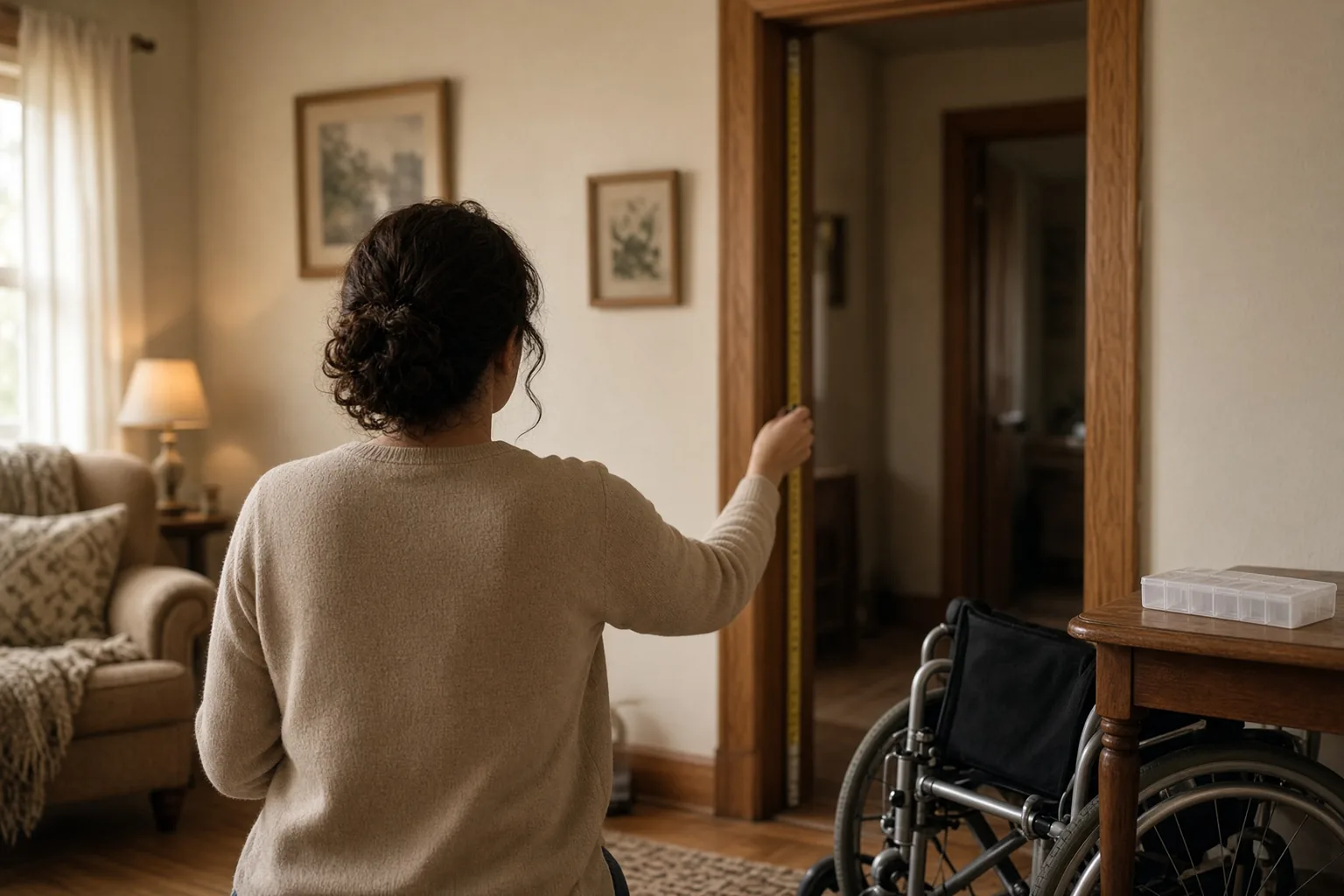
What does a life care planner do in a personal injury case?
The planner reviews the medical records, assesses the injured person, lists future needs for care, equipment and services, and researches the cost of each item. The plan supports the claim for future medical expenses.
In Soto-González v. Doctors' Center Hospital, decided by the District of Puerto Rico on February 23, 2024, the court described the method of the plaintiff's planner, Dr. Joseph Carfi, a physician in physical medicine and rehabilitation. He "employed the standard methodology applied by life care planners which requires consideration of: (a) available medical records; (b) assessment of the individual," followed by an assessment of needs and research of local costs. The court wrote: "This appears to be a sufficiently reasonable and reliable method for formulating a life-care plan." The case was a medical malpractice suit in which the plaintiff alleged that a hospital and two physicians failed to address her newborn daughter's high bilirubin.
In Edwards v. McElliotts Trucking, the plaintiff was helping load metal rods onto a semi-truck trailer when a rod weighing almost 2,000 pounds fell and struck his leg, and the lower part of the leg was amputated. His planner, Lisa Westfall, "extensively reviewed Edwards' medical records created after the injury," used the recommendations of Dr. Vaglienti, whose report listed medical devices and services, and of a prosthetics expert, Nick Wheeler, to list future needs, and "resorted to different online resources to assign a cost or range of costs to that item or service."
The Edwards court found the testimony relevant under Rule 702(a) for a short reason: "Costs of medical procedures, services, and devices are not common knowledge." A jury that has to award future medical expenses gets the list and the prices from the planner.
Does every item in a life care plan need a physician's support?
The medical items do. In Edwards, Ethicon and Norman, federal courts required the treatments and therapies in a plan to rest on a medical expert's opinion. Pricing and research of each item stay with the planner.
Under Federal Rule of Evidence 703, an expert may base an opinion on facts or data that experts in the particular field would reasonably rely on, and those facts or data need not be admissible. Relying on that rule, the Edwards court wrote that a planner "cannot opine about an area outside her expertise unless her opinion is based on the opinion of a qualified expert in that field."
The Edwards court contrasted its case with In re Ethicon, Inc., No. 2:12-MD-02327 (S.D. W. Va. January 15, 2014). As the Edwards opinion describes it, the plan in Ethicon "was not based on any findings or opinions by a medical expert" and "was based solely on the recommendations of the life care planner who admittedly was not a medical expert." Westfall's plan rested on two medical experts, and the defendant had not moved to exclude either of them, which the court said "severely undermines" its argument. The motion to exclude the plan was denied on August 22, 2017.
In 2023 the Western District of Virginia stated the rule this way. Quoting Boden v. United States (W.D. Va. 2019), the court wrote that a life care plan can be admissible "without a physician review, so long as" it is reliable. It added in its own words that "the medical treatments and therapies outlined therein must be predicated on expert medical opinion." From Ethicon the court took the test that only recommendations "very specifically grounded in" a medical expert's opinions survive.
Why did the court exclude the defense life care plan in Norman v. Leonard's Express?
The defense planner, a clinical social worker, marked treatments as not indicated where no medical expert had said so. The court held she gave medical opinions without medical grounding and on April 21, 2023 excluded her entire report.
Norman v. Leonard's Express arose from a collision between the plaintiff, Yvette Norman, and a semitruck owned by Leonard's Express and driven by Julian J. Kaczor. The plaintiff's planner, Elizabeth Zaras, was a nurse practitioner with the credentials MSN, RN, FNP-C and CLCP. The defense planner, Shelby Dubato, held a Master of Social Work and was licensed or certified as a clinical social worker, disability management specialist, case manager and life care planner. The plaintiff moved to exclude Dubato's report.
Dubato went through the plaintiff's plan and marked medications and treatments as "indicated" or "not indicated." She called Nurtec unnecessary while stating that she "would defer to the defense medical expert" on that point, and no defense expert or treating physician had said it was medically unnecessary. She called Voltaren gel unnecessary because the records showed no complaints about the temporomandibular joint, while the plaintiff's medical expert, Dr. O'Shanick, said it was necessary. The court found her unqualified to counter that opinion.
Judge Thomas T. Cullen wrote that Dubato "rendered medical opinions without sufficient medical grounding or expert support." She accepted some physician-endorsed items and rejected others, and the defense medical experts did not support the rejections. The court adopted the plaintiff's words: "Leonard's Express cannot have its cake and eat it too." Removing the unsupported opinions left little: "After those excisions, the Life Care Plan is effectively gutted," and what remained would be "incomplete, contradictory, and, at bottom, wholly unreliable." The court ruled that "Dubato's entire report must be excluded."
Must a life care plan be stated to a reasonable degree of medical certainty?
Not under the Federal Rules of Evidence. In Edwards, the court found no rule or Supreme Court decision that requires a particular degree of certitude for expert testimony and denied the motion built on that phrase.
The defendant in Edwards, Cardinal Transport, argued that Westfall was not a medical doctor and that the recommendations behind her plan were not given to "a reasonable degree of medical certainty," so the plan was irrelevant and inadmissible under Rule 702. The court answered that Rule 702 sets no required degree of certainty, and that whether the plaintiff proved his future damages is a question for the factfinder.
In footnote 3 the court cited a concurrence by Chief Justice Menis Ketchum of the West Virginia Supreme Court of Appeals in Toothman v. Jones (2012), who wrote that "[r]equiring a medical doctor to opine to a 'reasonable degree of medical certainty' should be abolished." The court added its own view: "No matter the context, the phrase has no coherent meaning and should be torn out root and branch from the legal lexicon."
The ruling applies the federal rules in a federal court. A plan prepared for a state court case is checked against that state's evidence rules, and the request to an expert search should name the state and the court.
Who qualifies as a life care planner expert witness?
Rule 702 accepts qualification by knowledge, skill, experience, training or education. Courts have heard planners who were nurses, physicians and social workers, each limited to the field in which the planner is qualified.
Under Rule 702, a witness "qualified as an expert by knowledge, skill, experience, training, or education" may testify in the form of an opinion. The rule does not mention certification. In Edwards the court treated Westfall as "an expert in life care planning" and not as a medical expert. In Soto-González the defendants did not contest the qualifications of Dr. Carfi, an Assistant Clinical Professor in the Department of Rehabilitation Medicine and Human Performance at Mount Sinai Medical Center.
In Sherwood v. BNSF Railway Co. (D. Idaho, February 25, 2019), the plaintiff had crashed his bicycle at a railroad crossing near Sandpoint, Idaho, on July 14, 2014. His life care planner, Liz Holakiewicz, was a nurse. Cloie Johnson, a life care planner among the railroad's three defense experts, was not. Judge B. Lynn Winmill held that "Ms. Johnson is not a nurse and is therefore not qualified to offer opinions regarding the practice of nursing," but that she could testify "whether Ms. Holakiewicz used the correct methodology for preparing a life care plan."
The credential CLCP (Certified Life Care Planner) is issued by the International Commission on Health Care Certification (ICHCC). An article in the first issue of the ICHCC Journal for Health Care Professionals, published June 30, 2026, states that ICHCC is accredited through the ANSI National Accreditation Board (ANAB) and that candidates complete one of the "120-hour preapproved training programs," submit "an approved life care plan constructed during training" and pass an examination. The Commission on Rehabilitation Counselor Certification (CRCC) announced a training program for professionals pursuing certification administered by ICHCC, based on a curriculum earlier offered through Capital University Law School, with launch expected in the fourth quarter of 2026.
How does a life care plan price future care?
Each item gets a cost from a stated source, a frequency and a duration. In Florida, section 768.0427 ties evidence of future medical costs to what the claimant's coverage would pay or to 120 percent of the Medicare rate.
Rule 26(a)(2)(B)(ii) requires a retained expert's report to state "the facts or data considered by the witness in forming" the opinions. For a life care plan, those are the medical opinions behind each item and the price sources. Westfall used online resources; Dr. Carfi researched local costs. Both methods went into the record and the courts reviewed them.
Florida changed the rules for this evidence in 2023 (chapter 2023-15, Laws of Florida). Under section 768.0427(2)(c), evidence of damages for future medical treatment or services includes, among other evidence, three types. If the claimant has health care coverage other than Medicare or Medicaid, or is eligible for it, the evidence is "the amount for which the future charges of health care providers could be satisfied if submitted to such health care coverage, plus the claimant's share of medical expenses under the insurance contract or regulation." If the claimant has no coverage or has Medicare or Medicaid, the evidence is "120 percent of the Medicare reimbursement rate in effect at the time of trial for the medical treatment or services the claimant will receive, or, if there is no applicable Medicare rate for a service, 170 percent of the applicable state Medicaid rate." The third type is "any evidence of reasonable future amounts to be billed to the claimant for medically necessary treatment or medically necessary services."
The Medicare rate for a physician service is looked up by code. The CMS guide to the Physician Fee Schedule Look-Up Tool says the tool can "Search the maximum fee schedule amount by HCPCS code," nationally or for a given Medicare Administrative Contractor and locality. To price an item at 120 percent of Medicare, the planner needs the code of each service, and the statute uses the rate in effect at the time of trial.
The 2026 text of section 768.0427 keeps the same paragraph (2)(c). The section applies to personal injury and wrongful death actions.
Does a life care plan need a life expectancy figure?
Not in every court. In Soto-González, the defendants objected that the planner gave no life expectancy and no total cost, and the court admitted the plan, relying on a 2022 First Circuit decision.
The defendants in Soto-González moved to exclude Dr. Carfi under Rules 403 and 702 and Rule 26(a)(2)(B). They argued that he did not quantify the total cost of care under either scenario he considered and did not state the child's life expectancy. Judge Gina R. Méndez-Miró denied the motion.
On life expectancy the court relied on Rodriguez-Valentin v. Doctors' Center Hospital (Manati), Inc., 27 F.4th 14 (1st Cir. 2022), where the First Circuit wrote that "we can find no authority clearly establishing that such expert testimony is necessary to recover damages for future care costs as a matter of law in Puerto Rico." On the charge that the plan was speculative, the court wrote: "That is a proper ground for cross-examination, but not a reason to exclude the testimony."
The holding rests on Puerto Rico damages law as read by the First Circuit. Outside Puerto Rico, counsel checks the damages law of the forum to see whether life expectancy testimony is required and, if it is, which expert gives it.
What happens if the life care plan changes before trial?
Rule 26(a)(2)(E) requires supplementing expert disclosures under Rule 26(e). A late update can stay in if it is harmless, as the Soto-González court found for a planner's note written after a new interview.
Under Rule 26(a)(2)(E), "The parties must supplement these disclosures when required under Rule 26(e)." Under Rule 37(c)(1), a party that fails to provide information as Rule 26(a) or (e) requires "is not allowed to use that information or witness to supply evidence on a motion, at a hearing, or at a trial, unless the failure was substantially justified or is harmless."
In Soto-González, Dr. Carfi wrote a "note to file" in February 2024 after a new interview with the plaintiff, and the defendants moved to strike it as an untimely updated report. The court found that the defendants "have failed to show that the delay caused prejudice," that the note did not add a new theory or new evidence that would surprise them, and that the update "is harmless and can be allowed."
The disclosure dates themselves come from Rule 26(a)(2)(D): absent a stipulation or court order, at least 90 days before the date set for trial, and within 30 days after the other side's disclosure for evidence intended only to rebut it. A defense planner whose report only rebuts the plaintiff's plan falls under the 30-day rule unless the scheduling order sets another date.
What can a defense life care planner do?
Review the plaintiff's plan for method and medical support, attend a Rule 35 examination when the order permits, and testify on planning methodology. Medical judgments about which treatment is needed come from the defense physicians.
Under Rule 35(a), the court may order a party whose physical or mental condition is in controversy to submit to an examination "by a suitably licensed or certified examiner," only on motion for good cause, and the order "must specify the time, place, manner, conditions, and scope of the examination," and the person or persons who will perform it.
In Sherwood, Johnson sat in on the Rule 35 examination by Dr. Klein, who evaluated possible psychological and neuropsychological injuries. The plaintiffs moved to bar her statements that she had met Mr. Sherwood and her descriptions of what she observed at the examination. The court found that the Rule 35 stipulation and order did not bar her attendance, ruled that "Ms. Johnson is not precluded from saying that she sat in on the Rule 35 exam," and added that she "would have all the same information from the video of the examination."
In Norman the court drew the line for the defense side. A defense planner who removes items from the plaintiff's plan needs a defense medical expert who says those items are unnecessary. Where the defense physicians were silent, the court treated the planner's view as a medical opinion she was not qualified to give.
How do lawyers challenge a life care plan under Rule 702?
By tracing each item to a medical opinion, checking the cost sources, and asking whether the planner stayed within her field. Since December 1, 2023, the proponent must show admissibility is more likely than not.
Rule 702, as amended effective December 1, 2023, requires the proponent to show the court that it is "more likely than not" that the testimony is based on sufficient facts or data, comes from reliable principles and methods, and applies them reliably to the facts of the case. The committee note calls rulings that treated the sufficiency of an expert's basis and the application of the method as questions of weight "an incorrect application of Rules 702 and 104(a)."
For a life care plan the sufficiency question is item by item. A recommendation with no medical opinion behind it is the gap that General Electric Co. v. Joiner (1997) described: "a court may conclude that there is simply too great an analytical gap between the data and the opinion proffered." Norman excluded a plan on that ground, and the Ethicon plan, as Edwards describes it, had the same defect.
A challenge has to name the defect. In Edwards the court noted that Cardinal "makes no attempt to question Westfall's methods" and attacked only her reliance on the medical experts, an argument the court rejected. In Soto-González the court denied the motion and left the charge of speculation to cross-examination.
How does IAE find a life care planner expert witness?
In the IAE request, choose the case type Personal injury and name life care planning as the field. Within 5 business days IAE sends 2-3 candidates with CVs, hourly rates and prior testimony lists.
The personal injury expert witness page lists life care plans built on physicians' opinions in the medicine group, next to orthopedic surgeons, neurologists and neurosurgeons. The request also asks for the state and court, the side, the expert disclosure deadline, and the parties and their counsel for the conflict check. Within 1 business day IAE replies whether it can search in that field by that deadline. The form asks not to include privileged or sealed information.
Each candidate confirms in writing that he or she has no ties to the parties or their counsel. The candidate file includes testimony in the last 4 years and publications in the last 10 years, the lists that Rule 26(a)(2)(B) requires.
The search is paid in advance, and candidate names and CVs come after payment. If no candidate fits, IAE searches again; if IAE finds no candidates, it refunds the payment. The expert's hourly rate never depends on the outcome of the case or on the content of testimony. Under the agency option the expert bills through IAE, and the firm receives one invoice.
IAE is not a law firm. Case strategy and the decision to retain an expert stay with the attorney.
Sources
- Edwards v. McElliotts Trucking, LLC, Civil Action No. 3:16-1879 (S.D. W. Va. August 22, 2017), Memorandum Opinion and Order
- Norman v. Leonard's Express, Inc., No. 7:22-cv-00096 (W.D. Va. April 21, 2023), Document 71 (Justia copy of the court document)
- Soto-González v. Doctors' Center Hospital, Civil No. 20-cv-01431 (GMM) (D.P.R. February 23, 2024), Opinion and Order
- Sherwood v. BNSF Railway Co., No. 2:16-cv-00008-BLW (D. Idaho February 25, 2019)
- Federal Rules of Evidence, Rule 702, with Committee Notes on the 2023 Amendment (LII)
- Federal Rules of Evidence, Rule 703 (LII)
- Federal Rules of Civil Procedure, Rule 26 (LII)
- Federal Rules of Civil Procedure, Rule 35 (LII)
- Federal Rules of Civil Procedure, Rule 37 (LII)
- U.S. District Court, Middle District of Alabama: Amendments to Federal Rules effective December 1, 2023
- General Electric Co. v. Joiner, 522 U.S. 136 (1997) (LII)
- Florida Statutes 2025, section 768.0427
- Florida Statutes 2026, section 768.0427
- CMS: PFS Quick Reference Search Guide (Physician Fee Schedule Look-Up Tool)
- ICHCC Journal for Health Care Professionals, vol. 1, issue 1: The accreditation of the International Commission on Health Care Certification
- Commission on Rehabilitation Counselor Certification: life care planning training program press release
Read also
All articles

Dram shop expert witness: what can a toxicologist prove about visible intoxication, and what do courts require of the opinion?
A dram shop claim asks a court to hold a bar or restaurant liable for what an intoxicated patron did after leaving. The crash is usually undisputed Sergei Voronin

Construction accident expert witness: which safety rules does the expert apply, and when do they decide the case?
A fall from a scaffold, a collapsed trench or a ladder that kicked out ends up in court as a question about safety rules. The construction safetySergei Voronin
Traumatic brain injury expert witness: what can a neuropsychologist and brain imaging prove in court?
A mild traumatic brain injury often leaves nothing a standard scan can show, so the case turns on experts: the treating physiciansSergei VoroninExpert witnesses
Need an expert witness for your case?
Describe the question, the case type and the court. Within 5 business days you receive 2-3 candidates with CVs, hourly rates and lists of prior testimony.
