
Examinations
Patent infringement claim chart: what must it show, and when can it change?
A claim chart puts each limitation of a patent claim in one column and, in the next, the evidence of where that limitation appears in the accused product or in a prior art reference. In the Northern District of California, Patent Local Rule 3-1(c) requires the patent owner to serve a chart identifying specifically where and how each limitation of each asserted claim is found within each accused instrumentality.
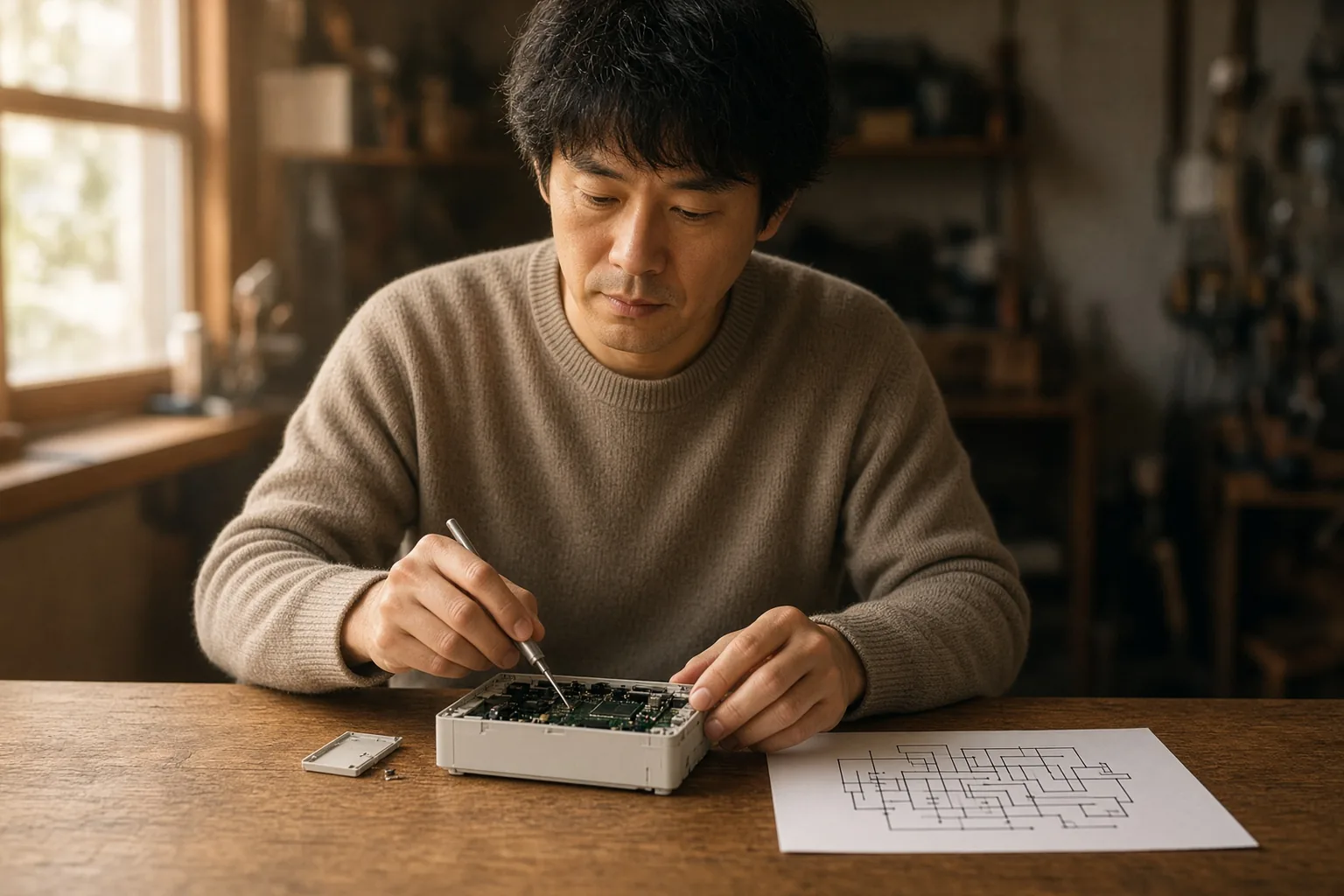
What is a patent claim chart?
A table that maps each limitation of an asserted claim to the part, step or feature of the accused product, or of a prior art reference, where that limitation is found. It follows the claim language limitation by limitation.
The left column splits the claim into its limitations, numbered in the order of the claim text: the preamble, then each element. The right column gives the evidence for each one: a photograph with the part marked, a page of a datasheet, a line of source code, a test result, a passage of a prior art reference with its page and line.
The format follows the law of infringement. Under 35 U.S.C. 271(a), "whoever without authority makes, uses, offers to sell, or sells any patented invention, within the United States or imports into the United States any patented invention during the term of the patent therefor, infringes the patent." Section 271(b) adds liability for whoever "actively induces infringement," and 271(c) for contributory infringement through components.
In Warner-Jenkinson Co. v. Hilton Davis Chemical Co., 520 U.S. 17, decided March 3, 1997, Justice Thomas wrote for a unanimous Court: "Each element contained in a patent claim is deemed material to defining the scope of the patented invention." A product that lacks one limitation, literally or by an equivalent, does not infringe that claim, so a chart with a blank row ends the analysis for the claim.
There are two kinds of chart. The patent owner serves infringement charts that map claims onto the accused products. The accused infringer serves invalidity charts that map the same claims onto prior art.
When does a patent case require a claim chart?
In districts with patent local rules, early in the case. N.D. Cal. Patent L.R. 3-1(c) requires infringement charts from the patent owner, and Patent L.R. 3-3(c) requires invalidity charts from the accused infringer.
Patent L.R. 3-1 lists what the patent owner discloses: each claim allegedly infringed by each opposing party, each accused apparatus, product, device, process, method, act or instrumentality, and, under 3-1(c), "[a] chart identifying specifically where and how each limitation of each asserted claim is found within each Accused Instrumentality." Judge Alsup quoted that text in Uniloc USA, Inc. v. Apple Inc. (N.D. Cal., July 2, 2018). Rule 3-1(d) adds the acts of any indirect infringer that contribute to or induce the direct infringement.
In Infineon Technologies AG v. Volterra Semiconductor Corp. (N.D. Cal., order of October 3, 2012), Magistrate Judge Donna M. Ryu called Rule 3-1 "a discovery device" that "takes the place of a series of interrogatories that defendants would likely have propounded."
Judge Susan Illston described the purpose of the rules in Verinata Health, Inc. v. Sequenom, Inc. (N.D. Cal., August 20, 2014): they "are designed to require parties to crystallize their theories of the case early in the litigation" and to adhere to those theories once they have been disclosed. The charts served under them define the case that the experts later argue.
How specific must an infringement chart be?
Specific enough to give the defendant reasonable notice of why the patent owner believes it can prove infringement. N.D. Cal. judges have required a level of detail that reverse engineering or its equivalent would provide.
In Infineon the court wrote that contentions must "provide reasonable notice to the defendant why the plaintiff believes it has a reasonable chance of proving infringement" and "raise a reasonable inference that all accused products infringe." A patent owner may not chart a limitation "without specifically identifying what in the device satisfies the limitation"; identifying specifically where each limitation is found "necessitates a level of detail that reverse engineering or its equivalent would provide." The court found that Infineon's contingent alternative theories did not crystallize its position as the rule requires.
In Uniloc v. Apple, Judge Alsup granted Apple's motion to strike. The contentions repeated the claim language as boilerplate, cross-referenced other charts without explanation, listed accused products open-endedly, identified the products inconsistently, pleaded indirect infringement in generic terms and used placeholder language on equivalents. Citing a video, the court held that pointing to it without explaining its content "is inadequate to satisfy Rule 3-1(c)." Representative charts "may suffice" when "supported by adequate analysis"; "A patentee must state how" the charted product stands for the others. Uniloc was ordered to serve amended contentions by July 27, 2018.
Each row of a chart that survives this review cites something the other side can check: a document page, a marked photograph, a source file and line, a test with its conditions. A row that restates the claim words with "the accused product includes" in front of them gives no notice of where the limitation is.
How does a claim chart plead the doctrine of equivalents?
Element by element. Warner-Jenkinson requires equivalents to be applied to individual claim elements, and N.D. Cal. courts expect the chart to explain why and how the doctrine applies to each element instead of a placeholder sentence.
Warner-Jenkinson held that "the doctrine of equivalents must be applied to individual elements of the claim, not to the invention as a whole," and that it must not be "allowed such broad play as to effectively eliminate that element in its entirety." On the test, the Court said that "the particular linguistic framework used is less important than whether the test is probative of the essential inquiry." It named "the known interchangeability of substitutes for an element" as one of the express objective factors, and fixed the time: equivalence is evaluated "at the time of infringement, not at the time the patent was issued."
In Infineon the court required an "element-by-element explanation of why and how" the doctrine applies and found Infineon's equivalents contentions adequate, though convoluted. In Uniloc the court rejected a doctrine of equivalents claim resting on "the hope that future discovery might support such an assertion" and allowed an amendment only on a showing of good cause for "a viable doctrine of equivalents claim."
The rule has since changed. The court invited public comment until April 2, 2026 on revisions to Patent L.R. 3-1(e) and 3-6(a). In the Patent Local Rules revised August 11, 2026, Rule 3-1(e) requires, for each limitation alleged to be present under the doctrine of equivalents, "the specific portion of the Accused Instrumentality alleged to practice the limitation by equivalents" and an explanation of how, based on the information available to the patentee at the time of the disclosure, that portion "is insubstantially different from the claim limitation," for example under the function/way/result test.
What is an invalidity claim chart?
The accused infringer's chart that maps each claim limitation to prior art. Patent L.R. 3-3(c) requires a chart identifying specifically where and how in each alleged item of prior art each limitation of each asserted claim is found.
Under Patent L.R. 3-3, the invalidity contentions state "[w]hether each item of prior art anticipates each asserted claim or renders it obvious," with "an identification of any combinations of prior art showing obviousness," and include "[a] chart identifying specifically where and how in each alleged item of prior art each limitation of each asserted claim is found."
An anticipation chart uses one reference for all limitations. Under 35 U.S.C. 102(a)(1), a person is not entitled to a patent if "the claimed invention was patented, described in a printed publication, or in public use, on sale, or otherwise available to the public before the effective filing date of the claimed invention." An obviousness chart combines references. Under 35 U.S.C. 103, a patent may not be obtained "if the differences between the claimed invention and the prior art are such that the claimed invention as a whole would have been obvious before the effective filing date" to a person having ordinary skill in the art.
In Verinata the court granted in part a motion to strike invalidity theories that Sequenom had not disclosed in time. It wrote that "a party may not use an expert report to introduce" new invalidity theories or new prior art references "not disclosed in the parties' infringement contentions or invalidity contentions," and found that Sequenom "has failed to show its diligence" as to the Lo Lancet reference.
Can a party change its claim chart later?
Only by court order on a timely showing of good cause under Patent L.R. 3-6. The party seeking to amend must show that it acted diligently once new information surfaced, and the court then weighs prejudice to the other side.
Patent L.R. 3-6 says amendment "may be made only by order of the Court upon a timely showing of good cause." In Verinata the court cited O2 Micro: the rules "seek to balance the right to develop new information in discovery with the need for certainty as to the legal theories."
A party must show that it "acted with diligence in promptly moving to amend when new evidence is revealed in discovery," and "[t]he party seeking to amend its contentions bears the burden of establishing diligence." Good cause requires diligence and an absence of prejudice; if diligence is not shown, "the Court need not address the issue of prejudice."
In Infineon the court treated flawed theories as a matter for amendment on a timely showing of good cause under Rule 3-6. In Uniloc the court allowed later amendment only for newly released Apple products or a viable equivalents claim, each on good cause. A patent owner that adds a theory later has to show diligence for it. Rule 3-6 lists non-exhaustive examples of circumstances that may support good cause absent undue prejudice; in the version revised August 11, 2026, the first is "[a] claim construction by the Court different from that proposed by any party in the Joint Claim Construction and Prehearing Statement."
How does the claim chart relate to the technical expert's report?
The expert's report builds on the served charts and cannot add new theories. Rule 26(a)(2)(B) requires every opinion with its basis and reasons, and before the PTAB testimony that hides its underlying facts gets little or no weight.
Rule 26(a)(2)(B) requires a retained expert's report with "a complete statement of all opinions the witness will express and the basis and reasons for them," "the facts or data considered by the witness in forming them," the exhibits, the witness's qualifications with publications from the previous 10 years, prior testimony in the previous 4 years and the compensation. In an infringement case the chart becomes an exhibit, and each row becomes an opinion with its basis.
Under Rule 702, the party offering the expert must persuade the court that it is more likely than not that the testimony is based on sufficient facts or data and that the opinion applies reliable methods reliably to the facts of the case. A row supported only by the expert's statement that the limitation is present fails the first condition.
Before the Patent Trial and Appeal Board, 37 CFR 42.65(a) provides that "Expert testimony that does not disclose the underlying facts or data on which the opinion is based is entitled to little or no weight," and that "Testimony on United States patent law or patent examination practice will not be admitted." Under 42.65(b), a party relying on a technical test must provide an affidavit explaining why the test is used, how it was performed and the data generated, how the data determine a value and how the test is regarded in the relevant art.
What does IAE do when a case turns on a claim chart?
An IAE expert maps the asserted claims to the accused product or to prior art, or reviews the opposing technical expert's report, for district court and PTAB cases. The document is issued in up to 5 business days.
The patent expertise page describes the infringement work as claim charts that map each claim element to the accused product, with equivalents tested element by element under Warner-Jenkinson, and acts under 35 U.S.C. 271(a): making, using, selling, importing. Validity work covers a prior art search before the effective filing date and obviousness under 35 U.S.C. 103.
A review of the opposing technical report checks whether each element is mapped to the product or the prior art, whether the expert applied the claim construction in the case, whether test data come with an affidavit on how the test was run, as 37 CFR 42.65(b) requires before the PTAB, and whether the opinion rests on sufficient facts or data under Rule 702(b).
IAE chooses the expert by the technical field of the patent and confirms the patent, the asserted claims and the questions before work starts. The secretariat confirms receipt the same day; within one business day IAE confirms the format, the cost, the deadline and the expert from its registry, and the client approves the candidate and the CV. The signed PDF is issued in up to 5 business days after the format and cost are confirmed, with a 48-hour rush for tight deadlines.
Every expert is a member of the public IAE registry, verifiable by Member ID or QR code, and states in the document that he or she has no interest in the outcome. A report is evidence that the court or the Board weighs with the other evidence; neither IAE nor the expert guarantees the outcome. IAE is not a law firm and does not advise on case strategy.
Sources
- 35 U.S.C. 271, Infringement of patent (LII)
- Warner-Jenkinson Co. v. Hilton Davis Chemical Co., 520 U.S. 17 (1997) (LII)
- Infineon Technologies AG v. Volterra Semiconductor Corp., No. C 11-6239 MMC (DMR) (N.D. Cal. Oct. 3, 2012), order on motion to strike infringement contentions (Justia)
- Uniloc USA, Inc. v. Apple Inc., No. C 18-00360 WHA (N.D. Cal. July 2, 2018), Dkt. 110 (Justia)
- Verinata Health, Inc. v. Sequenom, Inc., No. C 12-00865 SI (N.D. Cal. Aug. 20, 2014), Dkt. 240 (Justia)
- U.S. District Court, N.D. Cal., Seeking Public Comment on Proposed Changes to Patent Local Rules 3-1 and 3-6 (comments until April 2, 2026)
- U.S. District Court for the Northern District of California, Patent Local Rules (revised August 11, 2026)
- 35 U.S.C. 102, Conditions for patentability; novelty (LII)
- 35 U.S.C. 103, Conditions for patentability; non-obvious subject matter (LII)
- Federal Rules of Civil Procedure, Rule 26 (LII)
- Federal Rules of Evidence, Rule 702, with Committee Notes (LII)
- 37 CFR 42.65, Expert testimony; tests and data (LII)
Read also
All articles

Prior user rights: what must an accused infringer prove under 35 U.S.C. 273, and what does the technical expert compare?
A company that has run a process in its plant for years can be sued when someone else later patents the same process. Section 273 of the Patent Act Sergei Voronin
Patent inventorship dispute: who is an inventor, and how does the technical expert map each contribution to the claims?
An inventorship dispute asks who conceived what the claims cover. A former employee, a university collaborator or a supplier's engineer says heSergei Voronin
Process patent infringement: how is it proved that a product was made by the patented method?
A process patent is infringed when someone performs the claimed method in the United States, or imports, sells or uses a product made by itSergei VoroninExpert examinations
Ready to discuss your case?
Send the materials: the secretariat will confirm the format, cost, deadline and the specialist within one business day.
