
Expert witnesses
Patent infringement expert witness: what does the technical expert do in the case?
A technical expert in a patent case reads the patent and the accused product as a person of ordinary skill in the art would, then testifies on what the claims mean and whether the product meets each of them. Under the Patent Act, obviousness is judged from the position of the same person. The work begins before claim construction, and access to the other side's documents goes through a protective order.
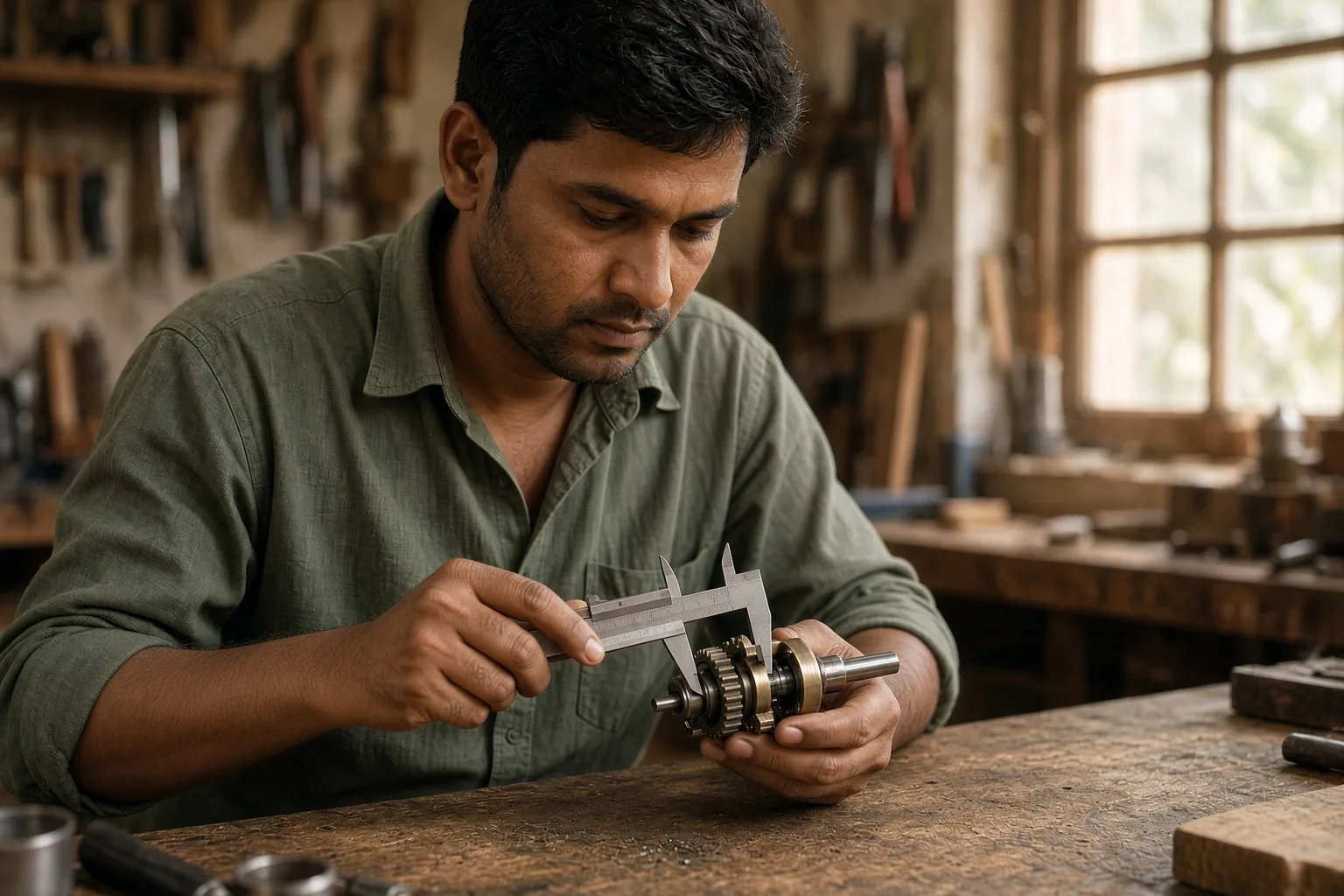
What does a technical expert do in a patent infringement case?
The expert compares each limitation of the asserted claims with the accused product and gives opinions on claim meaning, infringement or invalidity in a signed report and in testimony under oath.
Under 35 U.S.C. 271(a), whoever without authority makes, uses, offers to sell or sells a patented invention within the United States, or imports it, during the term of the patent infringes the patent. Section 271(b) makes a person who actively induces infringement liable as an infringer. Under section 271(c), a person who sells or imports a component of a patented invention, knowing it to be especially made or adapted for use in an infringement, is liable as a contributory infringer when the component is not a staple article suitable for substantial noninfringing use.
Each of these grounds depends on technical facts that the patent text does not contain, such as what is inside the accused device or what else a component can be used for. The patent owner's expert locates each claim limitation in the accused product. The accused infringer's expert answers on non-infringement and, when the defense includes invalidity, on the prior art.
Local patent rules set the order. In the Northern District of California, the Patent Local Rules (revised August 11, 2026) require infringement contentions no later than 14 days after the Initial Case Management Conference (Patent L.R. 3-1) and invalidity contentions no later than 45 days after service of those (Patent L.R. 3-3). No later than 60 days after the invalidity contentions, the parties file a joint claim construction statement. By the same date, unless the parties agree otherwise, any party that relies on an expert for its proposed constructions serves a claim construction expert report for that witness, compliant with Rule 26(a)(2)(B) (Patent L.R. 4-3).
If every step falls on the last allowed day, the claim construction report is due on day 119 after the conference. Briefing follows under Patent L.R. 4-5. Under Patent L.R. 4-6 the court holds the hearing two weeks after the reply brief, subject to its calendar and to the extent the parties or the court believe a hearing is necessary, which puts it near day 199. A party that retains its technical expert only after the invalidity contentions are served has at most 60 days for that report.
Who qualifies as a technical expert in a patent case?
Rule 702 admits a witness qualified by knowledge, skill, experience, training or education. Obviousness and claim meaning are judged from the viewpoint of a person skilled in the art, and counsel checks the candidate's record in that art.
Federal Rule of Evidence 702 admits opinion testimony from a witness qualified "by knowledge, skill, experience, training, or education" if the proponent shows the court that it is "more likely than not" that four conditions are met: the expert's specialized knowledge will help the trier of fact, the testimony rests on sufficient facts or data, it is the product of reliable principles and methods, and the expert has reliably applied those methods to the facts of the case.
The Patent Act names the person whose view counts. Under 35 U.S.C. 103, a patent may not be obtained if the claimed invention as a whole would have been obvious before the effective filing date "to a person having ordinary skill in the art to which the claimed invention pertains." Under 35 U.S.C. 112(a), the specification must describe the invention in terms that enable "any person skilled in the art to which it pertains" to make and use it.
An expert who testifies on obviousness under section 103 or on enablement under section 112(a) answers from that person's position. Before retaining an expert, counsel can set the candidate's CV against the field of the asserted claims, line by line: degree, specialty and years of design work on the kind of product the claims cover.
The other side reads the candidate's record in the Rule 26(a)(2)(B) report: the qualifications, all publications of the previous 10 years and every case of the previous 4 years in which the expert testified at trial or by deposition.
What does the expert do in claim construction?
The judge decides what the claims mean. An expert explains the background science and how a skilled artisan read a disputed term at the relevant time, and the judge's findings on that testimony are reviewed only for clear error.
In Markman v. Westview Instruments the Supreme Court held that the ultimate question of claim construction is for the judge. When the judge relies only on the claims, the specification and the prosecution history, the construction is a determination of law, and the Federal Circuit reviews it de novo. In Teva Pharmaceuticals USA v. Sandoz, decided 7-2 on January 20, 2015, the Supreme Court took up the cases in which the district court has to "consult extrinsic evidence in order to understand, for example, the background science or the meaning of a term in the relevant art during the relevant time period."
Teva's patent covered a method of manufacturing Copaxone, a multiple sclerosis drug, and its claim required an active ingredient with a "molecular weight of 5 to 9 kilodaltons." Sandoz argued that the term could mean any of three measures, peak average, number average or weight average molecular weight, and that the claim was therefore indefinite.
The experts disagreed on a figure in the patent. Teva's expert testified that converting chromatogram data into molecular weight curves would shift each peak slightly, which explained why the peak of one curve sat at about 6.8 while the legend gave 7.7. Sandoz's expert testified that no such shift would occur. The District Court credited Teva's expert and held the claim definite.
The Federal Circuit reviewed the whole construction de novo and held the claim indefinite. The Supreme Court vacated that judgment and remanded the case. Findings about extrinsic evidence are the "evidentiary underpinnings" of claim construction, and the appellate court must review them for clear error.
Local rules fix when this testimony is disclosed. Under N.D. Cal. Patent L.R. 4-2(b), each party identifies the extrinsic evidence for its proposed constructions, including "testimony of percipient and expert witnesses." The joint statement says whether any party will call witnesses at the hearing (Patent L.R. 4-3(e)), and claim construction discovery, including depositions of those experts, closes 30 days after the statement is filed (Patent L.R. 4-4).
How does the expert prove infringement limitation by limitation?
By comparing every limitation of every asserted claim with the accused product. A limitation is met literally or by an equivalent, and the equivalents analysis is applied to individual elements, not to the invention as a whole.
The comparison starts with the contentions. N.D. Cal. Patent L.R. 3-1 requires a chart "identifying specifically where and how each limitation of each asserted claim is found" within each accused instrumentality, and a statement for each limitation whether it is literally present or present under the doctrine of equivalents. In the infringement report the expert goes through the same limitations one by one and attaches the exhibits that support each opinion, for example schematics, source code excerpts or test results.
In Warner-Jenkinson Co. v. Hilton Davis Chemical Co., decided unanimously on March 3, 1997 in an opinion by Justice Thomas, the Supreme Court held that "the doctrine of equivalents must be applied to individual elements of the claim, not to the invention as a whole." The Supreme Court put the question this way: "Does the accused product or process contain elements identical or equivalent to each claimed element of the patented invention?"
The Supreme Court did not choose between the function-way-result test and the insubstantial differences test and left their refinement to the Federal Circuit. It held that equivalence is judged at the time of infringement, not at the time the patent issued, so an expert addresses what a skilled artisan knew about interchangeable elements on the date of the accused conduct.
An expert who compares the accused device with the invention as a whole has not answered the Warner-Jenkinson question for any element.
What must the expert's report contain, and when can it be tested?
A retained expert signs a report with all opinions and reasons, the facts or data considered, exhibits, qualifications with 10 years of publications, 4 years of testimony and compensation. The deposition comes after the report.
Federal Rule of Civil Procedure 26(a)(2)(B) applies to a witness "retained or specially employed to provide expert testimony in the case." The report is "prepared and signed by the witness" and contains six items: a complete statement of all opinions and the basis and reasons for them; the facts or data considered; the exhibits that will summarize or support them; the witness's qualifications, including all publications of the previous 10 years; every case of the previous 4 years in which the witness testified as an expert at trial or by deposition; and the compensation for the study and testimony.
Absent a stipulation or a court order, expert disclosures are due at least 90 days before trial, and rebuttal disclosures within 30 days after the other party's disclosure (Rule 26(a)(2)(D)). In the Northern District of California, claim construction reports come earlier, under Patent L.R. 4-3.
Under Rule 26(b)(4)(A), a party may depose any person identified as an expert whose opinions may be presented at trial, but when a report is required, "the deposition may be conducted only after the report is provided." The party that takes the deposition pays the expert a reasonable fee for the time, unless manifest injustice would result (Rule 26(b)(4)(E)).
Drafts of the report are protected (Rule 26(b)(4)(B)). Communications between the party's attorney and the expert are protected as well, except those about compensation, facts or data the attorney provided and the expert considered, and assumptions the attorney provided and the expert relied on (Rule 26(b)(4)(C)).
How does an expert get access to the other side's confidential documents?
Through the protective order. Under the N.D. Cal. model order, the party first discloses the expert's resume, employers, five years of paid work and five years of testimony, and the designating party has 14 days to object.
The Northern District of California publishes a model Stipulated Protective Order for Litigation Involving Patents, Highly Sensitive Confidential Information and/or Trade Secrets. Section 2.7 defines an Expert as a person retained as an expert witness or consultant who is not a past or current employee of a Party or of a Party's competitor and, at the time of retention, is not anticipated to become one.
Before the expert sees material designated for attorneys' eyes only, the party that retained the expert sends a written request under section 7.4(a)(2). The request names the general categories of information to be disclosed, gives the expert's full name and the city and state of primary residence, and attaches a current resume. It lists the expert's current employers, every person or entity that paid the expert or funded work in the expert's field, or received professional services from the expert, in the preceding five years, and every litigation in the preceding five years in which the expert offered expert testimony, including by declaration, report, deposition or trial testimony.
The designating party has 14 days to object in writing and must state its grounds in detail. The party seeking disclosure then meets and confers with it by direct voice-to-voice dialogue within seven days of the objection. If they do not agree, the court decides, and the party opposing disclosure bears the burden of showing that the risk of harm outweighs the receiving party's need (section 7.4(b)-(c)).
These five-year lists reach further back than the four years of testimony that Rule 26 requires in the report. A candidate who was ever employed by a party or by a party's competitor falls outside the definition in section 2.7, whatever the candidate's skill.
Section 8 of the model order, marked optional, contains a prosecution bar. Absent the producing party's written consent, a person who receives material designated for attorneys' eyes only may not take part in prosecuting patents before any patent office on the subject matter that the parties name in the order, including the asserted patents. The bar runs from first access until two years after final termination of the action. Representing a party that challenges a patent, for example in reexamination, is outside the bar. For an expert who also prepares patent applications on that subject matter, the bar means two years without that work after the case ends.
When the parties adopt the optional source code tier, under section 9 the code stays on a secured computer in a secured room without internet or network access. Nothing may be copied to recordable media, paper copies are limited to portions reasonably necessary for filings, expert reports, depositions or trial, and the receiving party keeps a record of every individual who inspected any portion of the code. Within 60 days after final disposition, each receiving party returns or destroys all protected material and certifies in writing that it kept no copies (section 15).
How does IAE find a technical expert for a patent case?
IAE searches in the named technology, has every candidate confirm in writing that he or she has no ties to the parties or counsel, and sends 2-3 candidates within 5 business days for $2,000 per case.
The request form on the IAE expert witnesses page asks for the field, the case type, the court, the side, the expert disclosure deadline and a list of the parties and their counsel. For a patent case, choose the case type Intellectual property and name the technology and the work in the field line: infringement, invalidity, damages or source code review. The case summary can carry each side's proposed definition of ordinary skill and any prosecution bar in the protective order, because both narrow the list of people who can serve.
Within 1 business day IAE replies whether it can search in that field by the deadline. Each candidate confirms in writing that he or she has no ties to the parties or their counsel. Within 5 business days the firm receives 2-3 candidates with CVs, hourly rates, testimony in the last 4 years and publications in the last 10 years, the lists that Rule 26(a)(2)(B) requires. Candidate names and CVs come after the search fee is paid.
The search costs $2,000 per case, paid in advance. If no candidate fits, the second search is free, and if IAE finds no candidates, it refunds the fee. The firm chooses the expert, who bills the firm directly or through IAE under the agency option, which adds $100 per hour to hours and 40% to fixed fees, minimum charges and surcharges, bills expenses at cost, and credits the search fee to the first invoice. The expert's hourly rate does not depend on the outcome of the case or on the content of the testimony.
IAE is not a law firm. Case strategy and the decision to retain an expert stay with the attorney.
Sources
- 35 U.S.C. 271, Infringement of patent (Legal Information Institute)
- 35 U.S.C. 103, Conditions for patentability; non-obvious subject matter (Legal Information Institute)
- 35 U.S.C. 112, Specification (Legal Information Institute)
- Federal Rule of Evidence 702, Testimony by Expert Witnesses (Legal Information Institute)
- Federal Rule of Civil Procedure 26, Duty to Disclose; General Provisions Governing Discovery (Legal Information Institute)
- Teva Pharmaceuticals USA, Inc. v. Sandoz, Inc., 574 U.S. 318 (2015), U.S. Reports (govinfo)
- Warner-Jenkinson Co. v. Hilton Davis Chemical Co., 520 U.S. 17 (1997) (Legal Information Institute)
- Patent Local Rules, U.S. District Court for the Northern District of California, revised August 11, 2026
- N.D. Cal. model Stipulated Protective Order for Litigation Involving Patents, Highly Sensitive Confidential Information and/or Trade Secrets
Read also
All articles

Patent eligibility under section 101: when does an expert declaration change the outcome of an Alice motion?
Whether a patent claims eligible subject matter under 35 U.S.C. 101 is a question of law, and district courts often decide it on a motion to dismiss Sergei Voronin
Trademark damages expert: how are the defendant's profits and actual damages proved under the Lanham Act?
Under 15 U.S.C. 1117(a), a trademark owner who wins on liability may recover the defendant's profits, its own damages and the costs of the actionSergei Voronin
FRAND royalty expert witness: how is a rate for standard-essential patents calculated and tested in US courts?
A patent that a standard requires, such as a Wi-Fi or video coding patent, is usually subject to a promise to license on reasonableSergei VoroninExpert witnesses
Need an expert witness for your case?
Describe the question, the case type and the court. Within 5 business days you receive 2-3 candidates with CVs, hourly rates and lists of prior testimony.
