
Expert report review
Can a product defect expert give an opinion without inspecting the product?
No federal rule requires a defect expert to handle the product before giving an opinion. Rule 703 of the Federal Rules of Evidence lets the expert rely on facts or data he was made aware of, but Rule 702 still requires sufficient facts or data for each opinion. A federal court in Illinois excluded failure opinions built on photographs and kept the same expert's general opinions. A review sorts the opinions by what each one needs from the item.
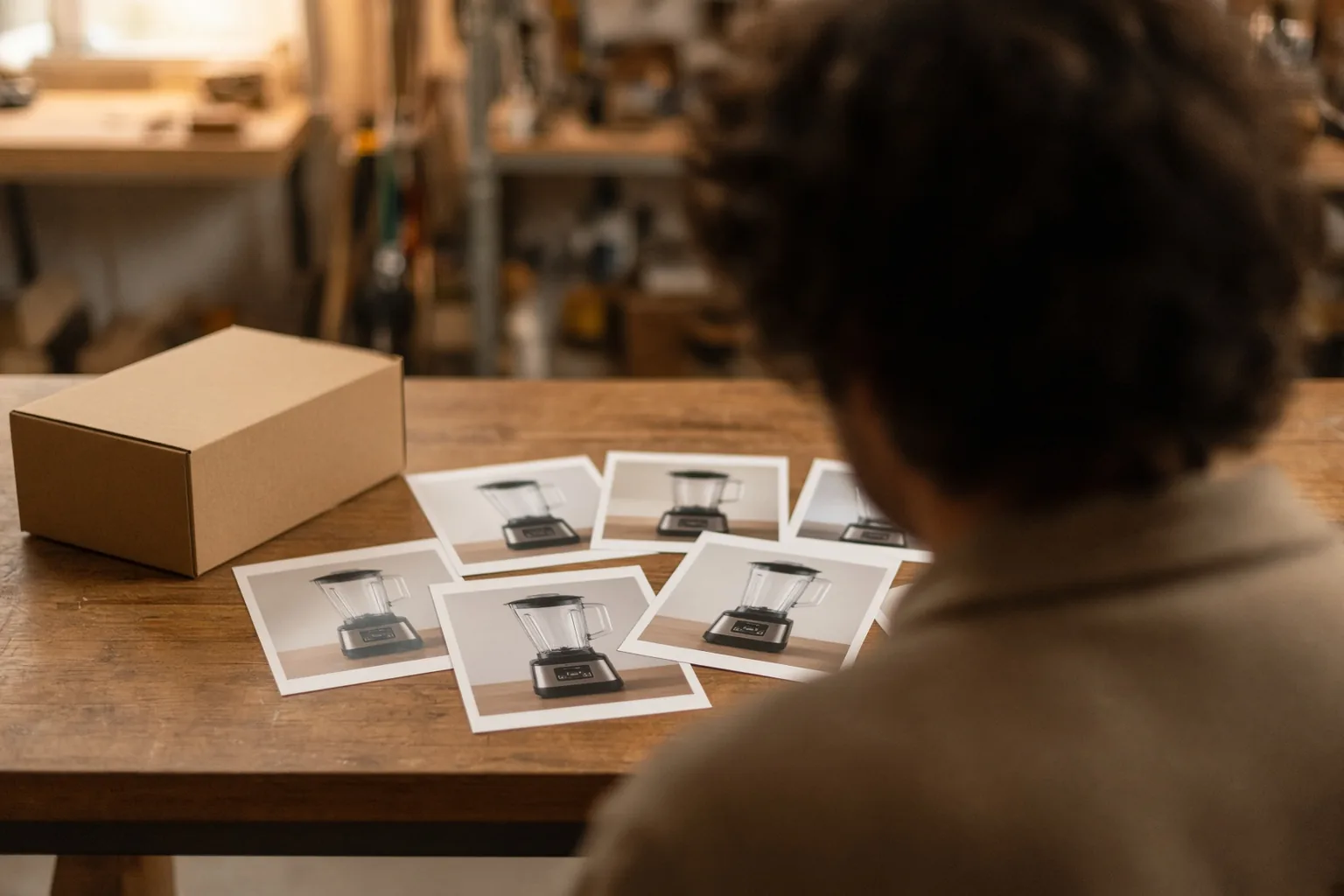
Must a defect expert examine the product before giving an opinion?
No rule says so. Rule 703 lets an expert base an opinion on facts or data he was made aware of, if experts in the field would reasonably rely on that kind of data.
Rule 703 reads: "An expert may base an opinion on facts or data in the case that the expert has been made aware of or personally observed." If experts in the particular field would reasonably rely on those kinds of facts or data in forming an opinion, "they need not be admissible for the opinion to be admitted."
The Advisory Committee note names three possible sources. "The first is the firsthand observation of the witness, with opinions based thereon traditionally allowed." The second is presentation at the trial. The third is "presentation of data to the expert outside of court and other than by his own perception." The note uses the example of a physician, who "in his own practice bases his diagnosis on information from numerous sources and of considerable variety," including statements by patients and relatives, reports and opinions from nurses, technicians and other doctors, hospital records and X rays.
For goods, the third source covers photographs taken by a repair shop, an inspection report written by the other side's engineer, a teardown video, warranty claim records and test data from the manufacturer. The note limits that source to facts or data "of a type reasonably relied upon by experts in the particular field." A review therefore asks a question about each opinion: would a failure analyst in this field rely on this kind of material for this conclusion, and does the report say why?
What do sufficient facts or data mean when the expert never saw the item?
The 2000 committee note calls the test quantitative rather than qualitative and counts reliable opinions of other experts as data. Since the 2023 amendment the proponent must show sufficiency to the court, more likely than not.
Rule 702 admits an expert opinion only if the proponent shows the court that "it is more likely than not" that "the testimony is based on sufficient facts or data," that it "is the product of reliable principles and methods" and that the opinion applies those methods reliably to the facts of the case.
The note to the 2000 amendment says the sufficiency requirement "calls for a quantitative rather than qualitative analysis." It adds: "The term 'data' is intended to encompass the reliable opinions of other experts." An expert who did not see the product can build on the inspection of another engineer, but that inspection then has to be reliable in its own right, and the review checks it as well.
The note to the 2023 amendment addresses courts that treated the sufficiency of an expert's basis as a question of weight. It calls those rulings "an incorrect application of Rules 702 and 104(a)" and says such arguments do not "always go to weight and not admissibility." A gap between the data and a failure opinion is argued to the judge, before the jury hears it.
The starting point for the review is the report itself. Rule 26(a)(2)(B)(ii) requires the report of a retained expert to state "the facts or data considered by the witness in forming" the opinions. If no inspection appears on that list, the review records which photographs, documents and measurements took its place, who made them and on what date.
Can a defect opinion rest on photographs alone?
In Cunningham Charter v. Learjet a federal court in Illinois refused it: opinions on why particular windshields failed rested on five photographs and were excluded as not sufficiently reliable.
Cunningham Charter Corp. v. Learjet, Inc., No. 07-cv-233-DRH-DGW, was decided by Chief Judge David R. Herndon of the Southern District of Illinois on May 2, 2012. The plaintiff bought a Learjet 45-075 that Learjet delivered in April 2000. Sierracin Corporation designed the windshields, and Learjet installed them. The plaintiff's claims included breach of warranty, failure of consideration and fraud.
The plaintiff's expert, Stanley J. Dapkunas, said the windshields came from a flawed manufacturing process. Learjet argued that he "has not physically examined the exact windshields installed on plaintiff's Learjet 45." The plaintiff answered that an inspection was unnecessary because the opinions were not specific to its aircraft. Dapkunas relied on about forty years of experience with materials, about ten years of analyzing failed windshields, and Learjet's internal documents, including a report by the University of Dayton Research Institute and Sierracin test data.
For the causes of particular windshield failures, the court found that he relied entirely on five photographs, and it wrote: "the Court finds the review of photographs does not provide a reliable basis for Dapkunas' opinion." It held that "Dapkunas' opinions as to the causes of specific windshield failures are not sufficiently reliable." Expert testimony, the court said, must rest on more than "subjective belief or unsupported speculation."
Which opinions can stand without an inspection?
Opinions that do not depend on the condition of the particular item. In Cunningham the court admitted the expert's general opinions on the manufacturing process, drawn from the defendant's own reports, and excluded the item-specific ones.
The same order went through Dapkunas' opinions one at a time. On the manufacturing process the court found him qualified and his general opinions reliable, because they rested on Learjet's own reports and on his relevant experience. It noted that "shaky" testimony can be admitted and tested by cross-examination.
Two more opinions fell for other reasons. On safety, the court found that Dapkunas was not qualified to give opinions on flight safety and that his "methodology in forming his safety opinions is virtually non-existent." On what Learjet knew and when, it wrote that "Dapkunas' mere recital of dates does not require an engineering background."
A review of an opposing report uses the same order. For each opinion it asks what the opinion needs from the item. A statement that a batch of parts came from a flawed process may rest on production records and test data. A statement that this part cracked from an inclusion, an overload or a mounting error needs the fracture surface, and if the expert never saw it, the review asks where the data came from.
Can a defect be proved without identifying the failed part?
Some states allow it. Illinois recognizes a non-specific defect claim, and in Bensenberg v. FCA the Seventh Circuit reinstated an engineer who could not name a defective airbag component.
Bensenberg v. FCA US LLC, No. 20-3407, was decided by the Seventh Circuit on April 8, 2022, in an opinion by Judge Rovner. On September 10, 2015, Donna Bensenberg, 85, lost consciousness while driving a 2008 Chrysler Aspen near Geneseo, Illinois. The SUV went into a ditch, became airborne over a raised driveway and struck a small concrete post. The side-curtain airbag deployed and the front airbag did not.
The plaintiff's expert, Bahram Ravani, a professor of mechanical engineering at UC Davis, estimated that the SUV struck the post at a speed closer to 53 mph than to 5 or 10 mph, above the front airbag's 16 mph must-deploy threshold. He could not identify a defective component. The district court excluded his defect opinion for that reason. The airbag control unit data had been downloaded, and the defense experts found the system functioning properly.
The Seventh Circuit reversed. "Illinois recognizes a claim for non-specific defect, which, in the appropriate case, relieves the plaintiff of the obligation to identify a particular defect," the court wrote. The plaintiff instead proves that the product failed to perform as expected in light of its nature and intended function, that it was not used abnormally and that there were no reasonable secondary causes of the failure. The court traced the rule to Tweedy v. Wright Ford Sales, a 1976 brake failure case, and found that the vehicle's age did not necessarily preclude the theory, because airbags are not worn down by use the way brakes are. It reversed and remanded.
Where state law accepts this proof, a review of the defense report and of the plaintiff's report turns on the two remaining elements: what the record says about the use of the product, and which other causes each expert examined and excluded.
What happens if one side has no defect expert at all?
The claim can fail on summary judgment. In Mohammad v. Toyota the Maryland Court of Special Appeals held that without an expert a jury could only conjecture whether the pickup was defective.
In Mohammad v. Toyota Motor Sales, U.S.A., Inc., decided May 8, 2008, the driver of a 2003 Toyota Tundra said the accelerator stuck on the Dulles access road in Fairfax, Virginia, on February 15, 2003. After about four miles he braked, the truck crossed the median, struck a Jersey barrier and rolled. His passenger was killed.
Toyota's side had inspected the truck. Its expert Robert Landis testified that the left ball joint had not separated and that the four bolts in question were sheared in the impact; his preliminary view was that they could have broken in the impact with the median or in the rollover. A second expert, Donald Tandy, said the physical evidence was consistent with both ball joints working properly. The plaintiff deposed three Toyota experts but identified no expert of his own on liability or on a design or manufacturing defect, and discovery closed without one.
The court affirmed summary judgment for all defendants. It wrote that "In the absence of such evidence, the jury could only conjecture as to whether the Tundra was defective," and that a reasonable jury could not determine a defect or causation "without engaging in speculation." The court accepted that a lay jury can sometimes infer a defect without an expert and quoted Phipps v. General Motors: "the accelerator of a new automobile should not stick without warning." It found this was not such a case. A 2005 recall covering certain Tundra and Sequoia vehicles was inadmissible under Maryland Rule 5-407 because it was issued after the accident.
How does a party get the item inspected during the case?
By a Rule 34 request to inspect, test or sample tangible things in the other party's possession, custody or control. A written response is due within 30 days, and a nonparty can be reached through Rule 45.
Rule 34(a)(1)(B) of the Federal Rules of Civil Procedure covers "any designated tangible things" in the responding party's possession, custody or control, which the requesting party may inspect, copy, test or sample. Under Rule 34(b)(1) the request "must describe with reasonable particularity each item or category of items to be inspected" and "must specify a reasonable time, place, and manner for the inspection and for performing the related acts." The responding party "must respond in writing within 30 days after being served."
When the failed part sits with a dealer, a repair shop, a warehouse or an insurer that is not a party, Rule 34(c) applies: "As provided in Rule 45, a nonparty may be compelled to produce documents and tangible things or to permit an inspection." A review that finds an opinion built without the item notes whether the expert's side ever asked for access in this way and what the answer was.
Loss of the item raises a different question. Rule 37(e) deals with electronically stored information that "should have been preserved in the anticipation or conduct of litigation" and is lost because a party failed to take reasonable steps. The committee note to the 2015 amendment says: "The new rule applies only to electronically stored information." A scrapped engine or a discarded heater falls outside it, and the review records who held the item, until what date and what record of its condition survives.
What does a review check when the opposing expert never saw the item?
Where each opinion's data came from, who collected them and when, whether the item-specific conclusions can be read from those data, and which other causes were ruled out without the item.
The review starts with the list of facts or data considered under Rule 26(a)(2)(B)(ii) and the exhibits under Rule 26(a)(2)(B)(iii). Each opinion is matched to its sources, and each source is checked for date, author and the condition of the item when the source was made. Photographs taken after disassembly, cleaning or repair are marked separately from those taken before.
Where the expert relied on another engineer's inspection, the review reads that inspection report as well, because Rule 702 counts the opinions of other experts as data only when they are reliable. Where the expert relied on manufacturer records, the review checks whether the records concern the same model, batch and period as the item in dispute.
- Does the report list an inspection of the item, and who carried it out on what date?
- Which opinions concern the specific item, and which concern a design, a batch or a process?
- Do the photographs show the surface or feature the opinion is about, with a scale and before disassembly?
- Which measurements were taken, with which instrument, and by whom?
- Which other causes did the expert consider, and what data excluded each of them?
- Did the expert's side request access to the item, and what happened to that request?
What does IAE do when the opposing defect expert never saw the product?
IAE prepares a review of the opposing expert's report or an expert report on the client's questions for warranty and supply disputes in US courts. Delivery takes up to 5 business days.
The review reads the other side's defect report against Rule 26(a)(2)(B) and Rule 702, lists the tests the expert did not run and the conclusions the data do not support, and checks the valuation under UCC 2-714(2). Each point cites the rule or decision behind it and the page of the opposing report. When the item is held by the other side, a Rule 34 request lets the expert inspect, test or sample it. Testing likely to change the item follows ASTM E860-22, and the expert documents the condition of the item first.
For an expert report on the client's questions, the expert answers whether the goods were defective when delivered, whether the failure came from manufacturing or from misuse, and what the goods were worth as accepted. The expert reads fracture surfaces, wear and repair marks to tell a manufacturing flaw from misuse. IAE confirms the questions with the client before work starts.
A review answers six questions about the opposing report: whether the method fits the object and was followed at every stage, whether all objects, materials and questions were examined, whether the conclusions follow from the examination, whether the expert's education, specialty and experience match the subject, whether the report meets the form and procedure of the jurisdiction, and whether it can be relied on. The client sends the opposing report with its exhibits and describes what to check.
The secretariat confirms receipt the same day. Within one business day IAE confirms the format, the cost, the deadline and the specialist from its registry, and the client approves the candidate and the CV before work starts. Cases with tight deadlines have a 48-hour rush. Every specialist is a member of the public IAE registry, verified by Member ID or QR code, and confirms in the document that he or she has no interest in the outcome. The court weighs a review together with the other evidence, and neither IAE nor the expert guarantees the outcome. IAE is not a law firm and does not advise on case strategy.
Sources
- Federal Rules of Evidence, Rule 702, Testimony by Expert Witnesses, with Committee Notes (LII)
- Federal Rules of Evidence, Rule 703, Bases of an Expert's Opinion Testimony, with Notes of Advisory Committee (LII)
- Federal Rules of Civil Procedure, Rule 26, Duty to Disclose; General Provisions Governing Discovery (LII)
- Federal Rules of Civil Procedure, Rule 34, Producing Documents, Electronically Stored Information, and Tangible Things, or Entering onto Land (LII)
- Federal Rules of Civil Procedure, Rule 37, Failure to Make Disclosures or to Cooperate in Discovery; Sanctions, with Committee Notes (LII)
- Cunningham Charter Corp. v. Learjet, Inc., No. 07-cv-233-DRH-DGW (S.D. Ill. May 2, 2012), Memorandum and Order, Document 177 (Justia)
- Bensenberg v. FCA US LLC, No. 20-3407 (7th Cir. Apr. 8, 2022) (FindLaw)
- Mohammad v. Toyota Motor Sales, U.S.A., Inc., No. 0183, September Term 2007 (Md. Ct. Spec. App. May 8, 2008)
Read also
All articles
Warranty denied for liquid damage: how does a reviewer check the finding that water caused the failure?
A red liquid indicator records one fact: water touched the indicator. A warranty denial needs a second fact, that the liquid caused the failure Sergei Voronin

The shipment was rejected on a sample: how does a reviewer check whether the opposing expert's sample speaks for the whole lot?
Nobody tests 10,000 sweatshirts or 1,709 microprocessors one by one. A buyer who rejects a shipment, and a seller who sues for the price, both relySergei Voronin
Defect after the warranty expired: is there still a claim, and what must the expert prove about when it arose?
A defect that first shows up after the warranty period has ended is usually outside the express warranty, even if the cause was there from the startSergei VoroninExpert report review
Ready to discuss your case?
Send the materials: the secretariat will confirm the format, cost, deadline and the specialist within one business day.
