
Expert report review
The opposing expert says the data were wiped: how is that conclusion tested?
A finding that a party wiped a laptop or a phone can end a lawsuit. In Leon v. IDX Systems Corp. a federal judge dismissed a doctor's claims and ordered him to pay $65,000 after an examiner found his laptop's unallocated space intentionally wiped. A reviewer tests such a finding with four questions: which traces show that a wiping tool ran, when it ran, whether the system removed the data on its own, and who acted.
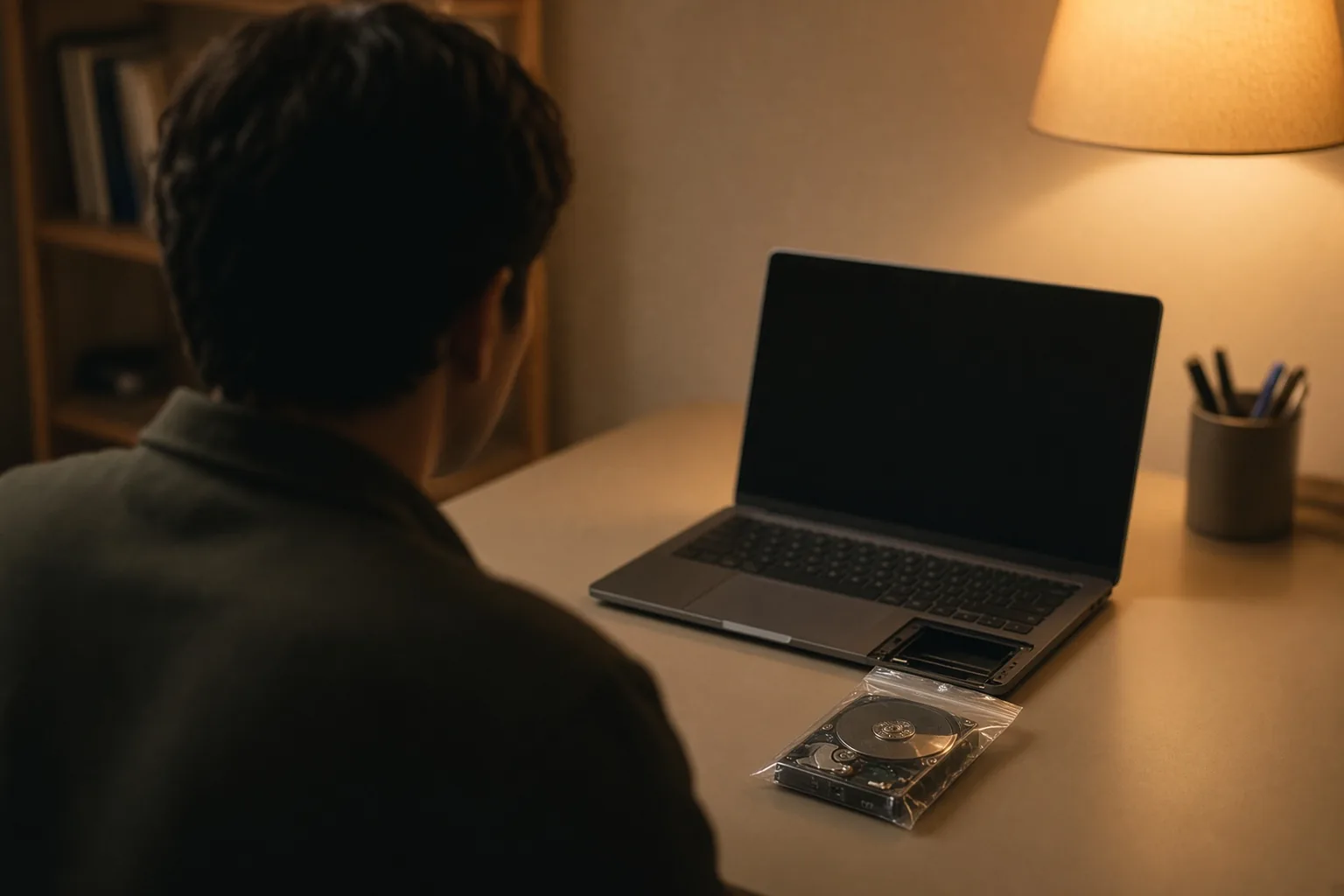
What is the difference between deleted and wiped data?
Deleting a file usually leaves its contents on the drive until other data overwrite that space. Wiping overwrites the space on purpose. NIST describes sanitization as making access to the data infeasible for a given level of effort.
The sanctions order in Leon v. IDX Systems Corp., signed by Judge Marsha J. Pechman of the Western District of Washington on September 30, 2004, describes both steps. Leon admitted "deleting entire directories of personal files as early as October 2002, and after he was placed on leave by IDX in April 2003." Then, "in the week before he shipped the computer back to IDX he wrote a program" to overwrite deleted files in the unallocated space of the hard drive. Deleting the directories had left their contents in that space, and the program was written to overwrite it. IDX's computer forensics expert reported that the unallocated space "was intentionally wiped" and that more than 2,000 files had been deleted.
Wiping did not remove every trace. Leon stated that his program would keep a later user from reading the deleted files, but that "an identifying tail or head of the data would remain." Remaining identifiers suggested that some wiped files "could have pertained to Dr. Leon's work at IDX or the SAGE project." Judge Pechman dismissed his claims with prejudice and ordered him to pay $65,000, the amount IDX showed it had spent investigating and litigating the spoliation.
NIST Special Publication 800-88 Revision 2, Guidelines for Media Sanitization, published in September 2025, describes sanitization as a process that "renders access to target data on the media infeasible for a given level of effort." The NIST FAQ to Revision 2 describes the clear method: "logical techniques apply standard read/write commands to overwrite user-addressable spaces." Overwriting free space, overwriting a whole drive and destroying an encryption key are different operations with different traces. The reviewer first pins down which of them the opposing report claims.
Which traces support a finding that a wiping tool was used?
The tool itself, records that it ran, and the state of the data it targeted. In Keating v. Jastremski the court relied on a DBAN program on a flash drive, traces of its use and dated deletion counts.
Keating v. Jastremski began on January 12, 2015, when a group of investment advisers who had left TRG, a registered investment adviser, sued TRG and Jastremski; TRG counterclaimed for misappropriation of trade secrets. On April 9, 2020, the Southern District of California adopted the report of a Special Master, who had held a six-day evidentiary hearing, and entered default. One finding concerned a 32 GB PNY flash drive kept by another former TRG adviser. It was wiped and a DBAN program was installed on December 29, 2016, about six days before TRG's examiner, Allan Sevel, received it. The order states: "The sole purpose of a DBAN program is to wipe a computer drive." The owner denied using the program. Sevel found that it had left traces on the drive showing that it had been used, and the order cites the advisers' own examiner to the same effect.
The same order counts and dates deletions. Sevel found that over 1,000 files were deleted from one adviser's laptop on January 12, 2015, the day the suit was filed, and the order records that approximately 1,712 files were deleted between December 2015 and February 2016. It also explains what a shortcut (LNK) file can show about a file that no longer exists: "the date it was created and probably the date it was last modified."
In Moore v. Gilead Sciences, Inc., Judge Susan Illston of the Northern District of California found on February 29, 2012 that a former sales representative had used "Secure Clean 4" at least six times in 2006, the last time on November 8, 2006, one week before he filed a qui tam suit. In August 2008 he used "Wipe Drive" on the hard drive of his company laptop. Gilead's forensic analysis found that the applications caused "the erasure of 10,040 deleted items."
For each trace the reviewer asks which artifact records it, which tool and version parsed that artifact, and whether the report gives the location and the stored value, so that another examiner can find the same record in a copy of the drive.
Could the operating system or a reset have removed the data without a wiping tool?
Yes. On NTFS volumes Windows sends trim notifications for freed clusters by default, and erasing an Apple device destroys the key that makes its files readable. The opposing report has to exclude these routes before it blames a wiping tool.
Microsoft's fsutil documentation defines the feature: "Delete notifications (also known as trim or unmap) is a feature that notifies the underlying storage device of clusters that have been freed due to a file delete operation." For NTFS, "trim is enabled by default unless an administrator disables it." What the storage device does with freed clusters after the notification is a property of the device. The reviewer asks whether the opposing report names the drive model, states whether trim was enabled and explains why the missing data point to a tool and not to ordinary deletion followed by trim.
Apple's platform security guide describes an effaceable key that wraps the file system key. That key is "designed to be quickly erased on demand" through Erase All Content and Settings or a remote wipe command, and "Erasing the key in this manner renders all files cryptographically inaccessible." On an Apple device, missing data after an erase are the expected result of a standard menu option. The questions then become when the erase was started, from which account or device, and by whom.
A reset can also be routine. The NIST FAQ lists a manufacturer factory reset among clear options "if rewriting is not supported." In Storz Management Co. v. Carey, Judge Troy L. Nunley of the Eastern District of California on February 9, 2021 left in place a magistrate judge's denial of sanctions against former officers accused of taking company files. One of them said he believed company data were kept on the company network, so "a factory reset would not cause any harm to SMC." The plaintiffs "failed to execute a forensic plan to examine what might have been stolen," and the court found the record insufficient to establish "the degree of prejudice suffered."
How does a reviewer check when the deletion or wiping happened?
By tracing each date in the report to a stored record and placing it against the dates of the case: the preservation demand, the filing of suit and the hand-over of the device to the examiner.
Courts read wiping dates against the duty to preserve. In Leon the district court found that the duty arose "no later than April 30, 2003." IDX had filed its declaratory judgment action on April 25, 2003. Leon wrote the wiping program in the week before he shipped the laptop back to IDX, and IDX's examiner received the laptop on February 5, 2004.
In Moore the court tied the duty to preserve to the spring of 2006, when the plaintiff first contacted an attorney, and held that it still applied in August 2008. It found the August 2008 wiping willful and in bad faith, in part because a letter from his former attorney dated August 15, 2008 showed that he anticipated litigation over retaliation.
In Keating the deletions on one laptop fell on the day the suit was filed, and the flash drive was wiped about six days before it reached the examiner. The order also records that deleted cloud files usually become unrecoverable after 30 days, which puts a deadline on any request to the provider.
A date in a forensic report is a stored value converted by a tool. The reviewer asks for the artifact behind each date, the time zone in which it was read and whether a second artifact confirms it. Where a shortcut file is the only support, the Keating order itself used the word "probably" for the last-modified date, and the review records the same limit.
Can the expert say who wiped the device?
Usually the data show what happened on a device and when, and other evidence ties a person to it. In Keating the owner of a wiped flash drive denied running DBAN, and the finding rested on a six-day hearing.
An artifact records that a program ran under an account at a time. It does not record which person pressed the key. The link to a person comes from facts outside the image: who had the device, who knew the password, what the person said under oath.
In Keating the owner of the flash drive denied running DBAN. The court's finding came from the Special Master's hearing and the record as a whole: the order states that "the Ardent Group formed a deliberate plan to destroy evidence in anticipation of litigation." In Leon the link to the person came from his own words: he "stated in his deposition that he wiped his hard drive specifically to avoid having IDX officials see what was there."
Intent is a finding for the court. Under Rule 37(e)(2) the severe measures require a finding that the party acted "with the intent to deprive another party of the information's use in the litigation." The 2023 committee note to Rule 702(d) states that "each expert opinion must stay within the bounds of what can be concluded" from a reliable application of the expert's basis and methodology. A report that starts with "DBAN was run" and ends with "the defendant intended to destroy evidence" goes beyond what an artifact records, and the reviewer marks that sentence.
Where does the forensic finding fit under Rule 37(e)?
Rule 37(e) asks whether lost electronically stored information can be restored or replaced, whether the party took reasonable steps, and whether the loss caused prejudice or was meant to deprive the other side. The examiner answers the first question.
Rule 37(e) applies to electronically stored information that "should have been preserved in the anticipation or conduct of litigation" and is lost because a party "failed to take reasonable steps to preserve it," if it "cannot be restored or replaced through additional discovery." On a finding of prejudice the court may order measures "no greater than necessary to cure the prejudice." On a finding of intent to deprive it may presume the information was unfavorable, instruct the jury on that presumption, or dismiss the action or enter a default judgment.
The 2015 committee note puts the order of questions: "the initial focus should be on whether the lost information can be restored or replaced through additional discovery." It adds that "'reasonable steps' to preserve suffice; it does not call for perfection," and that measures under (e)(1) may include "permitting the parties to present evidence and argument to the jury regarding the loss of information."
Restoration is a forensic question. In Keating the advisers' own examiner was asked to recover 27 files from one adviser's laptop and recovered two, and the order concluded that "much of the electronic data has been irretrievably destroyed."
The sanctions differed with the record. Leon was decided under the court's inherent authority and ended in dismissal with prejudice and $65,000. In Moore the court denied dismissal and monetary sanctions and allowed the jury to infer that the destroyed evidence would have favored Gilead on whether Moore was disabled. The Keating order does not cite Rule 37(e); it relied on the court's inherent authority, citing Leon, and entered default. In Storz no sanction was imposed.
Which other explanations must the opposing report rule out?
Ordinary deletion followed by trim, key erasure on reset, files moved elsewhere, backups and hardware failure. The 2000 committee note to Rule 702 asks whether the expert accounted for obvious alternative explanations.
Among the factors listed in the 2000 committee note to Rule 702 is "whether the expert has adequately accounted for obvious alternative explanations." A wiping opinion meets this factor only if the report names the other routes to the same missing data and the record that excludes each one.
In Keating the Ardent Group, the firm the advisers had moved to and the people around it, offered two such routes. It argued that the forensic evidence showed files had only been moved to the cloud; the court rejected that argument. For a hard drive destroyed in August 2015 it called the destruction accidental; the court found that explanation "not credible," because it required the drive to have been destroyed days after it was checked on August 4, 2015.
In Leon the plaintiff claimed, a week after oral argument, that he had made backups before wiping. The district court declined to credit the claim because it came late, his credibility was in question and the backups could not be verified.
For each alternative the reviewer names the record that would confirm or exclude it: the trim setting and the drive model, the account and time of a reset, cloud and synchronization records, and backup media with their hash values. If the opposing report does not address a route, the review lists it as an open question.
What must the opposing report disclose so that a wiping opinion can be tested?
Every opinion with its basis and reasons and the facts or data considered, under Rule 26(a)(2)(B). For a wiping opinion that means the artifacts, their locations and values, the tools and versions used and the dates.
Rule 26(a)(2)(B) requires "a complete statement of all opinions the witness will express and the basis and reasons for them" and "the facts or data considered by the witness in forming them." The 2010 committee note says that the protection for drafts and attorney communications does not cover the expert's testing: "notes of any such testing, would not be exempted from discovery by this rule." It adds: "Counsel are also free to question expert witnesses about alternative analyses, testing methods, or approaches."
At trial Rule 705 lets an expert state an opinion without first testifying to the underlying facts or data, "But the expert may be required to disclose those facts or data on cross-examination." A wiping opinion that rests on artifacts the report does not list can be tested only after those artifacts are produced.
In General Electric Co. v. Joiner, decided on December 15, 1997, the Supreme Court held that a court may conclude that there is "too great an analytical gap between the data and the opinion proffered." The 2023 note to Rule 702 rejects the view that "arguments about the sufficiency of an expert's basis always go to weight and not admissibility." A report that says a drive was wiped without naming the trace that proves it presents that gap.
What does a review of a wiping opinion contain?
Each finding of the opposing report with the artifact behind it, whether that artifact can be found again in a verified copy, which alternative explanation remains open and which further examination would close it.
Counts need the same care as conclusions. In Keating TRG's examiner reported over 1,000 files deleted from one laptop on the day suit was filed. The advisers' own examiner, Ashraf Massoud, reviewed his report and images and "concurred insofar as he found at least 50, and possibly more than 100, 'hard deletions.'" The order explains that "Hard deletions are intentionally made by a user" and "generally also conceal the fact that the deleted data was ever present on the computer." The review states which kind of count each figure in the opposing report is.
A second copy of the image lets the reviewer look for the same artifacts. The 2017 committee note to Rule 902(14) states that "identical hash values for the original and copy reliably attest to the fact that they are exact duplicates," and that "If the hash values for the original and copy are different, then the copy is not identical to the original." A certification under that rule "can only establish that the proffered item is authentic"; it does not establish that a deletion count or a wiping opinion is correct.
Timing follows Rule 26. Unless the parties stipulate or the court orders otherwise, a report offered solely to contradict or rebut the other side's expert on the same subject is due "within 30 days after the other party's disclosure" under Rule 26(a)(2)(D)(ii).
What does IAE do when the opposing expert says the data were wiped?
IAE prepares reviews of the opposing digital forensics report and rebuttal expert reports on messages, files, phones and computers. The reviewer checks whether each conclusion follows from the data. The document is issued in up to 5 business days.
The reviewer checks whether another examiner could repeat the opposing work: matching hash values, the tool and version that extracted the data, the time zone of each timestamp and whether each conclusion follows from the data. IAE works on civil, criminal, employment and trade secret cases, and the review can be followed by a rebuttal expert report and by questions for the opposing expert's deposition.
Work can start without the forensic image. The review can rest on the report, its exhibits and the facts or data the expert must list under Rule 26(a)(2)(B)(ii). With a second copy of the image verified by hash value, the reviewer can repeat the extraction.
The client sends the opposing report and describes the task. The secretariat confirms receipt the same day. Within one business day IAE confirms the format, the cost, the deadline and the specialist from its registry, and the client approves the candidate and the CV before work starts. Cases with tight deadlines have a 48-hour rush.
Every specialist is a member of the public IAE registry and passed the council's attestation under the published Criteria Matrix; the Member ID or QR code in the document opens the specialist's record. The specialist confirms in the document that he or she has no interest in the outcome. Materials are not passed to third parties without the client's consent. A review is evidence the court weighs with the other materials; neither IAE nor the reviewer guarantees the outcome, and IAE is not a law firm.
Sources
- Leon v. IDX Systems Corp., No. C03-1158P, order on sanctions, Dkt. 285 (W.D. Wash. Sept. 30, 2004), full text of the order on the K&L Gates site
- Keating v. Jastremski, No. 3:15-cv-00057-L-AGS, order adopting Special Master's report, granting terminating sanctions and entering default, Dkt. 467 (S.D. Cal. Apr. 9, 2020) (GovInfo)
- Moore v. Gilead Sciences, Inc., No. C 07-03850 SI, order granting in part motion for sanctions (N.D. Cal. Feb. 29, 2012)
- Storz Management Co. v. Carey, No. 2:18-cv-00068-TLN-DB, order (E.D. Cal. Feb. 9, 2021)
- NIST SP 800-88 Rev. 2, Guidelines for Media Sanitization (September 2025), CSRC page
- NIST SP 800-88 Rev. 2, Frequently Asked Questions
- Microsoft Learn, fsutil behavior (disabledeletenotify)
- Apple Platform Security, Data Protection in Apple devices
- Federal Rules of Civil Procedure, Rule 37, with committee notes (LII)
- Federal Rules of Civil Procedure, Rule 26, with committee notes (LII)
- Federal Rules of Evidence, Rule 702, with committee notes (LII)
- Federal Rules of Evidence, Rule 705 (LII)
- Federal Rules of Evidence, Rule 902, with 2017 committee note (LII)
- General Electric Co. v. Joiner, 522 U.S. 136 (1997) (LII)
Read also
All articles

Cell tower location evidence: how does a reviewer test the other side's cell-site analysis?
A cell-site report plots the towers a phone used and argues that the phone, and its owner, were near a place at a certain time. The records behind Sergei Voronin

Does an IP address identify a person, and how does a reviewer test the other side's expert who ties an IP address to a defendant?
An IP address identifies a network connection at a moment in time. The internet service provider can name the subscriber who pays for thatSergei Voronin
Who pays for a review of the opposing digital forensics report, and can the fee be recovered?
The party that retains a reviewer of the opposing digital forensics report pays the reviewer. The other side pays only for the time it spendsSergei VoroninExpert report review
Ready to discuss your case?
Send the materials: the secretariat will confirm the format, cost, deadline and the specialist within one business day.
