
Expert report review
How do you rebut the opposing digital forensics expert's report?
A rebuttal report answers the other side's digital forensics expert on the same subject, and under Federal Rule of Civil Procedure 26(a)(2)(D)(ii) it is due within 30 days of that disclosure unless the court sets another date. The reviewer checks whether another examiner could repeat the work: how the data were acquired, whether hash values match, which tool and version produced the output, and how timestamps were read.
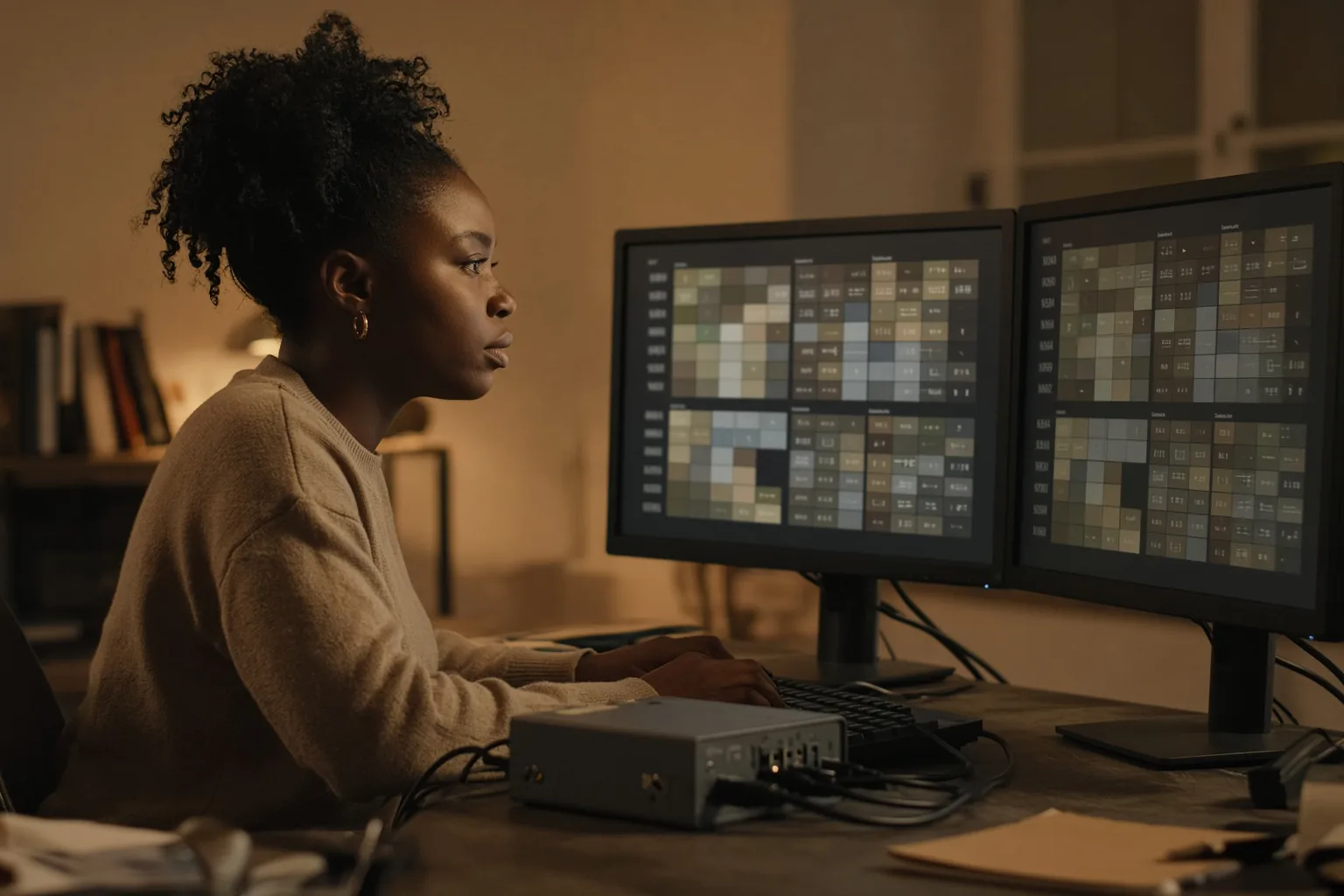
What does a rebuttal of a digital forensics report do?
It contradicts or rebuts the opposing expert's evidence on the same subject. It names the steps the other examiner skipped or misread and states what the data do and do not support.
Rule 26(a)(2)(D)(ii) sets the default date. Evidence intended solely to contradict or rebut evidence on the same subject matter that another party disclosed under Rule 26(a)(2)(B) or (C) is due within 30 days after that disclosure. A stipulation or a court order can set a different schedule.
A rebuttal written by a testifying expert is a report like any other. Rule 26(a)(2)(B) requires six parts: a complete statement of the opinions with their basis and reasons, the facts or data considered, exhibits, the witness's qualifications with publications from the previous 10 years, a list of cases with trial or deposition testimony in the previous 4 years, and a statement of compensation.
The rebuttal stays inside the subject the opposing expert opened. If the other side's examiner wrote about a phone extraction, the rebuttal answers the extraction. An opinion on a new subject, for example a new theory about who used a laptop, is an ordinary expert disclosure: it is due when the court orders or, absent an order, at least 90 days before the trial date (Rule 26(a)(2)(D)(i)).
A party can also keep the reviewer as a consultant and decide later whether to disclose a report. Under Rule 26(b)(4)(D), a party ordinarily may not discover, by interrogatories or deposition, facts known or opinions held by an expert retained in anticipation of litigation who is not expected to testify at trial.
What must the opposing examiner disclose?
Every opinion with its basis and reasons, the facts or data considered and the exhibits. Facts, data and assumptions that the attorney supplied are discoverable, while drafts and other attorney communications are protected.
The list of facts or data considered under Rule 26(a)(2)(B)(ii) is the reviewer's starting point. In a digital case it names what the reviewer needs to repeat the work: the forensic image or the extraction file, its hash value, the tool reports and the records exported from them. A list that says only "the client's phone" leaves the reviewer without the object of the examination.
Rule 26(b)(4)(B) protects drafts of the report in any form. Rule 26(b)(4)(C) protects communications between the attorney and an expert who must provide a report, with three exceptions: communications about compensation, facts or data that the attorney provided and the expert considered, and assumptions that the attorney provided and the expert relied on. If counsel told the examiner which employee used a laptop, that assumption is discoverable, and the rebuttal can test whether the data support it.
Rule 26(e)(2) extends the duty to supplement to the information in the report and to the expert's deposition. Additions and changes must be disclosed by the time the pretrial disclosures under Rule 26(a)(3) are due. A supplemental report that corrects an error named in the rebuttal falls under the same deadline.
How does the reviewer test the acquisition?
By comparing the documented acquisition with published practice: whether a write-blocker was used, which tool and version made the image, whether hash values were computed and verified, and the acquisition date and time with time zone.
The Scientific Working Group on Digital Evidence (SWGDE) published Best Practices for Computer Forensic Acquisitions, document 17-F-002, version 2.0, on June 15, 2023. Section 6 states the guiding principle: minimize, to the fullest extent possible, changes to the source data. Section 7.1 says hardware or software write-blockers should be used when possible to prevent writing to the original evidence.
Section 9 lists what examiners should document, including the type of acquisition, the imaging tool and its version number, the hash values of the acquired data and the acquisition date and time, including time zone. Errors encountered during acquisition go into the same record.
Live acquisitions carry a separate warning. Section 7.4.1 says system and file dates and times may change as a result of live access and that live acquisition may be susceptible to smear. Section 7.4.2 explains smear: the running system modifies data during the acquisition, which creates inconsistencies in the acquired data. Where changes to the source cannot be fully prevented, section 4 asks examiners to document the process in enough detail to account for the artifacts.
A report that gives only the final hash value of an image, without the tool, its version and the verification step, gives the reviewer nothing to test. The rebuttal records that gap as a missing fact and cites the section of the standard it departs from.
Do matching hash values settle authenticity?
They settle that the copy matches the source it was hashed against. They do not show who created the data, whether the source was the right device or whether every sector was read.
Federal Rule of Evidence 902(14) makes data copied from an electronic device, storage medium or file self-authenticating if a process of digital identification is shown by a certification of a qualified person, and the proponent gives the notice that Rule 902(11) requires. The 2017 Committee Note says such data are ordinarily authenticated by hash value and that, when the values match, it is highly improbable that the original and the copy are not identical.
The same note limits what the certification proves. A certification under the rule can only establish that the item is authentic. The opponent remains free to object to admissibility on other grounds, and the note adds that a challenge to the authenticity of electronic evidence may require technical information.
SWGDE 17-F-002 sets a technical limit in section 8. Verification compares the hash of the acquired data, and the process of verification might not verify all data as read from the subject media. Damaged sectors, Host Protected Areas or Device Configuration Overlays may prevent an acquisition tool from reading those areas. The reviewer checks whether the opposing report states which areas were not read and whether any conclusion rests on data from them.
Was the forensic tool validated, and was its output checked?
Published guidance asks for both: tools are validated before use and again for new versions, and the examiner checks the report against the data. In testing, tool reports have left out or misreported records.
NIST Special Publication 800-101 Revision 1, Guidelines on Mobile Device Forensics, by Rick Ayers, Sam Brothers and Wayne Jansen (May 2014), says in section 3.4 that tools should be validated and that validation is repeated when updates or new versions appear. The same section reports inconsistencies between the data displayed on the workstation and the data in output reports, and states that an examiner can compare the output of several tools to verify the consistency of results.
Section 7 of the publication calls it vital to check that the finalized report is consistent with the data shown in the user interface. SWGDE 18-F-001, Best Practices for Computer Forensic Examination, version 1.0 of July 11, 2018, says forensic tools should be tested and validated prior to use on examinations.
Published tests record such gaps. The Computer Forensics Tool Testing program, a joint project of the National Institute of Justice and a NIST laboratory, released a September 2009 test of Final Mobile Forensics 2.1.0.0313. The tool did not tell the user when connectivity was interrupted, misreported address book entries in one function, gave no warning when a case file had been changed with a hex editor and, according to the test abstract, left out address book entries and text messages with non-ASCII characters.
The reviewer copies the tool name, version and build from the opposing report and looks for a test of that version. A chat in Cyrillic or another non-Latin script is the first place to compare the tool's report with the raw message database.
How are timestamps and time zones re-checked?
The reviewer finds where each time value came from, which format and time zone it uses, and repeats the conversion. An error of one hour can reverse the order of two events.
Microsoft documentation on file times states that the NTFS file system stores time values in UTC, so they are not affected by changes in time zone or daylight saving time, while the FAT file system stores time values based on the local time of the computer. On FAT the resolution is 10 milliseconds for creation time, 2 seconds for write time and 1 day for access time.
A USB drive formatted with FAT and a laptop disk formatted with NTFS can therefore record one copy operation in two different kinds of time. A timeline that puts both in one column without saying which values were converted mixes local time with UTC.
SWGDE 17-F-002 asks examiners to record the acquisition date and time including time zone. When the opposing report lists times without a zone, the reviewer asks for the time settings used in the tool and repeats the conversion from the raw values.
The same document warns that live access may change system and file dates and times. A last access date that falls on the day of the acquisition may be the examiner's own trace.
Does each conclusion stay within what the data support?
Rule 702(d), as amended in 2023, requires that each opinion stay within the bounds of what a reliable application of the method can support. A finding that files exist does not by itself identify who created them.
Under the amended Rule 702, an expert may testify only if the proponent establishes to the court that it is more likely than not that the expert's knowledge will assist the trier of fact, that the testimony is based on sufficient facts or data, that it is the product of reliable principles and methods, and that the opinion applies those principles and methods reliably to the facts of the case.
The Committee Note to the 2023 amendment says each expert opinion must stay within the bounds of what can be concluded from a reliable application of the expert's basis and methodology. It also says forensic experts should avoid assertions of absolute or one hundred percent certainty, or to a reasonable degree of scientific certainty, if the methodology is subjective and thus potentially subject to error.
Digital reports go past their data in recognizable places. A browser history entry records that a page was loaded under a user profile; the entry itself does not name the person at the keyboard. A USB connection record gives a device serial number and a time; it does not list the files copied unless other artifacts do. The reviewer marks each sentence of the opposing report where the conclusion goes further than the artifact cited for it.
Daubert v. Merrell Dow Pharmaceuticals, decided on June 28, 1993, put the court's focus on method: "The focus, of course, must be solely on principles and methodology, not on the conclusions that they generate." The 2023 note to Rule 702(d) adds the next question: whether the conclusion stays within what the method can support.
When can the court exclude the opposing examiner's testimony?
When the party offering the examiner does not establish, more likely than not, that the Rule 702 conditions are met. Weaknesses that leave the method reliable go to cross-examination and contrary evidence instead.
The 2023 Committee Note puts the burden on the party offering the expert: the testimony may not be admitted unless that party establishes to the court that it is more likely than not that the testimony meets the admissibility requirements of the rule.
Daubert named the questions a court may ask: whether the theory or technique can be and has been tested, whether it has been subjected to peer review and publication, the known or potential rate of error, the existence and maintenance of standards controlling the technique's operation, and general acceptance. In a digital case the standards are the published acquisition and examination practices, and the error questions lead to tool test reports for the version used.
The same opinion names the other route: "Vigorous cross-examination, presentation of contrary evidence, and careful instruction on the burden of proof are the traditional and appropriate means of attacking shaky but admissible evidence." A rebuttal report is the contrary evidence in that sentence.
Rule 703 lets an expert base an opinion on facts or data that experts in the particular field would reasonably rely on in forming an opinion on the subject, even if those facts or data are not admissible. Whether examiners rely on an export that was never checked against its source is a question the rebuttal answers with the published practices cited above.
What does the reviewer need from the other side?
The forensic image or extraction file with its hash value, the tool reports with tool versions, the examiner's notes and the list of facts or data considered. Without the image, the review is limited to the text of the report.
SWGDE 18-F-001 says examiners should take contemporaneous notes relevant to their examination and that organizational systems should keep those notes with the case for later review. Section 7 of NIST SP 800-101r1 says proper documentation gives individuals the ability to re-create the whole process.
The same section lists the contents of a mobile forensics report, among them the identity of the reporting agency, the case identifier, the date of evidence receipt and the date of the report, a descriptive list of items with serial number, make and model, the equipment and setup used, a brief description of the steps taken, supporting materials such as chain of custody documentation, details of findings and the conclusions. Each missing item becomes a discovery request.
Rule 705 lets an expert state an opinion and give the reasons for it without first testifying to the underlying facts or data, but the expert may be required to disclose those facts or data on cross-examination. Under Rule 26(b)(4)(A), a party may depose any person identified as an expert whose opinions may be presented at trial, and when a report is required the deposition may be conducted only after the report is provided.
With a second copy of the image, verified by hash value against the opposing examiner's record, the reviewer can repeat the extraction instead of reading about it. When a protective order limits access, the review states which items were not available.
What does IAE do when a party needs a review of a digital forensics report?
IAE prepares reviews of the opposing forensic report and expert reports on the client's questions for civil, criminal, employment and trade secret cases. The signed document is issued in up to 5 business days.
The review answers whether another examiner could repeat the work from the report. The reviewer checks that the image and the source have matching hash values, which tool and version extracted the data, whether timestamps were read in the right time zone and whether each conclusion follows from the data. The same examiners prepare reports on messages, on documents and file metadata, and on software and devices: event logs, browser history and traces of connected USB drives.
IAE frames the questions by the device, the application and the event the case needs to establish, and confirms the questions, the devices and how the data reach the examiner before work starts. The secretariat confirms receipt the same day. Within one business day IAE confirms the format, the cost, the deadline and the specialist from its registry, and the client approves the candidate and the CV. The draft is checked for facts, and cases with tight deadlines have a 48-hour rush.
Every specialist is a member of the public IAE registry and passed the council's attestation under the published Criteria Matrix; the Member ID or QR code in the document opens the specialist's record. The specialist confirms in the document that he or she has no interest in the outcome of the case. Materials are not passed to third parties without the client's consent. A review is evidence that the court weighs with the other materials, and neither IAE nor the reviewer guarantees the outcome. IAE is not a law firm and does not advise on case strategy.
Sources
- Federal Rules of Civil Procedure, Rule 26, Duty to Disclose; General Provisions Governing Discovery (LII)
- Federal Rules of Evidence, Rule 702, Testimony by Expert Witnesses, with Committee Notes (LII)
- Federal Rules of Evidence, Rule 703, Bases of an Expert's Opinion Testimony (LII)
- Federal Rules of Evidence, Rule 705, Disclosing the Facts or Data Underlying an Expert's Opinion (LII)
- Federal Rules of Evidence, Rule 902, Evidence That Is Self-Authenticating, with Committee Notes (LII)
- Daubert v. Merrell Dow Pharmaceuticals, Inc., 509 U.S. 579 (1993) (LII)
- SWGDE, Best Practices for Computer Forensic Acquisitions, 17-F-002, version 2.0, June 15, 2023
- SWGDE, Best Practices for Computer Forensic Examination, 18-F-001, version 1.0, July 11, 2018
- NIST Special Publication 800-101 Revision 1, Guidelines on Mobile Device Forensics, May 2014
- National Institute of Justice, Test Results for Mobile Device Acquisition Tool: Final Data-Final Mobile Forensics 2.1.0.0313, September 2009
- Microsoft, File Times (Win32 documentation)
Read also
All articles

Cell tower location evidence: how does a reviewer test the other side's cell-site analysis?
A cell-site report plots the towers a phone used and argues that the phone, and its owner, were near a place at a certain time. The records behind Sergei Voronin
Does an IP address identify a person, and how does a reviewer test the other side's expert who ties an IP address to a defendant?
An IP address identifies a network connection at a moment in time. The internet service provider can name the subscriber who pays for thatSergei Voronin
Who pays for a review of the opposing digital forensics report, and can the fee be recovered?
The party that retains a reviewer of the opposing digital forensics report pays the reviewer. The other side pays only for the time it spendsSergei VoroninExpert report review
Ready to discuss your case?
Send the materials: the secretariat will confirm the format, cost, deadline and the specialist within one business day.
