
Expert report review
How does a physician review the opposing medical expert's report?
A review of the opposing medical expert's report is a physician's written analysis of that report against the chart, the medical literature and the expert's own publications and testimony. Counsel uses it to choose the reviewer's role, to prepare the opposing expert's deposition, to answer a defense causation theory at trial and to support a motion under Federal Rule of Evidence 702.
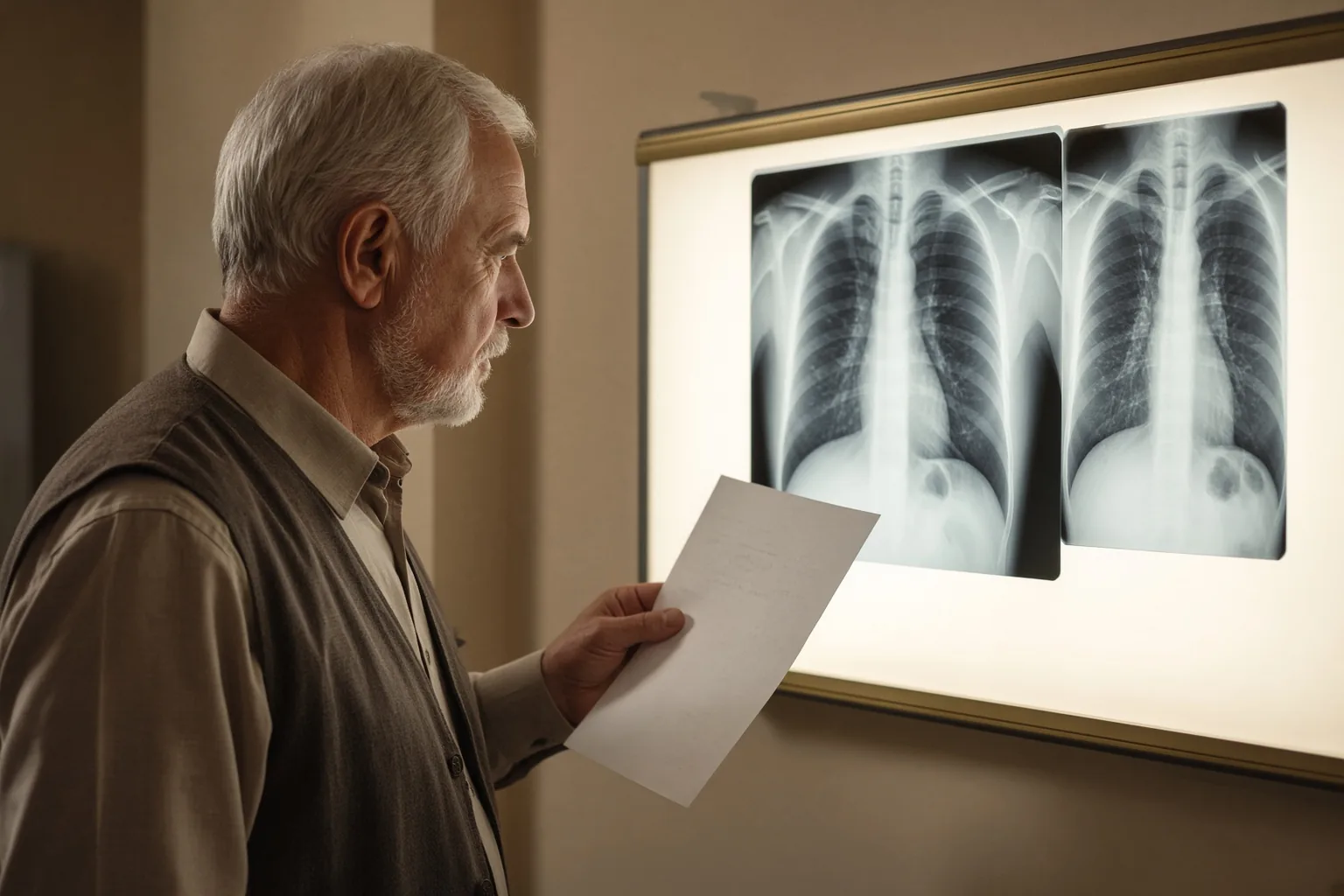
What does a review of the opposing medical expert's report cover?
Each opinion in the report, the records the expert lists as considered, the expert's qualifications and testimony history, and the reasoning that links each conclusion to the chart. The reviewer checks all of it against the full record.
A retained expert's report under Federal Rule of Civil Procedure 26(a)(2)(B) states the opinions with their basis and reasons, the facts or data considered, the exhibits, the expert's qualifications and publications, the testimony list and the compensation. A physician reviewer reads each part as a separate source of questions.
The opinions and their reasons come first. The reviewer lists every opinion, finds the reason the expert gives for it and marks the chart entries that reason relies on. An opinion with no stated reason, or with a reason that rests on no entry in the chart, becomes a separate point of the review.
Some medical opinions come from physicians who were never retained. Under Rule 26(a)(2)(C), a witness who does not have to provide a written report discloses the subject matter of the expected testimony and "a summary of the facts and opinions to which the witness is expected to testify." The committee note to the 2010 amendment says such a witness may testify both as a fact witness and as an expert, and it names "physicians or other health care professionals" among the frequent examples. For a treating physician the reviewer works from that summary, the physician's own notes in the chart and the deposition transcript.
The review ends in one of three documents: a confidential memo for counsel, a rebuttal report signed by the reviewer, or a declaration filed with a motion. The choice decides what the other side will see.
Which physician should review a medical expert's report?
A physician whose training and practice cover the care at issue and the field of the opposing expert. Rule 702 qualifies an expert by knowledge, skill, experience, training or education, and a testifying reviewer meets the same test.
Rule 702 admits opinion testimony from "A witness who is qualified as an expert by knowledge, skill, experience, training, or education." The committee note to the 2000 amendment adds a condition for opinions built on practice: "If the witness is relying solely or primarily on experience, then the witness must explain how that experience leads to the conclusion reached, why that experience is a sufficient basis for the opinion, and how that experience is reliably applied to the facts."
Two rulings of the Civil Court of the City of New York, Kings County, show the specialty question in a rebuttal setting. In January 2014, Judge Katherine A. Levine decided two cases brought by Village Medical Supply against GEICO. In each, GEICO moved for summary judgment on lack of medical necessity, relying on a peer review, and the supplier answered with an affidavit from an anesthesiologist. The court applied the rule that when a physician opines outside his specialty, "a foundation must be laid tending to support the reliability of the opinion rendered," and that the expert's affidavit "must set forth the requisite foundation as to the expert's knowledge and familiarity" with the specialty at issue.
In the ruling of January 6, 2014, GEICO's reviewer was an internist. The anesthesiologist had completed an internal medicine internship, discussed the supplies in depth and cited more authority than the peer review, so the court denied summary judgment. It also held the supplier to that anesthesiologist as its expert at trial and gave GEICO the right to question him on his foundation.
The reviewer's specialty is checked twice: against the care the patient received and against the specialty of the expert being answered. A review of a cardiac surgeon's opinion written by a physician outside cardiac surgery states the training that covers the procedure, because the court will look for that foundation before it weighs the review.
What does the reviewer need besides the report?
Everything the opposing expert lists as considered, the complete chart, the depositions of the treating staff and, once taken, the opposing expert's own deposition. A gap between the expert's list and the record goes into the review first.
Rule 26(a)(2)(B)(ii) makes the expert list "the facts or data considered by the witness in forming" the opinions. Counsel obtains every item on that list. If the list cites a chronology prepared by counsel, the reviewer reads it next to the chart entries it summarizes and marks every difference.
Rule 703 sets the outer limit of the basis: "An expert may base an opinion on facts or data in the case that the expert has been made aware of or personally observed." If experts in the particular field would reasonably rely on those kinds of facts or data, "they need not be admissible for the opinion to be admitted." The reviewer asks whether physicians in the specialty would rely on the sources the expert used in the form the expert used them: a radiology report instead of the images, a discharge summary instead of the nursing flowsheets, a typed transcription instead of the handwritten order sheet.
The reviewer then lists what the expert did not see. A standard-of-care opinion about a delayed operation that never mentions the anesthesia record or the timed vital signs rests on part of the chart. The review names each missing document and the opinion it bears on.
After the opposing expert is deposed, the reviewer reads the transcript against the report and the chart. Testimony that relies on a record the report never listed goes into the review with the page and line of the transcript.
How does the reviewer use the expert's publications and testimony list?
As a record of the expert's earlier positions. Rule 26(a)(2)(B) requires publications from the previous 10 years and a list of testimony from the previous 4 years, and the reviewer compares those positions with the current report.
Items (iv) and (v) of Rule 26(a)(2)(B) give the reviewer two lists: "all publications authored in the previous 10 years" and "all other cases in which, during the previous 4 years, the witness testified as an expert at trial or by deposition." Counsel obtains the articles and, where available, the transcripts.
The committee note to the 2000 amendment of Rule 702 asks whether the expert "is being as careful as he would be in his regular professional work outside his paid litigation consulting." An article in which the opposing surgeon described a technique, a complication rate or a monitoring interval gives the reviewer a measure of that care, written before the case. Where the report departs from the expert's own publication, the review quotes both texts side by side.
The testimony list shows how often the expert testifies and in what kinds of cases. A transcript in which the same expert gave a different causation opinion on similar facts goes into the review with the page and line, so counsel can put it to the expert at deposition or trial.
The review limits itself to what the documents say and where they differ from the report. Remarks about the expert's motives give the other side an easy reply and add nothing the court can use.
How does the review prepare the opposing medical expert's deposition?
It becomes the outline. The deposition follows the report, the notice lists the materials the expert must bring, and counsel takes up each opinion the review flagged within the default limit of 1 day of 7 hours.
Under Rule 26(b)(4)(A), where a report is required, the deposition of the opposing expert may be conducted only after the report is provided. The opposing expert is not a party, so the materials counsel wants at the deposition go into a subpoena duces tecum, and Rule 30(b)(2) requires that "the materials designated for production, as set out in the subpoena, must be listed in the notice or in an attachment." A notice to a party deponent "may be accompanied by a request under Rule 34."
For a medical expert the list follows the review: the chart as the expert received it, any chronology prepared by counsel, the literature cited in the report, the expert's notes and the invoices that show the time spent on each task. A gap between what the expert lists as considered and what he brings is a question in itself.
Time is limited. Rule 30(d)(1) provides: "Unless otherwise stipulated or ordered by the court, a deposition is limited to 1 day of 7 hours." The court "must allow additional time consistent with Rule 26(b)(1) and (2) if needed to fairly examine the deponent." Objections do not stop the questioning: under Rule 30(c)(2) "the examination still proceeds; the testimony is taken subject to any objection."
Within those hours the review gives counsel an order of questions tied to pages of the report and entries in the chart: which entry supports each opinion, which records the expert did not see, where his own article or earlier testimony says something different. Questions the record cannot answer, such as whether the expert reviewed the images himself or only the radiology report, go first. Under Rule 26(b)(4)(E)(i), unless manifest injustice would result, the party seeking the deposition pays the expert a reasonable fee for the time spent responding.
Can a rebuttal physician answer a defense causation theory at trial?
In Bereal v. Bajaj the Kansas Court of Appeals said yes and ordered a new trial after the plaintiff's rebuttal expert was struck. The plaintiff did not have to anticipate the defense theory in his case-in-chief.
Bereal v. Bajaj, No. 111,954, was decided by the Court of Appeals of Kansas on April 1, 2016. At the malpractice trial the defense expert, Dr. Yadin David, a biomedical engineer, attributed the air injection that injured the patient to a defect in the pressure isolation valve of the Avanta injection system made by Medrad. The plaintiff offered a rebuttal expert, Dr. Suzanne Parisian, and the trial court struck her. The Kansas statute, K.S.A. 60-226(b)(6)(C)(ii), permits expert testimony offered "solely to contradict or rebut" other expert testimony.
The appellate court held that the exclusion was an abuse of discretion. It noted that Dr. Parisian had been timely disclosed and quoted RMD, LLC v. Nitto Americas, Inc.: "The proper function of rebuttal evidence is to contradict, impeach or defuse the impact" of the other side's evidence, and the plaintiff was not required to anticipate the defense theory in his case-in-chief. The excluded testimony "was intended solely to contradict or rebut the defense expert's causation evidence," the error was not harmless, and the court reversed in part and remanded for a new trial. The court distinguished an earlier Kansas case, Dickerson, in rejecting the harmless error argument.
The ruling turns on the link between the rebuttal and the defense evidence. A physician reviewer therefore writes each rebuttal opinion as an answer to a named passage of the defense report or testimony: the device theory, the timing of the injury, the alternative diagnosis. An opinion on a question the defense never raised, such as a new theory of liability against another provider, is not rebuttal and needs its own disclosure. When the defense theory is technical, as the device theory was in Bereal, the rebuttal may need two specialists: an engineer for the device and a physician for the injury, each answering the part of the defense testimony in his field.
The review also records what the defense expert relied on for the alternative cause: the device records, the literature, the imaging. A rebuttal that answers those sources point by point stays within the subject the defense opened.
Can the review support a motion to exclude the opposing medical expert?
Yes. Since December 1, 2023, Rule 702 requires the party offering the expert to show that each reliability condition is more likely than not met, and the review supplies the specific defects for the objection.
Under Rule 702, the proponent shows the court "that it is more likely than not" that the expert's specialized knowledge will assist the trier of fact, that "the testimony is based on sufficient facts or data," that "the testimony is the product of reliable principles and methods," and that the opinion applies those principles and methods reliably to the facts of the case.
The committee note to the 2000 amendment lists further questions, and in a malpractice case each has a medical form. Did the expert unjustifiably extrapolate an accepted premise into an unfounded conclusion, for example by applying a study population's survival figure to a patient with a different disease? Has the expert "adequately accounted for obvious alternative explanations," such as the natural course of the patient's illness? Is the field "known to reach reliable results for the type of opinion the expert would give"?
The objecting party files the motion with the reviewer's declaration or report attached. Each point names subdivision (b), (c) or (d) of the rule, the page of the opposing report and the chart entry or publication that contradicts it.
The court decides whether the opposing expert is excluded, limited or heard in full. A review written for the motion is also the outline for cross-examination if the expert testifies.
What if the opposing expert changes an opinion after the report?
The other side has to supplement. Rule 26(e)(2) extends the duty to the report and the deposition, with changes due by the pretrial disclosures, and Rule 37(c)(1) bars undisclosed opinions unless the failure was justified or harmless.
For an expert who must give a written report, Rule 26(e)(2) extends the duty to supplement to the report and to the expert's deposition, and changes must be disclosed by the time the pretrial disclosures under Rule 26(a)(3) are due. Under Rule 37(c)(1), information that was not disclosed as Rule 26(a) or (e) requires cannot be used at a hearing or at trial unless the failure was substantially justified or is harmless.
In a malpractice case a change can concern causation or timing: the expert moves the moment when the complication could have been detected, or replaces one mechanism of injury with another. The reviewer keeps a table of the expert's opinions across the report, the deposition and every supplement, with the date of each version, the chart entries cited for it and the literature it relies on.
A new causation theory in a supplement served shortly before trial is marked with its date, and any article or chart entry it cites for the first time is checked against the materials list of the original report. Counsel then decides whether to move under Rule 37(c)(1) or to ask the court for time to answer it with a further rebuttal, and the reviewer's table shows the court what changed and when.
What does IAE do when a party needs a review of the opposing medical report?
A physician in the relevant specialty from the IAE registry writes a review of the opposing expert's report or an expert report on your questions, in up to 5 business days after the format and cost are confirmed.
The medical expertise page covers standard of care, causation and the medical record in malpractice, wrongful death and personal injury cases. IAE frames the questions from the chart, the operative notes and the opposing expert's report and confirms them before work starts. The IAE reviewer checks each opinion of the other side's expert against the chart and against Rule 702: sufficient facts, a reliable method and its reliable application to this patient.
A review answers six questions about an expert report: whether the method fits the object and the questions and was followed at every stage; whether all objects, materials and questions were examined; whether the conclusions follow from the examination; whether the expert's education, specialty and experience match the subject; whether the report meets the formal and procedural requirements of the jurisdiction; and whether the report can be relied on.
The client sends the report or the case materials and describes the task. The secretariat confirms receipt the same day. Within one business day IAE confirms the format, the cost, the deadline and the physician from its registry, and the client approves the candidate and the CV before work starts. The draft is checked for facts, and the signed PDF is issued in up to 5 business days. Cases with tight deadlines have a 48-hour rush.
Every specialist is a member of the public IAE registry and passed the council's attestation under the published Criteria Matrix. The Member ID in the document opens the specialist's record on the status check page or by QR code, and the specialist confirms in the document that he or she has no interest in the outcome. Materials go through the contact form or to info@iaexperts.com and are not passed to third parties without the client's consent. The court weighs the review together with the other evidence. Neither IAE nor the physician guarantees the outcome, and IAE is not a law firm.
Sources
- Federal Rules of Civil Procedure, Rule 26, Duty to Disclose; General Provisions Governing Discovery, with Committee Notes (LII)
- Federal Rules of Civil Procedure, Rule 37, Failure to Make Disclosures or to Cooperate in Discovery; Sanctions (LII)
- Federal Rules of Evidence, Rule 702, Testimony by Expert Witnesses, with Committee Notes (LII)
- Federal Rules of Evidence, Rule 703, Bases of an Expert's Opinion Testimony (LII)
- Village Medical Supply, Inc. v. GEICO, 2014 NY Slip Op 50068(U) (Civ. Ct. Kings County, Jan. 6, 2014)
- Village Medical Supply, Inc. a/a/o Shainah Raphael v. GEICO, 2014 NY Slip Op 50069(U) (Civ. Ct. Kings County, Jan. 3, 2014)
- Bereal v. Bajaj, No. 111,954 (Kan. Ct. App. Apr. 1, 2016)
- U.S. District Court for the Middle District of Pennsylvania, Amendments to Federal Rules Effective December 1, 2023 (Evidence rules among them)
- Federal Rules of Civil Procedure, Rule 30, Depositions by Oral Examination (LII)
Read also
All articles

Loss of chance in a medical malpractice case: how is the opposing expert's survival percentage tested?
Under the loss of chance doctrine a patient recovers for a reduced chance of survival or cure even when that chance was never above 50 percent Sergei Voronin

Summary judgment in a medical malpractice case: what must the expert affirmation contain?
A malpractice case can end before trial on a motion for summary judgment, and the motion is decided on physicians' written opinions. In New YorkSergei Voronin
Net opinion rule: when is a medical expert's opinion inadmissible in New Jersey?
In New Jersey a medical expert's conclusion that is not supported by facts in the record or by data is a net opinion, and the court bars itSergei VoroninExpert report review
Ready to discuss your case?
Send the materials: the secretariat will confirm the format, cost, deadline and the specialist within one business day.
