
Expert report review
Seat belt defense: how does a reviewer check the opposing expert's opinion that a belt would have prevented the injuries?
When the defense says the plaintiff was not wearing a seat belt, the argument stands on two expert findings: that the plaintiff was unbelted, and that a belt would have prevented or reduced the injuries. States treat the evidence differently. Florida and Texas use it in apportioning fault, New York lets it reduce damages, and California lets negligence be proven as a fact. A review tests each step of the opposing opinion.
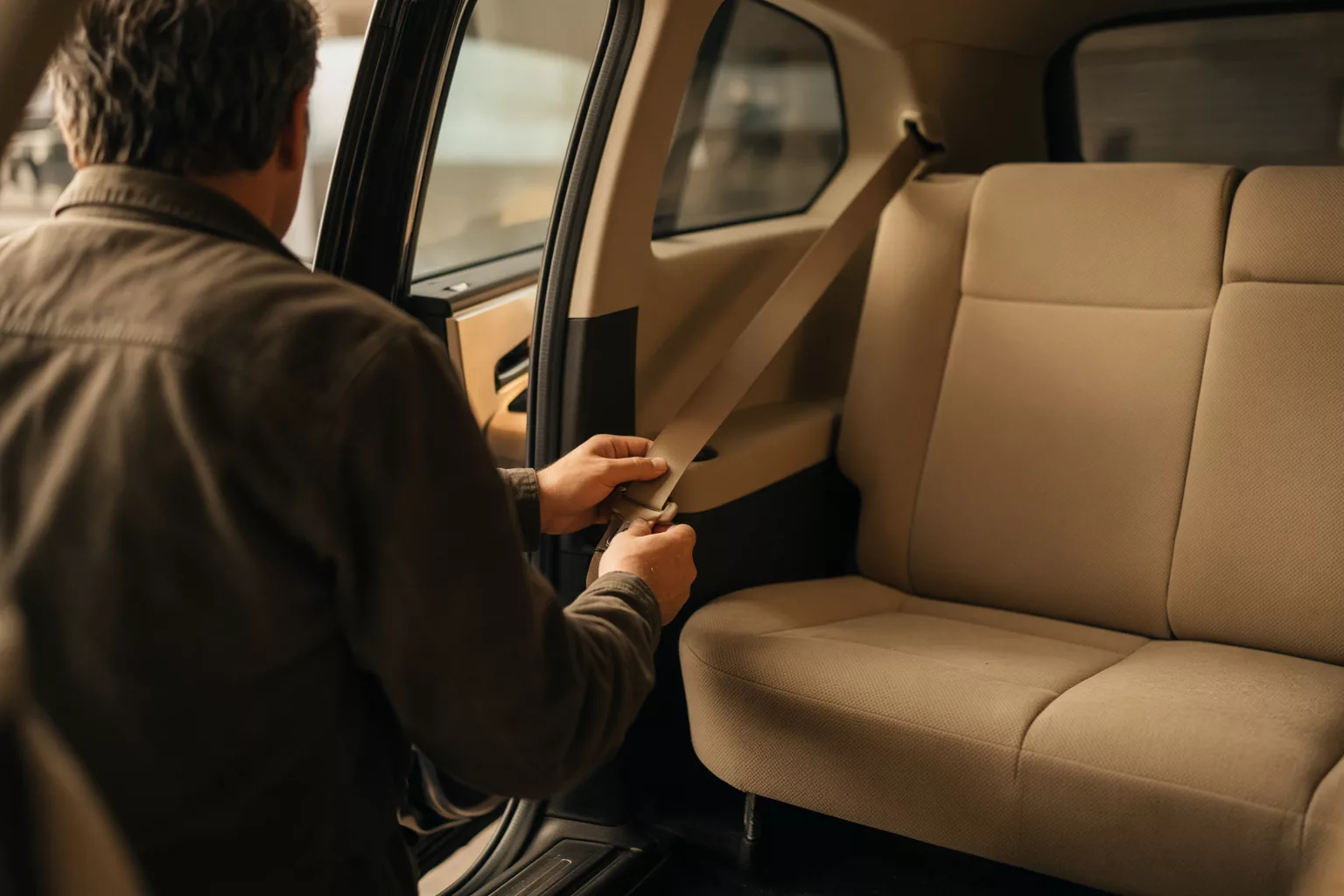
What does the defense have to prove in a seat belt defense?
That the plaintiff did not use an available and operational seat belt, that the nonuse was unreasonable in the circumstances, and that there is a causal link between the nonuse and the plaintiff's injuries.
The Florida Supreme Court set out the burden in Ridley v. Safety Kleen Corp., 693 So. 2d 934, decided May 30, 1996, with a clarification on denial of rehearing issued March 27, 1997. Quoting a commentary, the court stated that the defendant has the burden of pleading and proving that the plaintiff did not use an available and operational seat belt, that the nonuse was unreasonable under the circumstances, and that there was a causal relationship between the nonuse and the injuries.
New York frames the defense the same way. In Barnes v Paulin, 73 AD3d 1107, decided May 25, 2010, the Appellate Division, Second Department, wrote that the failure to use an available seat belt is an affirmative defense that must be properly pleaded and proved by a defendant, citing Vehicle and Traffic Law section 1229-c(8). Absent proof to the contrary, the seat belts in a vehicle are presumed operable and available.
Each element is a factual question, and two of them are engineering and medical questions. Whether a belt was used, and whether using it would have changed the injuries, are the points where the defense needs an expert and where a review of that expert begins.
How do states treat seat belt evidence?
Differently. Florida admits nonuse as evidence of comparative negligence, Texas admits relevant evidence of use or nonuse to apportion responsibility, New York lets expert proof reduce damages, and California lets negligence be proven as a fact.
Florida Statutes section 316.614(10) provides that a violation of the seat belt law does not constitute negligence per se, may not be used as prima facie evidence of negligence or be considered in mitigation of damages, but may be considered as evidence of comparative negligence in any civil action. In Ridley the Florida Supreme Court held that the jury should find a single total percentage of comparative negligence that combines the plaintiff's conduct in causing the accident with any failure to wear a seat belt, and receded from the two-step reduction used under Pasakarnis.
Texas changed course in 2015. In Nabors Well Services, Ltd. v. Loera, No. 13-0126, decided per curiam on March 20, 2015, the Supreme Court of Texas described its decision in Nabors Well Services, Ltd. v. Romero: the court overruled Carnation Co. v. Wong and held relevant evidence of use or nonuse of seat belts admissible for the purpose of apportioning responsibility in civil lawsuits. It made that decision in light of the Legislature's repeal of its statutory ban on all seat-belt evidence and of the proportionate-responsibility scheme, which, in the court's words, requires fact-finders to consider relevant evidence of a plaintiff's pre-occurrence, injury-causing conduct. There is no need, the court wrote, to deviate from a single apportionment question.
In New York the expert drives the result. In Barnes the trial court allowed the defendants' expert to testify about the causal connection between the plaintiff's nonuse of an available seat belt and his injuries and damages, citing Spier v Barker, 35 NY2d 444. The jury deducted $100,000 for the plaintiff's failure to use a functioning seat belt that was available to him, and the Second Department affirmed.
California Vehicle Code section 27315(i) provides that in a civil action a violation of the section's restraint requirements does not establish negligence as a matter of law or negligence per se for comparative fault purposes, but negligence may be proven as a fact without regard to the violation. Subdivision (d) requires the driver and all passengers 16 years of age or older to be properly restrained. The version of the section in force in 2026 states that it remains in effect only until January 1, 2027, so the edition on the date of the crash has to be checked.
What happened when the evidence reached the jury in Loera?
The jury found the plaintiffs' nonuse of seat belts negligent and a cause of their injuries. The trial court entered a take-nothing judgment, the court of appeals reversed under the old rule, and the Supreme Court remanded.
In Loera a Nabors tractor-trailer collided with a pickup driven by Morayma Loera, who was attempting to pass two Nabors trucks slowing for a left turn. Her parents, Josefina and Armando Loera, were passengers. The trial court admitted evidence that the Loeras were not wearing seat belts.
The jury assigned fault for the collision 50 percent to the Nabors driver, 10 percent to Nabors and 40 percent to Morayma. It also found that the Loeras' failure to wear seat belts was negligent and a proximate cause of their injuries and assigned them 100 percent responsibility for that nonuse. The jury awarded about $450,000, but the trial court entered a take-nothing judgment, presumably based on the seat belt answers.
The court of appeals applied the old rule of Carnation Co. v. Wong, held that admitting the evidence was harmful error and remanded for a new trial. While the petition for review was pending, the Supreme Court decided Romero. It granted the petition, vacated the court of appeals' judgment and remanded for reconsideration in light of Romero. The figures in Loera show how much turns on the seat belt findings once the jury is allowed to make them.
Was the plaintiff belted, and what evidence answers that?
The event data recorder, the restraint system itself, the injuries and the scene record. Under 49 CFR 563.7 a recorder stores the driver's safety belt status one second before the event, and the right front passenger's status if recorded.
Table I of 49 CFR 563.7 lists the data that every event data recorder subject to Part 563 must capture. One element is the driver's safety belt status, recorded at 1.0 second before time zero. Table II lists the right front passenger's safety belt status, buckled or not buckled, as an element captured if the vehicle records it. For rear seat passengers the reviewer checks whether the particular vehicle records belt status at all.
The restraint system is the second source. An engineer inspects the webbing, the latch plate, the buckle, the guide loop and the retractor for marks that a loaded belt leaves in a crash, and checks whether the belt was stowed, cut by rescuers or damaged. Photographs taken at the scene and at the tow yard show the belt's position before anyone handled it.
The third source is the occupant. Medical records may describe abrasions or bruising in the pattern of a shoulder or lap belt, or injuries from contact with the windshield, the steering wheel or the roof that a belted occupant would not have made. Police reports, rescue reports and witness statements add what people saw.
A reviewer checks which of these the opposing expert used and whether they agree. An opinion that rests on one recorder entry, with no inspection of the belt and no reference to the medical record, is open on the first element of the defense.
Would a belt have changed the injuries, and how does an expert answer that?
By comparing the plaintiff's actual motion and contacts in the crash with the motion a belted occupant would have had in the same crash, injury by injury. The answer depends on the crash direction, its severity and the vehicle.
The engineering part of the answer starts with the crash pulse: the direction of impact, the change in velocity and its duration, from the recorder data and the reconstruction. In a frontal crash a lap and shoulder belt holds the occupant in the seat and limits contact with the steering wheel and the windshield. In a side impact or a rollover the belt's effect on each injury differs, and the expert has to address the crash at hand.
Next comes occupant kinematics. The expert traces where the unbelted occupant moved and what he or she struck, using the interior contact marks and the injuries, and compares that path with the expected path of a belted occupant of the same size in the same seat. Each injury is then assigned to a contact.
The medical part follows. Whether a particular fracture or brain injury came from a contact the belt would have prevented, or would have occurred in a belted occupant too, is a question for a physician, and the engineer's analysis supplies the forces and contacts the physician needs. A seat belt opinion from an engineer alone, without that link, leaves the causal element of Ridley and Barnes to assumption.
Which injuries does the opposing opinion have to separate?
Every injury claimed. The defense must tie nonuse to particular injuries; an opinion that attributes all damages to nonuse without separating injuries that a belted occupant would also have suffered overstates the defense.
Ridley requires a causal relationship between the nonuse and the injuries, and Barnes allowed the defense expert to testify about the causal connection between the nonuse and the plaintiff's injuries and damages. Both put the question at the level of injuries, not of the crash as a whole.
A review lists the claimed injuries and, for each, records what the opposing expert says: prevented by a belt, reduced by a belt, or unaffected. Injuries the expert does not address are listed too. In a frontal crash with intrusion into the passenger compartment, for example, a leg injury from the intruding structure and a facial injury from striking the windshield are different questions, and an opinion that treats them alike has skipped a step.
The distinction matters in money. In New York the jury in Barnes deducted a fixed sum for nonuse. In Florida and Texas the finding feeds a single percentage of fault. In each system an opinion that sweeps in injuries a belt would not have changed increases the reduction beyond what the evidence supports.
What does the reviewer check in the opposing expert's method?
Whether the opinion rests on sufficient data from this crash and this vehicle, whether the methods are published and tested, and whether they were applied to the plaintiff's seat, size and injuries, as Rule 702 requires.
Federal Rule of Evidence 702 requires the proponent to show the court that it is more likely than not that the expert's knowledge will help the trier of fact, that the testimony is based on sufficient facts or data, that it is the product of reliable principles and methods, and that the opinion applies those methods reliably to the facts of the case. State courts apply their own rules, and the questions a reviewer asks track the same four conditions.
Sufficient facts or data means the recorder download, an inspection of the belt and the interior, the medical records and the reconstruction of this crash. A seat belt opinion drawn from general statistics on belt effectiveness, without the vehicle and the injuries, has no case-specific basis. Reliable methods means published occupant kinematics and injury biomechanics, crash tests of comparable vehicles and stated assumptions. Reliable application means the occupant's actual height, weight and seating position, and the actual crash direction and severity.
The committee note to the 2023 amendment says that some challenges go to weight rather than admissibility once the court finds the rule's requirements met. A review sorts its points accordingly: a missing inspection or a missing link to the medical record for a motion, disputes about the size of the reduction for cross-examination.
What should counsel obtain before answering a seat belt defense?
The event data recorder download and report, photographs and the physical belt assemblies, the vehicle for inspection, the medical records and imaging, rescue and police reports, and the opposing expert's calculations and test references.
The belt assemblies are evidence and are easily lost when the vehicle is salvaged. Counsel asks for the vehicle to be held and the belts preserved, with photographs taken before anyone removes them. The recorder is downloaded with the manufacturer's retrieval tool, and the full report, not a summary, goes to the reviewer.
Medical records and imaging come from every provider who treated the plaintiff after the crash, together with the rescue report that describes where the plaintiff was found and in what position. These records let the reviewer test the opposing expert's description of the occupant's motion against the injuries.
From the other side the reviewer needs the expert's file: the inspection photographs and notes, the calculations, any simulation, the crash tests and studies cited, and the assumptions about the occupant's size and position. Gaps in that file become questions for the deposition.
What does IAE do when the other side raises a seat belt defense?
An engineer from the IAE registry reviews the opposing reconstruction and seat belt opinion against the recorder data, the vehicle and published methods. Up to 5 business days, with a 48-hour rush.
The IAE accident reconstruction review is for counsel facing the other side's reconstructionist in an injury or property damage case in a US court. The engineer asks whether the opposing reconstructionist applied the intellectual rigor that practice in the field requires: inputs, reaction times, calculations, tests and simulations, and opinions that go past engineering. Each point is tied to a page of the opposing report and to a rule, a ruling or a published method.
The client sends the opposing report and the case materials and describes the task. The secretariat confirms receipt the same day. Within one business day IAE confirms the format, cost, deadline and the specialist from its registry, and the client approves the candidate and the CV before work starts. The signed PDF is issued in up to 5 business days; cases with tight deadlines have a 48-hour rush.
Every specialist is a member of the public IAE registry and passed the council's attestation under the published Criteria Matrix. The Member ID or QR code on the document opens the specialist's category, specialization, attestation date and record status. The specialist confirms in the document that he or she has no interest in the outcome of the case. Neither IAE nor the reviewer guarantees the outcome, and IAE is not a law firm.
Sources
- Florida Statutes section 316.614, Safety belt usage (2025)
- Ridley v. Safety Kleen Corp., 693 So. 2d 934 (Fla. 1996) (Justia)
- Nabors Well Services, Ltd. v. Loera, No. 13-0126 (Tex. Mar. 20, 2015) (Supreme Court of Texas)
- Barnes v Paulin, 2010 NY Slip Op 04531, 73 AD3d 1107 (App. Div. 2d Dept. 2010)
- California Vehicle Code section 27315
- 49 CFR 563.7, Data elements (LII, Cornell Law School)
- Federal Rules of Evidence, Rule 702, with committee notes (LII, Cornell Law School)
Read also
All articles
Left-turn collision: how does a reviewer check the opposing reconstruction of the oncoming vehicle's speed and the turning driver's gap?
In a left-turn crash each side blames the other: the turning driver failed to yield, or the oncoming driver was speeding. State statutes require Sergei Voronin
The police accident report is wrong: how is it checked, and what weight does it carry in court?
A police crash report is written by an officer who usually arrived after the vehicles stopped moving. It records what the officer saw, measuredSergei Voronin
Rear-end collision: how does a reviewer check the opposing reconstruction of a sudden stop or chain crash?
In a rear-end crash the law starts against the rear driver: New York treats the collision as a prima facie case of negligence, and Florida presumesSergei VoroninExpert report review
Ready to discuss your case?
Send the materials: the secretariat will confirm the format, cost, deadline and the specialist within one business day.
