
Expert report review
Bench notes, photographs and test marks: how does the defense get the toolmark examiner's file for a review?
A review of a toolmark or footwear report needs more than the report: it needs the bench notes, worksheets, photographs, casts and test marks behind it. In federal criminal cases the defense reaches them through Rule 16 of the Federal Rules of Criminal Procedure, which covers examination reports, items material to the defense and the bases of expert opinions. The draft OSAC toolmark standard and laboratory bulletins list what such a file should contain.
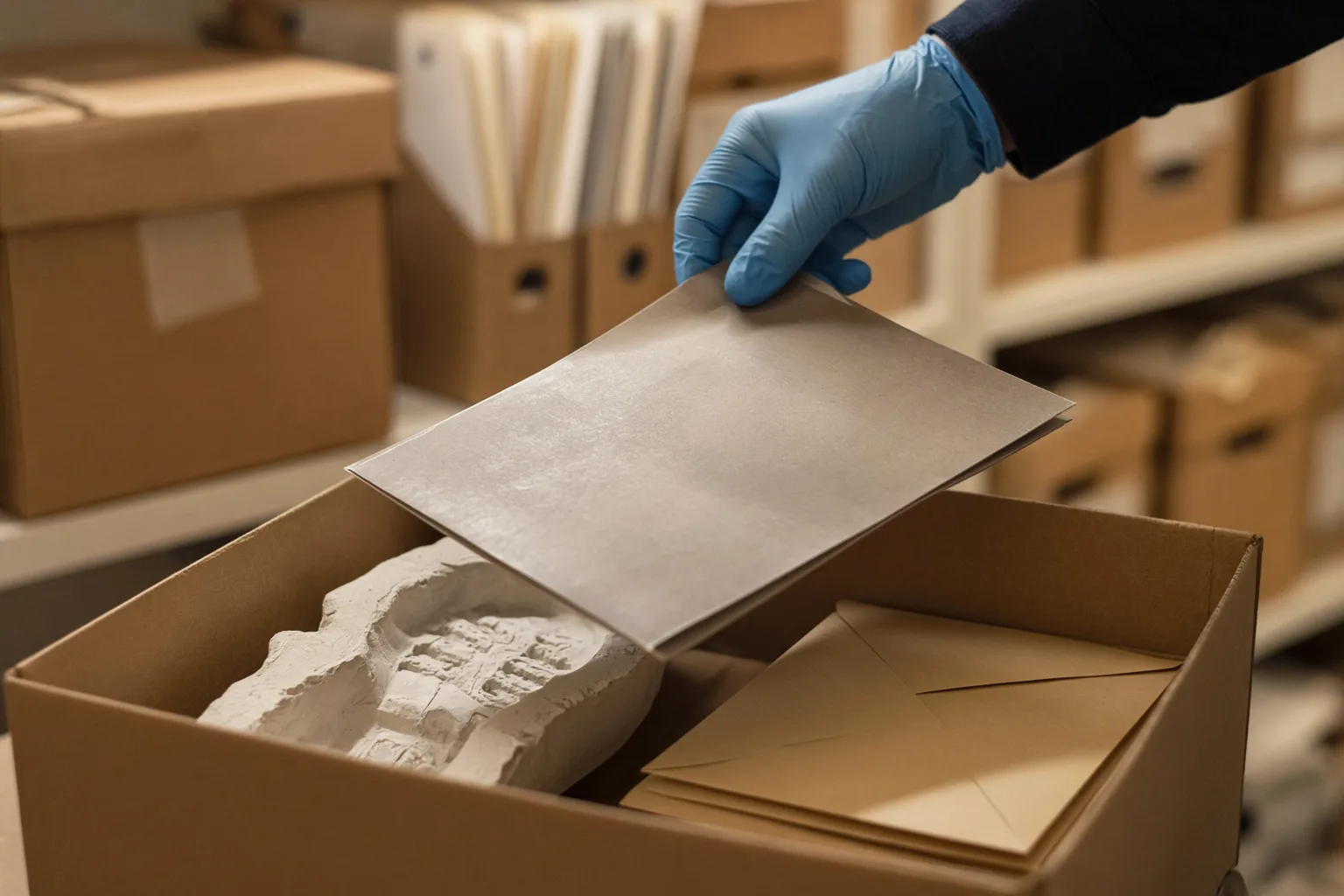
What is in a toolmark examiner's case file?
Worksheets with the observations, photographs of the marks, the test marks or casts made with the suspect tool, and the record of the conclusion. The draft OSAC toolmark standard sets the minimum documentation for each of these.
A report states the conclusion. The case file records how the examiner reached it. OSAC Proposed Standard 2024-S-0002, a draft toolmark standard marked version 1.0 and dated November 2023, says that documentation must include depictions or descriptions of the observations to the extent that another examiner, "without the benefit of the specimens themselves, can review the case record and understand what analysis was conducted" and the basis for any conclusions. A statement of conclusion alone, without supporting documentation, is insufficient under section 4.7.4.2.
The same draft requires that an identification be documented with photographs of the toolmark agreement in all areas of the specimens used for the conclusion (section 4.7.5.1). Test marks are part of the file as physical items: section 4.3.1 requires exemplars to be labeled under laboratory policy and preserved, whether kept in the laboratory, returned to the submitting agency or held in some other way.
Laboratory procedures name the forms. The FBI Laboratory procedure FTD-241-00, Toolmark and Fracture Examinations, issued on March 3, 2023, provides that observations of a questioned toolmark "will be recorded on the FTD Worksheet," and that a change in the classification of a mark is documented on the same worksheet. It also says exemplars may include toolmarks made by a known tool and casts taken from a marked item or fractured surface.
A request for the file therefore lists five groups of items: worksheets and bench notes, photographs and images, test marks and casts, the evidence items themselves, and the records of review and verification. Each group answers a different question in the review.
What must federal prosecutors disclose about a toolmark examination?
Results or reports of scientific tests that are material to the defense or that the government will use, and a written, signed expert disclosure with all opinions, their bases and the examiner's qualifications, under Rule 16(a)(1)(F) and (G).
Rule 16(a)(1)(F) of the Federal Rules of Criminal Procedure requires the government, on the defendant's request, to permit inspection and copying of results or reports of any physical or mental examination and of any scientific test or experiment if the item is within the government's possession, custody or control, the attorney for the government knows or through due diligence could know that it exists, and it is material to preparing the defense or the government intends to use it in its case-in-chief. A defense request treats the toolmark or footwear comparison as a scientific test under this paragraph.
Rule 16(a)(1)(G) adds an expert disclosure. The government must disclose in writing a "complete statement of all opinions that the government will elicit from the witness in its case-in-chief," the bases and reasons for them, the witness's qualifications and a list of prior cases. The court sets the time, which must be sufficiently before trial "to provide a fair opportunity for the defendant to meet the government's evidence."
The witness must approve and sign the disclosure, unless the government states why it could not obtain the signature or relies on an earlier signed report that contains the required information. A disclosure signed by the examiner fixes what the examiner will say, and the review compares that statement with the case file.
The disclosure is a summary. The worksheets, photographs and test marks behind it are reached through the other parts of the rule, and the request names them item by item.
Can the defense inspect the tool, the marked item and the test marks?
Yes, if the item is material to the defense, the government will use it at trial, or it belongs to or was taken from the defendant. These are the three grounds of Rule 16(a)(1)(E).
Rule 16(a)(1)(E) requires the government, on request, to permit the defendant to inspect and copy items within its possession, custody or control if "the item is material to preparing the defense," if "the government intends to use the item in its case-in-chief at trial," or if the item belongs to the defendant or was obtained from the defendant. A seized screwdriver usually meets the third ground, and the door frame or seal that the government will show the jury meets the second.
Test marks and casts are physical items made by the laboratory. Because the draft OSAC standard requires exemplars to be preserved, a request can ask where they are held and when a defense examiner may look at them under a microscope. The same draft requires exemplars made by the suspected tool to be intercompared "to determine which markings reliably reproduce with sufficient detail for comparison to questioned toolmarks," so the request also covers the notes of that intercomparison.
Laboratory submission rules tell the defense what should exist. The Maine State Police crime laboratory instructions for tools and tool marks list three kinds of items to package, each in a box of appropriate size: the entire tool, cuttings from the marked item and casts. The California Department of Justice bulletin PEB 27 says that if an actual item cannot be submitted, a cast can be made, and that the cast goes in a marked container because a hardened cast cannot be marked with a pen.
An inspection by a defense examiner is a separate step from receiving copies. The request states the place, the equipment and the time needed, and the court can set those terms if the parties disagree.
Are bench notes internal government documents that the rule excludes?
Rule 16(a)(2) excludes certain internal government documents, so the request ties each item to a ground the rule does list: a report of a scientific test, an item material to the defense, or the bases of an expert opinion.
Rule 16(a)(2) states that, with listed exceptions, "this rule does not authorize the discovery or inspection of reports, memoranda, or other internal government documents" of the kind it describes. A request that asks for "all internal documents" invites that objection.
A request built from the examination itself avoids the wording. Worksheets and bench photographs record the results of the scientific test named in Rule 16(a)(1)(F). The test marks and casts are items the government holds, reached under Rule 16(a)(1)(E). The observations that support each opinion are part of the "bases and reasons" the expert disclosure must state under Rule 16(a)(1)(G).
The draft OSAC standard supplies the link between the items and the opinion. If the record must let another examiner understand the analysis without the specimens, then the record is where the bases of the opinion are found, and the request quotes section 4.7 for that point.
Courts decide disputes over the scope of a request. Rule 16(d)(1) lets the court, for good cause, "deny, restrict, or defer discovery or inspection" or grant other relief, so the request should say why each item is needed for the review.
Which scene records should the request cover?
Photographs with a scale taken before the item was handled, wide photographs of the door or window, records of cuts made by officers, casts, and packaging and seal records. California and Maine instructions call for these.
The California bulletin PEB 27, Toolmark Evidence Collection, revised on November 12, 2025, states that "the tool should NEVER be placed into the impression to see if it could have made the mark." It says a scale should be included in the photographs and that wider photographs showing where the door, window or other surface bearing the mark is located can reveal the direction of tool use. It also says close-up photographs "cannot be used for actual comparisons."
The Maine State Police physical match instructions require photographs of items with a scale before handling, the location where an item was found with its orientation in the scene, and a clear indication of which marks were made by the suspected tool and which cuts were made by the officer. Scene evidence and the suspect's items are not to be packaged in the same container, and the tape seal is initialed, dated and labeled with the contents.
Each instruction becomes a request item. Were photographs taken before anyone touched the item? Did an officer try the seized tool in the mark? Which cuts on a padlock shackle or a wire were made when the item was removed? Were the scene item and the tool packed together? The answers come from the photographs, the property records and the packaging, and the reviewer needs all three.
PEB 27 adds a packaging rule: an object bearing a toolmark should be handled and packed so as to prevent any further contact with objects that could alter the original markings. A record of how the item travelled to the laboratory belongs in the request with the photographs.
Should the request cover the laboratory's procedures and verification records?
Yes. AFTE says verification follows each laboratory's quality assurance policy, with a mechanism to determine which cases require it, so the request covers the policy in force at the time and the verification record.
The Association of Firearm and Tool Mark Examiners describes four phases of the examination: evaluation, comparison, conclusion and verification. It says verification follows the laboratory's quality assurance policy and that a mechanism should be in place to determine which cases require it. Without the policy the reviewer cannot tell whether the case needed verification, and without the record the reviewer cannot tell whether it happened.
The request covers the procedure the examiner was required to follow, such as a laboratory equivalent of the FBI's FTD-241-00, in the version in force when the work was done. It also covers the verifier's name, the date, the items the verifier examined and the result.
In United States v. Graham, decided on February 20, 2024, in the Western District of Virginia, the court estimated the potential error rate for the examiner at about 1 percent, and at roughly 0.01 percent with independent verification. Whether verification was independent is a fact recorded in the file, and the request asks for it in those terms.
The examiner's training and proficiency records also belong to the request when the disclosure relies on them. In Graham the court noted that the examiner takes annual proficiency tests.
When must the government disclose, and what happens if it does not?
The court sets the deadline, sufficiently before trial for a fair opportunity to meet the evidence. If the government fails to comply, the court may order discovery, grant a continuance, exclude the evidence or enter another just order.
Under Rule 16(a)(1)(G)(ii) the court, by order or local rule, sets the time for the government's expert disclosure, and it must be sufficiently before trial to give the defendant a fair opportunity to meet the evidence. A review of a toolmark or footwear file takes time once the file arrives, so the deadline is set with that in mind.
Rule 16(c) imposes a continuing duty: "A party who discovers additional evidence or material before or during trial must promptly disclose its existence" if the other party previously requested it or the court ordered its production. A verification sheet found after the first production falls under this paragraph.
Rule 16(d)(2) lists what the court may do when a party fails to comply: order the discovery and specify its time, place and manner, grant a continuance, prohibit the party from introducing the undisclosed evidence, or enter any other order that is just under the circumstances.
A request made in writing, with each item named, gives the court a record against which to measure compliance. A general request leaves room to argue about what was asked.
What does the defense owe the government in return?
If the defense requests and receives the government's examination reports and expert disclosure, it must on request disclose its own reports it will use and its own expert's opinions, signed by the witness, under Rule 16(b)(1)(B) and (C).
Rule 16(b)(1)(B) applies when the government has complied with a defense request under (a)(1)(F). On the government's request the defendant must then permit inspection of results or reports of examinations if the defendant intends to use the item in its case-in-chief or intends to call the witness who prepared the report and the report relates to that witness's testimony.
Rule 16(b)(1)(C) mirrors the government's expert duty. The defendant discloses in writing the information required for its own expert, and the witness approves and signs the disclosure, with the same exceptions that apply to the government.
The two duties turn on use at trial. A reviewer who only prepares counsel for cross-examination and does not testify produces no report the defense intends to use, and the decision to call the reviewer as a witness belongs to counsel.
How is the examiner's file obtained in a civil case over a seal or a lock?
Through the expert report rules of Rule 26. A retained expert's report must contain the facts or data the witness considered and the exhibits that support the opinions, and attorney-provided facts and assumptions are open to discovery.
In a cargo loss or insurance case the toolmark examiner is usually a retained expert. Rule 26(a)(2)(B) of the Federal Rules of Civil Procedure requires the report to contain "a complete statement of all opinions the witness will express and the basis and reasons for them," "the facts or data considered by the witness in forming them" and "any exhibits that will be used to summarize or support them."
Communications between the attorney and the expert are protected by Rule 26(b)(4)(C), except to the extent they relate to compensation, identify facts or data the attorney provided and the expert considered, or identify assumptions the attorney provided and the expert relied on. If counsel gave the examiner the assumption that the seal was intact at loading and the examiner relied on it, communications identifying that assumption are discoverable.
Federal Rule of Evidence 705 adds a trial rule for both civil and criminal cases. An expert may state an opinion and the reasons "without first testifying to the underlying facts or data," but "the expert may be required to disclose those facts or data on cross-examination."
A rebuttal report in a federal civil case is due within 30 days after the other party's disclosure if no other date is set, under Rule 26(a)(2)(D)(ii). The file has to arrive early enough for the reviewer to work within that period.
What if the toolmark file is thin or the bench notes are missing?
The review records what the file lacks and ties each gap to the standard it falls short of. A Maryland court in 2023 held that missing documentation goes to the weight of the testimony, so the gaps become cross-examination questions.
Under section 4.7.4.2 of the draft OSAC standard a statement of conclusion alone, without supporting documentation, is insufficient. A file that holds a conclusion and little else does not meet that requirement, and the review says so with a citation.
In State v. Delonte Bryant the Circuit Court for Wicomico County, Maryland, ruled on June 14, 2023, on a defense argument that the examiner had not documented subclass and individual characteristics. The court wrote that the defense "falsely equates a failure to document certain observations with a failure to make those observations" and admitted the testimony within agreed limits. In Graham the defense argued that the report did not explain which marks drove the conclusion; the court admitted the opinion and left the criticism for trial.
After rulings like these, the gaps in the file reach the jury through questions. Where in the worksheet is this characteristic recorded? Which photograph shows it? Where are the test marks? Who verified the result? Rule 705 requires the examiner to disclose the underlying facts on cross-examination, and a missing record is an answer to that question.
What does IAE do when the defense receives a toolmark or footwear examiner's file?
IAE reviews the opposing examiner's report and case file against the standard for that kind of mark in criminal defense and cargo loss cases. Delivery takes up to 5 business days, or 48 hours on rush.
The review checks whether the case file records the verification and who performed it. For a footwear report it checks whether the examiner analyzed the questioned print before the known shoe, documented class characteristics and characteristics of use, and recorded the conclusion. Toolmarks on lock cylinders and seals are compared with test marks made by the suspect tool.
IAE confirms the questions with the client before work starts. The secretariat confirms receipt of the materials the same day, and within one business day IAE confirms the format, the cost, the deadline and the specialist from its registry. The client approves the candidate and the CV before work begins.
Every specialist is a member of the public IAE registry, verified by Member ID or QR code, and confirms in the document that he or she has no interest in the outcome. Materials are sent through the contact form or by email and are not passed to third parties without the client's consent. The court weighs a review with the other evidence, and neither IAE nor the reviewer guarantees the outcome. IAE is not a law firm and does not advise on case strategy.
Sources
- Federal Rules of Criminal Procedure, Rule 16, Discovery and Inspection (LII)
- OSAC Proposed Standard 2024-S-0002, Standard Test Method for the Examination and Comparison of Toolmarks for Source Attribution, draft version 1.0, November 2023 (NIST)
- FBI Laboratory, Toolmark and Fracture Examinations, FTD-241-00, issued March 3, 2023
- California Department of Justice, Bureau of Forensic Services, Physical Evidence Bulletin 27, Toolmark Evidence Collection, rev. November 12, 2025
- Maine State Police Crime Laboratory, Firearm and Tool Mark Section, Physical Match instructions
- Association of Firearm and Tool Mark Examiners, Summary of the Examination Method
- Federal Rules of Civil Procedure, Rule 26 (LII)
- Federal Rules of Evidence, Rule 705 (LII)
- United States v. Graham, No. 4:23-cr-00006 (W.D. Va. Feb. 20, 2024), memorandum opinion (copy posted by AFTE)
- State of Maryland v. Delonte Bryant, No. 22-K-15-000572 (Cir. Ct. Wicomico County June 14, 2023), opinion (copy posted by AFTE)
- Maine State Police Crime Laboratory, Tools and Tool Marks instructions
Read also
All articles
Can the prosecution use a toolmark or footwear report without calling the examiner who did the comparison?
A toolmark or footwear report rests on a comparison that a particular examiner made, and the case file can show who else made test marks, verified Sergei Voronin
Footwear and toolmark conclusion scales: what do identification, probably made and inconclusive mean in the examiner's report?
A footwear report can end with one of seven conclusions under the SWGTREAD standard of 2013 or one of six under the Department of Justice languageSergei Voronin
Contextual bias in footwear and toolmark examinations: what was the examiner told, and what does a reviewer check?
A footwear or toolmark examiner who knows that the suspect confessed, has a record or was linked by other evidence has received informationSergei VoroninExpert report review
Ready to discuss your case?
Send the materials: the secretariat will confirm the format, cost, deadline and the specialist within one business day.
