
Expert report review
When was the audio recording made, and how does a reviewer check the other side's ENF dating opinion?
An expert who dates a recording by its mains hum compares the drift of the power grid frequency captured in the file with a reference record of the grid. The opinion holds only as far as each link holds: the hum must be present, the reference must come from the right grid and be synchronized in time, the segment must be long enough, and the match must be tested against the false matches the method is known to produce.
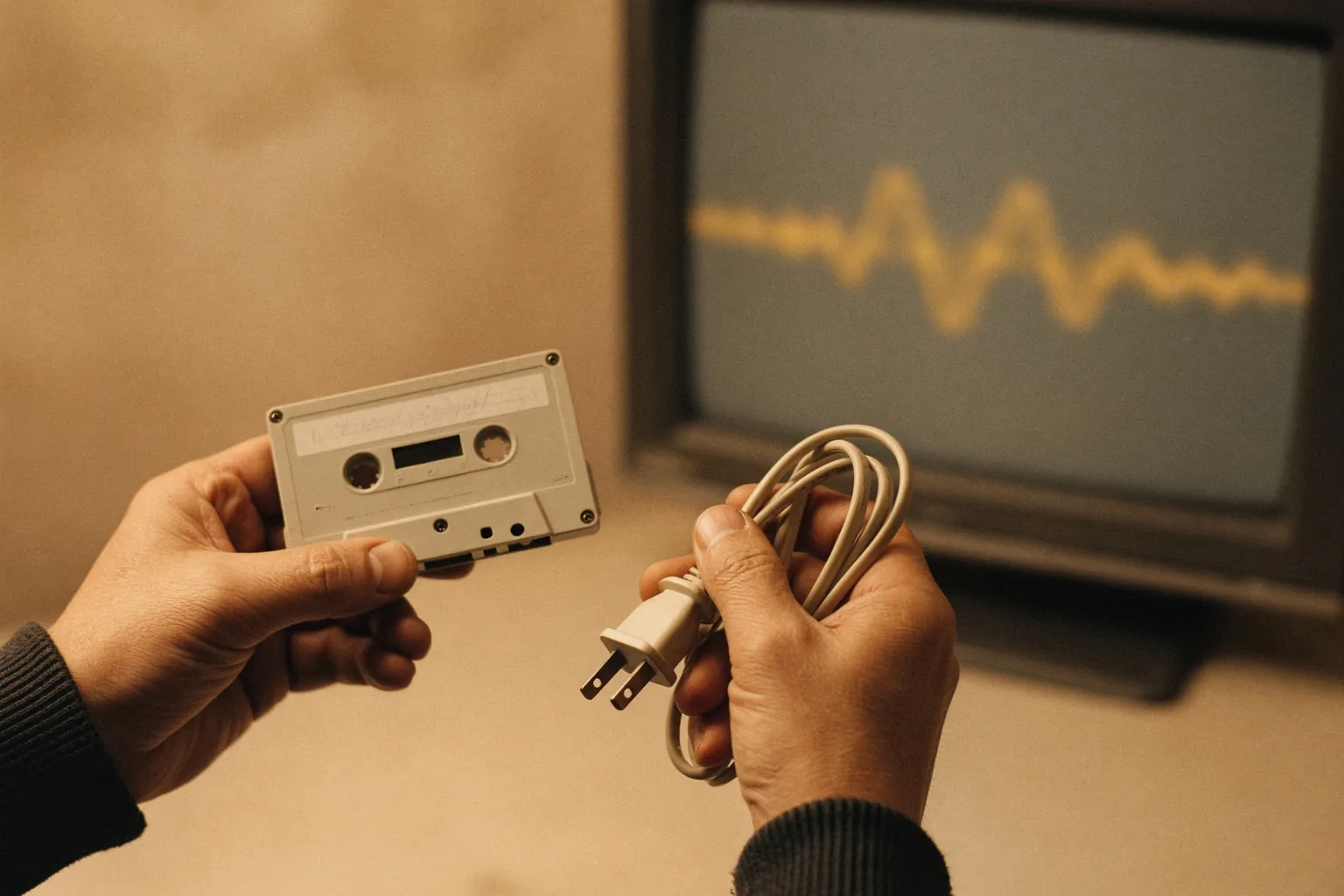
What is ENF analysis, and what can it say about when a recording was made?
ENF analysis extracts the grid frequency, nominally 60 Hz in the United States and 50 Hz in Europe and Russia, from the hum in a recording and matches its variations against reference data to estimate the recording time.
The Scientific Working Group on Digital Evidence (SWGDE) described the method in its Electric Network Frequency Discussion Paper, version 1.2 of February 6, 2014. Section 3 explains the source: ideally the mains waveform "is a sinusoid of a nominal amplitude (110 V, 220V) and nominal frequency (60 Hz, 50 Hz)." In practice the frequency moves, and the main driver of the movement is the mismatch between load and generation. Section 2 names the central application: to "determine the date and time a recording was made" by comparing the hum extracted from the recording with reference data.
The method has a name and an author. Catalin Grigoras, then at the Ministry of Justice in Bucharest, published "Digital audio recording analysis: the Electric Network Frequency (ENF) Criterion" in the International Journal of Speech, Language and the Law in 2005 (vol. 12, no. 1, pp. 63-76). The abstract presents the criterion as a means of assessing the integrity of digital audio evidence and states that it can "determine whether and where a digital recording has been edited."
Three Russian authors described the same method in 2019: A. A. Bessonov, A. G. Boyarov and M. V. Stepanov, Theory and Practice of Forensic Science, vol. 14, no. 2, pp. 43-50. They write that the frequency of the grid current changes randomly over time (p. 45), which is what makes a stretch of recorded hum comparable to one stretch of the reference and to no other.
How does mains hum get into a recording, and what if there is none?
Through the power supply of a mains-powered recorder, induction into portable devices, acoustic pickup or unbalanced connections. SWGDE states that ENF is not guaranteed to be present or detectable.
Section 2 of the SWGDE paper describes "the hum generated by the mains current powering a recording device," a hum "possibly induced into portable recorders," and lists the routes: electromagnetic fields, acoustic pickup and unbalanced audio connections. The Russian authors give the same mechanism in their terms: the trace appears when the recording device is not shielded well enough from electrical equipment working nearby (p. 46).
Neither source promises a trace. SWGDE, Section 4.2: "it is not even guaranteed that ENF is present or detectable." Bessonov and co-authors write that traces of mains interference are not always preserved during recording (p. 47), and that the trace must be present for the method to apply at all. The SWGDE paper does not discuss battery-powered recorders.
The absence of a trace is also a fact. Section 4 of the SWGDE paper notes that the mere presence of an ENF signal in a recording that is not expected to have one may be informative. The reviewer reads the report for a description of the device and its power source and asks whether the examiner explained why a hum was, or was not, expected on that device in that place.
Which reference database did the examiner compare the recording against?
The report should name the database, who recorded it, where, at what measurement interval, how its clock was synchronized and whether a second source confirmed it. SWGDE calls for multiple sources and measured time synchronization.
Section 4.1.2 of the SWGDE paper states that a reference collection should use multiple sources to protect against effects such as data lost when breakers trip or lines fail. Section 4.1.3 requires that "a reference data set must use a means of time synchronization," with its errors measured and accounted for. Section 4.1.1 compares measurements taken at wall sockets on the distribution side with measurements on the transmission side, which may carry less local interference but are harder to reach.
Appendix A of the paper listed possible archives as of 2014, including data from the Pacific Northwest National Laboratory, the Virginia Tech frequency disturbance recorder network, the Bonneville Power Administration, ERCOT and the Tennessee Valley Authority. Section 4.1.4 suggested that a central authority such as the National Institute of Standards and Technology or the Department of Energy could keep a shared database. That was a proposal; the reviewer checks what the opposing examiner actually used.
Laboratories built their own collections. In abstract B25 for the 2013 meeting of the American Academy of Forensic Sciences, Catalin Grigoras and Jeffrey M. Smith described databases recorded at the National Center for Media Forensics in Denver and at sites in Las Vegas and Minneapolis, with recording "redundantly made on two completely isolated computers" and bi-annual validation between the databases scheduled. They stressed redundancy at every stage: two databases, at least two extraction techniques, two comparison methods.
In Russia, Bessonov and co-authors report that an ENF-Server station was installed in Moscow and measured the current frequency once per second (p. 46). They describe two practices for obtaining reference values: Ministry of Justice laboratories request the data from the grid company, while the Investigative Committee records it with its own hardware and software system (p. 47). A report that names neither the source nor its clock leaves the central comparison without a checkable basis.
Was the recording compared with the right power grid?
Only a recording made on the same interconnection can match its reference. SWGDE notes three major grids in the continental United States and four in North America, and warns that the true source may be missing from the database.
Section 3 of the SWGDE paper states that there are "three major grids in the continental U.S., four in North America," and that in stable operation the frequency does not vary across one interconnection. Section 2 adds that studies are needed to understand how the structure of the three major independent US interconnections affects the utility of ENF. A recording made on one interconnection and compared only with the reference of another has no correct answer in that database.
Section 3 suggests that statistical measures of the differences between grids "may indicate which grids are likely associated with a recording," without quantifying how similar grids are. Section 4.4 says the interpretation framework "should include the open set possibility that the ENF signal is not in the database," because the signal may come from an unknown grid or from a time outside the database's span.
The reviewer asks three questions of the report: on which grid the party says the recording was made, which grids the examiner checked, and whether the conclusion leaves room for a source outside the reference set. If the examiner searched one grid and one week, the opinion can say no more than what was found in that grid and that week.
Is the recording long enough to be dated?
Short segments date poorly. In the Russian experiments, segments of five minutes or more were dated; three-minute segments searched against a 366-day reference base were dated correctly in 6 of 20 trials.
Bessonov and co-authors call the duration of the recording the second limitation of the method (p. 47). They report that date and time are determined for fragments lasting five minutes or longer, and that in their test with three-minute fragments searched against a 366-day reference base the date and time were found correctly in only 6 of 20 cases. With the date known and a one-day reference base, the time of all 20 fragments was found (pp. 47-48). For the same three-minute fragments, the narrow search gave 20 correct results out of 20, the wide one gave 6.
Other work sets its own thresholds. Gheorghe Pop, Dragos Burileanu and Serban Mihalache, in Proceedings of the Romanian Academy, Series A (2018, vol. 19, no. 4, pp. 605-612), required that matched windows cover at least 2 minutes and that at least half of the samples in each window fall within 0.002 Hz of the reference (p. 611). The SWGDE paper does not set a minimum length. Section 4.3 lists the variables that need systematic testing: "sample length, analysis window length, overlap distance, SNR," followed by "relative harmonic strengths, original sampling rate, etc."
The reviewer compares the length of the segment actually analyzed with the thresholds the examiner's own method was tested on. A report that dates a ninety-second call with the same confidence as a twenty-minute room recording should explain on what validation it relies.
How was the ENF signal extracted, and are the settings disclosed?
The report should state the filtering band, the harmonic used, the downsampling, the analysis window and overlap, and the signal-to-noise ratio, because each changes the extracted trace and therefore the match.
Section 4.2 of the SWGDE paper lists bandpass filtering "to isolate ENF fundamentals and harmonics" as one extraction method and notes that other signals in the recording are "usually with substantially greater amplitude." Section 4.1.3 states that published measurement methods vary, have not been compared directly on the same grid, and that window length, offset and resolution all affect the result.
The published studies disclose their settings. Grigoras and Smith worked with 8 kHz, 16-bit mono uncompressed files and segments of one to ten minutes. Pop and co-authors downsampled references to 1,000 Hz and band-passed them to 49.7-50.3 Hz for the European 50 Hz grid (p. 608). Bessonov and co-authors describe lowering the sampling rate and bringing the format into line with the reference before comparison (p. 48).
In a federal civil case these settings are part of what the report must disclose. Rule 26(a)(2)(B)(ii) requires "the facts or data considered by the witness in forming them," and the 2010 committee note reads the phrase broadly to reach "any material considered by the expert, from whatever source, that contains factual ingredients." The extracted ENF series, the reference excerpt and the plot of the two together are the data on which the opinion rests.
How was the match measured, and how often does the method find false matches?
The report should name the similarity measure, the threshold and the search range. ENF traces are self-similar, so non-matching stretches can look alike; the published studies report false positives and compare measures for that reason.
Pop and co-authors write that non-matching ENF sequences can still look similar because ENF is self-similar, which creates false positives (p. 610). Their baseline correlation threshold depended on the signal-to-noise ratio, so the ratio had to be known or estimated (p. 610). They tested their measure on controlled mixtures of reference signals and noise at 5, -15, -25 and -35 dB and found stable results down to about -25 dB (pp. 609-610). They added that comparing such systems on practical recordings is highly difficult.
Grigoras and Smith compared two measures on one year of Western US data and more than nine years of continental European data. Their result was that "each ten-minute segment is much more correlated to itself than any other ten-minute segment," that the ENF data show no exactly repeating pattern, and that the mean quadratic difference "provides better discrimination power than" the correlation coefficient. They also noted morning and evening events caused by maintenance operations or equipment switching whose "shapes and values cannot be predicted."
Section 4.3 of the SWGDE paper warns that cyclical patterns "could bias comparison results," for example by matching a noon recording to other noons, and lists load-following, hourly, daily, weekly, holiday and seasonal patterns. The reviewer checks whether the examiner searched the whole period the parties dispute or only the date the proponent named, and whether the second-best match was reported.
How should a dating conclusion be worded?
As a statement of the strength of the evidence with its search range and database, not as a bare date. Pop and co-authors warn that matches reported without such a statement may be mistaken for facts.
Pop and co-authors report their matches as log-likelihood ratios in an evaluative framework and argue that a match result should carry a statement of evidential strength, since matches reported without one may be mistaken for facts (pp. 611-612). Section 4.4 of the SWGDE paper says the interpretation framework "must be written down and standardized" to be credible, and the paper gives no standard reporting wording.
SWGDE's Best Practices for Digital Audio Authentication, document 15-a-001, version 1.3 of September 20, 2018, lists ENF analysis among the global analyses and permits three authentication results: "Consistent with an original," "Inconclusive," or "Inconsistent with an original." It adds that "language implying 100% certainty should be avoided unless speaking about known alterations or deletions." The 2023 committee note to Federal Rule of Evidence 702 says forensic experts "should avoid assertions of absolute or one hundred percent certainty" where the methodology is subjective.
A sentence such as "the recording was made on March 3 between 14:05 and 14:17" therefore leads to follow-up questions. Which database? Which search window? What was the score of the best match and of the next best? What does the method's validation say about matches of that score?
Can ENF analysis show that a recording was edited or copied?
It can point to a break in continuity or to two overlapping hum signals, but SWGDE's authentication guide forbids relying on any single analysis. The ENF result is checked against file structure and other tests.
Grigoras's 2005 abstract states that the criterion can show whether and where a digital recording has been edited. Section 4 of the SWGDE paper poses the continuity question, "Is this recording a continuous representation of acoustical events or not?", and Section 4.2 notes that a duplicated recording may contain two distinct ENF signals. Bessonov and co-authors list the continuity of the recording, together with its real date and time, among the facts the method can establish (p. 49).
Pop and co-authors add a limit: detecting edits in high-noise cases carries more uncertainty and may need complementary measures (p. 611). SWGDE 15-a-001 places ENF among global analyses together with file format and structure analysis, compression level, MDCT analysis and long-term spectral analysis, and states that no single analysis is to be relied upon solely.
The reviewer therefore lines up the ENF trace with the time codes where other tests found anomalies. A break in the trace at the same second as a change in background noise or a jump in the file structure is one finding; a break with no other sign is a question for the examiner.
Can mains hum be filtered out of a recording, or added?
Yes. SWGDE raised the risk of falsification by overlaying a reference signal onto a recording, and filtering can remove the hum. A report that finds a perfect match on an edited or processed file should address both.
Section 4.1.4 of the SWGDE paper raises concerns about falsification by overlaying a reference signal onto a recording.
Removal is simpler. Enhancement filters that lower hum target the same frequency band the ENF method reads. SWGDE's Best Practices for Enhancement of Digital Audio, document 20-A-001, version 2.0 of 2025, lists notch and comb filters, spectral subtraction and spectral editing for stationary tones in its challenges table. A recording that passed through such a filter before it reached the examiner may have lost its trace.
The reviewer asks whether the file the examiner dated was the native file or a processed export, whether the hum level is plausible for the device and the room the parties describe, and whether a control recording was made. Section 4.2 of the SWGDE paper suggests that examiners may need "a control signal of your system simultaneously" to separate the analysis system's own hum from the evidence signal.
Has the dating method been validated for this kind of recording?
The SWGDE paper calls for blind testing on ground-truth data before casework and gives no validated error rates. The reviewer asks for the validation of the examiner's own method on comparable devices, lengths and noise levels.
Section 4 of the SWGDE paper states that methods "should be evaluated before being used on forensic casework" and that evaluations "should involve blind testing using ground-truth data." Section 4.3 suggests reporting performance with a detection error tradeoff or receiver operating characteristic curve across parameter levels. Section 5 concludes that "further research must be done" to develop ENF as a viable forensic methodology. The paper reports no validated error rate for forensic recordings; for locating a recording it cites Virginia Tech FDR estimates "on the order of 100 miles" made on clean, non-forensic data.
Later studies filled some of the gap under controlled conditions. Pop and co-authors built a test database of 4,464 ten-minute grid recordings made over 31 days (p. 609). Bessonov and co-authors report trials in 2014-2017 and testing in Russia in 2016 (pp. 45-46). Each validation applies to its own grid, devices and lengths.
Rule 702(c) asks whether the testimony "is the product of reliable principles and methods," and the 2000 committee note asks whether the field "is known to reach reliable results" for the type of opinion given. A dating opinion on a short, compressed phone recording rests on the validation for that kind of file, and the reviewer asks the examiner to identify it.
What else, besides ENF, shows when and on what device a recording was made?
File format and structure, metadata consistent with the claimed device, exemplar recordings made on the same model, and the testimony of the person who made the recording. The ENF result is read together with them.
SWGDE 15-a-001 lists file format and file structure analysis among the global analyses, and accepts test recordings "from test recorders of the same manufacturer and model" for comparison with the evidence. A dating opinion that ignores a file structure typical of a different app or device answers only part of the question.
Federal Rule of Evidence 901(a) requires the proponent to "produce evidence sufficient to support a finding that the item is what the proponent claims it is." Rule 901(b)(1) accepts testimony of a witness with knowledge "that an item is what it is claimed to be," and Rule 901(b)(4) accepts "the appearance, contents, substance, internal patterns, or other distinctive characteristics of the item, taken together with all the circumstances." The ENF opinion is one of the circumstances.
Rule 901(b)(9) covers "evidence describing a process or system and showing that it produces an accurate result." The committee note explains that the example is designed for situations in which the accuracy of a result depends on the process or system that produces it. An ENF dating result is that kind of evidence, and its accuracy turns on the database, the extraction and the matching described above.
What should counsel request so the reviewer can check the dating?
The native file, the extracted ENF series, the reference data excerpt with its source and clock record, the extraction and matching settings, the scores of the best and next-best matches, and any control recording.
Rule 34(a)(1)(A) reaches "any designated documents or electronically stored information," and Rule 34(b)(1)(C) lets the requesting party specify "the form or forms in which electronically stored information is to be produced." The ENF series and the reference excerpt are data files; a printed plot of them is not enough to repeat the comparison. The written response is due within 30 days after service under Rule 34(b)(2)(A).
Rule 26(b)(4)(C)(ii) makes discoverable the communications that "identify facts or data that the party's attorney provided and that the expert considered." If counsel told the examiner the date the recording was supposedly made, that date is part of the record, and the reviewer checks whether the examiner searched beyond it.
Rule 26(b)(4)(A) permits the deposition of a testifying expert only after the report is provided, and Rule 705 lets the expert be required to disclose the underlying facts or data on cross-examination. The reviewer's list of files goes out before the deposition notice, so that the questions at the deposition are about the data and not about whether it exists.
How does a review of an ENF dating opinion reach the court?
Through a rebuttal report due within 30 days after the other side's disclosure, deposition and trial questions, and a Rule 702 motion. Whether the dating opinion is admitted, limited or left to cross-examination is for the court.
Rule 26(a)(2)(D)(ii) gives 30 days after the other party's disclosure for evidence "intended solely to contradict or rebut evidence on the same subject matter," unless a stipulation or court order sets other dates. A rebuttal on an ENF opinion answers the same subject: whether the trace exists, whether the reference fits, whether the match is distinctive and what the method's validation supports.
Rule 702, as amended on December 1, 2023, admits expert testimony only if the proponent establishes that "it is more likely than not" that the testimony "is based on sufficient facts or data" and "is the product of reliable principles and methods." The 2023 note adds that "each expert opinion must stay within the bounds of what can be concluded from a reliable application of the expert's basis and methodology." A date stated to the minute from a three-minute segment and one week of reference data is the kind of opinion the review measures against those bounds.
Rule 403 lets the court exclude relevant evidence if its probative value is substantially outweighed by a danger such as unfair prejudice or misleading the jury. The decision on any motion belongs to the attorney who files it and to the court.
What does IAE do when the date of a recording is disputed?
An IAE examiner reviews the opposing audio report for a US case: which file was received, which tests were run and documented, and whether each conclusion stays within the method. Up to 5 business days.
The IAE review of the opposing forensic audio report is for a party facing the other side's examiner on whether a recording was edited, whose voice is on it or what was said. The reviewer checks which file the examiner received, which tests were run and documented, whether the voice exemplars were comparable and whether the conclusion stays within the method. For a dating opinion that means the hum, the reference data, the extraction settings and the match, each tied to a page of the opposing report.
The document can take the form of a review of the opposing report, a rebuttal report or a statement of grounds for a Rule 702 motion. The decision on any motion belongs to the attorney and the court.
The client sends the opposing report and the case materials and describes what to check. The secretariat confirms receipt the same day, and within one business day IAE confirms the format, the cost, the deadline and the specialist from its registry. The client approves the candidate and the CV before work starts. The signed PDF is issued in up to 5 business days after the format and cost are confirmed, and a 48-hour rush is available for tight deadlines.
Specialists are members of the public IAE registry and passed the council's attestation under the published Criteria Matrix; the Member ID or QR code in the document opens the specialist's record. The specialist confirms in the document that he or she has no interest in the outcome, and materials are not passed to third parties without the client's consent. A review is evidence the court weighs with the other materials; neither IAE nor the reviewer guarantees the outcome, and IAE is not a law firm.
Sources
- SWGDE, Electric Network Frequency Discussion Paper, version 1.2 (February 6, 2014), PDF
- Grigoras C., Digital audio recording analysis: the Electric Network Frequency (ENF) Criterion, International Journal of Speech, Language and the Law 12(1), 63-76 (2005)
- Grigoras C., Smith J. M., B25 Electric Network Frequency (ENF) Database Validation for Digital Media Authenticity, AAFS 2013
- Pop G., Burileanu D., Mihalache S., An Evaluative ENF-Based Framework for Forensic Authentication of Digital Audio Recordings, Proceedings of the Romanian Academy, Series A 19(4), 605-612 (2018)
- Bessonov A. A., Boyarov A. G., Stepanov M. V., The Electric Network Frequency Based Method of Forensic Audio Analysis, Theory and Practice of Forensic Science 14(2), 43-50 (2019)
- SWGDE, Best Practices for Digital Audio Authentication, 15-a-001, version 1.3 (September 20, 2018)
- SWGDE, Best Practices for Enhancement of Digital Audio, 20-A-001, version 2.0 (2025)
- Federal Rules of Evidence, Rule 901, Authenticating or Identifying Evidence, with committee notes (LII)
- Federal Rules of Evidence, Rule 702, Testimony by Expert Witnesses, with committee notes (LII)
- Federal Rules of Evidence, Rule 705 (LII)
- Federal Rules of Evidence, Rule 403 (LII)
- Federal Rules of Civil Procedure, Rule 26, with committee notes (LII)
- Federal Rules of Civil Procedure, Rule 34 (LII)
- Federal Rules of Evidence, Rule 702, amendment history (Apr. 24, 2023, eff. Dec. 1, 2023), Office of the Law Revision Counsel
Read also
All articles
ShotSpotter evidence: is it admissible, and how does a reviewer test the other side's acoustic gunshot report?
An acoustic gunshot report tells the jury how many shots were fired, when and where, on the basis of sound picked up by sensors. Courts have admitted Sergei Voronin
The opposing audio report rests on a compressed file from a messaging app or a phone: what does a reviewer check?
Most recordings in disputes today reach the examiner as compressed files: voice messages, call recordings, memos made on a phone. CompressionSergei Voronin
Was the opposing audio examiner told what to find, and how does a reviewer check for contextual bias?
An audio examiner who knows that the suspect confessed, or that other evidence points to him, is working with information that the examination doesSergei VoroninExpert report review
Ready to discuss your case?
Send the materials: the secretariat will confirm the format, cost, deadline and the specialist within one business day.
