
Examinations
Appliance fire product liability: where does the fire investigator's opinion end?
When a house fire starts at a heater, a refrigerator or a light fixture, the claim against the maker turns on two facts: the fire began at the appliance, and a defect in the appliance caused it. A fire investigator answers the first. In 1999 the Eighth Circuit threw out a verdict over a baseboard heater fire because three plaintiff experts went past their data on the second.
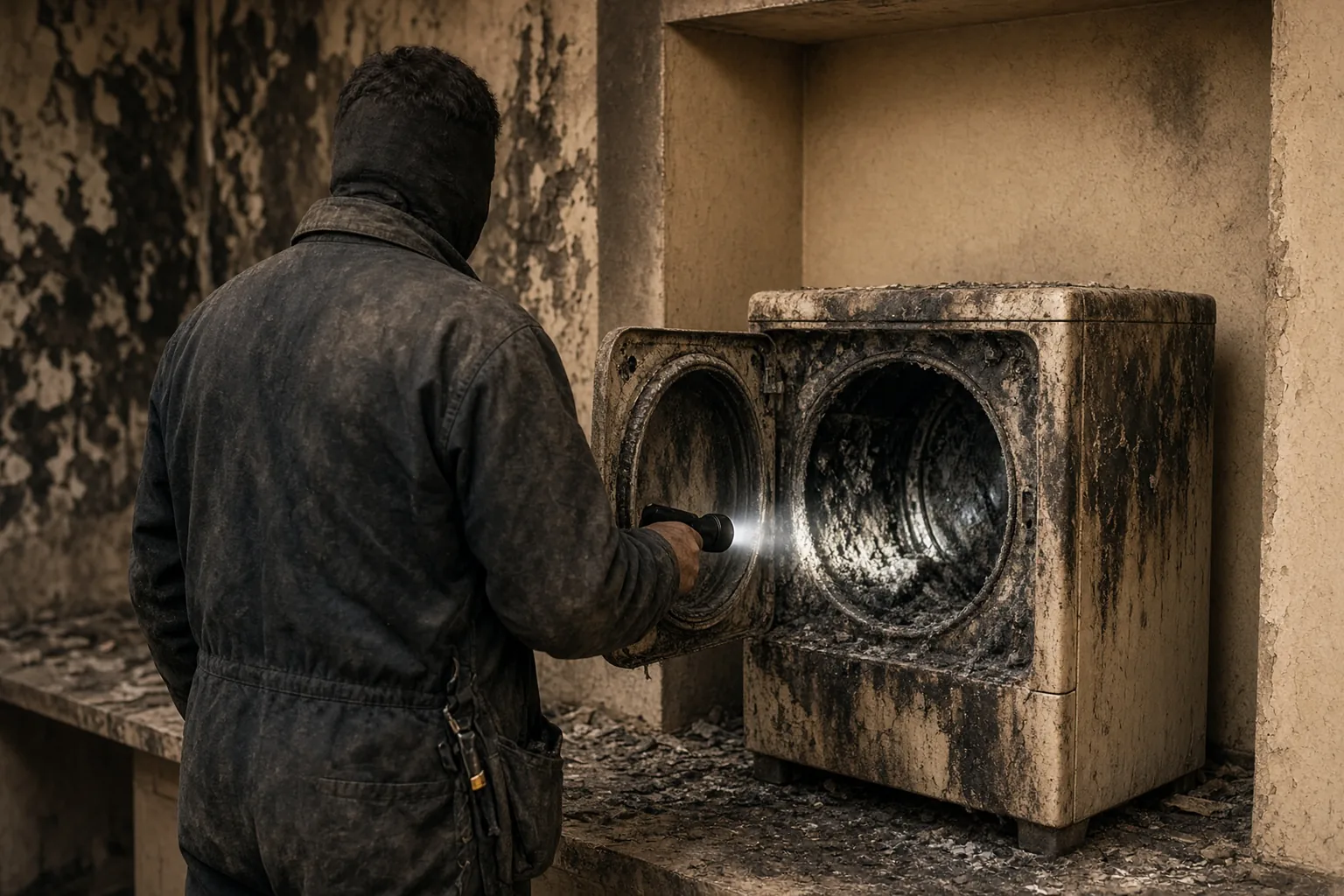
What does a plaintiff have to prove when an appliance starts a fire?
That the appliance had a defect and that the defect caused the fire. New York also accepts circumstantial proof: the product did not perform as intended, and all other causes not attributable to the defendants are excluded.
Weisgram v. Marley Co. began with a fire on December 30, 1993, at a town house in Fargo, North Dakota. Bonnie Weisgram died, and an autopsy found that she died of smoke inhalation. The suit against Marley, the maker of a fifteen-year-old electric baseboard heater, alleged a defect in the heater, and the jury found for the plaintiffs. The Eighth Circuit set the verdict aside, and in 2000 the U.S. Supreme Court took the case on what an appellate court may do once expert testimony falls away.
Two facts have to be proven, and they belong to different disciplines. Where the fire began and what ignited the first fuel is the work of origin and cause investigation: burn patterns, char depth, arc sites, witness accounts and the timeline. Whether the appliance left the factory with a defect in its design, components or assembly is an engineering question about the device itself. A claim against the maker needs an answer to both, and each answer has to come from a witness qualified for it.
Federal Rule of Evidence 702 sets the test for each of those witnesses. The proponent must show the court "it is more likely than not" that the testimony will help the trier of fact, that it "is based on sufficient facts or data," that it is "the product of reliable principles and methods," and that the expert applied those principles and methods reliably to the facts of the case. The 2023 Committee Note adds that "each expert opinion must stay within the bounds of what can be concluded from a reliable application of the expert's basis and methodology."
In practice the bounds are drawn opinion by opinion. A fire captain may be qualified to place the origin at the heater and not qualified to say why the heater failed. An engineer may know the thermostat and have no data on how much heat the unit could deliver to the sofa next to it.
Can a fire investigator testify that the appliance was defective?
Only within his qualifications and data. In Weisgram the Eighth Circuit held that a Fargo fire captain was not qualified to say the baseboard heater malfunctioned, and it called that part of his testimony patent speculation.
Dan Freeman, a Fargo fire captain and fire investigator, testified that the fire started near the heater and that radiated heat "ignited the material on the backside of that couch." He went further and told the jury that "we had a malfunction of the heater" and that he believed "we had a runaway of that heater." In an opinion by Chief Judge Bowman filed on February 23, 1999, the Eighth Circuit wrote: "Freeman's further testimony, however, was patent speculation." It added that Freeman "was not qualified to offer an opinion that the Weisgram heater malfunctioned."
The second witness, Ralph Dolence, was presented as a fire investigator and technical forensic expert and was also a master electrician. He never visited the scene. His theory was that a small rug pushed against the heater trapped heat that reached the floor, and he testified that "[t]he ignition of those vapors is what caused this fire." He did no testing to support it. The basis he gave was "There is no other explanation." The court called the opinion "rank speculation."
The third, metallurgist Sandy Lazarowicz, testified that the thermostat contacts had a defective serrated design and had welded shut, and that the sensor of the high limit control was poorly placed. The court held that his opinions "amount to no more than 'subjective belief or unsupported speculation'" and quoted General Electric Co. v. Joiner: "there is simply too great an analytical gap between the data and the opinion proffered."
Judge Bright dissented. In his view the experts were properly qualified, the weaknesses in their testimony went to weight, and the remedy for any error was "a new trial, not judgment as a matter of law." The majority found the remaining evidence insufficient to prove a defect at the time of sale and directed judgment for Marley, writing: "This is not a close case."
Does the expert have to show how the appliance could ignite the first fuel?
Yes. In Truck Insurance Exchange v. MagneTek the Tenth Circuit upheld the exclusion of opinions blaming a light ballast that could reach only about 340 degrees, while wood normally needs nearly 400 to ignite.
A fire destroyed Sammy's Restaurant in Lakewood, Colorado, on November 9, 1998. Truck Insurance Exchange, as subrogated insurer, sought to recover more than $1.5 million it had paid the restaurant and claimed that a fluorescent light ballast made by MagneTek started the fire. The investigators agreed that "the fire started in the void space between the basement storeroom ceiling and the kitchen floor," where the fixture was mounted, and that "there were no other apparent heat sources in the area of the fire's origin."
Tests set a limit on that inference. The court noted that "the maximum temperature the ballast could have reached was 340" degrees Fahrenheit and that "Wood normally will not catch fire until exposed to a heat source of nearly 400." To close the gap, the plaintiff's expert, Dr. Joe Romig, who holds advanced degrees in physics, proposed that long-term heating of the ceiling and furring strips at roughly 180 to 300 degrees had formed pyrophoric carbon, which then ignited at a lower temperature. The district court held that this hypothesis "has not been subjected to sufficient testing."
The Tenth Circuit, in an opinion by Judge Tymkovich decided in February 2004, read the literature the same way. Babrauskas, on whom the plaintiff relied, wrote that the phenomenon had "neither been proven nor successfully disproven at this time," and the cited studies did not find actual ignition of the charred wood. Romig himself said the process "depends on a lot of factors, as yet quantitatively unidentified." The court pointed to a lack of evidence on how the theory could be tested and on its rate of error, and to questions about the theory in the scientific community.
The fire investigator fared no better. Lt. Dan Pfannenstiel of the West Metro Fire Protection District concluded that the ballast caused the fire, relying on his experience and on eliminating other heat sources. The district court found that he had no evidence the ballast could generate enough heat to ignite combustibles in the ceiling, and his opinion was held to be "based on assumptions and speculation." With both opinions out, Truck could not show the ballast could reach ignition temperature, and summary judgment for MagneTek on all four claims was affirmed.
Can a defect be proven when the appliance burned beyond examination?
In New York, yes, by circumstantial evidence. Under Speller v. Sears, Roebuck & Co. (2003) the plaintiff proves the product did not perform as intended and excludes all other causes not attributable to the defendants.
The New York Court of Appeals described Speller in its 2008 decision in Ramos v. Howard Industries, Inc. The Speller plaintiffs alleged that a defective refrigerator caused a house fire. The manufacturer and the retailer answered with evidence of a different cause, "a stovetop grease fire." The plaintiffs "were required to come forward with competent evidence excluding the stove as the origin of the fire." They offered three expert opinions that the fire started in the refrigerator and not on the stove, and the court held that "a reasonable jury could conclude that plaintiffs excluded all other causes of the fire."
The rule works in both directions. In Ramos, decided on March 13, 2008, a lineman alleged that a transformer exploded in June 1997 after he energized it at work. He first reported a different injury and claimed the explosion more than two years later, and by then the transformer could not be located for inspection or testing. His expert engineer said the transformer "experienced an internal electrical fault due to defective coil/windings and/or insulation."
The manufacturer's expert had visited the plant, described its processes as "current and state of the art," and said an internal fault "would have been readily identified at several stages of the manufacturing process." He also named alternative causes: rewiring or rebuilding by the utility and a metal object dropped inside the transformer. Writing for six of the seven judges, Judge Pigott called the plaintiff's theory "pure speculation" and noted that the expert had not excluded rewiring or rebuilding by the utility's employees after the transformer left the manufacturer's control. The complaint was dismissed.
The court set out the sequence. A defendant meets its initial burden by offering evidence of an alternative cause. The plaintiff must then raise "a triable question of fact by offering competent evidence" that answers it. Judge Jones dissented: the defendant's own expert had conceded that without the transformer there was no proof of a defect, and in his view Speller involved a finite set of causes, while here the defense had listed speculative ones.
Which other causes does the plaintiff's expert have to rule out?
Each cause the evidence raises that is not the defendant's responsibility, including installation by someone else. In Maciarello v. Empire Comfort Systems a propane heater claim failed because improper installation was not excluded.
A propane heater made by Empire Comfort Systems was installed in the plaintiffs' home by Riverside Gas and Oil Company. Ten days later a fire "erupted causing extensive damage." The plaintiffs sued on products liability and improper installation theories and conceded that there was no direct evidence of a specific defect in the heater. Their experts said in general terms that a "properly installed defect free" heater will not cause a fire.
Empire's long-time service manager stated by affidavit that "there have been no other allegations of a defect with the . . . heaters causing a fire" and that a manufacturing defect "would not have been a transient condition." He added that the heater met industry safety standards and that there had been no recalls or service bulletins on it.
The Appellate Division, Third Department, affirmed summary judgment for Empire on March 31, 2005. Justice Carpinello wrote that "None of plaintiffs' experts definitively established the precise cause of the fire," and that "By failing to submit competent evidence excluding all other causes of the fire not attributable to Empire, namely, improper installation, plaintiffs did not meet their burden under Speller." Improper installation was a competing theory that would fully exonerate the manufacturer.
In an appliance case the installer's work, the branch circuit that fed the unit, the cord and plug, what stood next to the appliance and how it was used are separate hypotheses. A report that names the appliance only because it sat in the area of origin leaves each of them open for the defense.
What happens if the expert testimony is excluded after a verdict?
The court of appeals can direct judgment for the defendant instead of ordering a new trial. The Supreme Court so held unanimously in Weisgram v. Marley Co. on February 22, 2000.
After the Eighth Circuit found the testimony of all three plaintiff experts inadmissible, it directed the district court to grant Marley judgment as a matter of law. The question for the Supreme Court was whether a court of appeals may "instruct the entry of judgment as a matter of law for defendant, or must that tribunal remand the case" so the trial court can consider a new trial.
Justice Ginsburg wrote for a unanimous Court that the authority of courts of appeals to direct the entry of judgment "extends to cases in which, on excision of testimony erroneously admitted, there remains insufficient evidence to support the jury's verdict." The Court gave its reasons in two sentences: "Since Daubert, moreover, parties relying on expert evidence have had notice of the exacting standards of reliability such evidence must meet," and "It is implausible to suggest, post-Daubert, that parties will initially present less than their best expert evidence."
For a plaintiff in an appliance fire case there may be no second trial in which to replace an engineer whose opinion fails on appeal. The opinions have to be complete when they are disclosed. Under Rule 26(a)(2)(B) a retained expert's written report contains "a complete statement of all opinions the witness will express and the basis and reasons for them," "the facts or data considered by the witness in forming them," the exhibits, the witness's qualifications with publications from the previous 10 years, the cases in which the witness testified in the previous 4 years, and the compensation.
Does a recall or a CPSC report prove that the appliance caused the fire?
Not by itself. Rule 407 bars evidence of measures taken after the fire to prove a product defect, and CPSC rules let a manufacturer deny in its report that the product is defective.
Federal Rule of Evidence 407 covers measures that would have made an earlier injury or harm less likely to occur, taken after it happened. Such evidence is not admissible to prove negligence, culpable conduct, "a defect in a product or its design," or "a need for a warning or instruction." The court may still admit it for another purpose, such as impeachment or, if disputed, ownership, control or the feasibility of precautionary measures. The 1997 amendment wrote products liability into the rule, and the Committee Note says it "adopts the view of a majority of the circuits."
The same note fixes the timing. The words "an injury or harm allegedly caused by" were added "to clarify that the rule applies only to changes made after the occurrence that produced the damages giving rise to the action." Measures taken by the defendant before that event fall outside the rule even if they came after the product was made or designed. A recall announced before the fire in suit is therefore not excluded by Rule 407.
A report to the Consumer Product Safety Commission under section 15(b) of the Consumer Product Safety Act is not a concession either. Under 16 CFR 1115.12(a) a firm in its report "need not admit, or may specifically deny," that the information it submits reasonably supports the conclusion that its product "contains a defect which could create a substantial product hazard" or "creates an unreasonable risk of serious injury or death."
A recall tells the investigator which failure mode was identified in a product line. Whether that failure occurred in the unit found in the area of origin is still a question for the physical evidence from that unit. The absence of recalls can be evidence too: in Maciarello the manufacturer's affidavit listed no recalls or service bulletins on the heater.
How does the other side get access to the burned appliance?
By a Rule 34 request to inspect, test or sample the remains in the possession, custody or control of another party. A nonparty holding them can be compelled under Rule 45 to produce them or permit an inspection.
Rule 34(a)(1) lets a party ask another party "to inspect, copy, test, or sample" items in its possession, custody or control, including "any designated tangible things." Rule 34(a)(2) covers "entry onto designated land or other property" to inspect, measure, survey, photograph, test or sample it. The responding party "must respond in writing within 30 days after being served," unless the parties agree under Rule 29 or the court sets another time. Rule 34(c) points to Rule 45 for nonparties, who can be compelled to produce "documents and tangible things" or to permit an inspection.
Access matters most on the engineering question, because the defect, if there was one, is inside the unit. Ramos lost because the transformer was gone and the expert's theory did not exclude what others might have done to it. The dissent in the same case pointed out that the manufacturer's expert had conceded that without the transformer there was no proof of a defect.
Testing a burned thermostat or control board means taking the unit apart, and disassembly cannot be undone. A request under Rule 34(a)(1) can specify the testing sought, and the written response is where the holding party states its objections or conditions within the 30 days.
How certain does the cause opinion have to be?
The court must find it more likely than not that the opinion meets Rule 702. Absolute certainty is not required, and the 2023 Committee Note tells forensic experts to avoid asserting it.
Rule 702 places the burden on the proponent, who must show the court that it is "more likely than not" that the conditions of the rule are met. The 2023 Committee Note adds: "Forensic experts should avoid assertions of absolute or one hundred percent certainty."
None of the appliance cases above failed for lack of certainty. Each failed at a link with no data behind it: the heater malfunction in the fire captain's testimony and the trapped heat and adhesive vapors in Dolence's theory in Weisgram, the ignition temperature in Romig's theory and the heat output in Pfannenstiel's opinion in MagneTek, the internal fault in Ramos and the installation in Maciarello.
An appliance fire report built on the same chain has four links to support: the origin at the appliance, the electrical or mechanical event inside it, the heat delivered to the first fuel ignited, and the defect that produced the event. A fire investigator's report covers the first link. The second and third need data from the unit and from tests of its heat output, as the ballast tests in MagneTek supplied. The fourth belongs to an engineer who examined the unit.
What does IAE do in appliance fire cases?
IAE prepares fire origin and cause expert reports on the client's questions and reviews of the opposing investigator's report for US cases, including product liability. The signed report is issued within up to 5 business days.
The fire origin and cause service covers subrogation, product liability, arson defense and coverage disputes in US courts. The investigator answers the questions agreed with the client, working from the scene record, photos, removed artifacts and witness accounts, and addresses where the fire started, what ignited it, how it spread and whether an appliance, the wiring or a person's act caused it. The investigator names the ignition source, the first fuel ignited and the circumstances that brought them together, and tests each hypothesis against the scene and the timeline.
For appliance evidence the investigator checks whether wiring, appliances and debris were photographed in place before removal, logged and examined at a joint lab exam with all interested parties notified. The client states in the request whether the fire scene still exists.
The secretariat confirms receipt the same day. Within one business day IAE confirms the format, cost, deadline and the specialist from its registry, and the client approves the candidate and the CV before work starts. The draft is checked for facts. The signed PDF is issued within up to 5 business days after the format and cost are confirmed, and cases with tight deadlines have a 48-hour rush.
Every specialist is a member of the public IAE registry and passed the council's attestation under the published Criteria Matrix. The Member ID in the document opens the specialist's category, specialization, attestation date and record status on the status check page or by QR code. The specialist confirms in the document that he or she has no interest in the outcome of the case. Neither IAE nor the specialist guarantees the outcome or influences the decision, and IAE is not a law firm.
Sources
- Weisgram v. Marley Co., No. 97-3735 (8th Cir. Feb. 23, 1999), opinion
- Weisgram v. Marley Co., 528 U.S. 440 (2000), U.S. Reports (govinfo)
- Truck Insurance Exchange v. MagneTek, Inc., No. 03-1026 (10th Cir. 2004)
- Ramos v. Howard Industries, Inc., 2008 NY Slip Op 02081 (N.Y. Mar. 13, 2008), discussing Speller v. Sears, Roebuck & Co. (LII)
- Maciarello v. Empire Comfort Systems, 16 AD3d 1009, 2005 NY Slip Op 02521 (3d Dept. Mar. 31, 2005)
- Federal Rules of Evidence, Rule 702, Testimony by Expert Witnesses, with 2023 Committee Note (LII)
- Federal Rules of Evidence, Rule 407, Subsequent Remedial Measures, with 1997 Committee Note (LII)
- 16 CFR 1115.12, Information which should be reported; evaluating substantial product hazard (LII)
- Federal Rules of Civil Procedure, Rule 26, Duty to Disclose; General Provisions Governing Discovery (LII)
- Federal Rules of Civil Procedure, Rule 34, Producing Documents, Electronically Stored Information, and Tangible Things (LII)
Read also
All articles
Gas explosion investigation: who is liable, and what does the investigator have to establish?
After a gas explosion the claim turns on one physical question: where the gas came from and why nobody noticed it before something ignited it Sergei Voronin
Tenant caused a fire: who is liable, can the landlord's insurer sue, and what must the investigator establish?
When a rented house burns, three questions come up in order: where the fire started, what started it, and who answers for that cause under the leaseSergei Voronin
Fire spread from a neighbor's property: who is liable, and what does the investigator have to establish?
A neighbor is liable for a fire that spreads onto your property when the fire started through his negligence or in violation of law, not merelySergei VoroninExpert examinations
Ready to discuss your case?
Send the materials: the secretariat will confirm the format, cost, deadline and the specialist within one business day.
