
Examinations
Fire spread from a neighbor's property: who is liable, and what does the investigator have to establish?
A neighbor is liable for a fire that spreads onto your property when the fire started through his negligence or in violation of law, not merely because it started on his land. California and Washington put that rule in statutes. The claim therefore needs an investigator who places the origin on the neighbor's property, traces how the fire crossed the boundary and ties the ignition to something the neighbor did or failed to do.
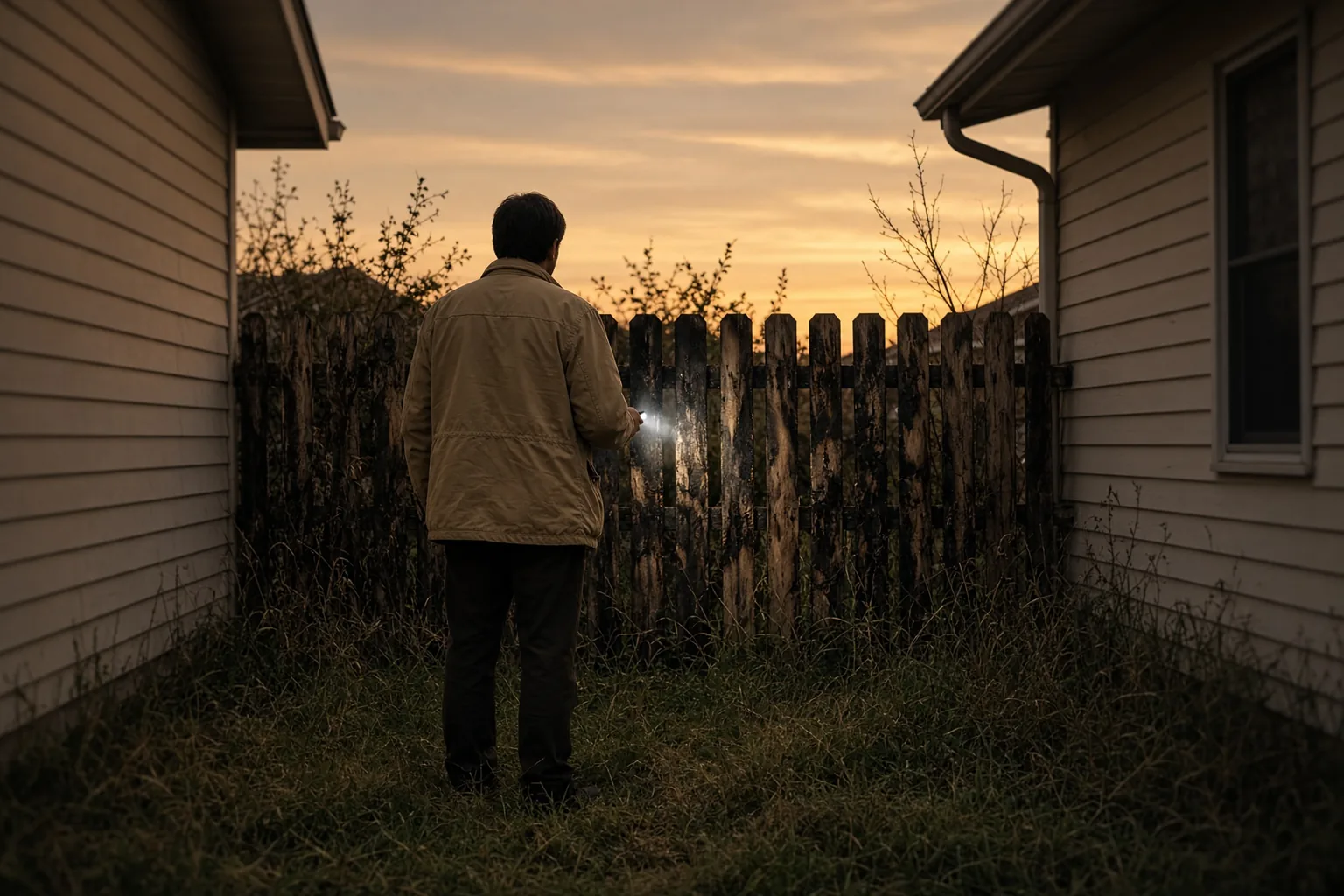
Who is liable when a fire spreads from a neighbor's property?
The person who set the fire or let it escape through negligence or in violation of law. California's Health and Safety Code section 13007 and Washington's RCW 4.24.040 state that rule for fires that reach another person's property.
Section 13007 of the California Health and Safety Code covers any person who "personally or through another wilfully, negligently, or in violation of law, sets fire to" the property of another, or lets a fire set to it, or lets a fire kindled or attended by him escape to it, "whether privately or publicly owned." Such a person "is liable to the owner of such property for any damages to the property caused by the fire."
Washington's statute, RCW 4.24.040, is titled "Action for negligently permitting fire to spread." Except as provided in RCW 76.04.760, a person who "shall for any lawful purpose kindle a fire upon his or her own land" must kindle it at such a time and in such a manner, and take such care of it to keep it from spreading and damaging other persons' property, "as a prudent and careful person would do." A person who fails to do so "shall be liable in an action on the case to any person suffering damage thereby to the full amount of such damage."
Both statutes attach liability to conduct: setting the fire wilfully, negligently or in violation of law, or failing to take the care a prudent and careful person would take. Neither makes a landowner liable just because the fire started on his side of the line. In New York, the state of the Rand case discussed below, the claim was brought in ordinary negligence.
Is the neighbor liable just because the fire started on his land?
No. The plaintiff has to show negligence or a violation of law. In Rand v. Finger Lakes Premier Properties (N.Y. App. Div. 2021) the court dismissed the claim against a renter who had used the fire pit.
The Rand case shows how courts separate the people connected with a fire. The New York Appellate Division, Fourth Department, applied the ordinary negligence standard: a failure to use the care that a reasonably prudent person would use under the same circumstances. It sent the claims against the neighbors and their management company to trial and dismissed the claim against the renter on the same facts.
The renter, Valerie Martini, testified that she and her friends put the fire out after each use and poured water into the pit before leaving. The court found that she was not negligent as a matter of law even if the pit was not fully extinguished, noting that "the fire pit was made of metal and was self-contained" and that she had no reason to expect someone would later dump its contents. It reversed and dismissed the complaint against her.
For the claimant, that means the investigation has to reach the act that caused the escape. Proof that a fire pit was used on the property is not proof that the user was negligent. Proof of who dumped the pit, when, onto what and how close to what fuel is.
What does the investigator have to establish first?
The origin on the neighbor's property, the path the fire took across the boundary and the ignition sequence that links the origin to a person's act or omission. Each step needs data from the scene.
The origin comes first. If the fire started on the claimant's own property and spread the other way, there is no claim against the neighbor. The investigator maps the fire patterns on both sides of the boundary, the degree of damage to each structure and the timeline of the first observations and calls, and determines which property burned first.
The path comes second. In Rand the plaintiff's account ran through a hay bale on the neighbors' property and across the yard to the cottage. The investigator records the fuels between the properties, the distance between the structures, the wind direction and speed at the time of the fire, and the pattern of damage on the side of the claimant's building that faced the neighbor's.
The ignition sequence comes third. It is the part the court tests hardest, because it is where the neighbor's conduct enters. In Rand the plaintiff's expert described the sequence step by step, and in Blue Ridge Service Corp. v. Saxon Shoes the Supreme Court of Virginia threw out a cause opinion that rested on an assumption with no support in the record.
How did the expert's chain of events hold up in Rand?
Well enough to reach trial against the neighbors. The expert described smoldering fire pit residue dumped next to a hay bale, the bale smoldering, wind reigniting it, and the fire spreading across the yard to the plaintiff's cottage.
James W. Rand owned a cottage on Keuka Lake in New York. He sued his neighbors, David and Karen Binkowski, and their son Steven; Valerie Martini, who had rented the Binkowski property days before the fire; and Finger Lakes Premier Properties, Inc., the company that managed the rental. According to the plaintiff's theory, the fire started on the Binkowski property after Steven dumped the remains of a portable fire pit on the ground.
The plaintiff's expert concluded that it was highly likely the dumped material "contained smoldering residue a portion of which came in contact with an adjacent hay bale causing the hay to smolder." The expert also concluded that strong winds supplied oxygen that reignited the bale and that the fire then spread to the plaintiff's property.
In a second appeal decided the same day, October 8, 2021, the Fourth Department unanimously affirmed the denial of summary judgment to the Binkowskis and the management company. Even assuming the defendants had met their initial burden, the expert's affidavit raised a triable issue of fact, and whether the fire started as the expert described was for trial. The court did not hold the expert's account proven. It held only that the affidavit raised a triable issue of fact.
Why did the cause opinion fail in Blue Ridge v. Saxon Shoes?
Because it rested on an assumption the record did not support. The expert blamed smoking material from the defendant's cleaning crew, but there was no evidence that any crew member smoked in the store. A $5,139,617 verdict was reversed.
On February 17, 2001, a cleaning crew from Blue Ridge Service Corp. arrived at 6:00 p.m. to clean the Saxon Shoes store at 1527 Parham Road in Henrico County, Virginia. At 8:54 p.m. the fire department received a report of a fire, and much of the store was destroyed. Both sides' experts agreed that the fire started at the back of the store; Saxon's expert placed the origin at the workbench in the shipping and receiving room.
Saxon's expert, Ronald L. Hiteshew, ruled out the light fixture above the workbench and concluded that the fire was caused by "smoking material discarded into the trash can." He relied on a trash box near the workbench, a video photo, deposition statements about a smoker and an admission by a crew member that he smoked twice that night. That crew member said he smoked only outside. Blue Ridge's expert did not accept that location and, like the fire marshal, concluded that the cause could not be determined. The jury returned a verdict of $5,139,617 for Saxon.
On January 13, 2006, the Supreme Court of Virginia, in an opinion by Justice Agee, reversed and entered final judgment for Blue Ridge. Expert testimony "cannot be speculative or founded upon assumptions that have an insufficient factual basis," the court wrote, and "There was no evidence in the record that a Blue Ridge employee smoked in the store." It called the conclusion "pure speculation which we have repeatedly held is unreliable as a matter of law." Without that opinion, Saxon could not show negligence or proximate cause.
Agreement that the fire began at the back of the store did not save the claim. An investigator who finds the origin on the defendant's side still has to connect the ignition to the defendant with facts, not with the defendant's opportunity to have caused it.
Can tenants, property managers or contractors be liable for a fire that spreads?
Yes, if their own conduct caused the fire or its escape. California's statute covers a person who acts personally or through another, and in Rand the court sent the claim against the neighbors' management company to trial.
Section 13007 reaches any person who sets a fire or lets it escape "personally or through another." On its face that language reaches an owner who has someone else set the fire for him, as well as the person who sets it. It also covers a person who lets a fire "kindled or attended by him" escape, which describes the guest who leaves a fire pit or the worker who leaves a torch.
In Rand the defendants were the owners, their son, the renter and the management company. The court released the renter and kept the others in the case. The decision turned on each defendant's own conduct, so the investigation had to identify who did what with the fire pit and its contents.
For an investigator, the list of potential parties is part of the scene work. Interviews, rental and work records, and the timeline show who was on the property, who used the fire or the equipment and who was responsible for the area where the fire started. Each name on that list needs its own facts.
Can the fire department recover its costs from the neighbor?
In California, yes. Health and Safety Code section 13009(a) makes a person who negligently or in violation of law lets a fire escape liable for fire suppression costs and the cost of rescue or emergency medical services.
Section 13009(a) applies to any person "who negligently, or in violation of the law, sets a fire," lets a fire be set, or lets a fire kindled or attended by the person escape onto any public or private property. It also applies to a person in possession of a structure who fails or refuses to correct, within the time allotted, a fire hazard prohibited by law after a public agency has issued a notice of violation.
Such a person "is liable for the fire suppression costs incurred in fighting the fire and for the cost of providing rescue or emergency medical services, and those costs shall be a charge against that person." The statute adds that the charge constitutes a debt of that person, collectible by the person or agency that incurred the costs in the same manner as an obligation under a contract.
The hazard clause makes earlier inspection records part of the evidence. If a fire agency cited the neighbor for a hazard, such as accumulated vegetation or debris, and the fire started there after the deadline to correct it passed, the citation, the deadline and the condition at the time of the fire become facts the investigator documents.
What does a fire spread investigation document?
The origin and the fire patterns on both properties, the distance and fuels between them, wind and weather at the time, the timeline of first observations, the ignition source and the people who controlled it.
A spread case has two scenes. The investigator photographs and maps both properties before cleanup or demolition, records which walls, roofs and openings faced each other, and notes the depth of char and the extent of damage on each side. The side of the claimant's building that faced the neighbor's property and the side that faced away tell the investigator which way the fire traveled.
Weather and time come next. Wind direction and speed at the time of the fire, the first 911 call, the first witness to see smoke and where, and the arrival report of the fire department fix the sequence. In Rand the expert's account relied on strong winds reigniting a smoldering bale; an account of that kind needs the weather data to support it.
Last, the investigator documents the ignition source and its control: the fire pit and where its contents went, a burn pile, a grill, an outbuilding's wiring, and who used or maintained each. That record is what lets an expert give the specific, step-by-step account that reached trial in Rand, instead of the assumption the Virginia court rejected in Blue Ridge.
What does IAE do when a fire spread from a neighboring property?
IAE prepares fire origin and cause expert reports on the client's questions and reviews of the opposing investigator's report for subrogation, product liability, arson defense and coverage disputes, up to 5 business days after format and cost are confirmed.
On the fire origin and cause page the work is described in three parts. For the origin, the investigator maps char depth, burn patterns on walls and ceilings and arc sites on branch circuits. For the cause, the investigator names the ignition source, the first fuel ignited and the circumstances that brought them together, and tests each hypothesis against the scene and the timeline. For the evidence, the investigator checks whether wiring, appliances and debris were photographed in place before removal, logged and examined at a joint lab exam with all interested parties notified.
The client sends the scene photographs and video of both properties, the fire department report, the timeline of calls, witness statements, any notices or citations about hazards on the neighboring property, the opposing investigator's report if one exists, and states whether the fire scene still exists. The secretariat confirms receipt the same day. Within one business day IAE confirms the format, the cost, the deadline and the specialist from its registry, and the client approves the candidate and the CV before work starts. Cases with tight deadlines have a 48-hour rush.
Every specialist is a member of the public IAE registry and passed the council's attestation under the published Criteria Matrix; the Member ID or QR code in the document opens the specialist's record. The specialist confirms in the document that he or she has no interest in the outcome. An expert report is evidence the court weighs with the other materials. Neither IAE nor the investigator guarantees the outcome, and IAE is not a law firm.
Sources
- California Health and Safety Code section 13007 (california.public.law)
- California Health and Safety Code section 13009 (california.public.law)
- RCW 4.24.040, Action for negligently permitting fire to spread (Washington State Legislature)
- Rand v. Finger Lakes Premier Properties, Inc., 2021 NY Slip Op 05410 (App. Div. 4th Dept. Oct. 8, 2021)
- Rand v Finger Lakes Premier Properties, Inc. (Appeal No. 2), Appellate Division, Fourth Department, Oct. 8, 2021 (nycourts.gov)
- Blue Ridge Service Corp. of Virginia v. Saxon Shoes, Inc., Record No. 050896 (Va. Jan. 13, 2006)
Read also
All articles
Gas explosion investigation: who is liable, and what does the investigator have to establish?
After a gas explosion the claim turns on one physical question: where the gas came from and why nobody noticed it before something ignited it Sergei Voronin
Tenant caused a fire: who is liable, can the landlord's insurer sue, and what must the investigator establish?
When a rented house burns, three questions come up in order: where the fire started, what started it, and who answers for that cause under the leaseSergei Voronin
Fire loss subrogation: what does the insurer's investigator have to prove?
An insurer that pays a fire claim and sues the party it blames has to prove the same case its insured would have had: where the fire started, whatSergei VoroninExpert examinations
Ready to discuss your case?
Send the materials: the secretariat will confirm the format, cost, deadline and the specialist within one business day.
