
Examinations
Tenant caused a fire: who is liable, can the landlord's insurer sue, and what must the investigator establish?
When a rented house burns, three questions come up in order: where the fire started, what started it, and who answers for that cause under the lease and state law. In Nebraska and Illinois the landlord's insurer cannot sue a negligent tenant at all unless the lease says otherwise. A tenant suing the landlord over bad wiring loses if the investigator can only say an electrical cause was possible, as in Winkler v. Robinett (Mo. Ct. App. 1995).
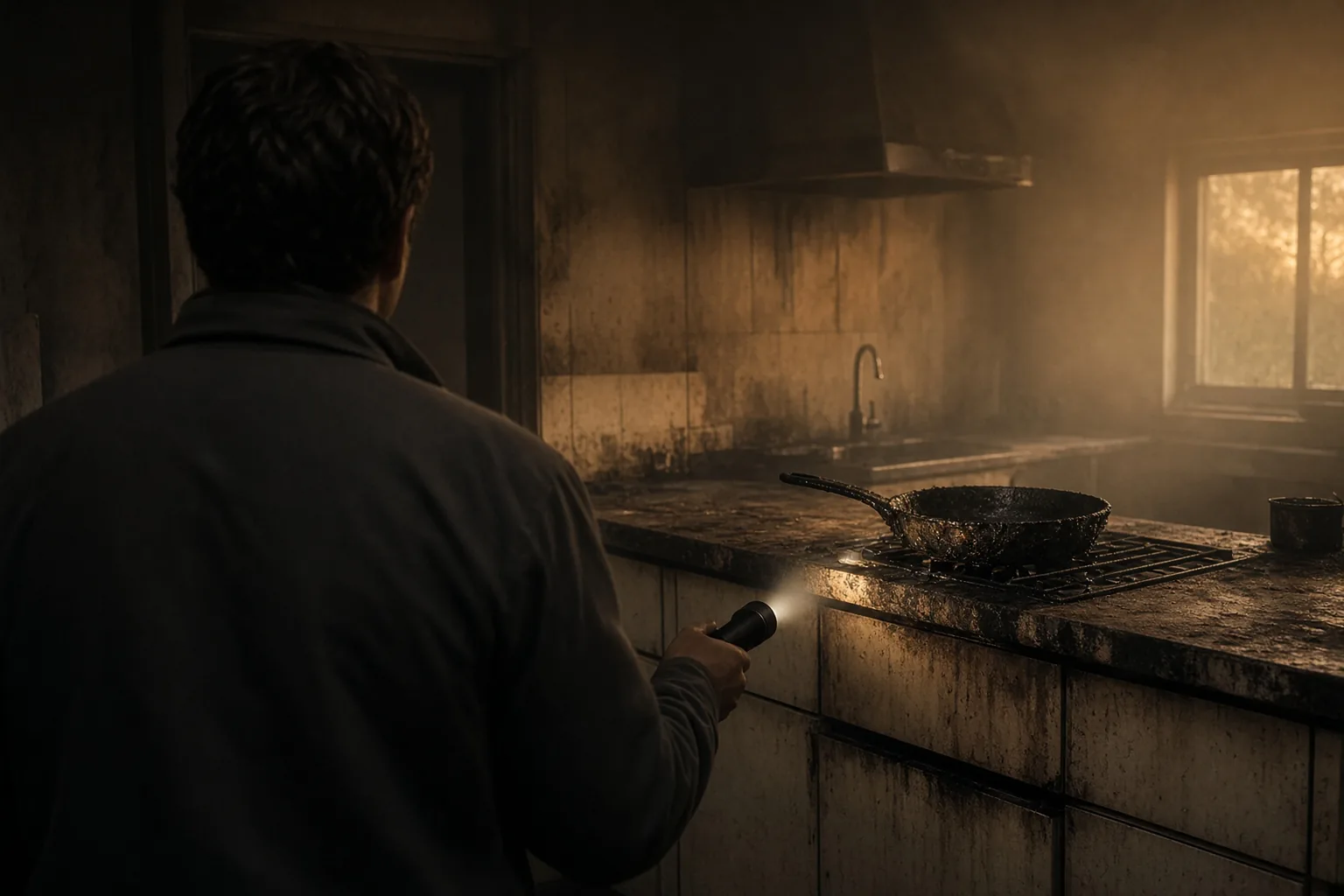
Who is liable when a fire starts in a rental?
The person whose negligence caused the fire, as modified by the lease and state law. A tenant answers for careless smoking or cooking; a landlord answers for a defect it had a duty to repair and knew about.
Fire liability in a rental turns first on the cause. A fire from a dropped cigarette, an unattended stove or a child with a lighter is the occupant's conduct. A fire from failed branch wiring, a defective panel or a furnace the landlord maintains points at the owner. The same burned room can support either claim until the origin and the ignition sequence are fixed.
The second question is the contract. Leases allocate repairs, require insurance and sometimes say who pays for fire damage. Courts read those clauses before they apply any general rule. In the cases below the lease decided as much as the fire scene did.
The third question is insurance. The landlord's property insurer usually pays for the building, then tries to recover from whoever caused the loss. The tenant's renter's policy usually covers the tenant's contents and liability. Whether the landlord's insurer may sue the tenant at all depends on the state.
Can the landlord's insurer sue a tenant who caused the fire?
In states that follow the Sutton rule, not unless the lease rebuts the presumption that the tenant is a coinsured under the landlord's fire policy. Other states decide case by case from the lease, and some allow the suit.
The rule takes its name from Sutton v. Jondahl, an Oklahoma Court of Appeals decision of 1975. The Nebraska Supreme Court adopted it in Beveridge v. Savage, 285 Neb. 991 (May 24, 2013): absent an agreement to the contrary, the tenant is presumed to be a coinsured under the landlord's fire policy, and an insurer cannot recover by subrogation from its own insured.
The facts in Beveridge were simple. The owner leased a house in Plattsmouth, Nebraska. A 6-year-old boy left alone in the basement set a couch on fire with a lighter. The landlord's insurer paid $161,545.01 for reconstruction and $7,824.18 for lost rent and then sued the tenants in the landlord's name. The court did not need to decide negligence. It held that the lease did not rebut the presumption, so the tenants were coinsureds, and it affirmed summary judgment for them.
The Illinois Supreme Court reached the same result on a different path in Dix Mutual Insurance Co. v. LaFramboise, 149 Ill. 2d 314 (July 30, 1992). The tenant, with the landlord's approval, used a power stripper to remove exterior paint, and its heat set the house on fire. The insurer paid $40,579 and sued the tenant for negligence. The court read the lease as a whole, noted that the landlord had bought fire insurance on the building and that the tenant helped pay for it through rent, treated the tenant as a coinsured and barred the claim.
Vermont rejected a fixed rule. In Travelers Indemnity Co. of America v. Deguise, No. 05-353 (Vt. Aug. 18, 2006), tenants emptied smoldering ashtray contents into a wastebasket and started a fire. Applying the case-by-case approach of Union Mutual Fire Insurance Co. v. Joerg (2003), under which the tenant's liability depends on the intent and reasonable expectations of the parties to the lease, the court held that the tenants were not implied coinsureds and affirmed judgment for the insurer, which had paid $10,711.66.
Which lease terms change the answer?
A clause that expressly requires the tenant to insure the building against fire, a clause that makes the tenant pay for damage caused by its negligence, and a subrogation clause. Ambiguous terms are read against the landlord who drafted them.
The Beveridge lease required the tenant to carry $100,000 in liability and renter's insurance. The court held the liability clause ambiguous as to fire and the renter's clause limited to the tenant's contents, so neither gave the tenant notice that he had to insure the structure. The lease had no subrogation provision. Under Nebraska law, the presumption is rebutted only by an express requirement that the tenant obtain fire insurance on the building, and ambiguity is construed against the drafter.
In Deguise the deciding clause was a damages provision that made the tenants pay for damage caused by their negligence. Read with the rest of the lease, it showed that the landlord had not waived recovery from them. A dissent would have read the lease the other way, which is a measure of how much these cases depend on drafting.
In Dix Mutual the lease said the landlord was not responsible for fire damage to the tenant's personal property. The court read that clause as covering personal property only, and took the silence about the building as a sign that each party would bear the risk to its own property. The investigator's report does not decide any of these questions, but the subrogation claim exists only if the lease leaves room for it, and the lease is the first document counsel reads.
When is the landlord liable to the tenant for a fire?
When the landlord had a duty to repair the defect, had notice of it and failed to repair, and the defect caused the fire. In Winkler the tenants proved duty and notice and still lost on causation.
Winkler v. Robinett, 913 S.W.2d 817 (Mo. Ct. App. Nov. 14, 1995) involved a mobile home rented month to month from March 1, 1991. Within about three weeks fuses blew weekly, lights flickered and appliances malfunctioned. In June the living room outlets stopped working. In early July the landlord looked at the outlets and the fuse box, said he could not find the problem and would need an electrician. None came. On August 2, 1991 the home burned, with the point of origin near the master bedroom.
The court found that the tenants had shown a duty, because the landlord kept partial control of the premises for repairs, and a breach, because he had notice of the electrical defects and did not repair them. The case failed on causation. The tenants had to prove by direct or circumstantial evidence that the fire was electrical, and circumstantial evidence had to fairly warrant the conclusion that the fire did not come from another cause.
The fire investigator found the fuse box destroyed and some arcing and beading on wires, but could not say whether a fuse had shorted. He could not eliminate electrical causes and could not eliminate accidental ones, kept his file open and gave no opinion on the cause. The court held that testimony showing only that an electrical cause was possible was "not sufficient to make a submissible case," and affirmed judgment for the landlord notwithstanding the jury verdict.
What must the fire investigator establish in a rental fire case?
The area of origin and whether it lies in the tenant's space or in a building system the landlord controls, the ignition source and first fuel, and why competing causes were ruled out.
Origin is the first fact because it sorts the parties. A fire that started on a couch in the tenant's basement, as in Beveridge, or in a wastebasket, as in Deguise, points at occupant conduct. A fire that started inside a wall, at a panel or on a branch circuit points at the electrical system, which is usually the landlord's repair obligation. In Winkler the investigator separated origin from cause: he placed the origin near the master bedroom but would not name a cause.
For the cause, the investigator names the ignition source, the first fuel ignited and the circumstances that brought them together, and tests each competing hypothesis against the physical evidence and the timeline. In a rental the competing hypotheses usually include smoking materials, cooking, candles, space heaters and extension cords brought by the tenant, and the fixed wiring, panel and appliances supplied by the landlord.
The records of the tenancy are evidence of cause as well as of notice: repair requests, texts about flickering lights or tripping breakers, electrician invoices, code inspection reports and utility records. In Winkler months of lay testimony about blown fuses proved notice but did not exclude other causes, so it did not prove that the fire was electrical.
In federal court the investigator's opinion has to meet Rule 702 of the Federal Rules of Evidence: since the 2023 amendment the proponent must show the court that it is more likely than not that the testimony rests on sufficient facts or data and on reliable principles and methods reliably applied to the facts of the case. A report under Rule 26(a)(2)(B) states every opinion with its basis and reasons and the facts or data considered. State courts apply their own versions of these rules.
What should a landlord or a tenant do in the first days after a rental fire?
Keep the scene and the burned wiring and appliances, notify every party that may be blamed before anything is removed, collect the lease and the repair history, and give the policies to counsel.
The scene is the main evidence and it is usually cleared quickly for repairs. Before demolition, the parties who may be blamed, including the tenant, the landlord, an electrician who worked on the unit and the maker of any suspect appliance, are notified so that each can send an investigator. Wiring, outlets, the panel and appliances from the area of origin are photographed in place, removed, logged and kept for a joint examination.
Paper evidence goes to counsel early: the lease with every addendum, both insurance policies, the move-in inspection, repair requests and replies, electrician and maintenance invoices, prior fire or code reports, and the fire department report. Under the cases above the lease and the policies may decide whether there is a subrogation claim at all before anyone argues about the cause.
A party whose insurer has already paid should not sign releases or waivers with the other side without the insurer's knowledge, because the insurer's claim runs through the insured's rights. That question belongs to counsel; the investigator's part is the physical evidence and the timeline.
What does IAE do in a dispute over a fire in a rental property?
IAE prepares fire origin and cause expert reports on the client's questions and reviews of the opposing investigator's report for subrogation, landlord and tenant claims, up to 5 business days after format and cost are confirmed.
On the fire origin and cause page the work is described in three parts. For the origin, the investigator maps char depth, burn patterns on walls and ceilings and arc sites on branch circuits. For the cause, the investigator names the ignition source, the first fuel ignited and the circumstances that brought them together, and tests each hypothesis against the scene and the timeline. For the evidence, the investigator checks whether wiring, appliances and debris were photographed in place before removal, logged and examined at a joint lab exam with all interested parties notified.
The client sends the scene photographs and video, the fire department report, the lease, the repair requests and electrician invoices, witness statements, the opposing investigator's report if one exists, and states whether the scene still exists. The secretariat confirms receipt the same day. Within one business day IAE confirms the format, the cost, the deadline and the specialist from its registry, and the client approves the candidate and the CV before work starts. Cases with tight deadlines have a 48-hour rush.
Every specialist is a member of the public IAE registry and passed the council's attestation under the published Criteria Matrix; the Member ID or QR code in the document opens the specialist's record. The specialist confirms in the document that he or she has no interest in the outcome. An expert report is evidence the court weighs with the other materials. Neither IAE nor the investigator guarantees the outcome, and IAE is not a law firm: the lease and the insurance questions stay with counsel.
Sources
- Beveridge v. Savage, 285 Neb. 991 (Neb. May 24, 2013), Justia
- Dix Mutual Insurance Co. v. LaFramboise, 149 Ill. 2d 314 (Ill. July 30, 1992)
- Travelers Indemnity Co. of America v. Deguise, No. 05-353 (Vt. Aug. 18, 2006), FindLaw
- Winkler v. Robinett, 913 S.W.2d 817 (Mo. Ct. App. Nov. 14, 1995)
- Federal Rules of Evidence, Rule 702 (LII, Cornell Law School)
- Federal Rules of Civil Procedure, Rule 26 (LII, Cornell Law School)
Read also
All articles
Gas explosion investigation: who is liable, and what does the investigator have to establish?
After a gas explosion the claim turns on one physical question: where the gas came from and why nobody noticed it before something ignited it Sergei Voronin
Fire spread from a neighbor's property: who is liable, and what does the investigator have to establish?
A neighbor is liable for a fire that spreads onto your property when the fire started through his negligence or in violation of law, not merelySergei Voronin
Fire loss subrogation: what does the insurer's investigator have to prove?
An insurer that pays a fire claim and sues the party it blames has to prove the same case its insured would have had: where the fire started, whatSergei VoroninExpert examinations
Ready to discuss your case?
Send the materials: the secretariat will confirm the format, cost, deadline and the specialist within one business day.
