
Examinations
Arc mapping in fire investigation: how an investigator tests an electrical cause
A melted copper wire near the area of origin does not by itself show that the wiring started the fire. Fire investigators map arc damage on each circuit, separate arc melting from melting by heat and then test whether an arc came before the fire or was caused by it. NFPA 921 has included arc mapping since its 2001 edition, and US courts measure each step of that work under Rule 702.
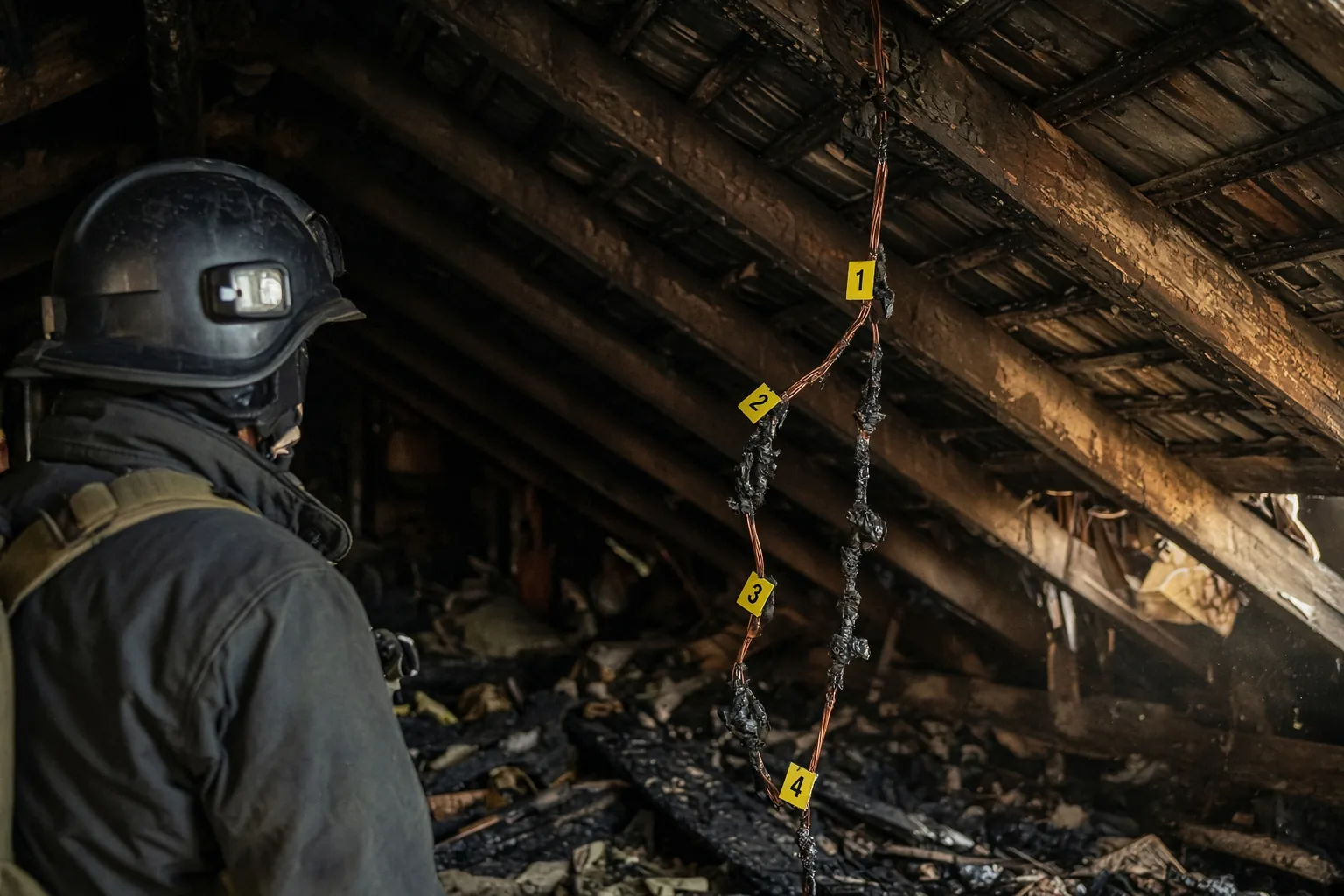
What is arc mapping and what does it tell the investigator?
It is a survey of the wiring for points where electrical arcs occurred, plotted on a plan. The pattern of arc sites along each circuit is one of the data sets used to narrow the area of origin.
In United States v. Hernandez, No. 23-7024, decided on June 7, 2024, the Tenth Circuit quoted the definition in the International Association of Fire Chiefs text Fire Investigator: Principles and Practice to NFPA 921 and 1033 (4th ed. 2016): "Arc mapping is a technique in which the investigator uses the identification of locations of electrical arcing" to help determine the area of origin. Citing section 18.1.2 of NFPA 921, the court listed arc mapping with fire patterns and fire dynamics as data for determining origin.
The Fire and Explosion Investigation Subcommittee of OSAC, the Organization of Scientific Area Committees for Forensic Science, describes arc mapping as an origin determination tool that has been part of NFPA 921 since 2001. Its research needs form, published on the NIST website and approved on March 10, 2021, adds: "The theory and technique of this method is based upon the wiring methods and components that were used in the past."
Arc mapping answers a narrow question: where on the circuits did arcs occur. Two further questions decide what the map is worth in a cause opinion. Was the damage an arc at all, or copper melted by the heat of the fire? And if it was an arc, did it happen before the fire or because the fire reached a live wire?
Is every melted wire a sign of an electrical arc?
No. Copper also melts from the heat of the fire alone. The ATF Fire Research Laboratory lists separate visual features for arc melting and for fire melting and tells investigators not to assume damage is electrical when unsure.
ATF Fire Research Laboratory Technical Bulletin 001, Visual Characteristics of Fire Melting on Copper Conductors, dated September 28, 2012, lists the features of arc melting: a sharp line of demarcation, a round smooth shape, a localized point of contact, corresponding damage on the opposing conductor, copper drawing lines outside the damaged area, localized round depressions, and small beads and divots over a small area.
Fire melting looks different in the same bulletin: an extended area of damage without a sharp line of demarcation, visible effects of gravity, blistering, gradual necking, and a loss of strand integrity on stranded conductors that is not localized. Magnification and some minor cleaning with a dry brush or an ultrasonic bath may be needed to see fine features, including the demarcation between melted and unmelted regions. The investigator "does not need to observe all or more than one" of the listed features to classify the damage.
The bulletin sets two limits. Where it is unclear whether damage is thermal or electrical, the investigator "should not assume it is electrical." Conclusions are checked against the other scene evidence, and conductors smaller than AWG #14 are not relied on alone.
Can arc beads be told apart from fire damage by looking at them?
Researchers disagree. A 2012 study for the National Institute of Justice found no distinguishing visual or microscopic features between beads on energized and non-energized wires, and the ATF laboratory disputed its test conditions.
R. J. Roby and Jamie McAllister wrote Forensic Investigation Techniques for Inspecting Electrical Conductors Involved in Fire (NCJ 239052, July 2012, award 2010-DN-BX-K246) for the National Institute of Justice. They proposed that arc beads can form on wires that are not energized and that bead formation depends on the thermal state of the wire. The report notes that this differs from the prevailing view that beads form only on energized wire.
They tested just over 190 wires, 12- and 14-gauge solid conductors and 16- and 18-gauge stranded conductors, in four exposures: a bench-scale flame impingement apparatus, a 125 kW/m2 radiant tunnel, a 2/5-scale flashover compartment and a full-scale flashover compartment. Energized wires ran under load, at 119 or 120 V and 9 to 113 A, or with power but no current. In the samples examined by the time of the report the authors found "no trends or distinguishing visual or microscopic characteristics" between energized and non-energized wires.
The ATF bulletin answered that three of the study's four exposures were not consistent with what would realistically be expected in a residential compartment fire and that the study failed to identify visible evidence of thermal melting in its photographs. According to the bulletin, the report's own photographs show that all remnants of the energized tests visibly met the NFPA 921 descriptions of an arc bead "without the use of special instrumentation such as a scanning electron microscope."
A report that classifies a bead under the ATF criteria therefore names the features observed, the magnification used and the gauge of the conductor, because the bulletin ties its criteria to each of them.
Does an arc on a wire mean that electricity caused the fire?
Not by itself. In Presley v. Lakewood the Eighth Circuit held that lab tests showing corrosion and arc through char did not establish ignition or spread, and the expert's untested ignition theory stayed excluded.
Presley v. Lakewood Engineering and Manufacturing Co., No. 07-3846, was decided by the Eighth Circuit on January 21, 2009. Inspector Kyle Curry's report gave the cause of the fire as "undetermined at this time." The plaintiffs claimed that the defendant's heater caused the fire. Their expert, Raymond D. Arms, theorized that a defective crimp on the double neutral wire connection in the heater's control panel made the connection hot, that the heat caused the wire insulation to emit flammable gases, and that the parting arc of the thermostat ignited them.
Arms relied on metallurgical tests that showed corrosion at the double neutral connection, and he ruled out the remains of an extension cord because they had arc through char. The court wrote that the tests "simply established corrosion and arc through char" and "did not establish ignition or spread," and that "Arms did not perform testing to prove his ignition scenario." It relied on the analytical gap reasoning of General Electric Co. v. Joiner and affirmed the exclusion. Without the testimony the plaintiffs could not show that the heater caused the fire, and summary judgment followed.
Dalton v. McCourt Electric LLC, No. 12-3568, was decided on July 7, 2015 by Judge Eduardo C. Robreno of the Eastern District of Pennsylvania. Sparks and flames had appeared around an Intermatic power pack for exterior lighting in the plaintiffs' basement. The plaintiffs' expert Wald described in-line arcing: a conductor breaks while current is drawn through it, electrons arc across the break and the arc consumes part of the conductor, producing molten metal "which can drop onto combustible materials below and ignite a fire." At his deposition he said that arcing "plays no real significant role" and that "whenever you part conductors there will be a parting arc."
The court wrote: "The arcing itself is not the point; the question is why it occurred." Wald had named three candidate causes: a manufacturing defect in the terminal, an improper connection made by the installer and an overload. He eliminated the installer's connection by the distance of the damage from the screw connection and the absence of arcing or melting there, and the overload because the load was within proper limits. The court found "the logic of his method to be sound," held that the lack of testing went to the weight of his opinion and not its reliability, and denied the defendants' Daubert motion.
Can arc mapping locate where the fire started?
A 2010 Strathclyde study of 42 fires found arc damage near the area of origin with high probability. The Tenth Circuit cited a 2016 article reporting no published research on finding the point of origin by arc mapping.
Nicholas Carey and Niamh Nic Daeid published their results in Fire and Arson Investigator in October 2010; the University of Strathclyde repository holds the record and the authors' manuscript. They started from the problem that burn patterns traditionally used after post-flashover fires "can be erroneous." They ran 42 fully furnished experimental compartment fires with repeated room configurations, three of them blind tests, and examined the resulting artefacts with several types of microscopy. Only the 22 fires set with one area of origin went into the calculations.
Their analysis of the three-dimensional data indicated "that there is a high probability that arcing damage observed on electrical conductors occurred in close proximity to the fire's area of origin." In the testing section they put that probability at "85% or higher at the confidence level tested." The authors wrote that the repeated scenarios validated the reliability of the arc fault mapping methodology for fire scene investigation.
The Tenth Circuit reached the question from the other side in Hernandez. The investigator, Mr. Wheat, examined every source of information the court listed except arc mapping and said that "fire investigators don't usually use arc mapping for fires in Eastern Oklahoma." The defense expert called arc mapping "industry standard." The court cited a 2016 article by Parisa Dehghani-Taffi and Paul Bieber in the West Virginia Law Review for the point that "no published research exists on the ability to identify a fire's point of origin based on arc mapping" and noted that Hernandez had not told the district court how arc mapping could have affected the three opinions of Mr. Wheat that were admitted.
The court held that the district court "could reasonably rely on Mr. Wheat's investigation as reliable." It described the NFPA 921 guidelines, in the 2017 edition that the investigator said was in effect at the time of the fire, as "flexible recommendations, not strict requirements."
Do arc-fault and ground-fault breakers change arc mapping?
The question is open. The OSAC fire subcommittee recorded that NFPA 921 (2021) does not address what effect GFCI and AFCI devices have on mapping and interpreting arc damage, and asked for a research program.
The OSAC research needs form on arc mapping, version 2 dated January 13, 2020, proposes "a coordinated research program" on the effects that ground-fault circuit interrupters (GFCI) and arc-fault circuit interrupters (AFCI) have on arc mapping. It explains that as new techniques and components enter building electrical systems, the effects of arc damage on origin determination "need to be reevaluated."
The form reports no known unpublished research under way on the subject and cites three works: an article by V. Babrauskas in Fire Technology 54 (2018), pp. 749-780; the ATF technical bulletin on fire melting of copper conductors; and C. Weinschenk and D. Madrzykowski, Impact of Flashover Fire Conditions on Exposed Energized Electrical Cords/Cables, Fire Technology 56 (2020), pp. 959-991.
In a building with AFCI or GFCI protection the type of device on each circuit and the position of each breaker after the fire are part of the scene record. A report that uses arc mapping there states how those devices were taken into account, because NFPA 921 (2021), as the OSAC form records, does not address them.
When does an electrical cause need laboratory testing?
When the cause opinion rests on a mechanism nobody saw. A federal court admitted a materials engineer's lab test of an arcing gas line in Attuso, while the Eighth Circuit upheld exclusion of an untested ignition theory in Presley.
Attuso v. Omegaflex, Inc., No. 18-157-SDD-RLB, was decided by Chief Judge Shelly D. Dick of the Middle District of Louisiana on April 9, 2020. It was undisputed that a melt hole was found in a TracPipe corrugated stainless steel tubing (CSST) gas line above the kitchen ceiling. The plaintiffs' materials engineer, Elizabeth Buc, attributed it to "a lightning induced melt opening as the result of arcing of the CSST with a nearby metal object," a sheet steel vent, and said the propane ignited "immediately after the opening [in the CSST] was created." The defense expert agreed that the hole came from arcing between the tubing and the vent with lightning as the energy source. The dispute was whether that hole caused the fire.
Omega Flex attacked her laboratory test: it used natural gas instead of the propane involved in the fire, and a TIG welder placed on the tubing stood in for lightning. A thermocouple embedded in the molten stainless steel recorded temperatures above the ignition points of propane and natural gas for up to two seconds and above that of the tubing's plastic jacket for up to three seconds. The court held that "Buc followed accepted principles and methods described in NFPA 921" and denied the motion to exclude her opinions.
In Presley the Eighth Circuit set the standard for such tests: testing that was performed "must be appropriate and must analytically prove the expert's hypothesis." Arms had not tested his ignition scenario at all, and the court also noted that he had not tested whether the heater's cover would spread fire to other combustibles.
How does an investigator rule out an electrical cause?
In United States v. Diaz a fire investigator excluded an electrical cause after finding insufficient signs of electrical activity: the condition of a radio in the basement and the absence of melted copper wiring.
In United States v. Diaz, No. 01-1904, decided by the First Circuit on August 20, 2002, fire investigator Dorsey first thought the fire "might have been caused by an electrical malfunction associated with the radio in the basement." After a second examination he and another investigator, Haynes, concluded that it was "deliberately set," and a carpet sample tested positive for mineral spirits. Haynes eliminated the electrical theory: the court described his finding of "insufficient signs of electrical activity," based on the condition of the radio and the absence of melted copper wiring.
Defense counsel argued that the experts should have collected more carpet samples and tested the electrical outlet. Diaz had objected at trial only to the experts' qualifications, so the First Circuit tested the reliability point only for plain error and found none. It noted that the experts examined the basement firsthand and explained their methods, and that Diaz explored these points in cross-examination. The arson conviction was affirmed.
A later expert checks such an exclusion against the scene record: photographs of the wiring and appliances in the area of origin taken in place, notes on which circuits were energized, and a list of the conductors examined with what was found on each.
What does IAE do when a fire may have started in the wiring?
IAE prepares fire origin and cause expert reports on the client's questions for US cases. The investigator maps char depth, burn patterns and arc sites on branch circuits. The signed report is issued within up to 5 business days.
The fire origin and cause service covers subrogation, product liability, arson defense and coverage disputes in US courts. The investigator answers the questions agreed with the client, working from the scene record, photos, removed artifacts and witness accounts. The work maps char depth, burn patterns on walls and ceilings and arc sites on branch circuits to narrow the area where burning began, and names the ignition source, the first fuel ignited and the circumstances that brought them together, testing each hypothesis against the scene and the timeline.
For electrical evidence the investigator checks whether wiring, appliances and debris were photographed in place before removal, logged and examined at a joint lab exam with all interested parties notified. The client states in the request whether the fire scene still exists.
The secretariat confirms receipt the same day. Within one business day IAE confirms the format, cost, deadline and the specialist from its registry, and the client approves the candidate and the CV before work starts. The draft is checked for facts. The signed PDF is issued within up to 5 business days after the format and cost are confirmed, and cases with tight deadlines have a 48-hour rush.
Every specialist is a member of the public IAE registry and passed the council's attestation under the published Criteria Matrix. The Member ID in the document opens the specialist's category, specialization, attestation date and record status on the status check page or by QR code. The specialist confirms in the document that he or she has no interest in the outcome of the case. Neither IAE nor the specialist guarantees the outcome or influences the decision, and IAE is not a law firm.
Sources
- United States v. Hernandez, No. 23-7024 (10th Cir. June 7, 2024)
- OSAC Research Needs Assessment Form: Arc Mapping, Fire & Explosion Investigation Subcommittee, approved March 10, 2021 (NIST)
- ATF Fire Research Laboratory Technical Bulletin 001, Visual Characteristics of Fire Melting on Copper Conductors (September 28, 2012)
- R. J. Roby, J. McAllister, Forensic Investigation Techniques for Inspecting Electrical Conductors Involved in Fire, NCJ 239052 (NIJ, July 2012)
- Presley v. Lakewood Engineering and Manufacturing Co., No. 07-3846 (8th Cir. Jan. 21, 2009)
- Dalton v. McCourt Electric LLC, Civil Action No. 12-3568 (E.D. Pa. July 7, 2015)
- N. Carey, N. Nic Daeid, Arc mapping, Fire and Arson Investigator (October 2010), University of Strathclyde repository record
- N. Carey, N. Nic Daeid, Arc Mapping research, authors' manuscript from the University of Strathclyde repository (CORE)
- Attuso v. Omegaflex, Inc., No. 18-157-SDD-RLB, Rec. Doc. 98 (M.D. La. Apr. 9, 2020)
- United States v. Diaz, No. 01-1904 (1st Cir. Aug. 20, 2002)
Read also
All articles
Gas explosion investigation: who is liable, and what does the investigator have to establish?
After a gas explosion the claim turns on one physical question: where the gas came from and why nobody noticed it before something ignited it Sergei Voronin
Tenant caused a fire: who is liable, can the landlord's insurer sue, and what must the investigator establish?
When a rented house burns, three questions come up in order: where the fire started, what started it, and who answers for that cause under the leaseSergei Voronin
Fire spread from a neighbor's property: who is liable, and what does the investigator have to establish?
A neighbor is liable for a fire that spreads onto your property when the fire started through his negligence or in violation of law, not merelySergei VoroninExpert examinations
Ready to discuss your case?
Send the materials: the secretariat will confirm the format, cost, deadline and the specialist within one business day.
