
Examinations
Can a surveyor come onto my property, and can my surveyor enter the neighbor's land?
In California and Florida a licensed surveyor may enter private land to survey it without the owner's consent: California Civil Code section 846.5 makes reasonable access the owner's duty, and Florida section 472.029 says the entry is not trespass. In a federal boundary case the way onto the other side's land is a request under Rule 34, and a refusal can lead to a court order, costs and sanctions under Rule 37.
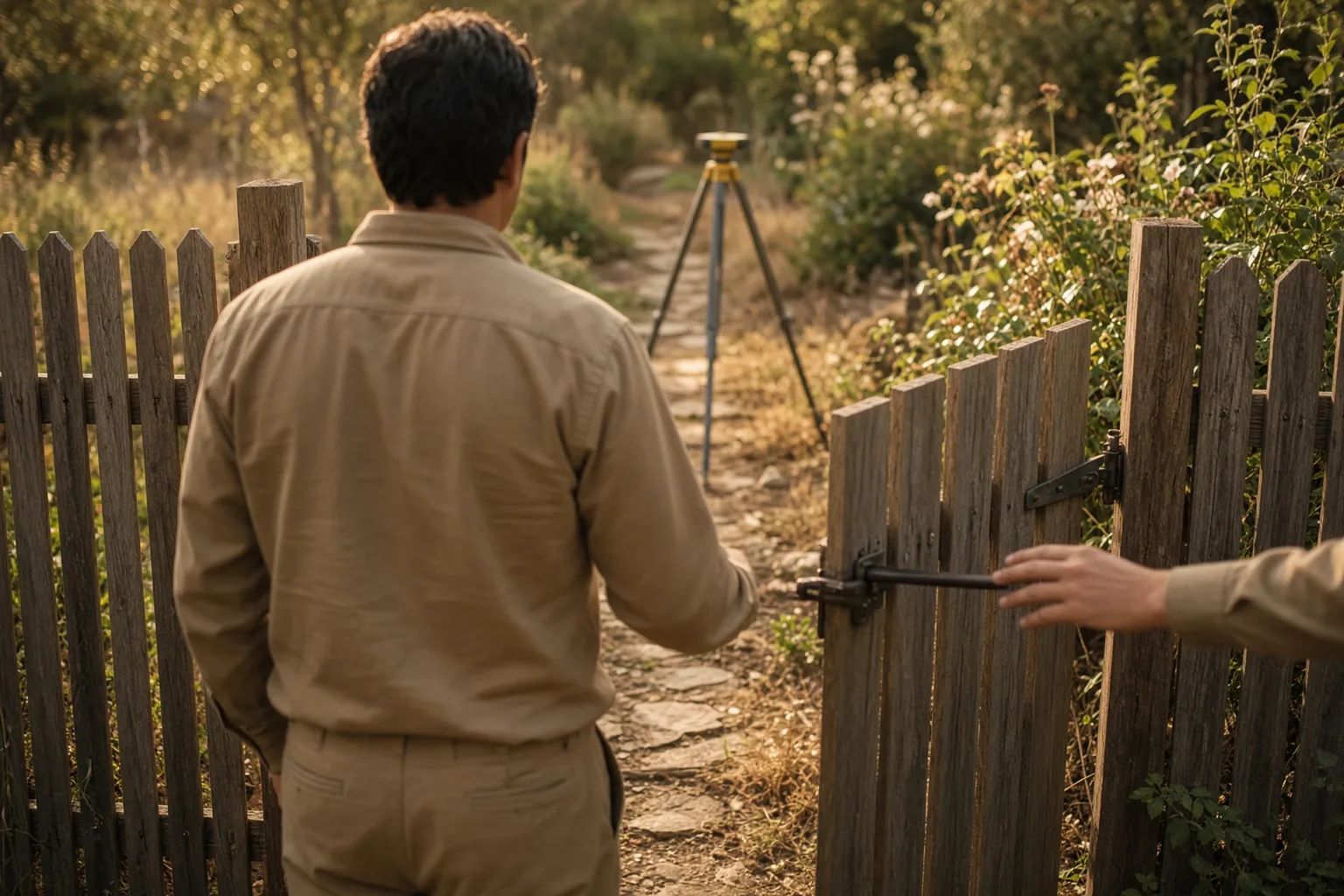
Can a surveyor enter my land without my permission?
In some states, yes. California and Florida give licensed surveyors a statutory right to enter the land of others to survey it, and Florida provides that such entry is not trespass. Each state sets its own rule.
California Civil Code section 846.5(a) states: "The right of entry upon or to real property to investigate and utilize boundary evidence, and to perform surveys, is a right of persons legally authorized to practice land surveying and it shall be the responsibility of the owner or tenant who owns or controls property to provide reasonable access without undue delay."
California counties answer the same question for residents. The Tuolumne County FAQ says "Yes, while performing a survey as provided for in Section 846.5 of the Civil Code," and adds the other two provisions: "Section 8774 of the Business & Professions Code and Section 602.8 of the Penal Code."
Section 472.029(1) of the 2026 Florida Statutes lets surveyors and mappers, with their subordinates, go on the lands of others when necessary to make surveys and maps or to locate or set monuments, and lets them bring the agents and employees they need. Such entry is not trespass, and the surveyor is not liable to arrest or to a civil action for it.
The two statutes cover licensed surveyors doing survey work. A neighbor who walks onto the land with a tape measure is not covered by either of them.
Does the surveyor have to tell me before entering?
California requires notice of the proposed time of entry where practicable, but entry does not depend on it. In Florida, written notice 3 business days ahead matters only for agricultural parcels over 160 acres.
Section 846.5(a) continues: "The right of entry is not contingent upon the provision of prior notice to the owner or tenant." The next sentence reads: "However, the owner or tenant shall be notified of the proposed time of entry where practicable." The Tuolumne County answer repeats the rule in one line: "Notice to the landowner shall be given where practicable."
Florida sets rules for farmland in section 472.029(2). A person regulated by chapter 472 who enters agricultural land must comply with applicable federal, state and local laws on premises security, agricultural protections, and health and safety. If written notice is not delivered to the landowner or registered agent "at least 3 business days prior to entry" on an agricultural parcel of more than 160 acres, the landowner owes the surveyor only the duty owed to an undiscovered trespasser.
The same subsection protects the owner from claims by others: a landowner is not liable to any third party for civil or criminal acts or damages caused by the negligent or intentional conduct of a regulated person on agricultural land. Subsection (2) applies only to land classified as agricultural under section 193.461.
Can a surveyor cut, dig or move things on my land?
Florida's statute gives no authority to destroy, injure, damage or move physical improvements without the landowner's written permission. California's section 846.5 covers entry to investigate boundary evidence and to perform surveys.
Florida section 472.029(1) ends with a limit: it does "not give authority to registrants, subordinates, agents, or employees to destroy" physical improvements on the land of another, or to injure, damage or move them, without the written permission of the landowner. A fence, a hedge or a shed stays where it is unless the owner agrees in writing.
California's section has two further subdivisions about highways. Under 846.5(b) the right of entry does not apply to monuments within access-controlled portions of freeways. Under 846.5(c), when a property survey needs such monuments, the agency with jurisdiction over the freeway references them to usable points outside the access control line, on written request from the registered civil engineer or licensed land surveyor. The agency does the work within a reasonable time, in direct cooperation with the surveyor and at no charge to him.
Neither statute decides where the boundary runs. Entry gives the surveyor the measurements; the location of the line is settled by agreement of the owners or by a court.
How does a party get its surveyor onto the other side's land in a lawsuit?
In federal court, by a written request under Rule 34(a)(2) to enter land the other party possesses or controls, so that the surveyor can inspect, measure, survey, photograph, test or sample it.
Rule 34(a)(2) of the Federal Rules of Civil Procedure lets a party serve a request "to permit entry onto designated land or other property possessed or controlled by the responding party," "so that the requesting party may inspect, measure, survey, photograph, test, or sample the property" "or any designated object or operation on it." A boundary survey of the neighbor's side of a fence falls within those words.
The request "must describe with reasonable particularity each item or category of items to be inspected" and "must specify a reasonable time, place, and manner for the inspection and for performing the related acts." For a survey that means the parcel, the corners and fences to be located, the date and hours, the instruments and the size of the field crew.
Timing follows Rule 26(d). A party may not seek discovery from any source before the parties have conferred under Rule 26(f), unless the rules, a stipulation or a court order allow it. Rule 26(d)(2)(A) makes an exception for Rule 34: more than 21 days after the summons and complaint are served on a party, a request under Rule 34 may be delivered to that party, and the 30 days to respond then run from the first Rule 26(f) conference.
The party served "must respond in writing within 30 days after being served". The 1970 committee note ties the addition of testing and sampling on land to "a need frequently encountered by parties in preparation for trial."
Can the neighbor object to a request to enter the land?
Yes, but the objection has to give specific grounds and reasons. An objection to part of the request must name that part and permit inspection of the rest. Terms of the entry can be set by a protective order.
Under Rule 34(b)(2)(B), for each item or category "the response must either state that inspection and related activities will be permitted as requested or state with specificity the grounds for objecting to the request, including the reasons." Rule 34(b)(2)(C) adds: "An objection to part of a request must specify the part and permit inspection of the rest."
A party who wants limits on the survey asks for a protective order under Rule 26(c)(1). The court may act for good cause to protect a party or person from "annoyance, embarrassment," "oppression, or undue burden or expense". Among the listed orders are "forbidding the disclosure or discovery" and "specifying terms, including time and place or the allocation of expenses, for the disclosure or discovery." The 1970 committee note to Rule 34 points to the same rule for claims of privacy or of undue burden or expense.
Scope is set by Rule 26(b)(1): discovery reaches any nonprivileged matter relevant to a party's claim or defense and proportional to the needs of the case. In a boundary dispute the land along the disputed line is the subject of the claim.
What happens if the neighbor refuses to let the surveyor in?
The requesting party can move to compel under Rule 37(a). If the court orders entry and the party still refuses, Rule 37(b)(2) lets the court treat designated facts as established or bar the party's own evidence.
Under Rule 37(a)(3)(B)(iv) a party may move to compel when a party "fails to respond that inspection will be permitted", or fails to permit inspection, as requested under Rule 34. Under Rule 37(a)(4), "an evasive or incomplete disclosure, answer, or response" "must be treated as a failure to disclose, answer, or respond."
If the motion is granted, or the entry is allowed only after the motion was filed, the court "must, after giving an opportunity to be heard," require the party whose conduct necessitated the motion, the party or attorney advising that conduct, or both to pay the movant's reasonable expenses incurred in making the motion, including attorney's fees (Rule 37(a)(5)(A)). The rule lists three exceptions: the movant did not first try in good faith to get the discovery without court action, the refusal was substantially justified, or other circumstances make an award unjust.
Disobeying the order brings the measures of Rule 37(b)(2)(A). The court may direct "that the matters embraced in the order or other designated facts be taken as established for purposes of the action, as the prevailing party claims"; prohibit the disobedient party "from supporting or opposing designated claims or defenses, or from introducing designated matters in evidence"; strike pleadings; stay the proceedings; dismiss the action in whole or in part; render a default judgment; or treat the failure as contempt of court.
For a boundary case the first two measures bear on the survey itself. A party who kept the surveyor off the land can find that the location of a fence or corner is taken as established, or that its own survey of the same ground is kept out.
What if the land belongs to someone who is not a party?
Rule 34(c) refers to Rule 45: a subpoena can command a nonparty to permit the inspection of premises. The party serving it must take reasonable steps to avoid undue burden or expense.
Boundary evidence often sits on a third parcel: a corner monument on the land of another neighbor, or a fence line that continues past the disputed strip. Rule 34(c) states: "As provided in Rule 45, a nonparty may be compelled to produce documents and tangible things or to permit an inspection." The 1970 committee note recognized that "it is occasionally necessary to enter land or inspect large tangible things in the possession of a person not a party".
Under Rule 45(a)(1)(A)(iii), a subpoena can command each person to whom it is directed to "permit the inspection of premises" at a specified time and place. Rule 45(d)(1) requires the party or attorney who issues and serves the subpoena to "take reasonable steps to avoid imposing undue burden or expense on a person subject to the subpoena."
The nonparty may answer with a written objection "to inspecting the premises" under Rule 45(d)(2)(B). The same committee note to Rule 34 adds that the rule "does not preclude independent actions for discovery against persons not parties."
What should the surveyor record about the entry?
The date and scope of the entry, the points measured and the instruments used, because the expert report must list the facts or data the surveyor considered and the exhibits that support each opinion.
Rule 26(a)(2)(B) requires a retained expert's written report to contain "a complete statement of all opinions the witness will express and the basis and reasons for them;" "the facts or data considered by the witness in forming them;" and "any exhibits that will be used to summarize or support them." Field notes and photographs from a Rule 34 entry are such facts or data.
The report also states the witness's qualifications with publications from the previous 10 years, the cases in which the witness testified as an expert in the previous 4 years, and the compensation for the study and testimony.
If entry was refused, the list of facts or data considered tells the court which points came from field measurement and which from deeds, plats and earlier surveys.
What does IAE prepare when access to the land is disputed?
For boundary, quiet title and encroachment cases in US courts, an IAE surveyor prepares an expert report on the client's questions or a review of the opposing surveyor's report, in up to 5 business days.
The IAE land survey page lists Rule 34(a)(2) among the rules the court looks at: a party may request entry onto land the other side possesses or controls to inspect, measure, survey, photograph, test or sample it, and the written response is due within 30 days after service. The surveyor collects deeds, recorded plats and original field notes, searches for the original monuments, measures with GNSS and a total station and locates fences, driveways and buildings relative to the line.
With the request the client sends the deeds, plats and any prior surveys. The secretariat confirms receipt the same day, and within one business day IAE confirms the format, the cost, the deadline and the specialist from its registry; the client approves the candidate and the CV before work starts. Delivery is in up to 5 business days after the format and cost are confirmed, with a 48-hour rush for tight deadlines.
The specialist is a member of the public IAE registry, can be verified by Member ID or QR code and confirms in the document that he or she has no interest in the outcome. IAE is not a law firm and does not advise on case strategy; whether to serve a Rule 34 request, a subpoena or a motion to compel is a question for the client's attorney.
Sources
- California Civil Code section 846.5 (California Public Law)
- Does a land surveyor have the Right of Entry to my private property without my permission? (Tuolumne County)
- Florida Statutes (2026), section 472.029, Authorization to enter lands of third parties (Florida Senate)
- Federal Rules of Civil Procedure, Rule 34, with committee notes (LII, Cornell Law School)
- Federal Rules of Civil Procedure, Rule 26 (LII, Cornell Law School)
- Federal Rules of Civil Procedure, Rule 37 (LII, Cornell Law School)
- Federal Rules of Civil Procedure, Rule 45 (LII, Cornell Law School)
Read also
All articles
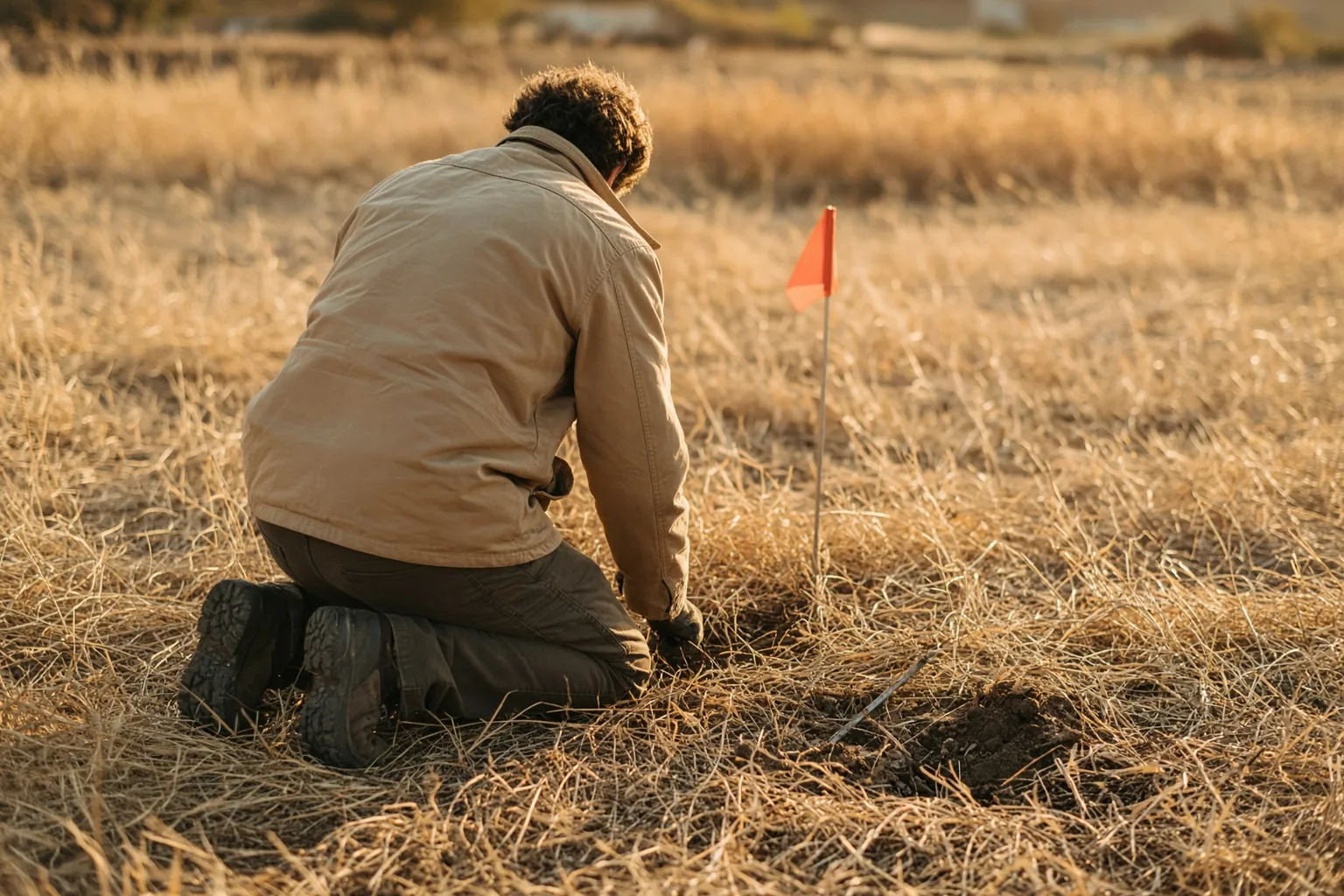
Neighbor removed the survey markers: is it illegal, who pays to reset them, and what does the surveyor document?
A survey is finished, the corners are pinned, and a week later the pins are gone. In Washington intentionally disturbing a survey monument is a gross Sergei Voronin
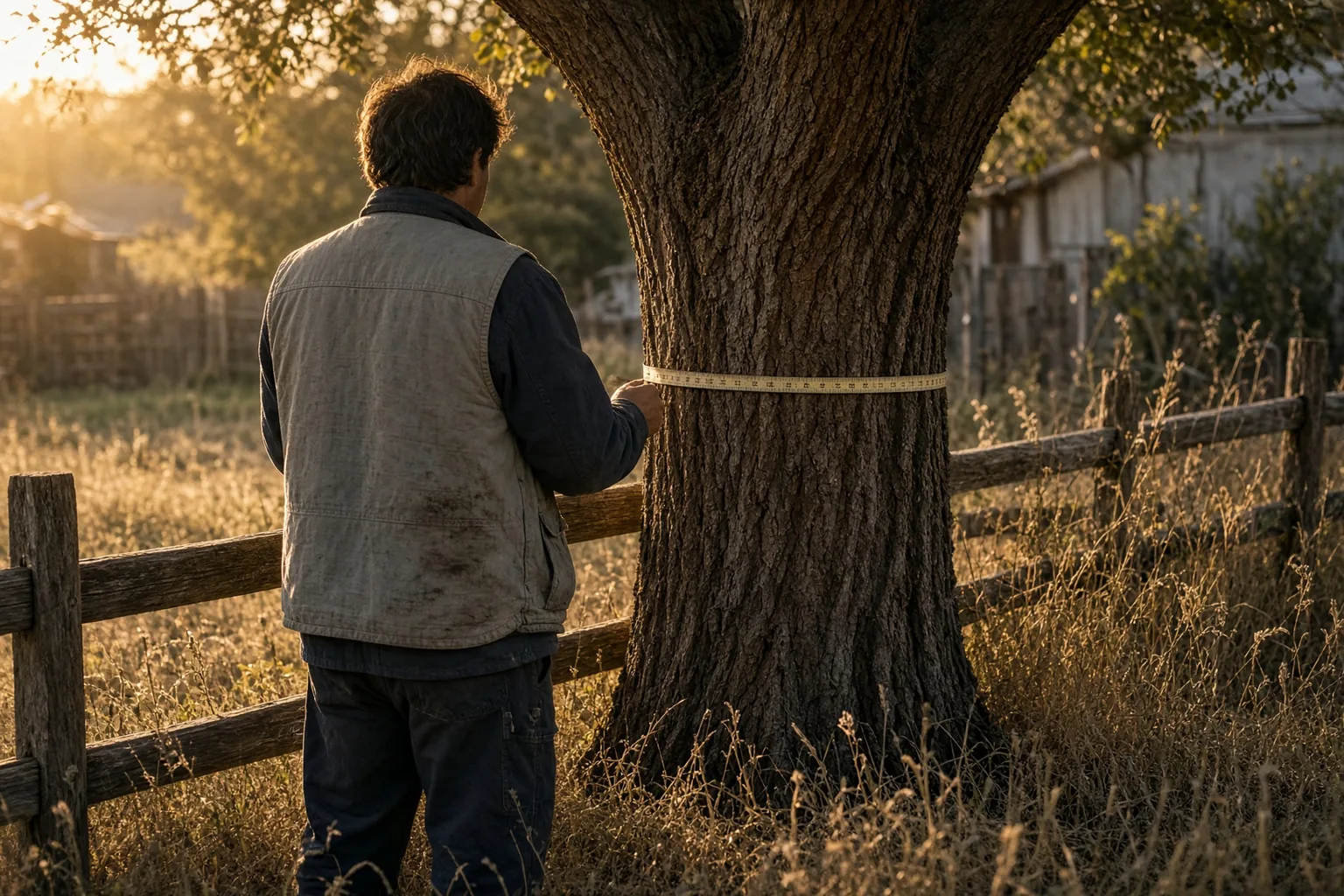
Tree on the property line: who owns it, and how does a surveyor show where the trunk stands?
In California ownership of a tree follows its trunk: a tree whose trunk stands wholly on one lot belongs to that owner, and a tree whose trunk standsSergei Voronin
Road right of way and the property line: where does the public road end and my lot begin?
Where a lot meets a public road, the line is the edge of the right of way or a line the deed sets, not the edge of the pavement. In Florida a roadSergei VoroninExpert examinations
Ready to discuss your case?
Send the materials: the secretariat will confirm the format, cost, deadline and the specialist within one business day.
