
Examinations
Rule 615 and the essential-person exception: can an expert witness stay in the courtroom during trial?
When a party invokes Federal Rule of Evidence 615, the court must exclude witnesses from the courtroom so they cannot hear each other's testimony, and an expert witness is not exempt by default. The expert stays only if the party proves to the court that the expert's presence is essential to presenting its claim or defense. Since December 1, 2023, the court may also bar excluded witnesses from reading or receiving trial testimony outside the courtroom.
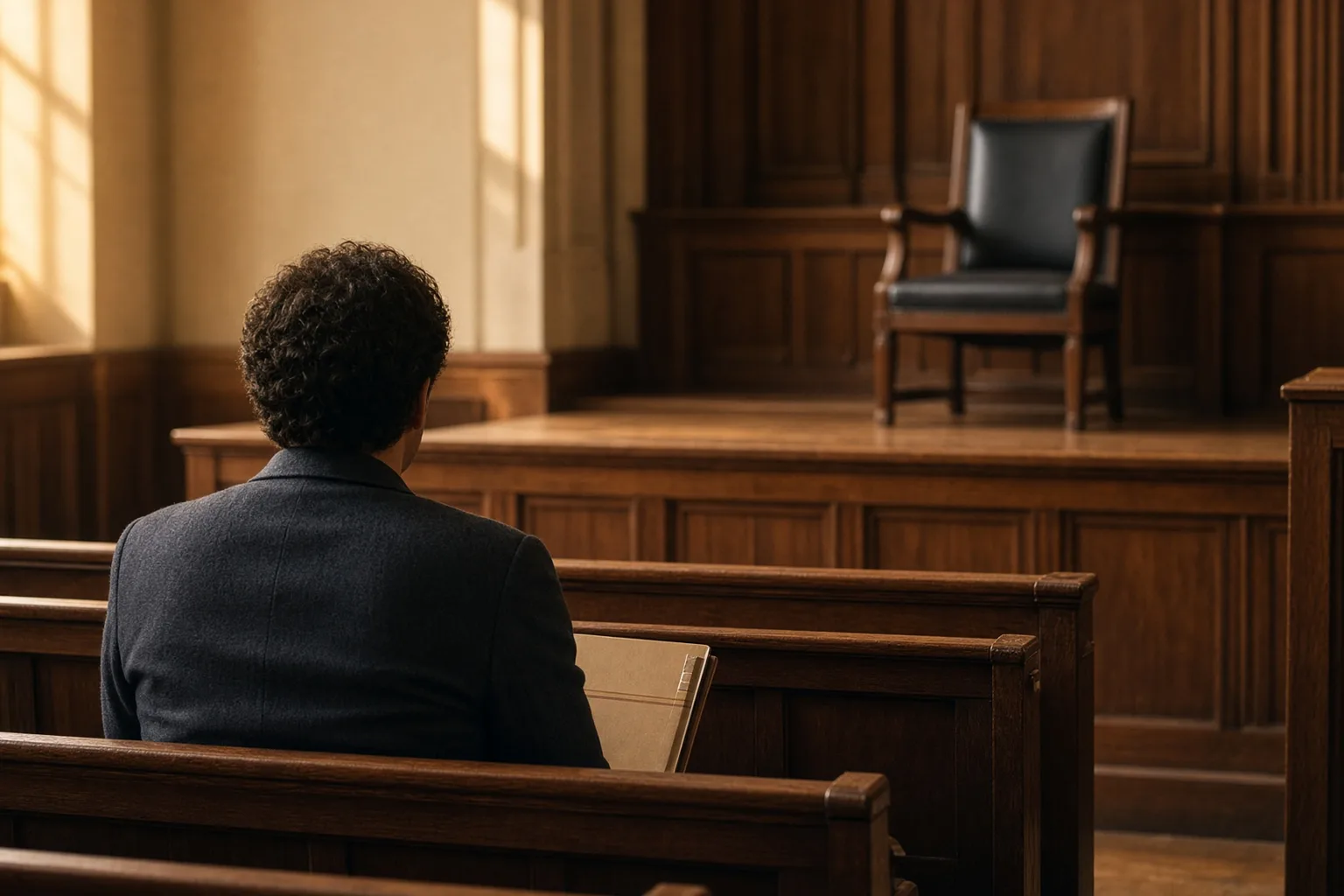
What does Rule 615 require when a party asks to exclude witnesses?
At a party's request, the court must order witnesses excluded from the courtroom so that they cannot hear other witnesses' testimony, and it may do so on its own. Four kinds of persons are exempt.
Rule 615(a) of the Federal Rules of Evidence reads: "At a party's request, the court must order witnesses excluded from the courtroom so that they cannot hear other witnesses' testimony. Or the court may do so on its own." The word "must" matters: once a party asks, the judge has no discretion to refuse the order itself. Discretion remains only over who falls within an exception.
The purpose is to keep each witness's account independent. A witness who hears another witness first can adjust his or her own testimony, consciously or not. For a fact witness the risk is plain. For an expert the question is less obvious, because an expert may need to know what the other witnesses said in order to answer it.
The rule was amended by the Supreme Court's order of April 24, 2023, together with Rules 106 and 702. The order states that the amendments "shall take effect on December 1, 2023, and shall govern in all proceedings thereafter commenced."
Who cannot be excluded from the courtroom under Rule 615?
A party who is a natural person, one designated officer or employee of an entity party, a person whose presence a party shows to be essential to its claim or defense, and a person authorized by statute.
Rule 615(a) says the rule "does not authorize excluding" four categories: "(1) a party who is a natural person; (2) one officer or employee of a party that is not a natural person, if that officer or employee has been designated as the party's representative by its attorney; (3) any person whose presence a party shows to be essential to presenting the party's claim or defense; or (4) a person authorized by statute to be present."
An expert witness can fit only the third category. An outside expert is not a party, and an expert retained for the case is not the entity's officer or employee. The 2023 committee note also limits the second category: "the exception from exclusion for entity representatives is limited to one designated representative per entity," although an entity may swap one representative for another during trial "so long as only one witness-representative is exempt at any one time."
The note to the original rule names the kind of person the third category contemplates: "an agent who handled the transaction being litigated or an expert needed to advise counsel in the management of the litigation." That sentence is the basis on which parties ask to keep their experts in the room.
Is an expert witness automatically allowed to stay in the courtroom?
No. The party must make a showing. The Kentucky Supreme Court in McAbee v. Chapman (2016) and the Arizona Supreme Court in Spring v. Bradford (2017) both rejected an automatic exemption for experts under their versions of Rule 615.
The text of Rule 615(a)(3) puts the burden on the party: the person's presence must be one "a party shows to be essential." The note to the original rule says such a category "contemplates" an expert needed to advise counsel; it does not say every expert qualifies.
In McAbee v. Chapman, No. 2014-SC-000555-DG, decided on December 15, 2016, the Kentucky Supreme Court rejected a per se exemption for opinion experts and held that its Rule 615 applies to expert and lay witnesses in civil and criminal cases. In Spring v. Bradford, No. CV-17-0068-PR, decided on October 23, 2017, the Arizona Supreme Court held that expert witnesses are not automatically exempt and that a party must make a showing before the court grants an exemption.
Both decisions interpret state rules. In federal court the text of Rule 615(a)(3) sets the same requirement: the exception covers a person whose presence the party shows to be essential, not every witness who gives opinion testimony.
What must a party show to keep its expert in the courtroom?
That the expert's presence is essential, not merely helpful or desirable. In McAbee a conclusory assertion was not enough; an exemption may be justified when hearing the testimony is the expert's only way to learn the facts.
Kathy McAbee sued the surgeon Darren Chapman in Hopkins Circuit Court for malpractice, alleging that a stapled colon reconnection in May 2010 was performed negligently and caused a fistula between the bladder and the rectum. Her counsel asked for an across-the-board exclusion of witnesses. The trial court instead exempted all designated experts, and the defense expert Dr. Shuttleworth sat in on the testimony of the plaintiff's expert Dr. Kodner and later disagreed with Dr. Kodner's reading of a surgical report.
The Kentucky Supreme Court held that the proponent must show essentiality and that being "helpful" or "simply desirable" is not enough. Defense counsel had offered only a conclusory assertion, so the trial court abused its discretion. Under Kentucky's Rule 703, experts may base opinions on facts "made known to the expert at ... the hearing," and an exemption may be justified if hearing the testimony is the expert's only way to learn the facts. The court named medical records, stipulations and hypothetical questions as adequate substitutes for hearing other witnesses live.
A showing that works on that reasoning is specific. It names the testimony the expert must hear, explains why depositions and records do not cover it, for example because a witness will describe a measurement or a test for the first time at trial, and describes what the expert will do with it: advise counsel on cross-examination or answer the new facts in his or her own testimony.
Can an excluded expert read the trial transcripts or be told what other witnesses said?
The court may forbid it. Since the 2023 amendment, Rule 615(b) lets the court prohibit disclosure of trial testimony to excluded witnesses and prohibit excluded witnesses from accessing trial testimony.
Rule 615(b) states: "An order under (a) operates only to exclude witnesses from the courtroom. But the court may also, by order: (1) prohibit disclosure of trial testimony to witnesses who are excluded from the courtroom; and (2) prohibit excluded witnesses from accessing trial testimony." The committee note says that subdivision (b) "emphasizes that the court may by order extend the sequestration beyond the courtroom."
Spring v. Bradford arose under Arizona's rule. Emma Spring sued the chiropractor Timothy Bradford over a neck adjustment. After witnesses had been excluded, defense counsel gave two defense experts, Dr. Hamilton and Dr. Iverson, the trial testimony transcripts of the plaintiff's experts, Dr. Lieberman and Dr. Bragman. The trial court found no bad faith but a violation of the order, and the Arizona Supreme Court read its rule as one that "prohibits a party from providing prospective trial witnesses with transcripts of prior witnesses' trial testimony."
Under the federal rule as amended, the scope depends on the order. An order that only excludes witnesses from the room leaves transcripts outside it, and a party that wants a wider bar asks the court to add the terms of Rule 615(b).
What happens if an expert hears or reads testimony in violation of the order?
In Spring v. Bradford the Arizona Supreme Court held that prejudice is not presumed in an ordinary civil case: the moving party must show an objective likelihood of prejudice, and the court must still take some corrective action.
The Arizona court wrote that "[N]o such presumption applies here." A rebuttable presumption of prejudice applies only in limited cases where the violation is substantial and makes proving prejudice nearly impossible. Otherwise the party complaining of the violation must show an "objective likelihood of prejudice." Nothing showed that the defense experts' trial testimony differed from their earlier reports or depositions, and the court affirmed the judgment and the denial of a new trial.
In McAbee the Kentucky Supreme Court found error in exempting the experts but held it harmless. Experts naturally learn of other testimony, the court said, so the question is whether testimony was improperly affected, and given defense counsel's consistent strategy it found no significant effect on the jury. The court affirmed the 9-3 defense verdict on different reasons than the Court of Appeals had given.
In both cases the comparison that decided prejudice was documentary: what the expert said in the report and at deposition against what the expert said at trial. An expert whose trial opinions match the disclosed report gives the other side little to show.
How does an excluded expert learn the trial evidence?
From medical records and other documents, stipulations and hypothetical questions put to the expert at trial. McAbee treated these as adequate substitutes for sitting in the courtroom.
Under Kentucky's Rule 703, as quoted in McAbee, an expert may base an opinion on facts "made known to the expert at ... the hearing." In McAbee the court listed medical records, stipulations and hypothetical questions as adequate alternatives to hearing the other witnesses live.
A hypothetical question lets counsel put the facts that another witness testified to before the expert at trial without the expert having heard that witness. The expert then answers on the stated assumptions, and the jury decides whether the assumptions were proved.
Where the court has entered an order under Rule 615(b), counsel cannot pass the transcript to the expert to fill the gap. The preparation then rests on the record that existed before trial, which is one more reason to have the expert review every deposition and exhibit before the trial begins.
When should a party ask the court to exempt its expert from exclusion?
When the other side invokes the rule, or earlier in a pretrial motion, with a specific showing on the record. In both McAbee and Spring the courts required a showing before an exemption is granted.
The other side may invoke the rule at the start of trial, before the first witness. A party that wants its expert in the room has to answer it then, and a showing prepared in advance can name the witnesses, the testimony and the use the expert will make of it.
The other side may oppose. In McAbee the plaintiff's counsel had asked for an across-the-board exclusion, the trial court exempted the experts although defense counsel gave no basis for calling them essential, and the Kentucky Supreme Court held that the exemption was an abuse of discretion. A record that explains essentiality protects the exemption on appeal.
A party that does not invoke Rule 615 at all leaves every witness, experts included, free to sit in. The decision whether to invoke the rule, and against which witnesses, is a trial strategy question for the attorney.
What does IAE do when a party needs an expert's work before or during trial?
IAE prepares an expert report on the client's questions and reviews of the opposing expert's report in civil, arbitration and criminal cases. The signed PDF is issued in up to 5 business days, with a 48-hour rush.
On the expertise page IAE describes three kinds of work in civil, arbitration and criminal cases: out-of-court examinations, expert opinions and reviews of forensic expert reports. An examination on the client's questions covers objects and materials before going to court or during a dispute, and the result is a specialist opinion with a description of the method and conclusions. A review of the opposing expert's report checks the method, the completeness of the study, whether the conclusions follow from the research and whether the expert's education and specialization match the subject.
The client sends the materials and describes the task, and the secretariat confirms receipt the same day. Within one business day IAE confirms the format, cost, deadline and the specialist from the registry, and the client approves the candidate and the CV before work starts. The draft is checked for facts, and the signed PDF is issued in up to 5 business days. For cases with tight deadlines there is a 48-hour rush.
The expert's Member ID and status are open in the public IAE registry, and verification by QR code needs no registration. The specialist confirms in the document that they have no interest in the outcome of the case, and materials are not passed to third parties without the client's consent. IAE is not a law firm and does not advise on case strategy; whether to invoke Rule 615 or seek an exemption is a question for the client's attorney.
Sources
- Federal Rules of Evidence, Rule 615, Excluding Witnesses, with committee notes (LII, Cornell Law School)
- Supreme Court of the United States, order of April 24, 2023 amending the Federal Rules of Evidence
- McAbee v. Chapman, No. 2014-SC-000555-DG (Ky. Dec. 15, 2016) (Hall Approved)
- Spring v. Bradford, No. CV-17-0068-PR (Ariz. Oct. 23, 2017) (Justia)
Read also
All articles
Can an expert witness testify outside his or her field, and when does a case need a second expert?
Rule 702 admits opinion testimony of a witness qualified by "knowledge, skill, experience, training, or education". Courts apply that test to each Sergei Voronin

Lay witness or expert witness: when does an opinion need an expert under Rule 701?
A witness who is not testifying as an expert may give an opinion only if it rests on the witness's own perception, is useful to the jury and is "notSergei Voronin
Can you sue an expert witness? Witness immunity and claims against your own expert
Whether an expert witness can be sued depends on who sues and for what. Testimony is protected by witness immunity, which the U.S. Supreme CourtSergei VoroninExpert examinations
Ready to discuss your case?
Send the materials: the secretariat will confirm the format, cost, deadline and the specialist within one business day.
