
Examinations
Fire cause and origin expert witness: what the investigator determines and what courts check
A fire cause and origin expert answers two questions: where the fire started and what brought a heat source and a fuel together at that spot. A federal court admits the opinion under Rule 702 of the Federal Rules of Evidence when the party offering it shows sufficient data and a reliable method. In 2024 a New Jersey court admitted an investigator's origin opinion and excluded his cause opinion, which rested on speculation.
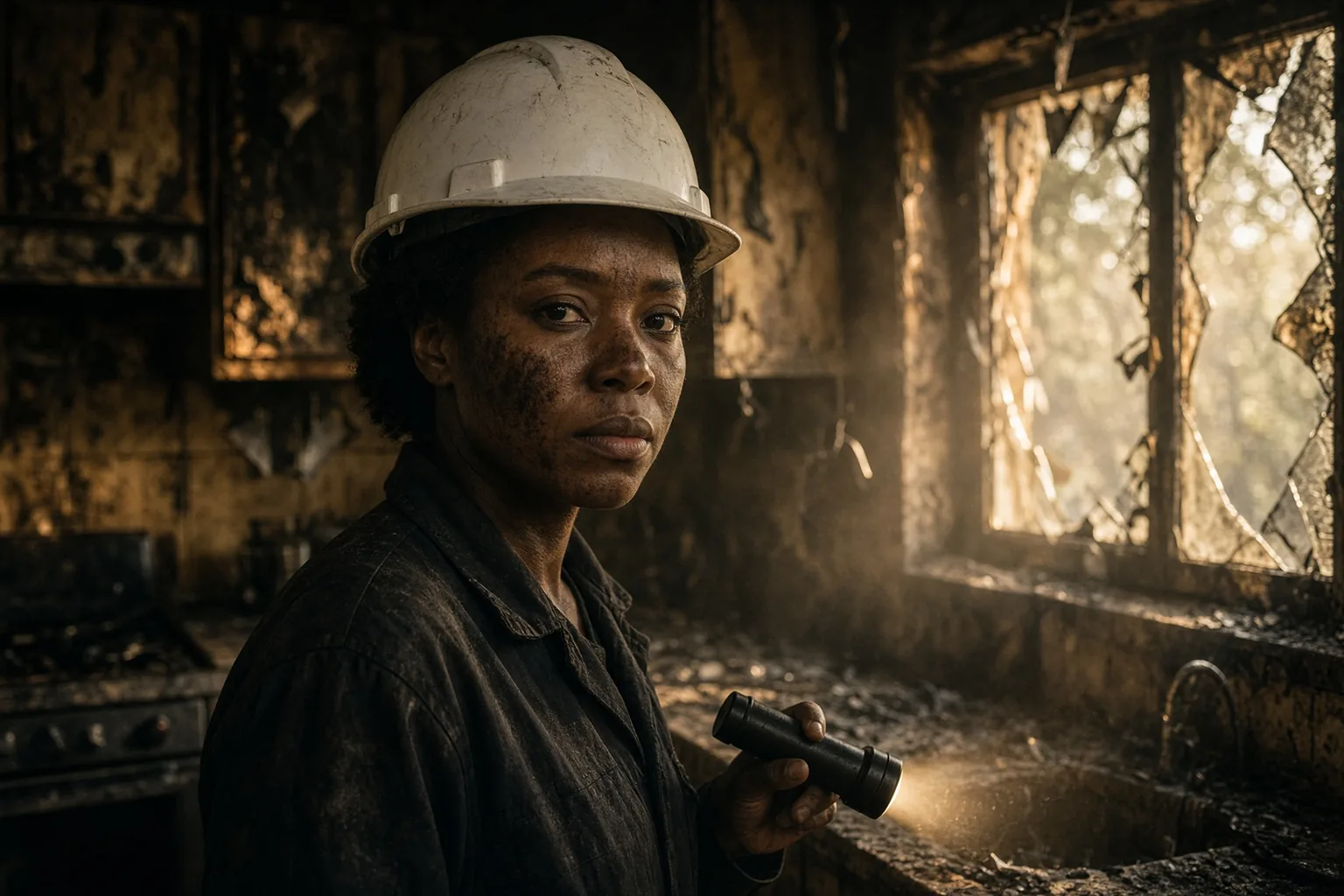
What does a fire cause and origin expert determine?
The area and the point of origin first, then the heat source and fuel that met there. In one Eighth Circuit case the investigator excluded every device outside the area of origin.
NFPA 921, Guide for Fire and Explosion Investigations, separates origin from cause, and courts quote its definitions. The Superior Court of New Jersey, Mercer County, did so in State v. Ordonez-Lima, decided March 21, 2024. The point of origin is "the physical location within the area of origin where a heat source, a fuel, and an oxidizing agent first interact." The area of origin is the space "in which the 'point of origin' of a fire or explosion is reasonably believed to be located."
The cause opinion comes after the origin. The same court quoted the NFPA 921 definition of an incendiary fire: one "intentionally ignited in an area or under circumstances where and when there should not be a fire." In that case the court let the investigator testify that the area of origin was the front porch and kept out his opinion that the fire was set on purpose.
In Hickerson v. Pride Mobility Products Corp., No. 06-1647, decided by the Eighth Circuit on December 13, 2006, the plaintiffs' investigator examined burn patterns and fire, heat and smoke damage, fixed a point of origin and then eliminated the devices that were not in the area of origin or had no power source. The court wrote: "We can find nothing unreliable in this accepted and tested methodology." The district court had barred him from saying that the defendants' PowerChair caused the fire and granted summary judgment. The Eighth Circuit reversed and remanded.
Which method does a fire investigator have to follow?
In Hoog and Ordonez-Lima the courts measured the work against NFPA 921, which builds the investigation on the scientific method: collect data, form hypotheses about origin and cause, test each one and drop those the data contradict.
In Hoog v. Dometic Corp., No. CIV-20-00272-JD, the Western District of Oklahoma ruled on March 22, 2024 on a motion to exclude a fire investigator. The parties did not dispute that NFPA 921 was the industry standard for fire and explosion investigations and agreed that its 2017 edition applied. The court said the guide "requires an investigator to collect data, analyze the data," and that it "incorporates the scientific method, which requires the consideration of alternate hypotheses." It quoted section 17.1.2, under which the investigator "must analyze witness information, fire patterns, arc mapping . . ., and fire dynamics." The court denied the motion.
Elimination is part of that method, within limits. The New Jersey court in Ordonez-Lima wrote that "the process of elimination is an integral part of the scientific method." It then quoted the NFPA 921 warning against declaring a fire incendiary because no accidental cause was found, a practice that "is referred to by some investigators as negative corpus." According to the guide, "the negative corpus process is not consistent with the scientific method" and "should not be used." The court found that the investigator reached the incendiary conclusion by speculation instead of supporting evidence and barred that opinion.
NFPA 921 is revised in editions. The ANSI webstore lists the 2024 edition as the latest, and the NIST OSAC registry shows a revision of the 2024 version in development at NFPA. A review of an opposing report starts by checking which edition the investigator applied, because section numbers and wording differ between editions.
Who qualifies as a fire cause and origin expert?
A witness qualified by knowledge, skill, experience, training or education under Rule 702. The qualification covers a field: an investigator can testify on origin and still be barred from opinions on product design.
Rule 702 opens with the words "A witness who is qualified as an expert by knowledge, skill, experience, training, or education." In Kumho Tire Co. v. Carmichael, 526 U.S. 137, decided March 23, 1999, the Supreme Court held that "Daubert's general principles apply to the expert matters described in Rule 702," including technical and other specialized knowledge. The judge checks whether the expert "employs in the courtroom the same level of intellectual rigor that characterizes the practice of an expert in the relevant field."
In Unitrin Preferred Insurance Co. v. Dobra, 2013 IL App (1st) 121364, decided November 25, 2013, an insurer sued as subrogee of homeowners after a fire broke out while a flooring contractor was applying a flammable floor finish. The contractor called a fire scientist and fire protection engineer who had taken part in developing NFPA 921. He worked from photographs of the scene and tested both experts' hypotheses against the guide. The Illinois Appellate Court held: "We find that Dr. Mowrer is qualified to testify as an expert regarding the cause and origin of the fire." The jury had found for the contractor, and the judgment was affirmed.
Courts measure qualification against each opinion. In Hickerson the defendants argued that the investigator could not identify a product defect. The Eighth Circuit answered that he was not offered as an engineering or product design expert, allowed his testimony on origin and on the inference drawn by elimination, and kept out opinions based on product design. In Ordonez-Lima the court noted that arson work was a "relatively small part" of the investigator's duties and that he "has yet to earn the group's certification" as a fire investigator. It still admitted his origin opinion.
How does an investigator inspect a fire scene the other side controls?
Through a request under Rule 34(a)(2) to enter the property and inspect, measure, survey, photograph, test or sample it. The other side must answer in writing within 30 days after service.
Rule 34(a)(2) covers entry "onto designated land or other property possessed or controlled by the responding party, so that the requesting party may inspect, measure, survey, photograph, test, or sample the property." Under Rule 34(b)(2)(A) the party served "must respond in writing within 30 days after being served." A request delivered before the Rule 26(f) conference is answered within 30 days after that conference.
Debris can be removed before discovery opens. In Hoog the defense investigator placed the origin at a pile of lumber that had been cleaned up before he could test it, and he declined to give an opinion on the cause. The parties disputed whether evidence had been spoliated. The court found that "spoliation is a contested issue with conflicting testimony on both sides" and that this "raises a matter of weight and not admissibility." It also cited the NFPA 921 instruction that "[c]are should be taken to preserve all evidence."
An investigator can also work without the scene. In Unitrin the court stated that "the basis for Dr. Mowrer's opinion was a review of the photographs of the scene," and the opinion was admitted.
Does an investigator hired early have to be disclosed?
Not while he or she only consults. Rule 26(b)(4)(D) ordinarily bars discovery of facts and opinions held by an expert retained for trial preparation who is not expected to testify.
Rule 26(b)(4)(D) protects an expert "retained or specially employed by another party in anticipation of litigation or to prepare for trial" who is not expected to be called as a witness. An investigator who inspects the scene for counsel before suit stays in that category until the party designates him or her as a testifying witness.
Once the party decides to call the investigator at trial, Rule 26(a)(2)(A) requires disclosure of the witness, and a retained expert must deliver the written report of Rule 26(a)(2)(B). Under Rule 26(b)(4)(A), "a party may depose any person who has been identified as an expert whose opinions may be presented at trial."
The cost of that deposition is assigned by Rule 26(b)(4)(E). Unless manifest injustice would result, the court must require the party seeking discovery to "pay the expert a reasonable fee for time spent in responding to discovery" under Rule 26(b)(4)(A) or (D).
What must a fire expert's report contain?
The six items of Rule 26(a)(2)(B): every opinion with its basis and reasons, the facts or data considered, exhibits, qualifications with publications from 10 years, testimony from 4 years and compensation.
Rule 26(a)(2)(B) requires "a complete statement of all opinions the witness will express and the basis and reasons for them," "the facts or data considered by the witness in forming them," "any exhibits that will be used to summarize or support them," the witness's qualifications "including a list of all publications authored in the previous 10 years," a list of all other cases in which, during the previous 4 years, the witness testified as an expert at trial or by deposition, and "a statement of the compensation to be paid for the study and testimony in the case."
In a fire case the exhibits can include a scene diagram with the area of origin marked, photographs of fire patterns and an arc map; Hoog quotes section 17.1.2 of NFPA 921, which lists witness information, fire patterns, arc mapping and fire dynamics as the data to analyze. Under item (ii) the report lists every such source, including witness statements and the fire department file the investigator read.
Timing follows Rule 26(a)(2)(D). Absent a stipulation or court order, the disclosure is due "at least 90 days before the date set for trial or for the case to be ready for trial." A report intended solely to contradict or rebut the other side's expert on the same subject is due "within 30 days after the other party's disclosure."
How far can a cause opinion go beyond the scene evidence?
Only as far as the data support it. The Supreme Court of Virginia assumed the origin and held a cause opinion speculative because it rested on facts that the record did not contain.
In Blue Ridge Service Corp. of Virginia v. Saxon Shoes, Inc., Record No. 050896, the Supreme Court of Virginia ruled on January 13, 2006. The court assumed, without deciding, that the evidence placed a wastepaper box under the workbench, where the investigator located the origin. His opinion that smoking material discarded into the trash can caused the fire was another matter: "The record contains no evidence that any employee of Blue Ridge smoked inside the building." The court called the opinion speculative, held that the trial court had abused its discretion in admitting it and entered final judgment for Blue Ridge.
Certainty is not required. In Savage v. Scripto-Tokai Corp., No. 3:00cv1158, the District of Connecticut on May 30, 2003 admitted a fire marshal's opinion that rested on ruling out other causes and on several facts considered together. The court quoted Daubert, "arguably, there are no certainties in science," and found that the opinion "rests on a sufficiently reliable foundation to be admissible."
The 2023 note to Rule 702 states that "each expert opinion must stay within the bounds of what can be concluded from a reliable application of the expert's basis and methodology." In General Electric Co. v. Joiner, 522 U.S. 136, decided December 15, 1997, the Supreme Court held that a court may find "too great an analytical gap between the data and the opinion proffered." In Blue Ridge the gap lay between an origin at the workbench, which the court assumed, and smoking material that no evidence placed inside the building.
What does IAE do in fire origin and cause disputes?
IAE prepares fire origin and cause expert reports on the client's questions and reviews of the opposing investigator's report. The signed document is issued within up to 5 business days after the format and cost are confirmed.
The fire origin and cause page covers subrogation, product liability, arson defense and coverage disputes in US courts. The investigator answers the questions agreed with the client, working from the scene record, photos, removed artifacts and witness accounts. The work maps char depth, burn patterns on walls and ceilings and arc sites on branch circuits, names the ignition source, the first fuel ignited and the circumstances that brought them together, and tests each hypothesis against the scene and the timeline. The investigator also checks whether wiring, appliances and debris were photographed in place before removal, logged and examined at a joint lab exam with all interested parties notified.
The client sends the materials and states whether the fire scene still exists. The secretariat confirms receipt the same day. Within one business day IAE confirms the format, the cost, the deadline and the specialist from its registry, and the client approves the candidate and the CV before work starts. The draft is checked for facts. Cases with tight deadlines have a 48-hour rush.
Every specialist is a member of the public IAE registry and passed the council's attestation under the published Criteria Matrix. The Member ID from the document opens the specialist's category, specialization, attestation date and record status on the status check page or by QR code. The specialist confirms in the document that he or she has no interest in the outcome of the case.
Materials go through the contact form or to info@iaexperts.com and are not passed to third parties without the client's consent. An expert report is evidence that the court weighs together with the other materials. Neither IAE nor the investigator guarantees the outcome or influences the decision. IAE is not a law firm and does not advise on case strategy.
Sources
- State v. Ordonez-Lima, Superior Court of New Jersey, Law Division, Mercer County, decided March 21, 2024
- Hickerson v. Pride Mobility Products Corp., No. 06-1647 (8th Cir. Dec. 13, 2006)
- Hoog v. Dometic Corp., No. CIV-20-00272-JD (W.D. Okla. Mar. 22, 2024), copy of the order
- Unitrin Preferred Insurance Co. v. Dobra, 2013 IL App (1st) 121364
- Blue Ridge Service Corp. of Virginia v. Saxon Shoes, Inc., Record No. 050896 (Va. Jan. 13, 2006)
- Savage v. Scripto-Tokai Corp., No. 3:00cv1158 (D. Conn. May 30, 2003)
- Federal Rules of Evidence, Rule 702, Testimony by Expert Witnesses, with Committee Notes (LII)
- Kumho Tire Co. v. Carmichael, 526 U.S. 137 (1999)
- General Electric Co. v. Joiner, 522 U.S. 136 (1997)
- Federal Rules of Civil Procedure, Rule 26, Duty to Disclose; General Provisions Governing Discovery (LII)
- Federal Rules of Civil Procedure, Rule 34, Producing Documents, Electronically Stored Information, and Tangible Things, or Entering onto Land (LII)
- NFPA 921, Guide for Fire and Explosion Investigations, 2024 edition (ANSI Webstore)
- NIST OSAC Registry: NFPA 921, Revision of 2024 Version, Guide for Fire and Explosion Investigations
Read also
All articles
Gas explosion investigation: who is liable, and what does the investigator have to establish?
After a gas explosion the claim turns on one physical question: where the gas came from and why nobody noticed it before something ignited it Sergei Voronin
Tenant caused a fire: who is liable, can the landlord's insurer sue, and what must the investigator establish?
When a rented house burns, three questions come up in order: where the fire started, what started it, and who answers for that cause under the leaseSergei Voronin
Fire spread from a neighbor's property: who is liable, and what does the investigator have to establish?
A neighbor is liable for a fire that spreads onto your property when the fire started through his negligence or in violation of law, not merelySergei VoroninExpert examinations
Ready to discuss your case?
Send the materials: the secretariat will confirm the format, cost, deadline and the specialist within one business day.
