
Examinations
Fire loss subrogation: what does the insurer's investigator have to prove?
An insurer that pays a fire claim and sues the party it blames has to prove the same case its insured would have had: where the fire started, what caused it and why the defendant answers for that cause. Courts test the insurer's origin and cause investigator against NFPA 921, and an opinion that skips a hypothesis or ignores physical evidence can end the subrogation claim before trial.
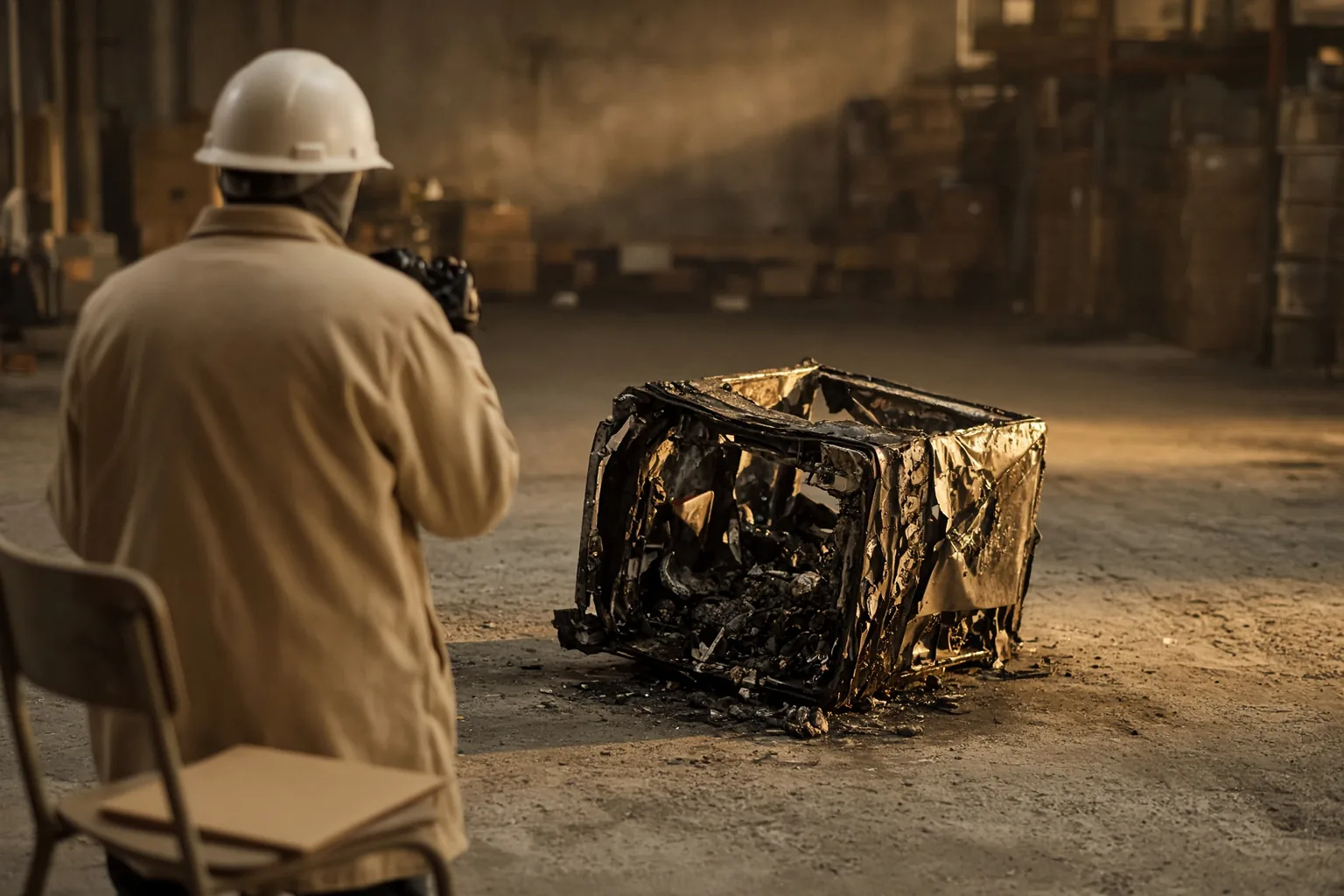
What is fire loss subrogation, and what does the insurer have to prove?
After paying the loss, the insurer pursues the insured's claim against the party responsible for the fire, up to the amount it paid. It proves the insured's claim: origin, cause, the defendant's responsibility and the damages.
The Supreme Court of South Dakota described the two sources of the right in American Family Mutual Insurance Co. v. Auto-Owners Insurance Co., decided November 5, 2008. "First, the parties can agree to create a contractual right of subrogation." Without such an agreement, an insurer is "entitled to subrogation, either by contract or in equity for the amount of the indemnity paid." The amount paid is the ceiling of the recovery.
In that case a tenant took fireplace ashes, put them in a cardboard box and left the box in a closet of a rented duplex at 1026 North Menlo Avenue in Sioux Falls. The fire broke out on March 1, 2005. The landlord's insurer, American Family, paid $96,959.42 and then sought to recover that sum from the homeowners' policy the tenants had bought because the lease required it.
The insurer does not get a better claim than the one it bought with the payment. If the insured would have had to prove negligence, the insurer proves negligence. If the claim is that a product was defective, the insurer proves the defect and that the defect caused the fire. Every element rests on the origin and cause determination, which is why the investigator retained after the fire is often the insurer's central witness.
Why does a subrogation case start with the origin and cause investigation?
Because the cause names the defendant. A defective appliance points at the manufacturer, careless handling of ashes at the tenant, a torch at the contractor. Without a reliable origin and cause, there is no one to sue.
Each theory of liability needs a different fact from the fire scene. A product claim needs the investigator to put the product in the area of origin and to identify a failure inside it that could ignite the first fuel. A negligence claim against a tenant needs a cause tied to the tenant's act. A claim against a contractor needs work that went on near the origin and a timeline that fits the ignition.
The investigator is therefore asked two different questions. The first is where the fire started and what ignited it. The second is whose product, conduct or work produced that ignition source. The first answer comes from fire patterns, arc sites, witness accounts and laboratory examination of artifacts. The second often needs other specialists: an electrical or mechanical engineer for a product, a records review for a contractor.
Insurers also check the fire service's conclusions. In Hoog v. Dometic Corp., a case against the maker of an RV refrigerator over a shop fire in Arcadia, Oklahoma, on March 30, 2018, the Edmond Fire Department listed the cause as "undetermined." The parties' investigators then reached opposite origins: one inside an RV refrigerator, the other at a lumber pile outside the shop near the electrical service entrance.
Which method does a subrogation investigator have to follow?
Courts measure origin and cause work against NFPA 921, the Guide for Fire and Explosion Investigations. The guide requires collecting and analyzing data, developing hypotheses and testing each one before a final hypothesis is chosen.
In Hoog v. Dometic Corp. the parties did not dispute that NFPA 921 is the industry standard for fire and explosion investigations and that its 2017 edition applied. The court's order of March 22, 2024 described the method: "The NFPA 921 requires an investigator to collect data, analyze the data, develop hypotheses, and test the hypotheses before selecting a final hypothesis." It added: "It incorporates the scientific method, which requires the consideration of alternate hypotheses."
The order also spelled out what testing means. "Testing can take many forms, including physical experiments, relying on the scientific research of others, and applying accepted scientific principles." For the origin, the court cited section 17.1.2 of the guide, under which the investigator must analyze witness information, fire patterns, arc mapping and fire dynamics.
The current edition of NFPA 921 is the 2024 edition. The edition matters in a subrogation file because the fire, the scene examination and the trial can be years apart, and the opposing investigator will ask which edition the report applied and whether the conclusion would change under the later one.
In Hoog the court denied the motion to exclude the defense investigator, Walter Oliveaux. He had an associate degree in fire science, about 30 years as chief investigator of a fire investigation firm and more than 1,000 fire investigations. The court found that he had considered and excluded several hypotheses before concluding that the fire started at the lumber pile, and that his origin rested on eyewitness accounts, video and photographs, fire pattern analysis, arc mapping and fire dynamics.
What happened when the insurers' experts could not tie the product to the fire?
In Fireman's Fund v. Canon (8th Cir. 2005) the court affirmed summary judgment for the copier maker. The insurers' experts never tested how the heater circuitry could fail and ignored the thermal fuse evidence.
On October 16, 2000, a fire destroyed Home Video, a video rental store in a strip mall in St. Paul, Minnesota, and damaged three other businesses there. The fire was traced to a Canon NP 6016 copier in the store's storeroom. The insurers of the mall owner, of Home Video and of the other tenants sued Canon U.S.A., Inc. Their experts, Beth Anderson and Michael Wald, first said that the upper fixing heater assembly caused the fire because its thermal fuse was not properly rated. In rebuttal reports both added the composite power supply board as another possible cause.
The district court held the opinions unreliable and granted Canon summary judgment. The Eighth Circuit affirmed on January 12, 2005, in an opinion by Judge Gruender. It accepted NFPA 921 as a reliable method and wrote that under it "hypotheses of fire origin must be carefully examined against empirical data." On the experts' laboratory work it said: "We agree with the district court that this experimental testing did not meet the standards of NFPA 921."
The court named the gaps. The experts' tests bypassed the heater control circuitry, although "the heater control circuitry first would have to malfunction" for their theory to work, and they "advanced no theory or experiment showing how the heater control circuitry could malfunction." The thermal fuse indicated that no current was flowing to the heater when it opened, and the experts "did not attempt to reconcile this empirical evidence with their theory."
One more fact weighed against them. The experts changed their reading of the burn patterns after they learned of other incidents involving copiers. The court called it a "sudden reversal of opinion" that "seriously undermines the reliability" of their opinions. With the opinions out, the insurers had no evidence that a defect proximately caused the fire.
Can the insurer rely on the fire department's report instead of its own investigator?
Rarely as the only proof. In Emmet v. American Insurance (D.C. 1970) a landlord's insurer won on a fire investigator's report, and the judgment was reversed: the report's cause opinion was inadmissible and the investigator never testified.
Emmet v. American Insurance Co. was a subrogation case in its facts: the insurer of a former landlord sued a former tenant for fire damage it attributed to the tenant's negligence. The trial court admitted a report made to the District of Columbia Fire Department by one of its fire investigators, which gave the "apparent cause of fire" as "careless smoking ignited mattress," and relied on it to find against the tenant.
On May 22, 1970, the District of Columbia Court of Appeals reversed with instructions to grant a new trial. It wrote that "It is generally held that the report of an official of a fire department stating the apparent or probable cause of a fire is not admissible" because "such opinion is usually based upon hearsay and often is mere speculation or conjecture."
Federal courts today apply Rule 803(8) of the Federal Rules of Evidence, which admits factual findings from a legally authorized investigation in civil cases unless the opponent shows a lack of trustworthiness. A fire department's cause finding can therefore come in, but the defendant will test where it came from, and the jury will weigh it against the defense investigator. In Emmet the insurer had no witness to explain the cause, and the judgment it won on the report was reversed.
Does lost or altered scene evidence end a subrogation claim?
Not automatically. In Hoog the court held that a dispute over whether the lumber pile had been spoliated went to the weight of the investigator's opinion, to be tested on cross-examination, and not to its admissibility.
The defense investigator in Hoog placed the origin at a lumber pile outside the shop but declined to say what ignited it, asserting that the pile had been "spoliated" before he could examine it. The plaintiffs disputed that and asked the court to exclude his opinions. The court found conflicting testimony on both sides and left the question to cross-examination.
The court quoted section 8.6 of NFPA 921, which states that "[c]are should be taken to preserve all evidence" and that "[t]he loss or alteration of an item may have a significant consequence on the investigation." A subrogation investigator who removes artifacts, discards debris or lets the scene be repaired before other interested parties have had a chance to inspect gives the defense a reason to attack every later conclusion.
For the insurer, preservation is a cost decision made in the first days after the fire: how long to keep the scene, which artifacts to hold and who receives notice of a joint examination. The investigator's file records each step, and the defense reviewer reads that file first.
Can the landlord's insurer sue the tenant who started the fire?
It depends on the state. Some courts treat the tenant as an implied co-insured and bar the claim, some allow it, and South Dakota in 2008 chose to read the lease case by case.
In American Family Mutual Insurance Co. v. Auto-Owners Insurance Co. the Supreme Court of South Dakota set out three approaches. Under the Sutton rule, "Subrogation is not available to a landlord's insurer as against a tenant unless the lease explicitly provides otherwise," and the tenant is treated as an implied co-insured. Under the opposite approach the insurer may sue the tenant unless an express or implied agreement precludes it; the court cited Page v. Scott from Arkansas and Neubauer v. Hostetter from Iowa. Under the third approach the court examines the lease as a whole to find the intent of the parties; here the court cited Rausch v. Allstate from Maryland and 56 Associates v. Frieband from Rhode Island.
The court adopted the case-by-case approach and wrote that "we reject the notion that a tenant is implied to be a co-insured under a landlord's insurance policy." Reading the lease, it found that the tenants could reasonably anticipate liability for their own negligence, observing that "those whose actions result in loss should be held responsible for the damage they caused." It reversed the summary judgment for the tenants and remanded.
The court also noted where the answer would differ: subrogation could be denied if the lease requires the landlord to carry fire insurance or exonerates the tenant from fire losses. The lease terms and the approach of the state where the building stands decide whether the insurer can pursue the tenant at all.
What does the defense reviewer check in a subrogation investigator's report?
Whether every reasonable origin and cause hypothesis was tested and excluded with data, whether the physical evidence fits the chosen cause, whether opinions changed without new data, and which NFPA 921 edition was applied.
The reviewer lists each hypothesis the insurer's investigator considered and the data used to exclude the others. In Fireman's Fund v. Canon the failure lay in a step the experts never tested: how the heater control circuitry could malfunction. A review that finds an untested link writes down which test was missing and which physical item could have answered the question.
Next the reviewer looks for physical evidence that does not fit. The thermal fuse in Canon showed no current flowing to the heater, and the experts did not address it. Arc sites outside the claimed area of origin, an appliance switch found in the off position or a burn pattern that runs the wrong way are the same kind of evidence in other cases.
Then the reviewer compares the investigator's reports over time. A cause that moves after the investigator learns of other incidents, as in Canon, or after a rebuttal report is served, is a reliability question the court will hear about. The review also notes who examined each artifact, whether the defendant was invited to the examination, and whether the report rests on statements recorded by others.
What does IAE do in fire subrogation cases?
IAE prepares fire origin and cause expert reports on the client's questions and reviews of the opposing investigator's report for subrogation, product liability, arson defense and coverage disputes, up to 5 business days after format and cost are confirmed.
On the fire origin and cause page the work is described in three parts. For the origin, the investigator maps char depth, burn patterns on walls and ceilings and arc sites on branch circuits. For the cause, the investigator names the ignition source, the first fuel ignited and the circumstances that brought them together, and tests each hypothesis against the scene and the timeline. For the evidence, the investigator checks whether wiring, appliances and debris were photographed in place before removal, logged and examined at a joint lab exam with all interested parties notified.
The client sends the claim file materials that bear on the cause: scene photographs and video, the fire department report, evidence logs and chain of custody forms, notice letters to interested parties, the opposing investigator's report if one exists, and states whether the fire scene still exists. The secretariat confirms receipt the same day. Within one business day IAE confirms the format, the cost, the deadline and the specialist from its registry, and the client approves the candidate and the CV before work starts. Cases with tight deadlines have a 48-hour rush.
A rebuttal report limited to the same subject as the other side's expert disclosure is due within 30 days after that disclosure under Rule 26(a)(2)(D)(ii), unless the parties stipulate or the court orders otherwise. Every specialist is a member of the public IAE registry and passed the council's attestation under the published Criteria Matrix; the Member ID or QR code in the document opens the specialist's record. The specialist confirms in the document that he or she has no interest in the outcome. An expert report is evidence the court weighs with the other materials. Neither IAE nor the investigator guarantees the outcome of the claim, and IAE is not a law firm.
Sources
- American Family Mutual Insurance Co. v. Auto-Owners Insurance Co., 2008 SD 106 (S.D. Nov. 5, 2008) (South Dakota Unified Judicial System)
- Fireman's Fund Insurance Co. v. Canon U.S.A., Inc., No. 03-3836 (8th Cir. Jan. 12, 2005)
- Hoog v. Dometic Corp., No. CIV-20-00272-JD, Order (W.D. Okla. Mar. 22, 2024) (CounselStack)
- Emmet v. American Insurance Co., 265 A.2d 602 (D.C. 1970) (Justia)
- Federal Rules of Evidence, Rule 803, Exceptions to the Rule Against Hearsay (LII, Cornell Law School)
Read also
All articles
Gas explosion investigation: who is liable, and what does the investigator have to establish?
After a gas explosion the claim turns on one physical question: where the gas came from and why nobody noticed it before something ignited it Sergei Voronin
Tenant caused a fire: who is liable, can the landlord's insurer sue, and what must the investigator establish?
When a rented house burns, three questions come up in order: where the fire started, what started it, and who answers for that cause under the leaseSergei Voronin
Fire spread from a neighbor's property: who is liable, and what does the investigator have to establish?
A neighbor is liable for a fire that spreads onto your property when the fire started through his negligence or in violation of law, not merelySergei VoroninExpert examinations
Ready to discuss your case?
Send the materials: the secretariat will confirm the format, cost, deadline and the specialist within one business day.
