
Examinations
What questions should you ask a footwear impression examiner when requesting an examination?
A request for a footwear impression examination decides what the laboratory can answer. Submission guidelines of state laboratories in Colorado, Florida and Wisconsin ask for the original lifts or casts with scaled photographs, the suspect's shoes themselves and elimination shoes of people who walked the scene. The questions then follow the conclusion scale the laboratory uses, and the request can name what the report should document.
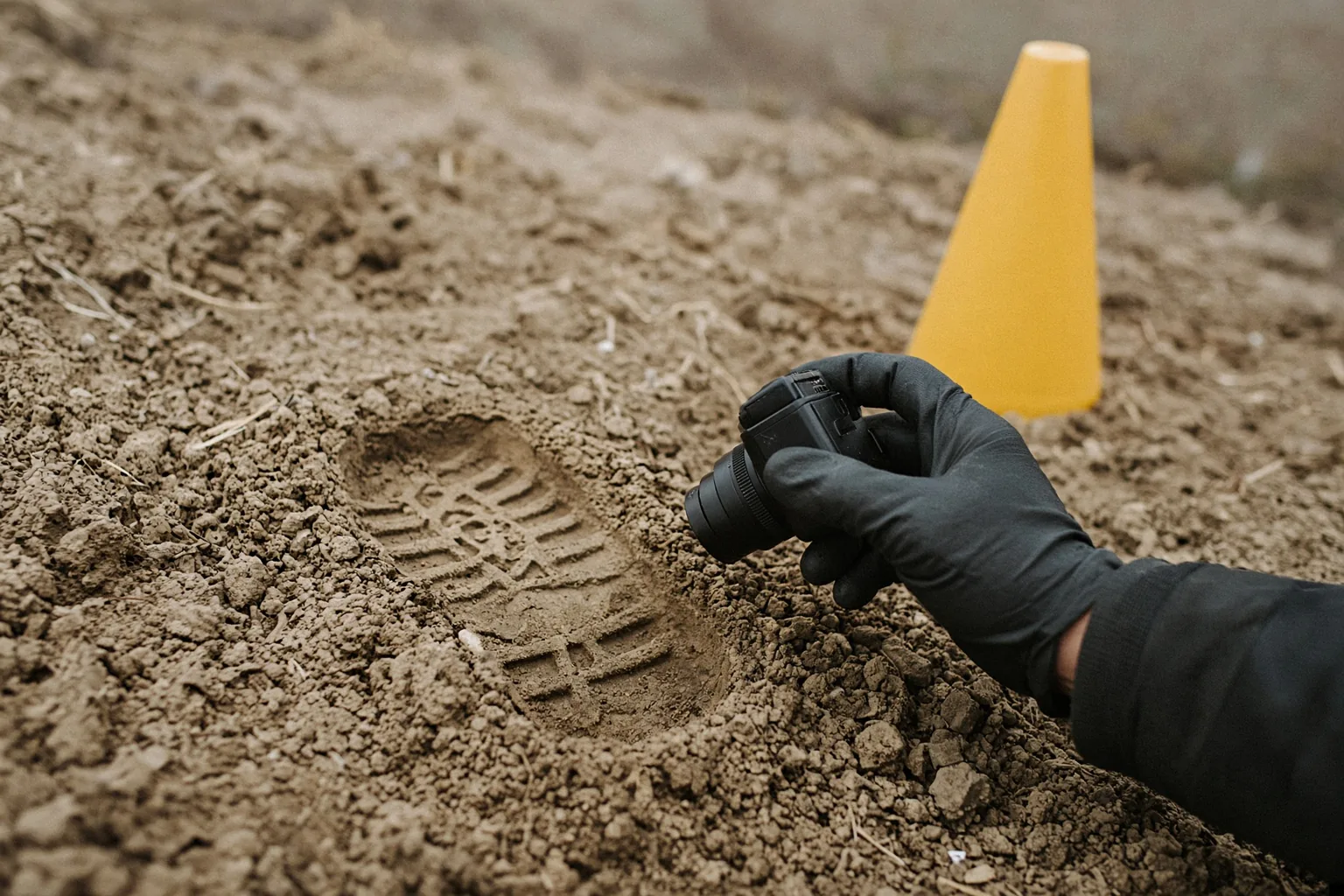
What should a request for a footwear examination contain?
The items to be examined, the date of collection, which laboratory units need each item and the question to be answered. Wisconsin asks submitters to leave out case details the examiner does not need, to avoid the influence of bias.
The Wisconsin State Crime Laboratories set out their requirements in Footwear Evidence Submission Guidelines effective May 1, 2025. The submitter provides a Transmittal of Criminal Evidence form and includes the date of collection on it. The guidelines add: "To avoid the influence of bias, please avoid providing unnecessary details about the case." The laboratory has to know on the transmittal "which units need to examine the items," because additional time is necessary if several disciplines are requested on an item.
The same document limits footwear submissions to felony investigations and states that the laboratory requires at least two months to complete analysis before any anticipated deadline. Items examined for footwear "may not be processed for DNA afterwards," so a request for a shoe that may also carry biological traces settles the order of examinations before the shoe goes to the footwear unit.
A request that names the question in examiner's terms gets a usable answer. Instead of asking whether the suspect was at the scene, it asks whether the questioned impression is suitable for comparison, what outsole design it shows, and whether the submitted shoe can be identified with it or excluded.
Which questions can a footwear examiner answer?
Whether the impression is suitable for comparison, which outsole design, make or model it shows, how many distinct designs are at the scene, and whether a submitted shoe made it. Shoe size and direction of travel usually cannot be determined.
The Florida Department of Law Enforcement answers these questions in its submission FAQ for footwear and tire impressions. The laboratory can compare impressions "against laboratory references to possibly determine a manufacturer or model information," including when no known shoes are submitted. On shoe size the answer is "Generally, no, unless there is a size indicator in the impression." On direction of travel: "In most circumstances this information is not able to be determined through the examination process."
The Colorado Bureau of Investigation will use available databases or resources to attempt to identify a make and model for an impression without a known source, and notes that some impressions lack enough detail or are not in the databases. Wisconsin calls this a Footwear Investigative Lead Search. The Virginia Department of Forensic Science provides report wording for an impression that is of value for comparison but not suitable for a manufacturer search (12.2.5.3).
The Alaska Scientific Crime Detection Laboratory notice template for footwear analysts lists among its items manufacturer techniques that could affect the analysis and the number of distinct outsole designs. A request can ask both: how many different designs appear among the questioned impressions, and whether the submitted shoes account for each of them.
What should be submitted for the questioned impressions?
The original lifts or casts together with comparison-quality photographs taken before collection, with a flat scale and at the resolution the laboratory sets. Colorado treats phone photographs as below comparison quality.
Colorado requires both the images taken before collection and the physical lifts or casts. The scale "should be a minimum of 300mm in length (approximately 1 foot) and completely flat." Minimum resolution is 300 ppi, and 600 ppi in RAW or TIFF format is preferred. The guidelines state: "Photos taken on phones are not comparison quality," and the absence of comparison-quality photographs "will severely limit the conclusions." Adhering dirt is not cleaned off a cast before submission; the analyst cleans it in the laboratory.
Florida asks for photographs with a scale "at the same depth as the impression (if 3 dimensional)," taken with a leveled tripod and filling the frame. Lifts can be adhesive, gelatin or electrostatic, and a secondary recovery method beyond photography, such as a lift or a cast, gives the best opportunity for a more comprehensive examination.
Wisconsin asks that casts dry for at least 24 hours and be packaged in cardboard or paper, not plastic; that casts and dust lifts be photographed with a scale before packaging; and that electrostatic dust lifts go in a box, taped down with the impression side up. In the Virginia laboratory impressions with comparison potential are photographed before and after enhancement (2.4.3.1.1), so the request lists which images were taken before any powder or chemical was applied.
Why send the shoes themselves rather than photographs of them?
Because the laboratories need the outsole itself for a complete comparison. Colorado states that photographs of known footwear are not sufficient for a complete examination, and Florida calls the subject's shoes the ideal submission.
Colorado instructs: "Submit known footwear for comparison to questioned impressions," and "Do not attempt to clean footwear or remove adhering or embedded debris." It adds that "Photos of the known footwear or tire are not sufficient for a complete examination." Florida writes that "The ideal submission would contain the subject's shoes," and that a comparison with the shoes themselves can be more complete than one with standards, even if the conclusion may be the same.
Once the shoes arrive, the laboratory makes its own test impressions. Under section 8.2.1 of the Virginia manual, "A minimum of two known standards shall be created using two different methods." The examiner compares the known standards with each other and documents whether the characteristics reproduce (8.2.1.1); initial known standards are made of the entire footwear (8.3.4). Before testing, the examiner records the make, model if known, type and size of the shoes (4.6.1) and photographs the outsoles in their original condition with an L-shaped scale (4.6.3).
The Virginia report wording also includes a statement that the known footwear or tire should be submitted for a conclusive comparison (12.2.6.2). A request that sends the shoes at the outset makes that statement unnecessary.
Whose shoes should be submitted for elimination?
Of everyone with rightful access to the scene, including officers who walked through it. Wisconsin asks for appropriate elimination standards whenever possible, so that impressions left by them are set aside before the suspect's shoes are compared.
The Wisconsin guidelines ask for "Appropriate elimination standards," including from "law enforcement who walked through the crime scene," and from "all individuals with rightful access to locations and items" where footwear evidence is collected, "whenever possible." Known standards are packaged separately, each in paper or cardboard.
Elimination matters for the count of designs. If the scene holds four outsole designs and two belong to a resident and a paramedic, the request asks the examiner to account for the remaining two. Without the elimination shoes the examiner can report that an impression was not made by the suspect's shoes but cannot say whose shoes made it.
The request lists each elimination pair with the owner's role at the scene, for example first officer, medic or resident, and states whether the person wore the same shoes on the day of the incident.
How does the laboratory's conclusion scale shape the request?
The request asks which scale the laboratory uses and what would move the result one level up or down. The Virginia laboratory, for example, uses a scale of seven levels.
The Virginia manual sets out its seven levels in section 12.2.3, and for the two class-level associations its model wording adds that other footwear with the same characteristics could be the source of the impression (12.2.3.5, 12.2.3.6).
A request can therefore ask which randomly acquired characteristics, such as cuts or wear marks, the examiner looked for, whether any were found and where they are documented (9.6.1).
What should the request ask the report to document?
The characteristics behind each conclusion, impressions that were not compared and why, whether comparisons stopped after an identification, who verified the conclusion, the methods used and any deviations from them.
The Virginia manual gives a list a request can borrow. The characteristics observed that support each conclusion are documented (9.6.1), comparison images are labelled with the conclusion, date and examiner's initials (9.6.2), and impressions that were not analyzed, compared or evaluated are acknowledged (9.6.5). The certificate of analysis lists the reasons images without a scale or with improper photography were not examined (4.5.1.3.2) and states where the supporting documentation is retained (1.3.4).
Processing may stop once an identification is made and verified, if the submitting agency agrees (2.2.6); if comparisons stop after an identification, the certificate says so and states that additional comparisons can be performed if needed (2.2.7). All comparison conclusions are verified by another examiner before they are communicated (9.5.1, 9.1.6); if the two examiners cannot reach consensus, an inconclusive source conclusion is reported (9.7.2.2).
The Alaska notice template has the analyst cover the test methods and their limitations, the opinions reached and their limitations for each item, and the quality assurance measures in place. A request can ask for the same items in writing, so that the report and the later notice of expert describe the same work.
Should the report say whether the approved method was followed?
Yes. NIST researchers recommended in 2024 that analysts report their adherence to an approved method alongside the result, and a Virginia report states that the methods listed were approved for use at the time of analysis.
Swofford and eight co-authors, in Inconclusive Decisions and Error Rates in Forensic Science (Forensic Science International: Synergy, volume 8, 2024), separate two questions. Method conformance concerns "whether the outcome of a method is the result of the analyst's adherence to the procedures that define the method." Method performance asks how well the method discriminates between propositions such as same source and different source.
A NIST news release of January 13, 2025 reports that the Texas Forensic Science Commission reviewed these recommendations and set up a working group to apply them in Texas laboratories. The authors recommended that analysts "include alongside their results information about their adherence to an approved method" and give performance data on test samples close in quality and condition to the evidence in the case.
The Virginia certificate of analysis gives the dates of testing and states that the listed methods "are those approved for use at the time of analysis" (12.2.6.1), and deviations from a test method are included on the certificate (12.1.3). A request can ask for the same two statements from any laboratory.
What has to be decided before the shoes go to the laboratory?
The order of examinations, the deadline and who else needs the items. Wisconsin needs at least two months before any deadline, and items examined for footwear may not be processed for DNA afterwards.
The Wisconsin timing rule, at least two months to complete analysis before an anticipated deadline, means that the request is made as soon as the shoes and lifts are in hand. A trial date or a disclosure deadline goes on the request so the laboratory can say whether it can meet it.
The DNA warning means that a shoe with possible blood or tissue on it goes to the biology unit first, or the request states that both examinations are needed and asks the laboratory to set the order.
Tires and other large items need coordination: Colorado asks submitters to contact its evidence staff before submission to coordinate drop-off of large items such as tires, and to submit all images on a disc or thumb drive.
What does IAE do when a party prepares a footwear examination request?
An IAE examiner prepares an expert report on the client's questions or a review of the opposing examiner's report, in up to 5 business days. Each question is tied to the ANSI/ASB or ISO standard for that kind of mark.
The IAE trace evidence page covers whether a shoe, tire or tool could have left a mark, how strong the association is and whether a lock or seal was defeated, in criminal defense and cargo loss cases in US courts. For footwear it cites ANSI/ASB Standard 137 (2023), under which the examiner documents the class characteristics and characteristics of use of the questioned print before examining the known shoe.
The client sends the case materials, the photographs and, if there is one, the existing report, and describes the task. The secretariat confirms receipt the same day and, within one business day, confirms the format, cost, deadline and the examiner from the registry; the client approves the candidate and the CV before work starts. For tight deadlines there is a 48-hour rush.
Examiners are listed in the public IAE registry and can be verified by Member ID or QR code. IAE is not a law firm and does not advise on case strategy, and neither IAE nor the examiner guarantees how the court will rule.
Sources
- U.S. Department of Justice, Uniform Language for Testimony and Reports for the Forensic Footwear Discipline (approved June 8, 2020, effective August 15, 2020)
- Virginia Department of Forensic Science, 241-D300 Impressions: Footwear and Tire Tread Procedures Manual, Revision 14 (November 11, 2025)
- Alaska Scientific Crime Detection Laboratory, Footwear Impression Analysis Notice of Expert Template (v 3.0)
- Florida Department of Law Enforcement, Forensic Submission FAQ: Footwear and Tire (Impression Evidence)
- Colorado Bureau of Investigation Forensic Services, Footwear and Tire Track Impression Submission Guidelines (undated)
- Wisconsin State Crime Laboratories, Footwear Evidence Submission Guidelines (effective May 1, 2025)
- Swofford H. et al., Inconclusive Decisions and Error Rates in Forensic Science, Forensic Science International: Synergy 8 (2024) (NIST publication page)
- NIST, Texas Forensic Science Commission Supports NIST Recommendations (January 13, 2025)
Read also
All articles
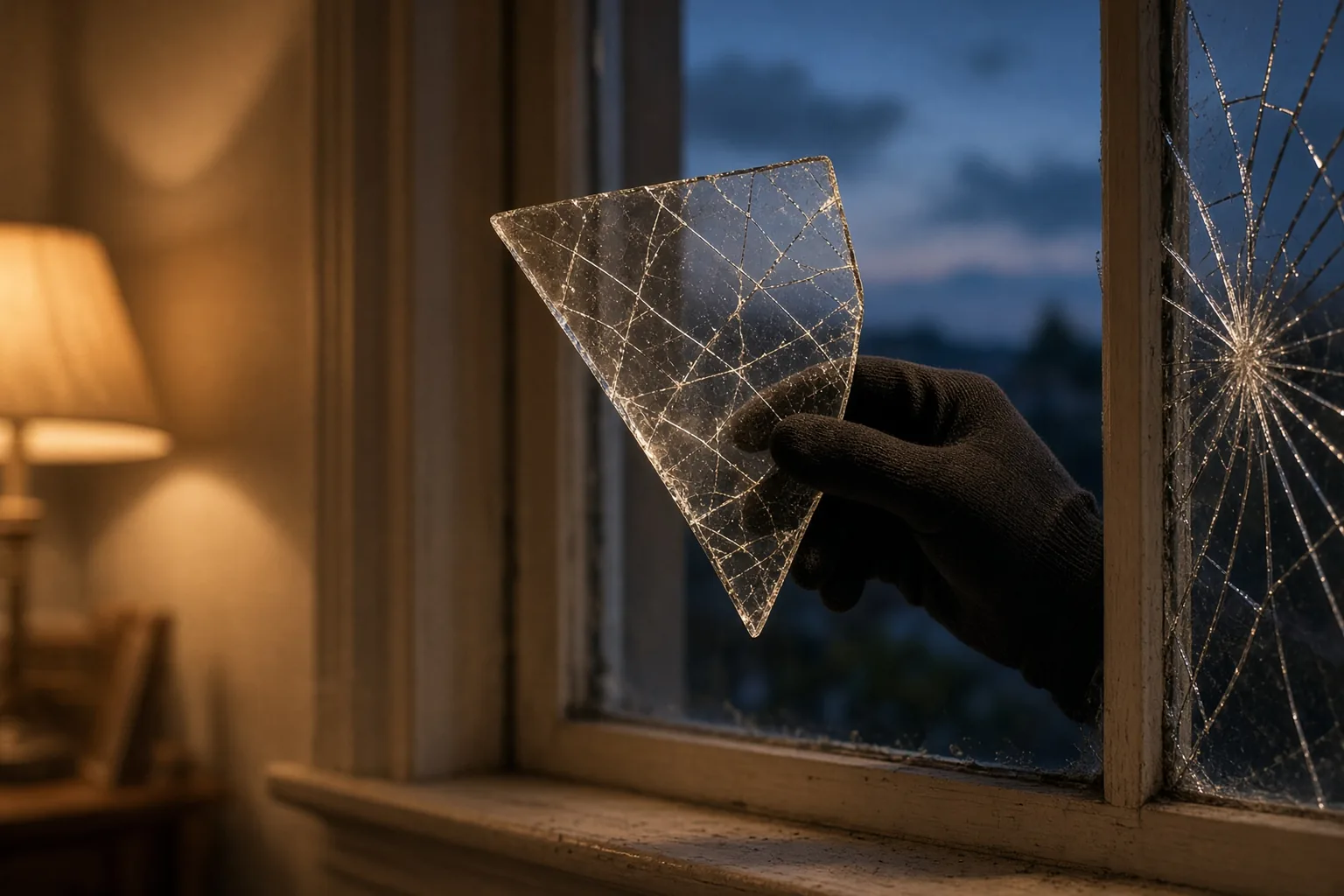
Was the window broken from inside or outside? How does a glass fracture examination answer, and how far can the answer be trusted?
After a reported burglary, a shooting or a fire, one broken pane can decide which account is true: forced entry or a staged scene, a shot fired into Sergei Voronin
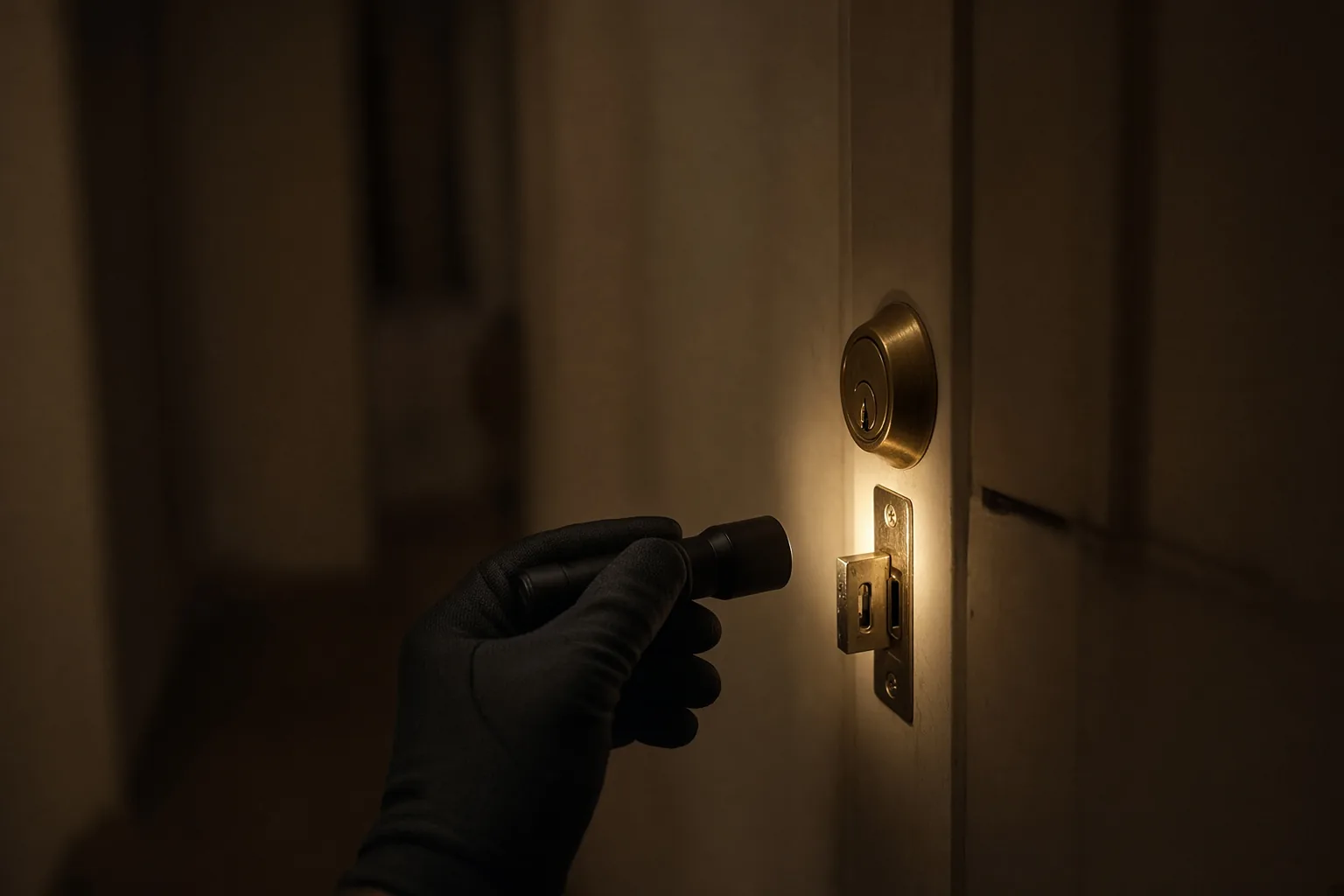
No signs of forced entry: how is a door, lock or window examined after a reported burglary?
Some commercial burglary policies pay only for entry by force that leaves visible marks, and police reports often carry the line "no signs of forcedSergei Voronin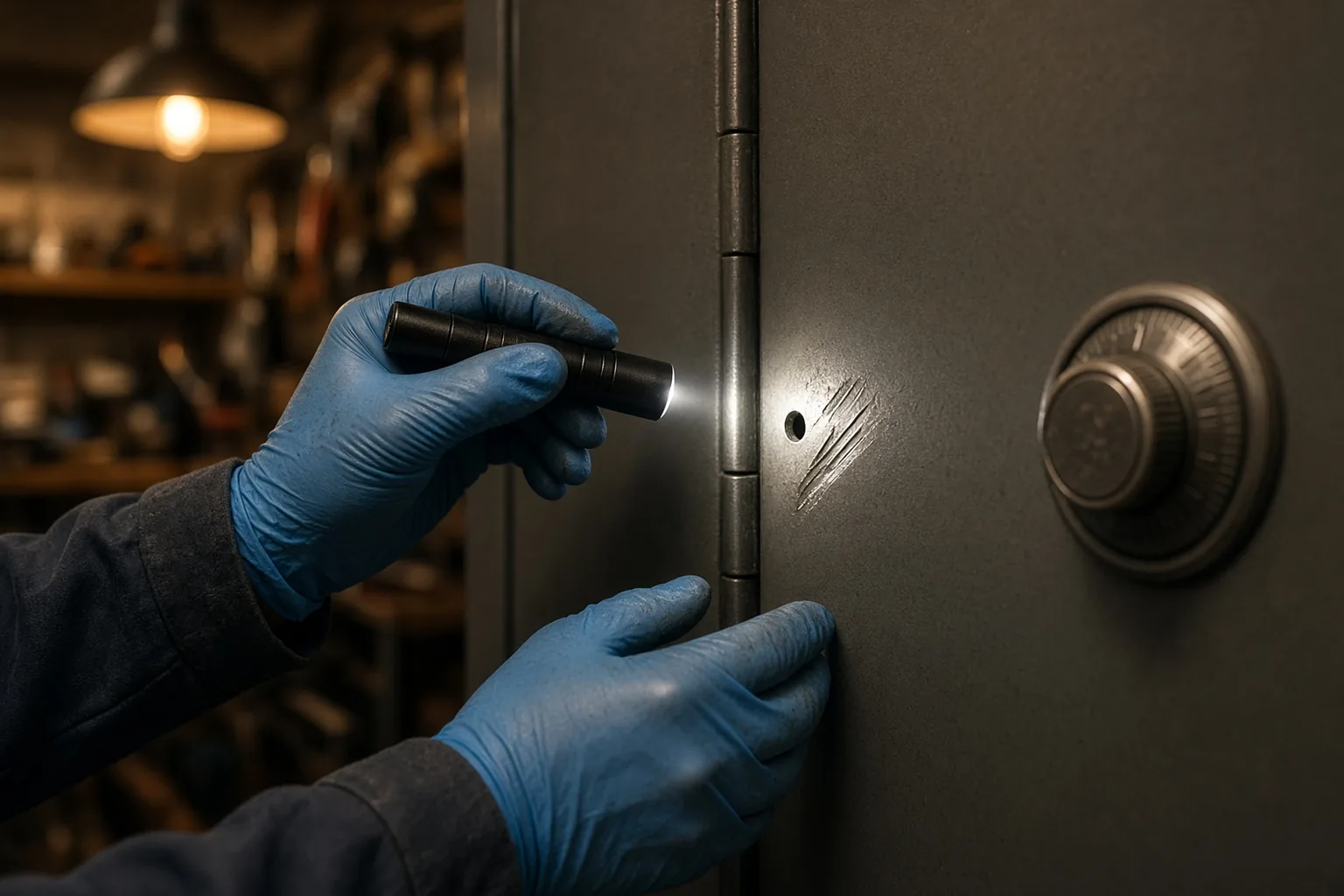
Safe burglary: how does an examiner tell whether a safe was forced, drilled or opened with the combination?
An examination of a safe after a theft answers how it was opened: by force on the door or body, by drilling, or with the combination or keySergei VoroninExpert examinations
Ready to discuss your case?
Send the materials: the secretariat will confirm the format, cost, deadline and the specialist within one business day.
