
Examinations
Forensic voice identification: when is a voice comparison admissible in court?
A voice on a recording can be identified in a US court in two ways: by a lay witness who knows the voice, under Federal Rule of Evidence 901(b)(5), or by an examiner who compares the recording with known samples. The second is expert testimony under Rule 702. In United States v. Angleton (2003), a federal court in Texas excluded an aural spectrographic comparison after a full Daubert review.
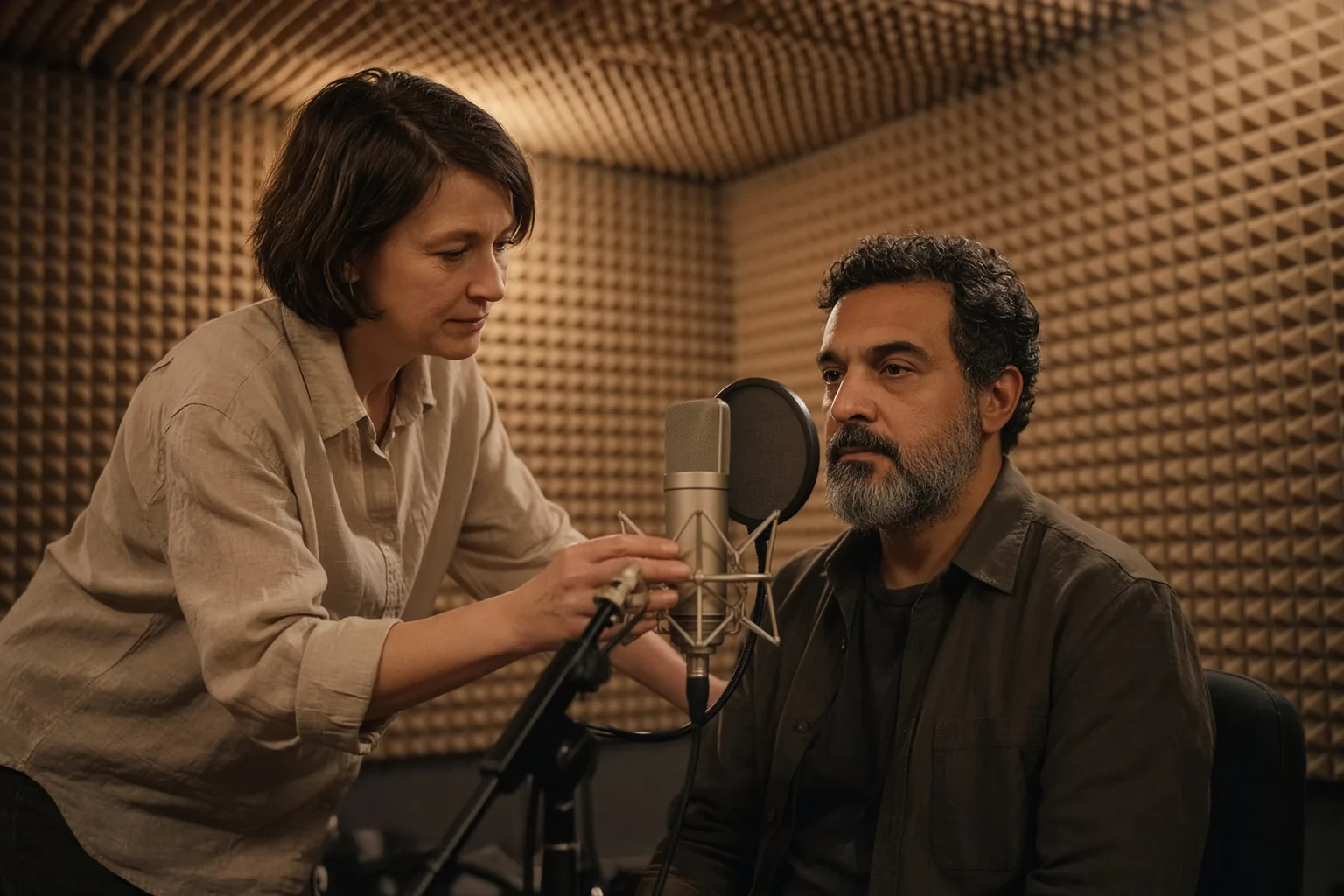
What is forensic voice identification?
A comparison of a questioned recording with recordings of a known speaker, made to say whether the same person is speaking. The examiner compares pitch, formants, speech rate and pronunciation and states the limits of the comparison.
The examiner works with two sets of material. The questioned recording is the one where the speaker is in dispute: a threatening call, a voicemail, a recorded meeting. The known recordings are those where the identity of the speaker is not in dispute. The comparison covers features of the voice, such as pitch and the formants produced by the vocal tract, and features of speech, such as rate, pronunciation and habitual expressions.
Methods have changed since the 1970s, when courts heard examiners who compared spectrograms by eye and listened to the recordings, the aural spectrographic method. Geoffrey Stewart Morrison and William C. Thompson, in "Assessing the Admissibility of a New Generation of Forensic Voice Comparison Testimony" (Columbia Science and Technology Law Review, vol. 18, no. 2, 2017), describe the technical methods and reasoning frameworks of newer forensic voice comparison, how such systems are validated empirically and how contextual bias affects them.
A court asks the same questions whatever the method: what the examiner compared, whether the method was tested, how often it errs, whether there are standards for it and whether the examiner followed them. The court in United States v. Angleton went through them one by one for the aural spectrographic method.
Can a lay witness identify a voice on a recording?
Yes. Rule 901(b)(5) permits an opinion identifying a voice heard firsthand or through a recording, if the witness heard the voice at any time under circumstances that connect it with the alleged speaker.
Rule 901(b)(5) covers "an opinion identifying a person's voice, whether heard firsthand or through mechanical or electronic transmission or recording, based on hearing the voice at any time under circumstances that connect it with the alleged speaker." A coworker who has talked with the person for years, or a relative, can give that opinion about a recording.
The advisory committee note explains why no expert is needed for it: "Since aural voice identification is not a subject of expert testimony, the requisite familiarity may be acquired either before or after the particular speaking which is the subject of the identification, in this respect resembling visual identification of a person rather than identification of handwriting." A witness may become familiar with the voice after the recording was made, for example at a later meeting.
The note to example (6) adds a limit for calls: "a mere assertion of his identity by a person talking on the telephone is not sufficient evidence of the authenticity of the conversation," and "additional evidence of his identity is required." A caller who says his own name has not been identified by that alone.
An examiner who compares the recording with known samples by listening and measurement gives expert testimony. That testimony must meet Rule 702, and the lay witness rule does not lower the bar for it.
What known recordings does the examiner need?
Recordings whose speaker is not in dispute, made with equipment and under conditions similar to the questioned recording. In Angleton the court found no evidence that the examiner had used similar recording equipment to make the exemplar.
The court in United States v. Angleton found that standards for the aural spectrographic method existed, issued by the International Association for Identification (IAI) and the American Board of Recorded Evidence (ABRE), and that the defense examiner had not followed them fully. Those standards require the exemplar to be taken under conditions similar to the original recording. He did not include a statement of accuracy in his report, the court found no evidence that he used similar recording equipment to make the exemplar, and his documentation misidentified a spectrogram.
Whether the known material is enough goes to Rule 702(b): the testimony must be "based on sufficient facts or data." A comparison built on a short exemplar, recorded on a different channel or in a different speaking situation, gives the examiner less to compare, and the report says so.
The known recordings must be authenticated as well. A voicemail offered as a sample of the defendant's voice is evidence of identity only if someone connects it to the defendant, for example the person who received it and knows the voice under Rule 901(b)(5).
In civil discovery, Rule 34(a)(1)(A) reaches "sound recordings" among electronically stored information, and Rule 34(b)(1)(C) lets the requesting party specify the form of production. Counsel who need known recordings in their native format, with metadata, name that form in the request.
Are voiceprints admissible in court?
Federal courts were split in the 1970s. The Fourth Circuit upheld admission of a spectrographic identification in United States v. Baller (1975); in 2003 the court in United States v. Angleton excluded aural spectrographic testimony under Rule 702.
In United States v. Baller, 519 F.2d 463 (4th Cir. 1975), Carl J. Baller, Jr. was convicted on four counts of telephoning bomb threats to the Shoemaker Coal Mine. Detective Lieutenant Ernest W. Nash of the Michigan State Police testified that Baller's voice matched the speaker in the first three recorded calls; he could not identify the speaker on the fourth, because the mine clerk had repeatedly interrupted the caller. Judge Butzner wrote that "it is better to admit relevant scientific evidence in the same manner as other expert testimony."
The Fourth Circuit relied on the safeguards at trial: an extensive voir dire, detailed cross-examination, the recordings played "so that the jury could make its own aural comparisons," and an instruction that the jury could reject Nash's opinion. "We find no abuse of discretion in the admission of the testimony," the court concluded. The opinion described the split of the time: the D.C. Circuit in Addison had excluded spectrograms under the Frye general acceptance test, and the Sixth Circuit in Franks had admitted them.
In 1979 the National Academy of Sciences published On the Theory and Practice of Voice Identification. As the Angleton court summarized it, the report found that voice spectrograms are not analogous to fingerprints, that "the statistical relations between the intraspeaker variability and interspeaker variability have not been established," and that error rates vary widely between cases and can be measured accurately only under controlled laboratory conditions.
How did the court in United States v. Angleton apply Daubert?
Judge Rosenthal found the aural spectrographic method tested and found wanting, its error rate unknown, its standards not followed and the method not generally accepted, and on June 26, 2003 excluded the defense examiner's testimony.
Robert Angleton offered testimony from Stephen Cain that the speaker on a seized tape, marked Q-1, was not Angleton. Cain reported a "possible elimination" in 1998 and changed it to "probable elimination" in 2003. The government moved to strike the testimony under Rule 702, and the court decided the motion in United States v. Angleton, 269 F. Supp. 2d 892 (S.D. Tex. 2003).
On testing, the court found the technique "tested and found wanting in aspects critical for admission under Rule 702": the studies of the 1970s did not establish that differences between speakers reliably exceed the variation within one speaker. On publication, it noted that "many of the studies conclude that voice spectrographic analysis is of questionable scientific validity" and that review had become difficult with a "dwindling number of practitioners." On error rate, it found that the rate "is unknown and may vary considerably"; the FBI's reported rate of 1 percent had "not been reliably repeated." On acceptance, "neither voice spectrography nor aural spectrographic analysis has been generally accepted as a method of identifying unknown recorded speakers."
The court heard Dr. Hirotaka Nakasone of the FBI, a former proponent of the method who had come to doubt it. According to the opinion, the FBI renders no opinion when a recording shows disguise, distortion or reverberation, and "does not permit the use of voice spectrographic analysis for courtroom identification, but only for investigation."
The court also found the testimony properly excluded under Rule 403 as unhelpful and confusing to the jury. The excluded expert had been called by the defendant: Rule 702 applies to both sides.
How should a voice comparison report state its conclusion?
Within the limits of the method. The 2023 committee note to Rule 702 says each opinion must stay within what the method supports, and forensic experts should avoid claims of absolute certainty when the method is subjective.
Rule 702 requires the party offering the examiner to persuade the court that it is more likely than not that the testimony is based on sufficient facts or data, that it is the product of reliable principles and methods, and that the opinion applies them reliably to the facts of the case. The committee note to the 2023 amendment states that "each expert opinion must stay within the bounds of what can be concluded from a reliable application of the expert's basis and methodology."
The same note says that forensic experts "should avoid assertions of absolute or one hundred percent certainty" if the methodology is subjective and thus potentially subject to error. Listening to a voice is a perceptual judgment, so a report that rests on listening states how the judgment was checked by measurement.
Morrison and Thompson, in the 2017 article, examine how courts assess forensic voice comparison under Daubert and Frye, review Angleton, where spectrographic testimony was excluded, and United States v. Ahmed, a Daubert hearing on an automatic approach, and propose how a proponent of the newer methods could meet a rigorous Daubert standard.
Under Rule 26(a)(2)(B) the report lists all opinions with their basis and reasons and the facts or data considered. For a voice comparison those facts include the questioned and known recordings, the segments used, the features measured, the software and its settings.
What must the government disclose about a voice expert in a federal criminal case?
Since December 1, 2022, Criminal Rule 16(a)(1)(G) requires the government, at the defendant's request, to disclose in writing each opinion of its expert, the bases and reasons, qualifications and prior testimony, in a disclosure the witness signs.
The amendment to Rule 16 took effect on December 1, 2022. Under Rule 16(a)(1)(G)(i), "At the defendant's request, the government must disclose to the defendant, in writing, the information required by (iii)" for expert testimony under Federal Rules of Evidence 702, 703 or 705.
Under (G)(iii), the disclosure contains a complete statement of all opinions that the government will elicit from the witness, the bases and reasons for them, the witness's qualifications with "a list of all publications authored in the previous 10 years," and "a list of all other cases in which, during the previous 4 years," the witness testified as an expert at trial or by deposition. The witness must approve and sign it, with two exceptions: the government explains why it could not obtain the signature through reasonable efforts, or it has already provided a signed report with the same opinions, bases and reasons.
The rule sets no fixed number of days. The court sets the time by order or local rule, and it "must be sufficiently before trial to provide a fair opportunity for the defendant" to meet the evidence. For a voice identification, that time covers obtaining the questioned and known recordings and having them compared by a defense examiner.
How is the other side's voice comparison reviewed?
Against Rule 702 and the facts or data listed under Rule 26(a)(2)(B)(ii): which recordings were compared, whether the known samples were comparable and sufficient, which method was used and what is known about its error rate.
In a civil case, a report intended solely to contradict or rebut the other side's expert on the same subject is disclosed within 30 days after that disclosure, under Rule 26(a)(2)(D)(ii), unless a stipulation or court order sets another date.
The reviewer checks the points on which Angleton turned. Was the questioned recording the original file or a copy? Were the known recordings made with similar equipment and under similar conditions? Does the report name the method and give a statement of its accuracy? Does the conclusion claim more than the method supports?
The reviewer also asks what the examiner was told. Under Rule 26(b)(4)(C), communications between counsel and a reporting expert are protected, except those about compensation, facts or data that counsel provided and the expert considered, and assumptions that counsel provided and the expert relied on. If counsel told the examiner which person was the suspect and the examiner relied on it, that assumption is discoverable, and it bears on the contextual bias that Morrison and Thompson discuss.
Whether the opposing examiner is excluded, limited or heard in full is decided by the court.
What does IAE do when a speaker's identity on a recording is disputed?
IAE prepares an expert report comparing the questioned voice with known recordings, or a review of the opposing examiner's voice comparison, for a federal or state case. The document is issued in up to 5 business days.
On the forensic audio page, the voice comparison card says the examiner compares the questioned voice with known recordings by pitch, formants, speech rate and pronunciation and states the limits of the comparison in the report. A review of the opposing report checks which file the examiner worked from, original or copy, whether its hash and metadata are listed among the facts or data considered, and whether the known samples were enough for the opinion.
The client sends the questioned and known recordings, or the opposing report with the case materials, and IAE confirms the questions before work starts. The secretariat confirms receipt the same day; within one business day IAE confirms the format, the cost, the deadline and the examiner from its registry, and the client approves the candidate and the CV. The signed PDF is issued in up to 5 business days after the format and cost are confirmed, with a 48-hour rush for tight deadlines.
Every examiner is a member of the public IAE registry, verifiable by Member ID or QR code, and states in the document that he or she has no interest in the outcome. A report is evidence that the court weighs with the other evidence; neither IAE nor the examiner guarantees the outcome, and IAE does not advise on case strategy.
Sources
- Federal Rules of Evidence, Rule 901, Authenticating or Identifying Evidence, with Committee Notes (LII)
- United States v. Baller, 519 F.2d 463 (4th Cir. 1975) (Justia)
- United States v. Angleton, 269 F. Supp. 2d 892 (S.D. Tex. 2003) (Justia)
- Morrison, G. S., Thompson, W. C. Assessing the Admissibility of a New Generation of Forensic Voice Comparison Testimony, Columbia Science and Technology Law Review 18(2), 2017 (NIJ abstract)
- Federal Rules of Evidence, Rule 702, Testimony by Expert Witnesses, with Committee Notes (LII)
- Federal Rules of Civil Procedure, Rule 26, Duty to Disclose; General Provisions Governing Discovery (LII)
- Federal Rules of Civil Procedure, Rule 34, Producing Documents, Electronically Stored Information, and Tangible Things (LII)
- Supreme Court of the United States, amendment to Federal Rule of Criminal Procedure 16, effective December 1, 2022
Read also
All articles

Can a voice recording prove a verbal agreement in court, and what does the recording have to show?
In California all contracts may be oral, except those that a statute requires to be in writing: that is Civil Code section 1622. A recording is Sergei Voronin
Is voice stress analysis admissible in court, and can an audio expert tell from a recording whether someone lied?
Voice stress analysis results are kept from juries as proof that a person lied. In a study funded by the National Institute of Justice, twoSergei Voronin
The court transcript does not match the audio recording: how is the record corrected, and what can a forensic transcript add?
When the official transcript of a federal hearing differs from what the audio recording shows, the transcript is presumed correct until the courtSergei VoroninExpert examinations
Ready to discuss your case?
Send the materials: the secretariat will confirm the format, cost, deadline and the specialist within one business day.
