
Examinations
Who ran the red light? How does an accident reconstructionist analyze signal timing?
When two drivers each say the light was green, the answer comes from timing: when each signal phase changed, where each vehicle was at that moment and how fast it was moving. In California a steady yellow warns that the green movement is ending and a red will follow, and a driver facing a steady red must stop at the limit line. A reconstructionist ties the signal records to the vehicles' positions second by second.
What do the traffic laws say about yellow and red signals?
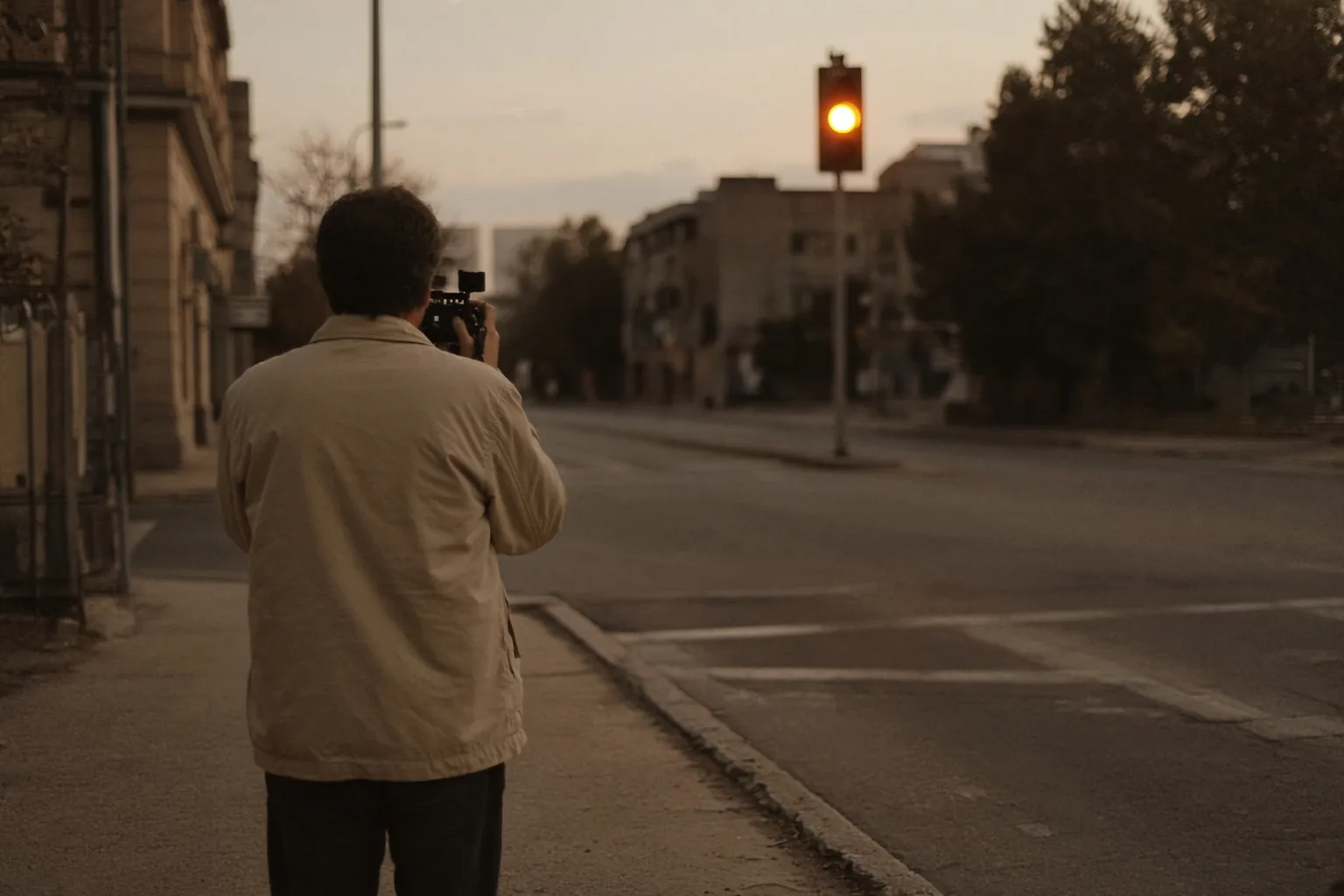
In California a steady yellow warns that the green movement is ending or that red will follow immediately. A driver facing a steady circular red must stop at the limit line and stay stopped until a signal permits movement.
California Vehicle Code section 21452(a) provides that a driver facing a steady circular yellow or yellow arrow signal is warned that the related green movement is ending or that a red indication will be shown immediately thereafter. Under section 21452(b), a pedestrian facing a steady yellow signal, unless a pedestrian control signal directs otherwise, is advised that there is insufficient time to cross the roadway.
Section 21453(a) tells a driver facing a steady circular red signal to stop at a marked limit line, or if there is none, before entering the crosswalk on the near side of the intersection, or if there is none, before entering the intersection, and to remain stopped until an indication to proceed is shown. Subdivision (b) permits a right turn, or a left turn from a one-way street onto a one-way street, after stopping, unless a sign prohibits it, and requires the driver to yield to pedestrians and to vehicles that pose an immediate hazard. Subdivision (c) applies the same stopping rule to a steady red arrow.
Other states use similar rules with their own wording. The legal question in a red light crash is therefore the same everywhere: what each driver faced at the stop line and whether the driver could have stopped. The engineering answer comes from the signal and the vehicles.
Which records show how the signal was timed?
The agency's timing plan for the intersection on the date of the crash, the controller settings and any stored event logs, maintenance and malfunction records, and video from nearby cameras. Each is requested before it is overwritten or replaced.
A traffic signal runs on a timing plan: the order of phases, the length of each green, the yellow change interval and any all-red clearance, and how these vary by time of day. The plan in force on the date and at the hour of the crash is the starting point. Counsel asks the agency that operates the signal for the plan, the controller settings and any change orders around the crash date.
Some signals record their own events. The Federal Highway Administration describes automated traffic signal performance measures as a proven approach, with continuous performance monitoring and timing changes based on actual performance. Where the intersection has such a system, its logs can show when each phase began and ended. Maintenance and malfunction reports show whether the signal was operating normally or in flash.
Video fills the gaps. Business cameras, transit cameras and dashcams may show the signal heads or the vehicles' movements, and the engineer synchronizes the video clock with the signal records. Recordings can be overwritten, so preservation letters go out first.
How does the reconstructionist place each vehicle at the change of the light?
By working backward from the point of impact with each vehicle's speed, using recorder downloads, video, tire marks and scene measurements, until each vehicle's position relative to its stop line at the change of the signal is known.
The reconstruction starts at the collision. The engineer fixes the point of impact from gouges, debris and crush and measures how far that point lies beyond each vehicle's stop line. Speed before the crash comes from the event data recorder where one exists. Under 49 CFR 563.7, Table I, the recorder stores the vehicle's indicated speed, accelerator position and service brake status for a period before the event, together with the change in velocity during it.
With speed and distance, the engineer computes when each vehicle crossed its stop line and where it was at earlier moments. Placing those moments on the signal timeline answers the core question: which signal each driver faced when crossing the line, and where each vehicle was when its yellow began.
Every step carries a margin. Recorder speeds, video frame rates and scene measurements have tolerances, and the engineer runs the calculation at the ends of those ranges. If one driver entered on red under every plausible input, the result is firm. If the answer changes within the margin, the report says so.
Could the driver have stopped when the light turned yellow?
That depends on the approach speed, perception-reaction time, a reasonable deceleration and the vehicle's distance short of the stop line at the onset of yellow. If the stopping distance was longer, the driver could not stop at the line.
The Federal Highway Administration describes the yellow change interval as the length of time that the yellow signal indication is displayed following a green signal indication, and lists the factors for setting it: approaching and turning vehicle speeds, driver perception-reaction time, vehicle deceleration and intersection geometry. It refers agencies to Section 4F.17 of the Manual on Uniform Traffic Control Devices for the basic requirements.
The same factors decide whether a particular driver could have stopped. The engineer takes the speed at the onset of yellow and computes the distance needed to perceive, react and brake at a stated deceleration, then compares it with how far short of the stop line the vehicle was at that moment. If the vehicle was closer than the stopping distance, entering on yellow was the expected result; if it was farther, the driver had room to stop.
The assumptions are part of the opinion. The reaction time and deceleration used, and their sources, are stated in the report, because a different reaction time can move the result.
What if the yellow interval itself was too short?
Then the signal itself can produce red-light running. FHWA states that an interval that is too short may leave drivers unable to stop safely, and one that is too long may lead drivers to treat yellow as part of green.
The Federal Highway Administration names red-light running as a leading cause of severe crashes at signalized intersections. It states that a yellow interval that is too short may result in drivers being unable to stop safely and cause unintentional red-light running, while one that is too long may encourage drivers to treat the yellow as an extension of the green.
FHWA reports, citing NCHRP Report 731 (2011), that appropriate yellow change intervals were associated with a 36 to 50 percent reduction in red-light running, an 8 to 14 percent reduction in total crashes and a 12 percent reduction in injury crashes. It recommends that agencies review their timing policies, set up regular evaluation and use automated performance measures to adjust timing.
In a crash case the engineer compares the yellow interval in the timing plan with the interval the agency's own policy and the approach speed call for. A shortfall changes the analysis of the driver who entered on red, and in some cases raises a separate question about the agency that set the timing.
How does the analysis deal with conflicting witnesses?
It tests each account against the physical timeline: where the driver was, by the reconstruction, when the light changed, and what the witness could see from where he or she stood.
Witnesses at intersections often watch only one signal head, or look up after hearing brakes. The engineer records where each witness stood, which signal faces were visible from there, and what the witness was doing. A statement that the light was red when a car entered may refer to the witness's own signal, which shows red to one direction while another shows green.
The reconstruction then tests the account. If the witness's version requires a vehicle to have covered a distance in less time than its speed permits, the account and the physical evidence conflict, and the report states the size of the conflict. If the version fits, it supports the timeline.
The engineer does not decide who is telling the truth. The report sets out which accounts fit the physical evidence and which do not, and the court or jury weighs the witnesses.
How does a court test a signal timing analysis?
Under Rule 702 in federal court and the state's own rule elsewhere: the opinion must rest on sufficient facts or data, such as the actual timing plan and speed data, and on reliable methods reliably applied to this crash.
Federal Rule of Evidence 702 requires the proponent to show the court that it is more likely than not that the expert's knowledge will help the trier of fact, that the testimony is based on sufficient facts or data, that it is the product of reliable principles and methods, and that the opinion applies those methods reliably to the facts of the case.
A signal timing opinion is open to challenge where the engineer used a typical timing instead of the plan in force at the hour of the crash, assumed a speed the evidence does not support, or did not account for the margins in the data. The committee note to the 2023 amendment says that some challenges go to weight rather than admissibility once the court finds the rule's requirements met; disputes about the exact reaction time often fall there, while a missing timing plan goes to the basis of the opinion.
What does IAE do when a red light crash is disputed?
IAE prepares an expert report on the client's questions about the crash or a review of the opposing expert's report, in up to 5 business days, with a 48-hour rush for cases with tight deadlines.
The IAE accident reconstruction service answers how the vehicles moved before impact, what the event data recorder shows about speed and braking, and whether the damage on each car fits the claimed crash, for injury and property damage cases in US courts. The engineer matches crush on both vehicles with tire marks, gouges, the police diagram and video, and sets the point of impact, the impact angle and pre-crash speeds. IAE confirms the questions with the client before work starts.
The client sends the report or the case materials and describes the task. The secretariat confirms receipt the same day. Within one business day IAE confirms the format, the cost, the deadline and the specialist from its registry, and the client approves the candidate and the CV before work starts. The draft is checked for facts, and the signed PDF is issued in up to 5 business days.
Every specialist is a member of the public IAE registry and passed the council's attestation under the published Criteria Matrix; the Member ID in the document can be checked by QR code. The specialist confirms in the document that he or she has no interest in the outcome. Neither IAE nor the engineer guarantees the outcome, and IAE is not a law firm.
Sources
Read also
All articles
Sideswipe or lane-change crash: how does an expert establish which vehicle left its lane?
Two cars travelling in the same direction touch sides, and each driver says the other drifted over. Traffic codes put the duty on the driver who Sergei Voronin
Motorcycle accident reconstruction: how does the expert find speed, position and visibility without a car's data recorder?
In 2024, 6,228 motorcyclists were killed on US roads, 16 percent of all traffic deaths, according to NHTSA. Many of these crashes turn on threeSergei Voronin
Dangerous road condition or driver error: what does an accident expert examine when the road is blamed?
When a crash is blamed on the road, the expert has two tasks: measure the condition and show whether it, rather than speed or inattention, causedSergei VoroninExpert examinations
Ready to discuss your case?
Send the materials: the secretariat will confirm the format, cost, deadline and the specialist within one business day.
