
Examinations
Rule 34 inspection by the opposing expert: can you attend, record it and set conditions?
Rule 34 of the Federal Rules of Civil Procedure lets a party send its expert onto the other side's land or property to inspect, measure, photograph, test or sample it. The rule says nothing about who else may watch. In 2018 and 2019 two federal magistrate judges let the defense expert inspect a vehicle and an RV without the owners present, and set the terms by order: video, notice of devices, cost and one business day.
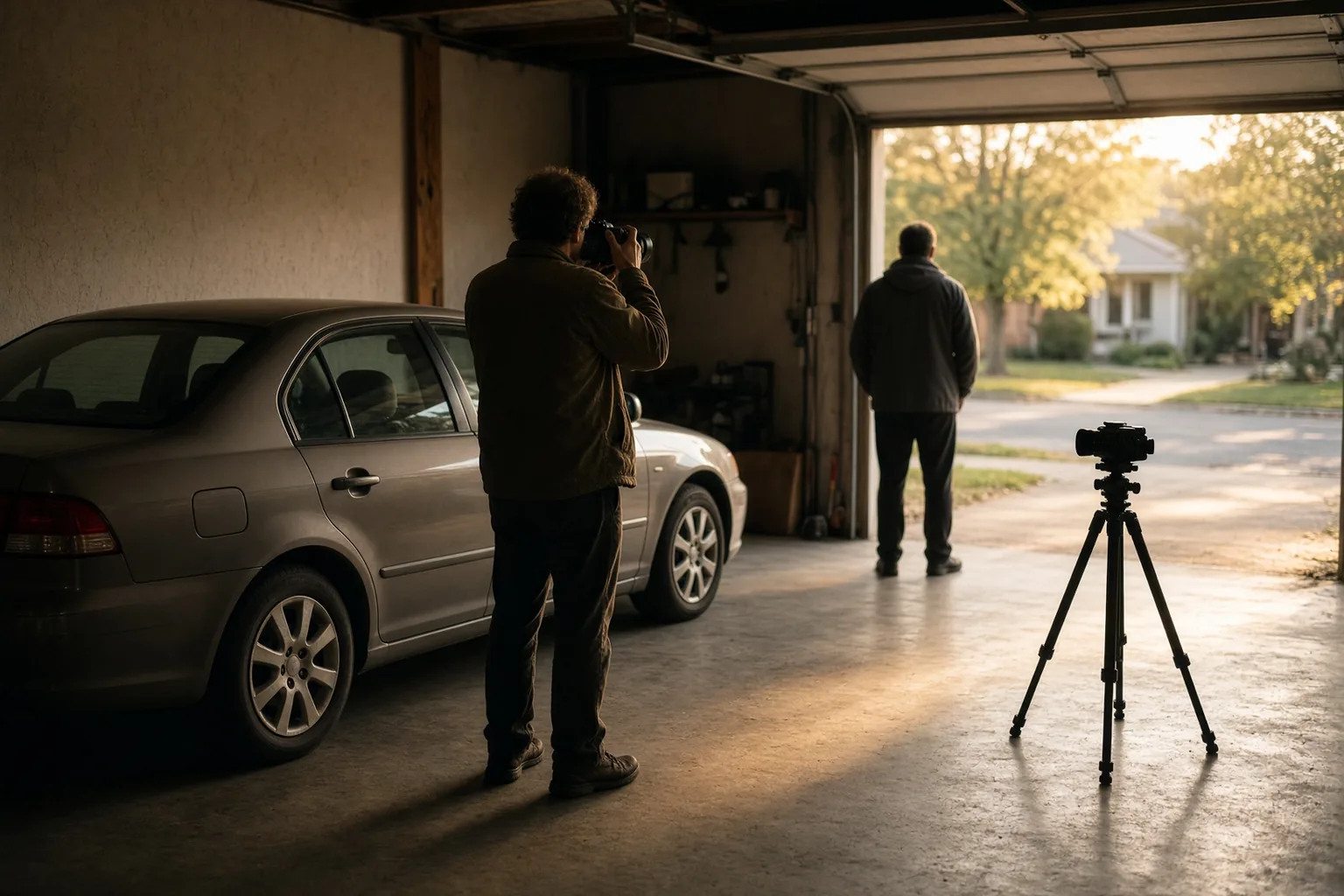
What does Rule 34 let the other side's expert do with your property?
Enter land or other property you possess or control and inspect, measure, survey, photograph, test or sample the property or any designated object or operation on it. Tangible things may be inspected, copied, tested or sampled.
Rule 34(a) has two branches. Under Rule 34(a)(1)(B) a party may ask the other side to produce "any designated tangible things" so that the requesting party "or its representative" can inspect, copy, test or sample them. Under Rule 34(a)(2) a party may ask the other side "to permit entry onto designated land or other property possessed or controlled by the responding party, so that the requesting party may inspect, measure, survey, photograph, test, or sample the property or any designated object or operation on it."
The representative named in the rule is usually the expert. A vehicle in a lemon law case, a machine in a product liability case, a building in a construction defect case: each can be the object of a Rule 34 request, and the request can cover the object as it operates.
The request must stay within the scope of Rule 26(b). Rule 26(b)(1) limits discovery to nonprivileged matter relevant to a claim or defense and "proportional to the needs of the case", considering the importance of the issues, the amount in controversy, the parties' relative access to information, their resources, the importance of the discovery and whether its burden or expense outweighs its likely benefit.
The Advisory Committee explained the testing branch in 1970 with an example: "If the operation of a particular machine is the basis of a claim for negligent injury, it will often be necessary to test its operating parts or to sample and test the products it is producing."
What must the inspection request say, and how long do you have to answer?
The request must describe each item with reasonable particularity and specify a reasonable time, place and manner for the inspection and the related acts. The written response is due within 30 days after service.
Rule 34(b)(1)(A) requires the request to describe "with reasonable particularity each item or category of items to be inspected". Rule 34(b)(1)(B) requires it to "specify a reasonable time, place, and manner for the inspection and for performing the related acts". The related acts are the measuring, testing and sampling the expert plans to do.
Under Rule 34(b)(2)(A) the responding party answers in writing within 30 days after being served. A shorter or longer time may be agreed under Rule 29 or ordered by the court.
For each item the response must either state that inspection and related activities will be permitted as requested or "state with specificity the grounds for objecting to the request, including the reasons" (Rule 34(b)(2)(B)). An objection to part of a request "must specify the part and permit inspection of the rest" (Rule 34(b)(2)(C)). A general objection to the whole inspection does not meet this rule: the owner names the test or the condition it objects to and lets the rest go ahead.
Can the owner or the owner's lawyer watch the other side's expert inspect?
The rule does not say. In Rasnic v. FCA US (D. Kan. 2018) and Smith v. Nexus RVs (N.D. Ind. 2019) the courts let the defense expert inspect without the plaintiffs or their representatives present.
In Rasnic v. FCA US LLC, No. 17-2064-KHV-GEB, decided on August 14, 2018, the plaintiffs owned the vehicle at issue and asked that their representative be present for the whole day of the defendant's inspection. Magistrate Judge Gwynne E. Birzer did not adopt that request. The order held that the defendant's counsel and consulting expert were entitled to determine "what to test and how" outside the plaintiffs' view.
The court tied that holding to two protections in Rule 26. Rule 26(b)(3) protects trial preparation materials, and Rule 26(b)(4)(D) bars discovery of facts known and opinions held by an expert retained only for trial preparation, except in exceptional circumstances. Relying on Shoemaker v. General Motors Corp., 154 F.R.D. 235 (W.D. Mo. 1994), the court found that the plaintiffs' concerns about the testing did not show exceptional circumstances.
Smith v. Nexus RVs, LLC, No. 3:17-CV-00815-PPS-MGG, decided on May 14, 2019, came out the same way on attendance. Magistrate Judge Michael G. Gotsch, Sr. adopted the defendants' amended notice, which provided for inspection "outside the presence of Plaintiffs and their representatives". The plaintiffs had asked that their counsel attend. The court found that they "presented no circumstances unique to this case that outweigh Defendants' justified interest" in protecting their expert's work.
These are two orders of magistrate judges in two districts, both on nondestructive inspections. They do not bind other courts. A party that wants to attend has to give the judge reasons tied to its own case, and the order shows which reasons failed in these two.
Can the inspection be recorded on video?
A court may order it. In Smith v. Nexus RVs the defense had to video record the entire inspection and serve the recording with the expert's report. The Rasnic order did not rule expressly on videotaping.
In Smith the court did not let the plaintiffs' counsel watch, but it required the defendants to "create a video recording of the entire inspection and to serve it on Plaintiffs along with the expert's report." The defendants had stated that the inspection would be nondestructive, and the court took them at their word.
In Rasnic the plaintiffs had written that they intended to have a representative present the entire day and a second person videotaping the entire inspection. The order did not allow the representative to attend and made no express ruling on the videotaping.
For a later review the video matters as a record. A reviewer who has the recording can compare each step of the inspection with what the expert's report says was done. Without a recording, the report and the expert's notes are the only account of the inspection.
What conditions can a court set for the inspection?
Rule 26(c)(1) lets the court, for good cause, set the time, place and allocation of expenses and designate the persons who may be present. Rasnic set notice of devices, costs, a rental car and a one-day limit.
Rule 26(c)(1) permits a protective order for good cause. Its list includes an order "specifying terms, including time and place or the allocation of expenses, for the disclosure or discovery" (26(c)(1)(B)) and an order "designating the persons who may be present while the discovery is conducted" (26(c)(1)(E)). An owner who objects to the terms of an inspection can ask for one of these orders instead of refusing the inspection.
The Rasnic order is a working example of such terms. The plaintiffs chose the dealership where the inspection would take place. One week before the inspection, the defendant's counsel had to identify "any outside device(s) it intends to connect to Plaintiffs' vehicle". The plaintiffs could object, and the court expected any objection to be "well-founded and supported by empirical evidence".
The defendant bore all reasonable costs, provided a rental car and had to finish testing in one business day. "Any risk of loss occurring during Defendant's testing will be borne by Defendant." The defendant had to give the plaintiffs "a printout of any diagnostic codes revealed during its inspection", and if the vehicle was damaged or materially altered in the defendant's custody, the plaintiffs could request sanctions for spoliation. The court denied a request for a neutral expert, which the plaintiffs had raised for the first time in their response brief.
In Smith the date of the inspection had to be "mutually acceptable to all parties". Both courts denied fee awards under Rule 37(a)(5), and in Smith the court found the plaintiffs' objection substantially justified.
Does destructive testing need more than a Rule 34 request?
Courts look harder at it. The Rasnic order noted that courts use a balancing test for nondestructive testing and a four-factor test from Ramos v. Carter Express for destructive testing.
Rule 34 lists "test" and "sample" among the permitted acts and does not distinguish tests that alter or consume the object. Courts draw the line. In Rasnic the defendant sought only nondestructive testing, and the court noted that courts are more likely to apply a balancing test to nondestructive testing and a four-factor test, taken from Ramos v. Carter Express Inc., 292 F.R.D. 406 (S.D. Tex. 2013), to destructive testing.
A destructive test changes the evidence for everyone. After it, the other side's expert cannot repeat the observation on the original object. That is why the request for such a test should name the method, the part to be cut or consumed, the equipment and the record that will be kept, and why the owner should answer with a written objection or a proposed protocol inside the 30 days of Rule 34(b)(2)(A).
What if the object is held by someone who is not a party?
Rule 34 reaches only parties. Rule 34(c) sends the requesting party to Rule 45: a subpoena can compel a nonparty to produce tangible things or permit an inspection of premises.
Rule 34(c) reads: "As provided in Rule 45, a nonparty may be compelled to produce documents and tangible things or to permit an inspection." The 1991 Advisory Committee Note explains that Rule 45 was revised "to provide for subpoenas to compel non-parties to produce documents and things and to submit to inspections of premises."
The same note states that removing the earlier text "is not intended to preclude an independent action for production of documents or things or for permission to enter upon land". A wrecked car held by an insurer, a failed part held by a repair shop, a building sold after the loss: each sits with a nonparty, and the expert's access runs through a subpoena or a separate action.
Why should the inspection protocol be put in writing early?
Because an unwritten agreement may not be enforced. In Smith v. Nexus RVs the court refused to enforce an inspection protocol the plaintiffs said had been agreed, because it never appeared in the Rule 26(f) report.
In Smith the plaintiffs argued that the parties had agreed on how inspections would run. The court did not enforce that protocol because it had not been presented in the parties' Rule 26(f) report. The terms the court then set came from the defendants' amended notice and the court's own order.
A written protocol names the people who will attend, the tests and devices, the record (photographs, video, data downloads), the custody of the object, the costs and the sequence when both sides' experts need the same object. Agreed early and filed with the court, it binds both experts. Left to a phone call, it becomes a motion to compel.
How do Russian courts handle the parties' presence at an examination?
Participants given the right by procedural law may attend. Part 2 of Article 83 of the Arbitrazh Procedure Code grants it unless presence could interfere with the experts' work, and Article 24 of Law No. 73-FZ sets the procedure.
The contrast with Rule 34 comes from the structure. In Russian courts the examination is ordered by the court and carried out by a court-appointed expert, and the parties have a statutory right to be present, with exceptions. Under Part 2 of Article 83 of the Arbitrazh Procedure Code the parties "may be present" unless their presence could interfere with the normal work of the experts, and they may not interfere with the research. Part 3 bars their presence while the expert drafts the report and while a panel of experts confers and formulates conclusions.
Article 24 of Federal Law No. 73-FZ on state forensic expert activity adds that those present may give explanations and ask the expert questions about the subject of the examination. If a participant interferes, the expert may suspend the work and ask the court to withdraw the permission to attend. Article 41 extends Article 24 to experts outside state institutions, and Article 25 requires the report to list the participants who were present.
What does a reviewer look for in the opposing expert's inspection?
Whether the report matches the record of the inspection: what was examined, which tests were run and with what equipment, what condition the object was in before and after, and whether the conclusions rest on the observations made.
A review of the opposing expert's report starts with the inspection, because the inspection produced the data. The reviewer compares the report with the video, the photographs, the data printouts and the protocol. A test described in the report and missing from the recording, a device connected without the notice the order required, a part removed and not documented: each is a gap between the report and the record.
The second question is method. The reviewer checks whether the tests chosen fit the object and the question, and whether they were run in the sequence and under the conditions the method calls for. The third is reasoning: whether the conclusions follow from what the expert observed or rely on assumptions the inspection did not test.
What does IAE do when the opposing expert has inspected your property?
IAE reviews the opposing expert's report on six questions, including method, completeness and soundness of conclusions. The format, cost, deadline and specialist are confirmed within one business day; the signed PDF follows in up to 5 business days.
The review answers six questions about the report: whether the method fits the object and the questions and was followed at every stage; whether all objects, materials and questions were examined, with no substituted questions or gaps; whether the conclusions follow from the examination, with no contradictions or inadmissible assumptions; whether the expert's education, specialty and experience match the subject; whether the report meets the formal requirements and procedure of the jurisdiction; and whether it can be relied on.
The client sends the report, the inspection video and photographs or other case materials and describes the task. The secretariat confirms receipt the same day, and within one business day IAE confirms the format, the cost, the deadline and the specialist from its registry. The client approves the candidate and the CV before work starts. The signed PDF is issued in up to 5 business days, depending on the volume of materials, and a 48-hour rush is available for cases with tight deadlines.
Every specialist is a member of the public IAE registry and can be verified by Member ID or QR code, and confirms in the document that he or she has no interest in the outcome of the case. Materials are not passed to third parties without the client's consent. IAE is not a law firm and does not advise on case strategy; whether to object to an inspection or move for a protective order is a decision for the client's attorney. Neither IAE nor the reviewer guarantees the outcome of the case.
Sources
- Federal Rules of Civil Procedure, Rule 34, Producing Documents, Electronically Stored Information, and Tangible Things, or Entering onto Land, for Inspection and Other Purposes, with committee notes (LII, Cornell Law School)
- Federal Rules of Civil Procedure, Rule 26, Duty to Disclose; General Provisions Governing Discovery (LII, Cornell Law School)
- Rasnic v. FCA US LLC, No. 17-2064-KHV-GEB, Memorandum and Order, ECF No. 86 (D. Kan. Aug. 14, 2018) (Justia)
- Smith v. Nexus RVs, LLC, No. 3:17-CV-00815-PPS-MGG, Opinion and Order, Filing 28 (N.D. Ind. May 14, 2019) (Justia)
- Arbitrazh Procedure Code of the Russian Federation, Article 83, Procedure for conducting an examination (rulaws.ru)
- Federal Law No. 73-FZ of May 31, 2001, On State Forensic Expert Activity in the Russian Federation, as amended on July 22, 2024, Articles 24, 25 and 41 (rulaws.ru)
Read also
All articles
Can an expert witness testify outside his or her field, and when does a case need a second expert?
Rule 702 admits opinion testimony of a witness qualified by "knowledge, skill, experience, training, or education". Courts apply that test to each Sergei Voronin

Lay witness or expert witness: when does an opinion need an expert under Rule 701?
A witness who is not testifying as an expert may give an opinion only if it rests on the witness's own perception, is useful to the jury and is "notSergei Voronin
Can you sue an expert witness? Witness immunity and claims against your own expert
Whether an expert witness can be sued depends on who sues and for what. Testimony is protected by witness immunity, which the U.S. Supreme CourtSergei VoroninExpert examinations
Ready to discuss your case?
Send the materials: the secretariat will confirm the format, cost, deadline and the specialist within one business day.
