
Expert witnesses
Useful safe life defense in product liability: how does a manufacturer prove a product outlived its safe life, and what does the expert measure?
In Washington, Kansas, Idaho and Minnesota a seller can defeat a product liability claim by proving that the harm happened after the product's useful safe life had expired. After 12 years in Washington and 10 in Kansas and Idaho the law presumes it. Whether an old machine was still within its safe life is proved with wear measurements, service records, manuals and industry practice, and that is expert work.
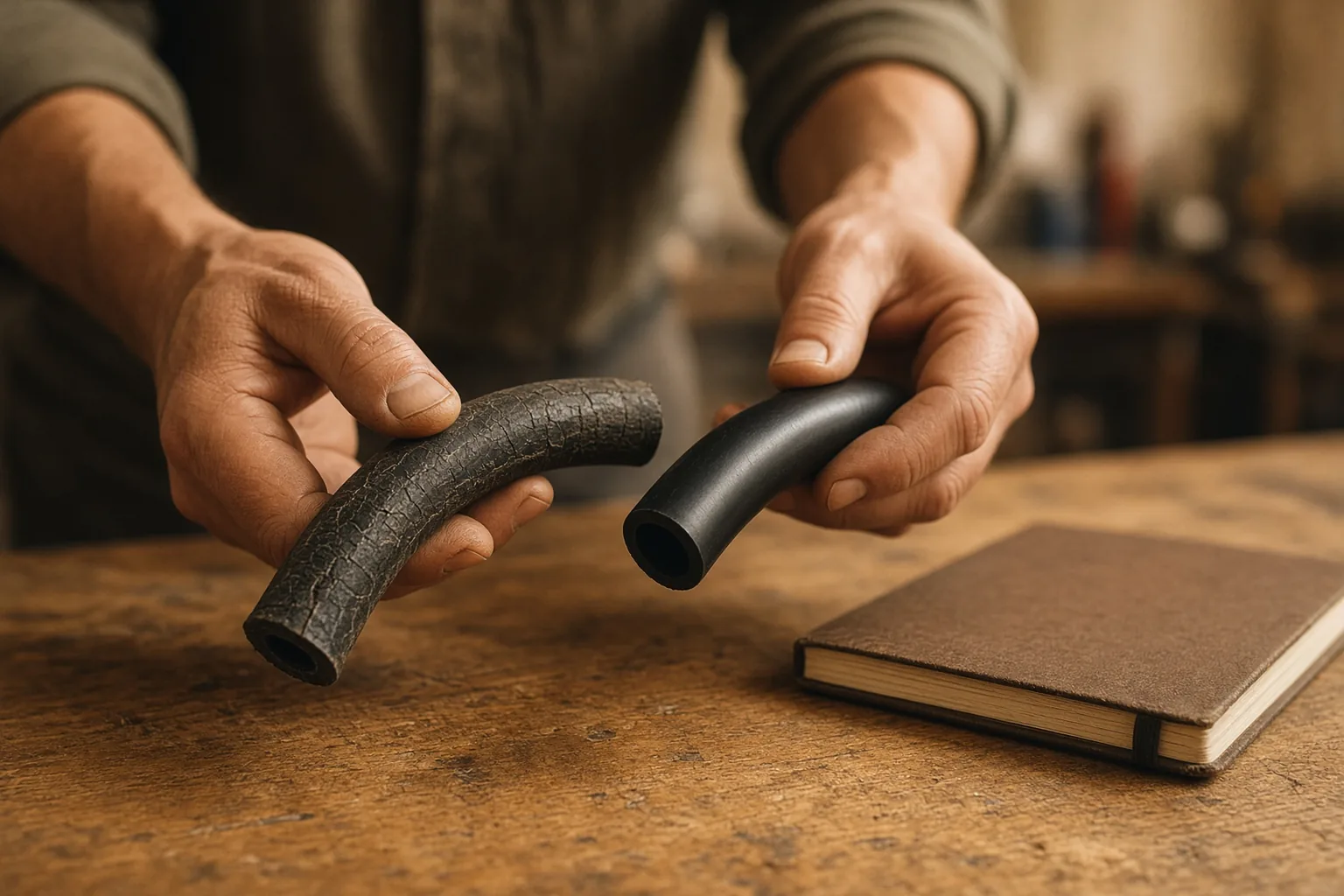
What is the useful safe life defense?
A statutory defense in some states: the seller is not liable if it proves that the harm happened after the product's useful safe life had expired, meaning the time during which the product would normally perform or be stored safely.
Washington, Kansas and Idaho use almost the same words. Under RCW 7.72.060(1)(a), "a product seller shall not be subject to liability to a claimant for harm under this chapter if the product seller proves by a preponderance of the evidence that the harm was caused after the product's "useful safe life" had expired." Idaho Code 6-1403(1)(a) repeats that sentence, and K.S.A. 60-3303(a)(1) states the same rule for product liability claims in Kansas.
The three statutes define the term alike. Useful safe life "begins at the time of delivery of the product and extends for the time during which the product would normally be likely to perform or be stored in a safe manner." Time of delivery means delivery to the first purchaser or lessee who was not in the business of selling such products or using them as components of another product to be sold. Washington adds that for a remanufactured product the clock starts with delivery of the remanufactured product to its first such purchaser.
Minnesota frames it as the ordinary useful life. Under Minn. Stat. 604.03, subdivision 1, in an action for personal injury, death or property damage arising out of a product, "it is a defense to a claim against a designer, manufacturer, distributor or seller of the product or a part thereof, that the injury was sustained following the expiration of the ordinary useful life of the product." The section dates from 1978 (1978 c 738 s 9).
The defense is an affirmative one. In Washington, Kansas and Idaho the seller proves the expiry by a preponderance of the evidence, unless one of the presumptions described below shifts the burden after a fixed number of years. Either way the question is factual and is decided on evidence about the product, its use and its maintenance.
Which states have a useful safe life rule?
Washington (1981), Kansas (1981), Idaho (1980, redesignated 2005) and Minnesota (1978) have such statutes. A 2001 law review article by Charles E. Cantú also cites Connecticut and Colorado provisions and the Model Uniform Products Liability Act.
The history notes give the dates. RCW 7.72.060 comes from Laws of 1981, chapter 27, section 7. K.S.A. 60-3303 was enacted in L. 1981, ch. 231, section 3 and amended in 1990 and 1992. Idaho's section was added in 1980 as 6-1303 and amended and redesignated in 2005 as 6-1403. Minnesota's 604.03 carries the history note 1978 c 738 s 9.
In The Useful Life Defense: Embracing the Idea That All Products Eventually Grow Old and Die, 80 Nebraska Law Review 1 (2001), Professor Charles E. Cantú of St. Mary's University School of Law lists Minn. Stat. 604.03, Conn. Gen. Stat. 52-577a and K.S.A. 60-3303 among the useful life statutes. He also cites Colo. Rev. Stat. 13-21-403(3), which in his footnote presumes, rebuttably, that a product was not defective ten years after it was first sold for use or consumption, and section 110 of the Model Uniform Products Liability Act (1979).
The four statutes differ in the details that decide cases: the number of years before a presumption arises, the standard for rebutting it and the list of exceptions. The sections below take them in that order, and a request for an expert names the state for the same reason.
What evidence decides whether the useful safe life has expired?
Wear, deterioration, the user's practices, the seller's own statements about life and maintenance, and modifications. Kansas lists five kinds of especially probative evidence, and Minnesota lists six factors measured against the experience of users of similar products.
K.S.A. 60-3303(a)(1) names the evidence: the degree of wear from use; deterioration from natural causes, climate and the conditions of use or storage; the normal practices of the user, similar users and the seller about use, frequency, purpose, repairs, renewals and replacements; the seller's representations, instructions or warnings about maintenance, storage, use or expected useful safe life; and any modification or alteration by a user or a third party.
Minnesota measures the period "by reference to the experience of users of similar products, taking into account present conditions and past developments." Its factors are "(1) wear and tear or deterioration from natural causes," "(2) the progress of the art, economic changes, inventions and developments within the industry," "(3) the climatic and other local conditions peculiar to the user," "(4) the policy of the user and similar users as to repairs, renewals and replacements," "(5) the useful life as stated by the designer, manufacturer, distributor, or seller of the product in brochures or pamphlets furnished with the product or in a notice attached to the product," and "(6) any modification of the product by the user."
Subdivision 2 also says what useful life is not: it "is not necessarily the life inherent in the product, but is the period during which with reasonable safety the product should be useful to the user." A machine that still runs after decades of repairs may be past its useful safe life, and the factors are the way to prove it either way.
When does the law presume that the useful safe life has expired?
After 12 years from delivery in Washington, and after 10 years in Kansas and Idaho. Washington's presumption can be rebutted by a preponderance of the evidence; Kansas and Idaho require clear and convincing evidence.
RCW 7.72.060(2) provides: "If the harm was caused more than twelve years after the time of delivery, a presumption arises that the harm was caused after the useful safe life had expired." It adds: "This presumption may only be rebutted by a preponderance of the evidence."
K.S.A. 60-3303(b)(1) sets the line at 10 years after delivery, and "This presumption may only be rebutted by clear and convincing evidence." Idaho Code 6-1403(2)(a) uses the same 10 years and the same standard, and subsection (2)(b) calls the 10-year period a "period of repose."
The presumption changes the expert's task. Before the line the seller proves expiry; after it the claimant proves that the product was still within its safe life when the harm occurred, in Kansas and Idaho by clear and convincing evidence. The age of the product on the date of injury, counted by the first delivery to a user rather than by the date of manufacture or of the claimant's own purchase, is the first fact both sides fix.
Which exceptions keep an older product in the case?
An express warranty for a longer period, intentional misrepresentation or concealment that caused the harm, and harm from exposure that began within the safe life or from a defect that could not be discovered at delivery.
In Washington the seller may be liable beyond the useful safe life if it "has warranted that the product may be utilized safely for such longer period," if it "intentionally misrepresents facts about its product, or intentionally conceals information about it, and that conduct was a proximate cause of the claimant's harm," or if the harm "was caused by exposure to a defective product, which exposure first occurred within the useful safe life of the product, even though the harm did not manifest itself until after the useful safe life had expired."
Idaho Code 6-1403(2)(b) lists four limits on its 10-year period. An express warranty of safe use for longer than 10 years extends it. It does not apply if the seller "intentionally misrepresents facts about its product, or fraudulently conceals information about it, and that conduct was a substantial cause of the claimant's harm." It does not affect contribution or indemnity. And it does not apply if the harm "was caused by prolonged exposure to a defective product," if the injury-causing aspect that existed at delivery "was not discoverable by an ordinary reasonably prudent person until more than ten (10) years after the time of delivery," or if harm caused within 10 years did not manifest itself until later.
Kansas has the same structure in 60-3303(b)(2). Subsection (d) adds a rule for latent diseases caused by exposure to a harmful material, defined to include silicone gel breast implants implanted before July 1, 1992, asbestos, dioxins, polychlorinated biphenyls and substances regulated as presenting an unreasonable risk; for those claims the action accrues when the disease and its cause have been made known to the person or the person should have been aware of both.
What happened in Baumann v. Excel Industries?
A mechanic lost four fingers in a 1966 riding mower about 22 years after it was made. The Kansas Court of Appeals held in 1993 that he had not rebutted the 10-year presumption, and affirmed summary judgment for the manufacturer.
The mower was a Model XL 172 Hustler heavy-duty riding mower that Excel Industries manufactured in 1966. Baumann bought it used in 1980. On July 31, 1988, while trying to prime the fuel pump with the engine running, he caught his hand in the drive belt and a pulley, and four fingers were severed. He filed suit on July 27, 1990. The opinion, Baumann v. Excel Industries, Inc., 17 Kan. App. 2d 807, No. 67,383, was written by Chief Judge Briscoe and decided on January 13, 1993.
Baumann's expert testified: "I see the useful life being as long as you want to keep repairing the mower." He admitted that he had not been asked whether the useful safe life had expired. Excel admitted a useful life of 1,000 to 2,000 hours. Baumann estimated about 600 hours of use in his eight years of ownership and had no evidence of the mower's use before he bought it. He pointed out that Excel sold replacement parts, that the owner's manual promised dependable performance, and that the mower was running and in good condition with routine repairs since 1981.
The court held that the district court erred in applying the clear and convincing standard at summary judgment, then reviewed under a preponderance standard and still found the evidence short: "None of these assertions meets the burden of proof necessary to establish a genuine issue of fact," and "Baumann has not rebutted the presumption that his injury occurred after the useful safe life of the mower had expired." The court also rejected the exception for defects not discoverable at delivery, because on a preliminary examination at delivery a reasonably prudent person would have seen that using the manual valve with the engine running could cause injury.
The expert's opinion described how long the mower could be kept running with repairs, which is the life inherent in the product. It does not answer the statutory question, which is how long the mower would normally perform safely, and the unknown 14 years of use before 1980 left the hours count incomplete.
Is useful safe life measured for the whole product or for the failed component?
Federal courts applying Washington law have looked at the component that caused the harm. According to a FindLaw article, the Ninth Circuit so held in Pardo v. Olson & Sons (1994), a case over the repair of a dump truck.
Pardo v. Olson & Sons, Inc., 40 F.3d 1063, was decided by the Ninth Circuit on November 25, 1994, in an opinion by Judge Hug, with Judges Wood and Tang on the panel. It was a wrongful death action over injuries Luis Pardo suffered while repairing a dump truck, and the appeal concerned summary judgment for Knapheide Manufacturing Co., which the opinion describes as "the manufacturer of the bed of the dump truck." Washington law applied.
The FindLaw article The Useful Safe Life Defense: Finding the Relevant Product (updated June 2, 2016) reports that the case involved two components, a crane and a truck bed, and that the Ninth Circuit held the relevant product to be the component that caused the injury rather than the whole machine, relying on the reference in RCW 7.72.010(3) to the "component part or parts" that gave rise to the claim. The same article reports that in Siler v. Ford, No. C98-5005 RJB (W.D. Wash.), Judge Robert J. Bryan held that an allegation that a 1967 truck was beyond its useful safe life was legally insufficient, because the fuel tank was the relevant product. The article adds that "there is no Washington State court appellate case" on which product the defense refers to.
For the expert this decides what gets measured. If the component is the product, the analysis needs the component's own delivery date, its replacement history, its wear and the seller's statements about its life, which may differ from the age of the vehicle or machine it is installed in.
Does the defense reach harm caused by long exposure?
Washington's statute excludes harm from exposure that began within the useful safe life. In 2025 the Washington Supreme Court held in a school PCB case that Missouri law, which has no repose statute, governed repose.
Erickson v. Pharmacia LLC, No. 103135-1, was decided en banc on October 30, 2025, in an opinion by Chief Justice Stephens, and amended by order of January 21, 2026. The products were PCB-containing light ballasts and caulking made by Monsanto, Pharmacia's predecessor, which stopped PCB production in 1977, four years before the Washington Product Liability Act was enacted. The school buildings were built in 1967-1968, and the teachers worked there between 2011 and 2016.
The court quoted the Washington presumption that "the harm was caused after the useful safe life had expired" and held that the Act's repose provision does not displace Washington's issue-by-issue choice-of-law analysis. Under that analysis the court found Missouri's connection to the issue of repose the strongest and wrote: "Accordingly, we reverse the Court of Appeals and hold that Missouri law governs this issue." Because the Washington provision did not apply, the court did not reach the challenge to its constitutionality.
For the expert work this has two consequences. Exposure cases go to the exception for harm from exposure that began within the safe life, so the expert dates the first exposure as carefully as the delivery. And in a multistate case the useful safe life rule of the forum may not govern at all, so the choice-of-law ruling can make an entire line of expert analysis unnecessary.
What does a useful safe life expert analyze?
The product's delivery date and history of use, measured wear and deterioration, maintenance and replacement practice, the seller's stated life and instructions, industry practice for similar products, and any modification. Each maps to a statutory factor.
The first step is a timeline: manufacture, first delivery to a user, later sales, repairs, part replacements and the date of injury. In Baumann the timeline had a hole, the years between 1966 and 1980, and the hours estimate covered only Baumann's own ownership.
The second step is physical. A failure analyst or mechanical engineer measures wear and deterioration on the failed part and on comparable units, which answers the Kansas factors of use-related wear and deterioration and Minnesota's wear and tear. The third step is documentary: owner's manuals, service bulletins, brochures and labels that state a useful life or a maintenance schedule, which is Minnesota's factor (5) and the Kansas factor on the seller's representations.
The fourth step compares the product with practice. Minnesota looks to the experience of users of similar products and to the progress of the art, and Kansas to the normal practices of the user, similar users and the seller. An expert from the product's industry can say how long such machines are normally kept in service, when owners replace them and what safety features later models carried.
The last step is the one Baumann's expert skipped: an opinion on the statutory question itself. The expert states whether, on the evidence of these factors, the product would normally still have performed safely on the date of injury, and with what degree of certainty, because in Kansas and Idaho the claimant who relies on that opinion after 10 years needs clear and convincing evidence.
Which experts does a useful safe life dispute need?
A failure analysis or mechanical engineer for wear and the failed part, an engineer from the product's industry for service life and practice, and often a records or maintenance witness. Both sides need the same specialties.
For the manufacturer, the experts show the age of the product, the service hours against the stated life, the wear on the failed part and the absence of the maintenance the manual required. Excel's admission of a 1,000 to 2,000 hour life in Baumann was the kind of figure the manufacturer's side has to be able to explain.
For the claimant, the experts address the exceptions as well as the life itself: a warranty for a longer period, statements in the manuals that promised longer safe use, a defect that existed at delivery and could not be discovered, or exposure that began within the safe life. In a component case they also fix which part caused the harm and how old that part was.
The IAE page on product liability expert witnesses describes what a court checks in such an expert: under Rule 702, since December 1, 2023, the proponent shows the court it is more likely than not that the data are sufficient and the method is reliable and reliably applied. The page lists six parts of the expert report under Rule 26(a)(2)(B), among them the opinions with their basis and the facts or data considered.
How does IAE find an expert for a useful safe life dispute?
In the request choose the case type Product liability and name the product, the failed part, the dates of manufacture, delivery and injury, and the state. Within 5 business days IAE sends 2-3 candidates with CVs and rates.
The IAE page on product liability expert witnesses covers defects in vehicles, medical devices, consumer products and industrial equipment and lists 8 specialties, among them failure analysis, materials science, electrical engineering, product design, vehicle crashworthiness, human factors, and warnings and instructions. For part failures the page names metallurgists and materials engineers who examine cracks, welds, heat treatment and alloy composition and compare the failed unit with drawings and sound units.
The page notes that state courts apply their own rules on expert admissibility and on proof of defect, so the request names the state and the court. Here the state also decides whether a useful safe life defense exists and which presumption applies: 12 years in Washington, 10 in Kansas and Idaho.
The request form asks for the field of expertise, the case type, the state and court, the firm's side, the expert disclosure deadline, the parties and their counsel for the conflict check, and a short description of the case. The form asks not to include privileged or sealed information. Within 1 business day IAE replies whether it can search in that field by the deadline.
The search costs $2,000 per case, paid in advance, and candidate names and CVs come after payment. Each candidate confirms in writing that he or she has no ties to the parties or their counsel. Within 5 business days the firm receives 2-3 candidates with CVs, hourly rates, testimony in the last 4 years and publications in the last 10 years. If no candidate fits, the second search is free; if IAE finds no candidates, it refunds the fee. IAE is not a law firm: case strategy and the decision to retain an expert stay with the attorney.
Sources
- RCW 7.72.060, Length of time product sellers are subject to liability (Washington State Legislature)
- K.S.A. 60-3303 (Kansas Office of Revisor of Statutes)
- Idaho Code 6-1403, Length of time product sellers are subject to liability (Idaho Legislature)
- Minnesota Statutes 2022, section 604.03, Useful life of product (Office of the Revisor of Statutes)
- Baumann v. Excel Industries, Inc., 17 Kan. App. 2d 807, No. 67,383 (Kan. Ct. App. Jan. 13, 1993) (Justia)
- Erickson v. Pharmacia LLC, No. 103135-1 (Wash. Oct. 30, 2025, amended Jan. 21, 2026) (Washington Courts)
- Pardo v. Olson & Sons, Inc., 40 F.3d 1063 (9th Cir. 1994), opening of the opinion (Leagle)
- The Useful Safe Life Defense: Finding the Relevant Product (FindLaw, updated June 2, 2016)
- Cantú, The Useful Life Defense: Embracing the Idea That All Products Eventually Grow Old and Die, 80 Nebraska Law Review 1 (2001) (CORE)
Read also
All articles

Learned intermediary doctrine: when is a warning to the physician enough, and what must the plaintiff's experts prove?
Under the learned intermediary doctrine, the maker of a prescription drug or device warns the patient through the prescribing physician. A plaintiff Sergei Voronin

State of the art defense in product liability: what must the manufacturer's expert prove about the technology available when the product was made?
The state of the art defense asks what a manufacturer could have known and built on the day the product left its hands, not on the day of the injurySergei Voronin
Toy injury expert witness: small parts, age grading and ASTM F963 in a children's product case
A toy injury case usually turns on a short list of questions: was the toy meant for a child under three, did any part fit inside the federal smallSergei VoroninExpert witnesses
Need an expert witness for your case?
Describe the question, the case type and the court. Within 5 business days you receive 2-3 candidates with CVs, hourly rates and lists of prior testimony.
