
Examinations
11-month builder warranty inspection: which defects in a new home does the builder have to fix?
An 11-month builder warranty inspection takes place shortly before the first warranty year ends, while defects in workmanship and materials are still covered. State statutes set what the builder owes. Minnesota and New Jersey provide one-, two- and ten-year warranties, and New York provides one-, two- and six-year warranties. Each statute ties coverage to a building standard and a notice rule, and the inspection report becomes the first record of the claim.

What is an 11-month builder warranty inspection?
It is an inspection of a new home in the 11th month after the warranty date. The owner receives a written list of defects in time to notify the builder before the one-year coverage expires.
The one-year term is the shortest in the state warranty statutes. Under Minnesota Statutes section 327A.02, subdivision 1(a), the vendor of a new dwelling warrants that for one year after the warranty date the home is free from defects caused by "faulty workmanship and defective materials" due to noncompliance with building standards. New Jersey uses a one-year term for the same category in N.J.S.A. 46:3B-3(b)(1). Section 777-a(1)(a) of the New York General Business Law covers, for one year, defects "due to a failure to have been constructed in a skillful manner."
The warranty date starts every period. Minnesota fixes it at the earlier of the first buyer's occupancy or the day the buyer takes legal or equitable title (section 327A.01). New York uses the date title passes to the first owner for occupancy as a residence or the date of first occupancy, "whichever first occurs" (section 777(8)). An inspection in the 11th month after that date leaves about 30 days of one-year coverage for a written claim.
None of the three statutes requires the owner to order an inspection. A covered defect can be reported at any time inside its period. The 11th month is a practice of inspectors and owners: after eleven months of use, seasonal leaks, settlement cracks and faults in heating and cooling have had time to appear, and the one-year coverage is still running.
How long does a builder warranty on a new home last?
As long as the state statute and the contract provide. Minnesota and New Jersey set one year for workmanship and materials, two years for systems and ten years for major construction defects. New York sets one, two and six years.
In Minnesota the two-year warranty covers defects caused by "faulty installation of plumbing, electrical, heating, and cooling systems" due to noncompliance with building standards, and the ten-year warranty covers major construction defects due to the same noncompliance (section 327A.02, subdivision 1(b) and (c)). Section 327A.01 defines a major construction defect as "actual damage to the load-bearing portion of the dwelling" that affects its load-bearing function and vitally affects, or is likely to vitally affect, use of the home as a residence. Damage from soil movement caused by flood, earthquake or other natural disaster is excluded.
New Jersey follows the same pattern. N.J.S.A. 46:3B-3(b)(2) gives two years for faulty installation of plumbing, electrical, heating and cooling delivery systems, with appliance coverage no longer and no broader than the manufacturer's warranty, and (b)(3) gives ten years for major construction defects. The consumer page of the New Jersey Department of Community Affairs lists load-bearing roof rafters, joists, beams, columns, foundation walls and footings as the structural items covered in years three through ten. It names outbuildings, swimming pools, driveways, walkways, unattached patios, fences and landscaping as exclusions.
New York's section 777-a(1)(b) gives two years for plumbing, electrical, heating, cooling and ventilation systems that the builder failed to install in a skillful manner, and section 777-a(1)(c) gives six years against "material defects." Section 777(4) defines a material defect as "actual physical damage to the following load-bearing portions of the home" that makes the home "unsafe, unsanitary or otherwise unliveable." The statute applies to a new home, which section 777(5) defines as a single-family house or a for-sale unit in a multi-unit residential structure of five stories or less.
In Minnesota a contract changes little of this. Section 327A.04 says the chapter's provisions "cannot be waived or modified by contract or otherwise." After the contract is signed, a warranty can be excluded or modified only by a signed writing in boldface type of at least ten points, and the vendor must then give substitute express warranties with substantially the same protection.
Which defects does the one-year warranty cover?
Defects in workmanship and materials measured against the building standard the statute names. Minnesota uses the State Building Code, New York the building code and locally accepted building practices, New Jersey the standards approved under its act.
Minnesota defines building standards as "the materials and installation standards of the State Building Code" in effect when the house was built (section 327A.01). A one-year claim in Minnesota therefore rests on two facts: the defect and the code requirement the work fails. A finding written as "poor workmanship" without the requirement it breaks does not match the statutory wording.
New York measures construction in a skillful manner against "the specific standards of the applicable building code" and "the standards of locally accepted building practices" (section 777(3)). The building code there means "local building code standards approved by the uniform fire prevention and building code council" (section 777(2)). In New Jersey the one-year coverage reaches defects caused by faulty workmanship and defective materials due to noncompliance with building standards approved by the commissioner.
Exclusions narrow the list. Minnesota's section 327A.03 excludes, among other items, normal wear and tear, damage from maintenance or alterations by others, acts of God unless caused by noncompliance with building standards, and loss the owner failed to take timely action to minimize.
A report written for a warranty claim sorts each finding into one of three groups. The first holds covered defects with the code section each one breaks. The second holds conditions that need an engineer before anyone can say whether they are covered. The third holds items outside the warranty, such as a cracked driveway in New Jersey.
When does the owner have to notify the builder?
Within the deadline set by the state. Minnesota requires written notice within six months after discovery, New York no later than 30 days after the warranty period ends, and New Jersey a claim before coverage ends.
Minnesota excludes loss that is not "reported by the vendee or the owner to the vendor or the home improvement contractor in writing within six months" after the owner discovered the defect or should have discovered it, unless the owner proves the vendor had actual notice (section 327A.03). The six months run from discovery. A dated inspection report can later be used to fix the discovery date for every item listed in it.
After notice the Minnesota builder has a right to look. Under section 327A.02, subdivision 4, the vendor performs the inspection "within 30 days" of the notification. Subdivision 5 requires a written offer to repair within 15 days of the completed inspection, with the scope of work and the proposed start and completion dates.
New York requires the builder to receive written notice of a warranty claim "prior to the commencement of any action" and no later than 30 days after the applicable warranty period expires (section 777-a(4)(a)). The owner must also "afford the builder reasonable opportunity to inspect, test and repair" the affected portion of the home.
The New Jersey consumer page tells owners to notify the builder in writing of each defect and to file a formal claim with the warranty plan administrator before the coverage period ends. Talking or writing to the builder does not count as filing a claim, and "If a claim is not filed on time, it will be denied." The owner can pursue the warranty or the courts for the same defects, not both.
What should the 11-month inspection report record?
Each defect with its room, exact spot, measurements and dated photos, the requirement it fails and its warranty category. Structural items also need a note on whether load-bearing parts show actual damage.
The statutes sort defects by period, so a report used for a claim sorts them the same way: one-year workmanship and materials, two-year plumbing, electrical, heating and cooling items, and structural items for the longer term. A cracked floor tile and a cracked footing fall under different deadlines and need different proof.
For each item the report names the room and the spot, gives measurements such as crack width and length, the slope of a floor or the moisture reading on a wall, and attaches photos with the date. When the item is a code issue, the report cites the code section and the edition that applied when the house was built, since Minnesota measures the work against the code in effect at the time of construction.
A home inspector records conditions. Whether a crack comes from shrinkage or from movement of a load-bearing part is a question for an engineer, and Minnesota's ten-year category turns on "actual damage to the load-bearing portion of the dwelling." New York's six-year category also requires actual physical damage to load-bearing portions. A report that refers such items to an engineer keeps the inspector's observations apart from the facts that still need proof.
Minnesota and New York both give the builder a chance to inspect before repairs. Photos and measurements taken before any repair or patch become the record both sides use later, because the condition changes once work starts.
What can the owner do if the builder refuses or the repair fails?
Sue within the statutory period or, in New Jersey, go through the warranty plan. Minnesota limits damages to the cost of repair or the loss in value caused by the defect.
Minnesota's section 327A.05 lets the buyer of a new dwelling sue for damages or specific performance. Damages are limited to "the amount necessary to remedy the defect or breach" or "the difference between the value of the dwelling without the defect and the value of the dwelling with the defect." The first measure needs a repair scope and price, the second a valuation.
In New York an action under section 777-a(4)(b) may be brought within one year after the warranty period expires or within four years after the warranty date, whichever is later. If the builder makes repairs in response to a claim, an action on that claim may be brought "within one year after the last date on which such repairs are performed."
In New Jersey, according to the Department of Community Affairs, the warranty plan pays for the correction if the builder fails to correct a covered defect. The builder's warranty liability is limited to the first good-faith sale price of the home or, if there was no good-faith sale, its fair market value on completion.
A repair estimate prepared for such a claim lists each defective element, its quantity and its price, and keeps upgrades out of the defect repair. Items the builder offered to fix are marked separately, so the dispute narrows to the items the builder refused.
Can the inspection report be used as evidence in court?
As a record of what the inspector saw, through the inspector's testimony. Opinions on cause, code compliance and cost face Rule 702 in federal court, and a retained expert's opinions go into a Rule 26 written report.
Under Federal Rule of Evidence 702 a witness qualified by "knowledge, skill, experience, training, or education" may give an opinion if the party offering it shows the court that "it is more likely than not that" the testimony is "based on sufficient facts or data," is "the product of reliable principles and methods" and applies those methods reliably to the facts of the case. State courts apply their own evidence codes.
The committee note to Rule 702 says that many courts treated "the critical questions of the sufficiency of an expert's basis, and the application of the expert's methodology" as questions of weight, and calls those rulings "an incorrect application of Rules 702 and 104(a)." An opinion that a crack comes from foundation movement, given after a visual walk-through without measurements, is tested on exactly these two points.
A retained expert who will testify in federal court signs a written report under Rule 26(a)(2)(B): all opinions with their basis and reasons, the facts or data considered, exhibits, qualifications with publications from the previous 10 years, cases with testimony in the previous 4 years and the compensation. A rebuttal report limited to the same subject is due within 30 days after the other side's disclosure under Rule 26(a)(2)(D)(ii).
Once suit is filed, an expert can examine parts of the property the other side controls through a Rule 34(a)(2) request for entry "so that the requesting party may inspect, measure, survey, photograph, test, or sample the property." The request must specify a reasonable time, place and manner for the inspection, and the written response is due within 30 days after service.
What does IAE do in a new home warranty dispute?
IAE prepares construction defect expert reports on the client's questions and reviews of the opposing expert's report for US courts. The signed document is issued within up to 5 business days after the format and cost are confirmed.
The construction defects page covers water intrusion, workmanship and code issues, scope and cost. The expert answers the questions agreed with the client, working from the documents, the photos and the site inspection record. The expert documents cracks, deflection, settlement and failed finishes, compares the work with the plans, the specifications and the code edition in force at permit, and prices the repair line by line with defect repair kept apart from upgrades.
For a warranty dispute the client sends the 11-month inspection report with its photos, the purchase contract and the warranty documents, the notices sent to the builder and the builder's replies, and states the warranty date and the state where the home stands. The secretariat confirms receipt the same day. Within one business day IAE confirms the format, the cost, the deadline and the specialist from its registry, and the client approves the candidate and the CV before work starts. The draft is checked for facts. Cases with tight deadlines have a 48-hour rush.
Every specialist is a member of the public IAE registry and passed the council's attestation under the published Criteria Matrix. The Member ID from the document opens the specialist's category, specialization, attestation date and record status on the status check page or by QR code.
Materials go through the contact form or to info@iaexperts.com and are not passed to third parties without the client's consent. An expert report is evidence that the court weighs together with the other materials. Neither IAE nor the expert guarantees the outcome of a warranty claim or a lawsuit. IAE is not a law firm and does not advise on case strategy.
Sources
- Minnesota Statutes 2026, chapter 327A, Housing; Statutory Warranties (sections 327A.01-327A.08, Office of the Revisor of Statutes)
- Minnesota Statutes, section 327A.02, Statutory warranties, subdivisions 1-7 (Office of the Revisor of Statutes)
- New York General Business Law, section 777-a, Housing merchant implied warranty (NYS Open Legislation)
- New York General Business Law, section 777, Definitions (NYS Open Legislation)
- N.J.S.A. 46:3B-3, New Home Warranty and Builders' Registration Act, warranty periods (2025 New Jersey Revised Statutes, Justia)
- New Jersey Department of Community Affairs, Consumer Information for New Home Buyers
- Federal Rules of Evidence, Rule 702, Testimony by Expert Witnesses, with Committee Notes (LII)
- Federal Rules of Civil Procedure, Rule 26, Duty to Disclose; General Provisions Governing Discovery (LII)
- Federal Rules of Civil Procedure, Rule 34, Producing Documents, Electronically Stored Information, and Tangible Things, or Entering onto Land (LII)
Read also
All articles

A neighbor's grading or paving sends water onto my property: who is responsible, and how does an expert prove the drainage change?
Whether a neighbor answers for water that runs onto your land depends on the surface water rule of the state. California asks whether each owner Sergei Voronin

Roof leaking after a roof replacement: how does an expert prove that the roofer's work caused it?
A roof that leaks a few weeks after it was replaced does not prove by itself that the roofer did bad work. The owner has to show where the waterSergei Voronin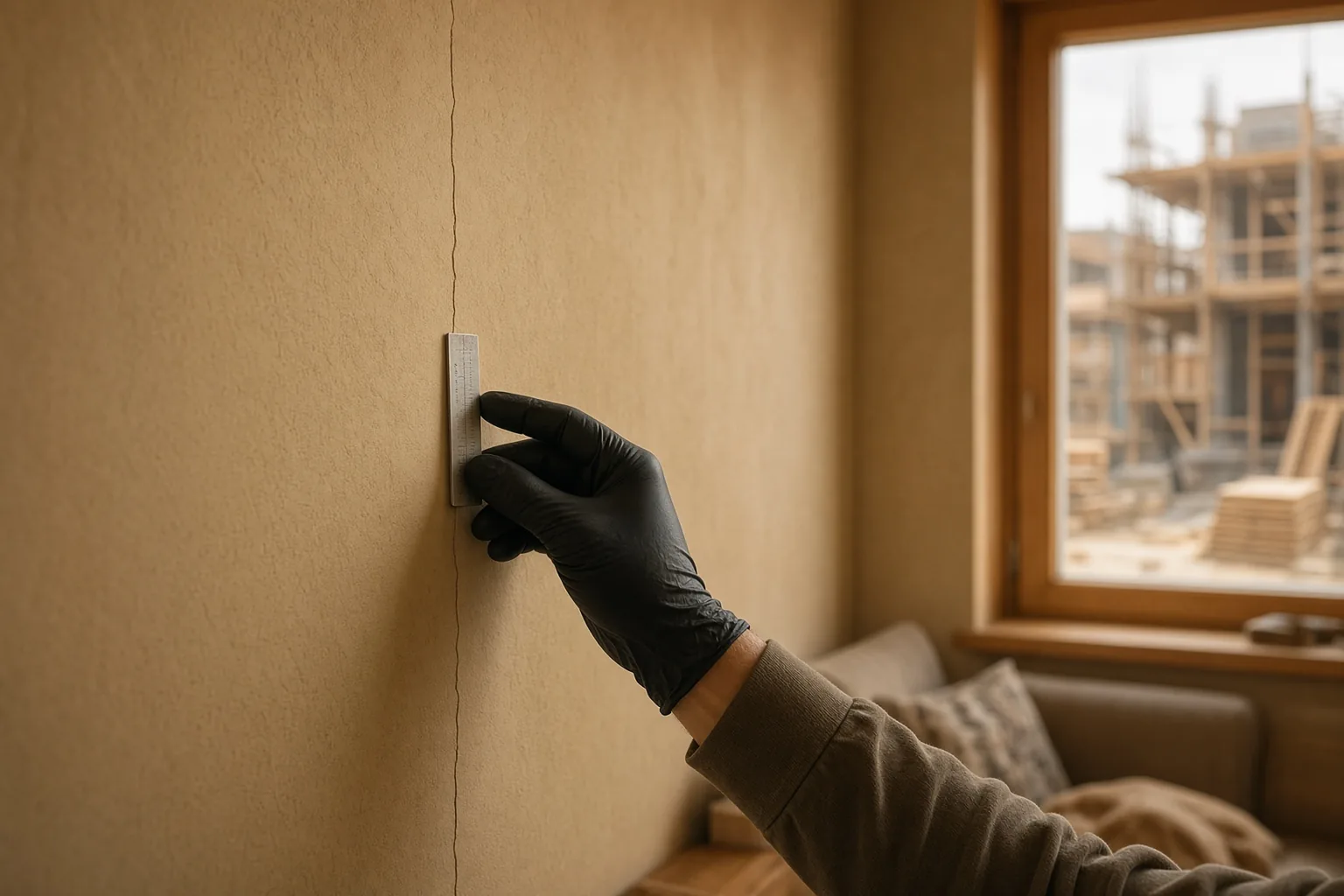
Construction next door damaged my house: how does an expert tie the cracks to the neighboring work?
When excavation, pile driving or underpinning next door is followed by new cracks, tilting floors or sticking doors, the owner has to prove thatSergei VoroninExpert examinations
Ready to discuss your case?
Send the materials: the secretariat will confirm the format, cost, deadline and the specialist within one business day.
