
Expert witnesses
Automotive defect and crashworthiness expert witness: recalls, safety standards and enhanced injury
In a vehicle defect case the expert answers one of two questions: did a defect cause the crash, or did the vehicle's design make the injuries worse in a crash it did not cause. The second question is a crashworthiness claim, recognized by the Eighth Circuit in Larsen v. General Motors in 1968. The expert works with the manufacturer's recall reports, the safety standard for the model year and the test of Rule 702.
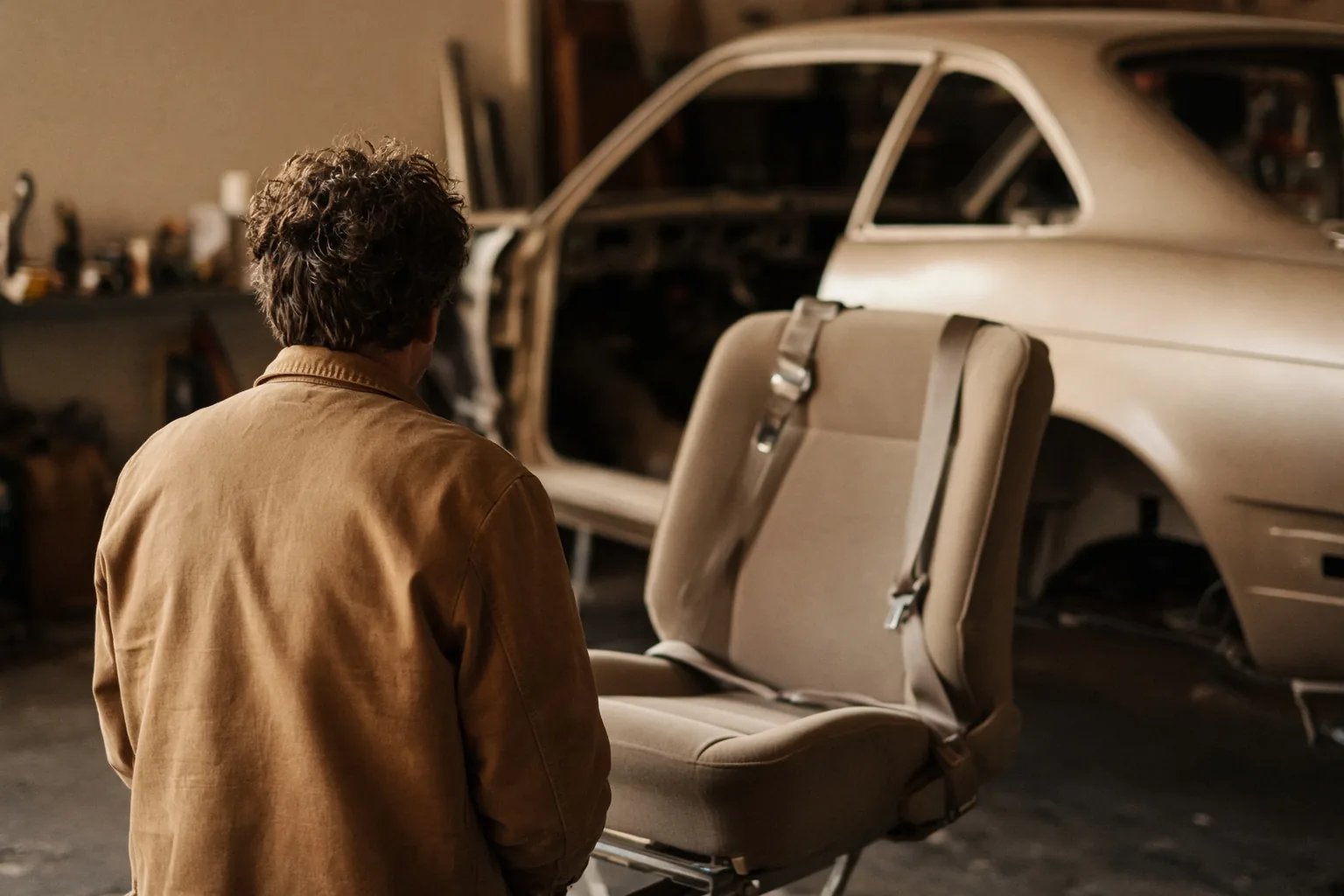
What is a crashworthiness claim?
A claim that the vehicle's design did not cause the collision but made the injuries in it worse. The manufacturer answers for the injury the design caused over and above the injury the collision alone would have caused.
The rule goes back to Larsen v. General Motors Corp., 391 F.2d 495, decided by the Eighth Circuit on March 11, 1968. Erling Larsen was driving a 1963 Chevrolet Corvair in Michigan in February 1964 when a head-on collision struck its left front corner and drove the steering assembly rearward into his head. He did not claim that the design caused the crash. He claimed that the design of the steering assembly enhanced his injuries. The trial court granted summary judgment to General Motors, and the Eighth Circuit reversed.
The court wrote: "Collisions with or without fault of the user are clearly foreseeable by the manufacturer and are statistically inevitable." From that it held that a manufacturer "is under a duty to use reasonable care in the design of its vehicle to avoid subjecting the user to an unreasonable risk of injury in the event of a collision." A design defect that did not cause the accident does not make the manufacturer liable for the entire damage, only for the portion caused by the defective design over and above the damage from the collision.
Larsen spoke of "the so-called 'second collision' of the passenger with the interior part of the automobile", and the claim is also known as the second collision doctrine. It is brought under state product liability law, so the request to an expert names the state and the court.
Which experts does a vehicle defect case need?
The defect theory decides. A broken part needs a failure analyst or metallurgist. A crashworthiness claim needs an engineer for the vehicle's design and a specialist who separates the injuries the crash caused from those the design added.
Larsen splits the proof of an enhanced injury into two questions. The first is technical: what the steering column, seat, belt, airbag, roof or door did in the crash, and what an alternative design available for that model year would have done. The second concerns the body: which injuries came from the collision itself and which from the design.
When the claim is that a defect caused the crash, the work starts with the failed component: a fractured axle, a separated tire tread, a throttle that stuck, a wiring fire. The failure analyst compares the part with the drawings and with sound parts from the same production. The accident reconstructionist ties the failure to the vehicle's motion before impact.
Both kinds of case rest on the vehicle. Its condition after the crash, the parts removed during repair and the data from its modules are evidence for every expert on both sides, so the request for inspection and testing is made before the vehicle is repaired, scrapped or sold.
When must a manufacturer tell NHTSA about a safety defect?
When it learns of a defect and decides in good faith that it is related to motor vehicle safety, or decides in good faith that the vehicle fails a federal safety standard. The report is due within 5 working days.
Under 49 U.S.C. 30118(c), a manufacturer that "learns the vehicle or equipment contains a defect" and decides in good faith that the defect is related to motor vehicle safety, or "decides in good faith that the vehicle or equipment does not comply with an applicable motor vehicle safety standard", notifies the Secretary of Transportation and the owners, purchasers and dealers. The regulation, 49 CFR 573.6(a), directs the report to NHTSA for each defect and each noncompliance.
49 CFR 573.6(b) requires the report "not more than 5 working days" after the manufacturer determines that a defect is safety related or that a noncompliance exists. The first report must contain at least the manufacturer's name, the identification of the affected vehicles and the description of the defect. The rest follows within 5 working days after the manufacturer confirms its accuracy.
NHTSA can act first. Under section 30118(a), the Secretary notifies the manufacturer immediately after an initial decision that a vehicle contains a safety defect. Under section 30118(b), the Secretary may order notification and a remedy after giving the manufacturer an opportunity to present information, views and arguments. Under section 30118(e), on the Secretary's own motion or on petition of any interested person, the Secretary may hold a hearing on whether the manufacturer met its notification duties.
What does a Part 573 report contain, and what does the expert take from it?
The affected vehicles and their count, the estimated share with the defect, a description of the defect and its risk, a chronology behind the determination and the remedy plan. The expert reads it for dates and for the mechanism.
Section 573.6(c) lists 11 items. Item (c)(2) identifies the vehicles potentially affected, the basis for the recall population and how the recalled vehicles differ from similar vehicles that were not recalled. Item (c)(3) gives the total number. Item (c)(4) gives the percentage of those vehicles estimated to actually contain the defect. Item (c)(5) requires "a description of the defect or noncompliance, including both a brief summary and a detailed description", with the location of the defect and the safety risk it creates.
Item (c)(6), for defects, requires "a chronology of all principal events that were the basis for the determination", including warranty claims and field or service reports with the dates they were received. For a plaintiff's expert this is the manufacturer's own record of when the problem surfaced. A defense expert compares the plaintiff's vehicle with the population described in item (c)(2) and with the percentage in item (c)(4). Item (c)(8) gives the remedy and the schedule of notices to owners and dealers.
The owner letter follows 49 CFR 577.5. It opens with an "IMPORTANT SAFETY RECALL" heading and the vehicle identification number, states that the manufacturer has decided a safety defect exists, describes the malfunction that may occur and the conditions that can trigger it, evaluates the risk, including whether a crash can happen without prior warning, and describes the remedy and how an owner can complain to NHTSA.
What other manufacturer data can an expert ask for?
Early warning data under 49 U.S.C. 30166(m): claims involving deaths and serious injuries, property damage figures, warranty and repair campaigns, and incidents of which the manufacturer has actual notice. The statute limits public disclosure of these data.
Section 30166(m) required the Secretary to issue early warning rules by June 30, 2002. Manufacturers report, periodically or on request, claims data on serious injuries, including deaths, aggregate statistics on property damage from alleged defects, and customer satisfaction campaigns, consumer advisories, recalls and other repair or replacement activity. They also report incidents of which they have actual notice involving alleged or proven deaths or serious injuries caused by a possible defect, in the United States and abroad when the foreign vehicle is identical or substantially similar to one sold here.
Information collected under the early warning rules may not be disclosed under section 30167(b) unless the Secretary decides that disclosure will help carry out the defect and recall provisions. A party that needs these data for its expert requests them from the manufacturer in discovery. The statute also says that manufacturers comply with the reporting duty even when a court order restricts disclosure of information in a civil action.
Communications to dealers are public. Under section 30166(f), the manufacturer sends the Secretary a copy of each communication to dealers, rental companies, owners or purchasers about a defect or a noncompliance, and the Secretary publishes them on a public website with an index by make, model and model year. An expert searches that index for communications about the same component in the same model.
Does a recall prove that the plaintiff's vehicle was defective?
No. A recall covers a population, and the manufacturer itself estimates what share of it contains the defect. The expert still has to show that this vehicle had the defect and that the defect caused the crash or the injury.
The percentage in item (c)(4) is an estimate of how many recalled vehicles actually contain the defect. A recall tells the expert which component to examine and which failure mode the manufacturer identified. The inspection of the vehicle answers whether that failure mode is present.
When the recall came matters for admissibility. Federal Rule of Evidence 407 bars evidence of measures taken "that would have made an earlier injury or harm less likely to occur" when offered to prove negligence, culpable conduct, "a defect in a product or its design" or a need for a warning or instruction. The court may admit such evidence for another purpose, such as impeachment or, if disputed, proving ownership, control or the feasibility of precautionary measures.
The 1997 committee note extended the rule's text to product liability and says that the rule covers only changes made after the event that caused the injury. Measures taken before that event are not excluded, even if they came after the product was manufactured or designed. A recall announced before the crash is outside the rule's timing condition, and a recall announced after it meets that condition.
Does compliance with a federal safety standard defeat the claim?
Not by itself. Compliance with a motor vehicle safety standard does not exempt a person from liability at common law, but a claim is preempted when it conflicts with the standard's objectives, as the Supreme Court held in Geier.
The saving clause, 49 U.S.C. 30103(e), reads that "compliance with a motor vehicle safety standard prescribed under this chapter does not exempt a person from liability at common law." Justice Thomas quoted it in his concurrence in Williamson v. Mazda Motor of America, 562 U.S. 323.
In Geier v. American Honda Motor Co. (No. 98-1811, decided May 22, 2000), Alexis Geier was injured while driving a 1987 Honda Accord that had no driver's side airbag, and she sued under District of Columbia tort law. Federal Motor Vehicle Safety Standard 208 then required passive restraints in only some 1987 vehicles and left manufacturers a choice among restraint types. The Court, 5 to 4 in an opinion by Justice Breyer, held that the express preemption provision did not bar the suit and that the saving clause did not stop ordinary conflict preemption.
The Department of Transportation had deliberately sought a mix of passive restraint devices, phased in gradually. A state tort duty to install airbags would have obstructed that mix and that phase-in, so the claim was preempted. The expert therefore starts with the version of the standard in force for the vehicle's model year and with the options it gave the manufacturer.
When is a seat belt or airbag design claim not preempted?
When the choice the standard left to manufacturers was not a significant regulatory objective. In Williamson v. Mazda (2011) the Supreme Court let a California claim over a lap-only belt in a rear aisle seat go forward.
Thanh Williamson died in an accident while riding in the family's 1993 Mazda minivan. The rear aisle seat had a lap belt and no shoulder belt. The 1989 version of FMVSS 208 allowed manufacturers to install either simple lap belts or lap-and-shoulder belts in rear inner seats. The California courts dismissed the tort claim, relying on Geier.
The Supreme Court reversed on February 23, 2011 (No. 08-1314, opinion by Justice Breyer). It found that the manufacturer's choice was not a significant regulatory objective this time. In 1989 the agency believed lap-and-shoulder belts would increase safety and did not require them mainly for reasons of cost-effectiveness. A cost-effectiveness judgment alone did not show an intent to bar tort suits, and the Solicitor General told the Court that the regulation did not preempt the suit.
Geier and Williamson concern the same standard and reach opposite results because the agency's reasons for leaving manufacturers a choice differed between the two versions of the standard. Those reasons sit in the rulemaking record for each version of the standard, and the expert who proposes an alternative restraint design reads that record for the model year in dispute.
How does a court test a vehicle expert's method?
Under Rule 702 the proponent shows the court it is more likely than not that the opinion rests on sufficient facts or data and on reliable methods reliably applied. Kumho Tire applied that test to a tire engineer's inspection.
Rule 702 admits expert testimony if it is more likely than not that the expert's specialized knowledge will help the trier of fact, the testimony is based on sufficient facts or data, it is the product of reliable principles and methods, and the opinion applies those principles and methods reliably to the facts of the case. The committee notes include a 2023 amendment on the preponderance standard and on subpart (d).
In Kumho Tire Co. v. Carmichael, decided on March 23, 1999, the plaintiffs' tire failure expert concluded from a visual and tactile inspection that a defect caused the tread to separate, because the tire did not show at least two of four signs of overdeflection: shoulder wear, bead grooving, sidewall discoloration and rim flange marks. The trial court excluded him. The Supreme Court held that the gatekeeping duty of Daubert applies to technical and other specialized knowledge, that its factors "do not constitute a 'definitive checklist or test'", and that the trial court acted within its discretion. The Court reversed the Eleventh Circuit.
The Court described the goal as making sure that the expert "employs in the courtroom the same level of intellectual rigor that characterizes the practice of an expert in the relevant field." For a vehicle expert the question is what a design or failure engineer outside litigation would measure and test before reaching the same conclusion.
What remedy does a recall give the owner, and why does it matter in a case?
The manufacturer repairs the vehicle, replaces it with an identical or reasonably equivalent one, or refunds the price less depreciation, free of charge. The free remedy does not reach vehicles first bought more than 15 calendar years before the notice.
49 U.S.C. 30120(a)(1) lets the manufacturer choose among the three remedies. Under section 30120(g)(1), the free remedy does not apply if the first purchaser bought the vehicle more than 15 calendar years before the notice or the order, whichever is earlier; for tires the limit is 5 calendar years. A 2015 amendment raised the vehicle limit, which had been 10 years.
Under section 30120(i)(1), a dealer may sell or lease a new vehicle, and a rental company may rent a covered rental vehicle, subject to the recall only after the defect is remedied, unless enforcement of the order is restrained or the order is set aside. In a case about a recalled vehicle the expert checks whether the remedy was performed before the crash, using the dealer's repair records and the vehicle itself, and whether the vehicle passed through a dealer or rental company while the recall was open.
How does IAE find an expert for a vehicle defect case?
In the request choose the case type Product liability and name the vehicle, model year, component and defect theory. Within 5 business days IAE sends 2-3 candidates with CVs, hourly rates and lists of prior testimony.
The product liability expert witness page lists 8 specialties, vehicle crashworthiness among them, and names safety-related defects under 49 U.S.C. 30118 in the design group. The request form asks for the field, the case type, the state and court, the firm's side, the expert disclosure deadline and the parties with their counsel. In the short description name the make, model and model year, the recall campaign number if there is one, the component and the question: a defect that caused the crash, an enhanced injury, or both. The form asks not to include privileged or sealed information.
Within 1 business day IAE replies whether it can search in that field by the deadline. Each candidate confirms in writing that he or she has no ties to the parties or their counsel; in a vehicle case the list of parties can include the manufacturer, the dealer and the component supplier.
Within 5 business days the firm receives 2-3 candidates with CVs, hourly rates, testimony in the last 4 years and publications in the last 10 years. Candidate names and CVs come after the search fee is paid in advance. If no candidate fits, IAE searches again, and if it finds no candidates, it refunds the fee. The expert bills the firm directly or through IAE under the agency option, in which IAE issues one invoice and credits the search fee to the first invoice. The expert's hourly rate never depends on the outcome of the case or on the content of testimony.
IAE is not a law firm. Case strategy and the decision to retain an expert stay with the attorney.
Sources
- Larsen v. General Motors Corp., 391 F.2d 495 (8th Cir. 1968), text of the opinion (Public.Resource.Org)
- 49 U.S.C. 30118, Notification of defects and noncompliance (Cornell LII)
- 49 CFR 573.6, Defect and noncompliance information report (Cornell LII)
- 49 CFR 577.5, Notification pursuant to a manufacturer's decision (Cornell LII)
- 49 U.S.C. 30166, Inspections, investigations, and records (Cornell LII)
- 49 U.S.C. 30120, Remedies for defects and noncompliance (Cornell LII)
- Federal Rule of Evidence 407, Subsequent Remedial Measures (Cornell LII)
- Federal Rule of Evidence 702, Testimony by Expert Witnesses (Cornell LII)
- Geier v. American Honda Motor Co., No. 98-1811 (2000), syllabus (Cornell LII)
- Williamson v. Mazda Motor of America, Inc., No. 08-1314 (2011), syllabus (Cornell LII)
- Williamson v. Mazda Motor of America, Inc., 562 U.S. 323 (2011), U.S. Reports (GovInfo)
- Kumho Tire Co. v. Carmichael, 526 U.S. 137 (1999) (Cornell LII)
Read also
All articles

State of the art defense in product liability: what must the manufacturer's expert prove about the technology available when the product was made?
The state of the art defense asks what a manufacturer could have known and built on the day the product left its hands, not on the day of the injury Sergei Voronin

Toy injury expert witness: small parts, age grading and ASTM F963 in a children's product case
A toy injury case usually turns on a short list of questions: was the toy meant for a child under three, did any part fit inside the federal smallSergei Voronin
Machine guarding expert witness: what does the engineer examine when a worker is hurt by an unguarded machine?
When a worker is hurt at the point of operation of a machine, the case usually turns on the guard: how the machine was designed to keep hands outSergei VoroninExpert witnesses
Need an expert witness for your case?
Describe the question, the case type and the court. Within 5 business days you receive 2-3 candidates with CVs, hourly rates and lists of prior testimony.
