
Expert report review
Candle fire: how does a reviewer check a report that blames a candle?
A candle leaves little behind after a fire. In the cases below, the reports that blamed one rested on witnesses who saw it burning and an origin near where it stood. A reviewer checks whether the report places the candle at the origin, names the scenario that brought flame and fuel together and excludes the electrical and smoking sources nearby. A claim that the candle itself was defective needs separate proof.
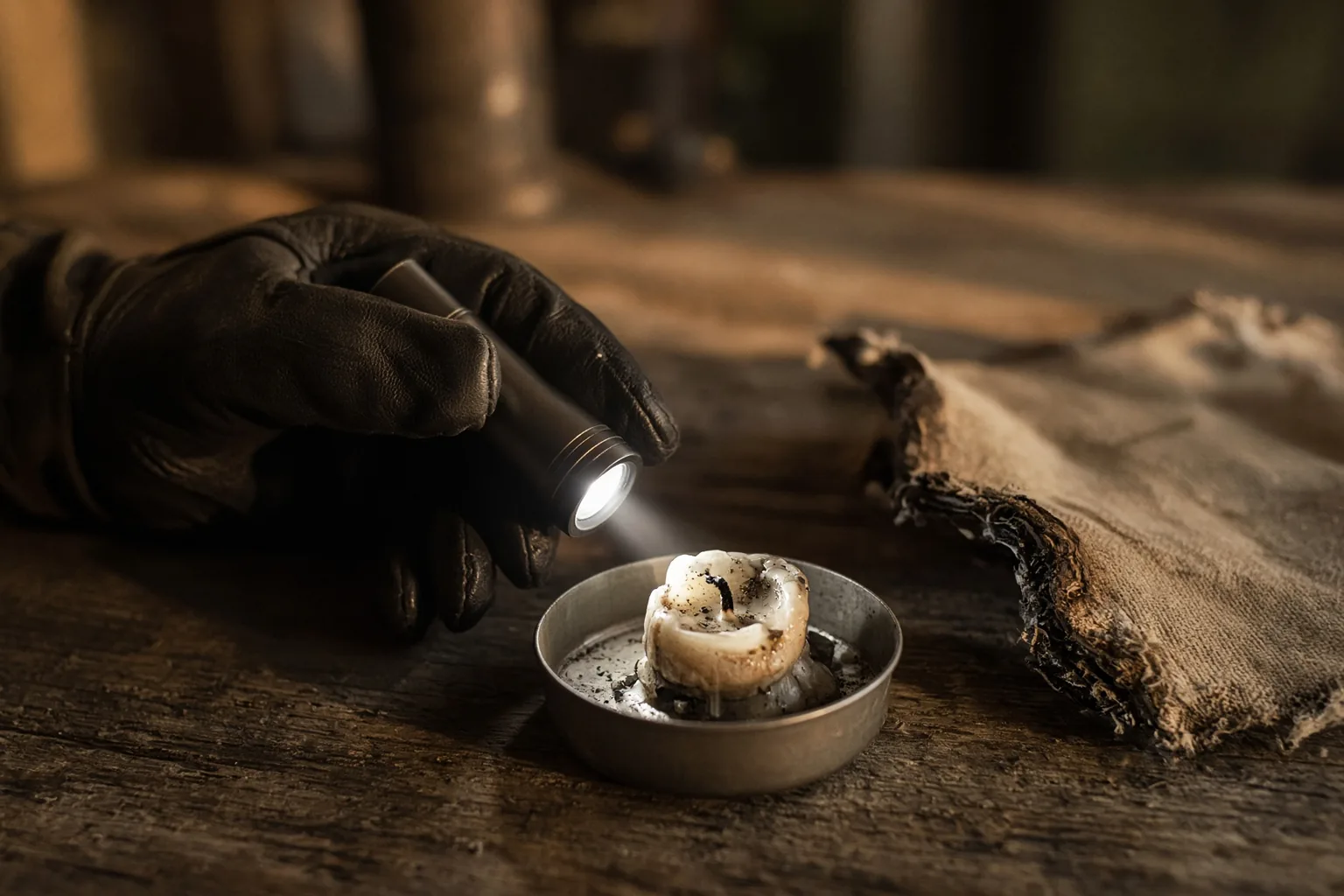
How often do candles start fires, and how do those fires reach court?
The CPSC estimated 12,800 candle-associated fires in 1998, with 170 deaths and 1,200 injuries. They reach court as negligence claims against the person who lit the candle and as product claims against the maker.
The figure comes from the Consumer Product Safety Commission's Preliminary Report on In-Depth Investigations of Incidents Involving Candles, issued in March 2002: "In 1998 there were an estimated 12,800 candle-associated fires that resulted in 170 deaths and 1,200 injuries." The report covers 593 in-depth investigations assigned between January 1998 and September 2001 and summarizes 112 of them in hazard categories that a voluntary product standard could address.
State data show the same pattern on a smaller scale. In a press release on a fire in Somerville, Massachusetts State Fire Marshal Jon Davine reported 481 fires that started with candles over the previous five years, which injured 13 firefighters and 54 civilians and killed three residents. Bedrooms led all rooms as the starting point of residential candle fires. "Most of these fires start when someone leaves a candle unattended," he said.
In court the candle cases split three ways. A negligence claim names the person who lit the candle or left it burning, as in Yount v. Deibert (Kan. 2006). A product claim names the manufacturer or the maker of the jar, as in Platero v. Anchor Hocking (Cal. Ct. App. 2014). A third group names someone whose conduct made candle use foreseeable: in Graham v. Progress Energy (4th Cir. 2010) a couple whose electricity had been disconnected lit candles, forgot to put them out before falling asleep, and sued the utility. The Fourth Circuit reversed summary judgment for the utility, holding that it could not find the harm unforeseeable as a matter of law.
What does a report that blames a candle have to show?
That a lit candle stood at the origin, which material ignited first, how the flame reached it, when the candle was last seen burning, and what data excluded the other ignition sources at the origin.
A candle near the origin is a hypothesis, not a cause. The report has to put the candle at the origin with evidence of where it stood: the holder, wax residue, a scorched shelf or sconce, or a witness who saw it there before the fire. In Graham the candles were on two wall sconces above the living room sofa, and the fire started on the wall above the couch.
The first fuel and the mechanism come next. A candle on a table ignites curtains or paper next to it, a candle that tips over ignites bedding or carpet, a flare-up throws flame several feet, and a glass container that shatters spills burning wax. Each mechanism leaves different traces, and the report names the one it found.
The candle itself often does not survive. In Platero the candle "was never recovered," and the fire department never determined the official cause, although its report said the lit candle was "[m]ost probabl[y]" responsible. A report built on such a record is honest about what is inference and what was observed, and the reviewer marks every statement about the candle that has no physical evidence behind it.
Which candle scenarios does the reviewer test?
The scenarios the CPSC found in its investigations: unattended burning, tipovers, flare-ups, low wax, shattered glass containers, burning holders and reignition after a candle was blown out. Each points to a different responsible party.
The CPSC report counted 30 flare-ups, 12 with gel candles and 18 with wax candles; its appendix lists flame heights up to several feet, and first-time use was cited in a number of gel flare-ups. It found five incidents in which a candle exploded, with low wax named in at least one, and two cases in which a candle burned down and ignited the holder or nearby materials. All the shattered containers it reviewed were glass, and several involved low wax.
Tipovers made up another group: candles fell from holders, shelves, wall hangers or windowsills onto bedding, furniture or carpet. Five happened during power outages, and in those the fire appeared to start after the occupant fell asleep or left. The report found it difficult to discern a hazard pattern in the tipover cases that a product standard could address.
Reignition is the scenario most open to dispute. The CPSC wrote that heat storage in candles blown out after long burns "may have contributed to a fire" in several cases, and it noted that the alternative explanation, that the candle was never fully extinguished, "cannot be totally discounted."
The scenario decides the defendant. Unattended burning and tipovers point to the user. Flare-ups, container failures and burning holders can point to the product. The reviewer checks whether the report chose its scenario from the physical evidence or from the outcome of the fire.
Can a candle claim go forward when the official cause is undetermined?
It can. In Yount v. Deibert the Kansas Supreme Court held that circumstantial evidence of candles left burning created a fact question on causation, although the fire marshal's inspector could not determine the cause.
On November 5, 2000, a fire destroyed Katherine Yount's house in Bourbon County, Kansas. She escaped with injuries; her son Henry and a friend died. Earlier that night three of Henry's friends had lit many candles in the living room, burned matches and small fires, tried to light alcohol or perfume, and set off fireworks outside before leaving. One of them, Probst, thought one candle was still burning when they left. The others said the candles were out.
The fire inspector, David Yates, placed the origin in the first-floor living area. He found no evidence of foul play and no utility, appliance or weather cause, but he could not determine the cause. The district court granted summary judgment because Yount could not prove what caused the fire or which defendant's act caused it, and the Court of Appeals affirmed.
The Kansas Supreme Court reversed on December 8, 2006 (No. 93,726). It held that the circumstantial evidence created a question of fact on causation, and that it is enough when the evidence "affords a basis for a reasonable inference." It also agreed with Yount that "the potential difficulty with apportioning liability does not preclude Yount's claims."
For a reviewer the case sets the comparison. An origin in the room where the candles burned, the exclusion of utility, appliance and weather causes and a witness who believed one candle was still lit made a jury question. A report that blames a candle without that kind of record asks for more inference than Yount allowed.
When is a candle fire report enough to prove a product defect?
Only when someone identifies a defect with evidence. In Platero v. Anchor Hocking the court struck an expert declaration that a cracked glass caused the fire, because the expert examined no candle, no exemplar and no specifications.
Fifteen-year-old twins, Edward and Erick, died in a fire that started in their bedroom early on August 12, 2010. The candle was an eight-inch, glass-enclosed scented candle that their mother had bought about three months earlier. Celebrating Home was named on the label, and Anchor Hocking supplied glass containers for some of its candles.
The plaintiffs' expert, Marcello M. Hirschler, declared that an unspecified defect in the candle or the glass caused the deaths and suggested that the glass cracked because it was too thin or could not withstand the heat. He examined neither the candle nor an exemplar, reviewed no design specifications, ran no tests and cited no safety standard. The trial court struck the declaration and granted summary judgment.
The Court of Appeal affirmed on November 20, 2014 (No. B250947, unpublished). It wrote that "Mr. Hirschler's declaration was not evidence of anything" and that "He simply chose a conclusion and then provided assumptions which would support the conclusion." The plaintiffs "offered no proof that the injury was proximately caused by the product's design."
Origin and cause testimony does not fill that gap. According to a case summary by Expert Witness Profiler, in Motto v. Newell Brands (E.D. Pa., No. 2:24-cv-1338) the court on February 5, 2026 denied the defendants' motion to preclude the plaintiffs' experts Roger Spadt and John Golder, who tied the fire to a Yankee candle that had been burning for an extended period. According to the law firm White and Williams, the candle stood in a glass jar inside a metal holder, and the court granted the defendants summary judgment on all claims because the experts' opinions addressed causation only and did not identify any defect in the product. A review of a defect report therefore separates two questions: did the candle start the fire, and what in the candle was wrong.
Which other ignition sources does the report have to exclude?
Every competent source at the origin: wiring, outlets, extension cords and the devices on them, lamps, smoking materials and heaters. In Platero an extension cord with electrical devices lay near the dresser where the candle had stood.
The fire investigator in Platero found electrical devices on an extension cord near the dresser. The Court of Appeal listed the causes that were never ruled out: an electrical problem, a candle knocked over, and damage to the glass after the sale. With those causes left open, the plaintiffs offered no proof that the design caused the injury.
In Yount the inspector excluded utility, appliance and weather causes before the court accepted the candles as a jury question. The other activity in the house that night, matches, small fires and attempts to light alcohol or perfume, stayed in the record as competing sources that the defendants themselves had created.
The reviewer lists each source at the origin and the data the report used to exclude it. An outlet excluded without a photograph of its interior, or a lamp excluded because it was "off" without a record of the switch position, is marked as an exclusion without examination.
How does a reviewer test the timeline of a candle fire?
By setting the times the candle was lit and last seen against the time the fire was discovered, and checking whether the report explains the gap. In Platero about an hour passed between the last sighting and bedtime.
In Platero the mother saw the lit candle at 10:30 p.m. and again between 11:45 p.m. and midnight. One of her sons promised to put it out. She went to bed at 12:55 a.m. without checking. The fire started in the early morning. A report that blames the candle has to account for those hours: was the candle still burning, did it burn down to low wax, or was it relit.
In Graham, the opinion states, the occupants forgot to put out the candles before falling asleep. In Yount the defendants disagreed about whether any candle was still burning when they left, and the court treated that disagreement as a question for the jury.
The CPSC finding on reignition adds one more check. If a witness says the candle was blown out, the report states whether the candle had been burning for a long time and what excludes a candle that was never fully extinguished.
What does a review of a candle fire report contain?
The evidence that put the candle at the origin, the scenario the report claims, the timeline, the excluded alternatives with their data and, if a defect is alleged, what was examined in the candle, its container or an exemplar.
The review follows the order of the opposing report and ties each point to a page and to the record. Counsel uses it for a rebuttal report, a deposition outline or a motion. The checks usually include these items.
- The position of the candle is supported by the holder, residue, a scorched surface or a witness, and the report says which.
- The first fuel is named, with its distance from the candle recorded before the scene was disturbed.
- The scenario is stated: unattended burning, tipover, flare-up, low wax, container failure or reignition.
- The times the candle was lit and last seen are set against the time of discovery.
- Each other source at the origin is listed with the data that excluded it.
- A defect opinion names the defect and rests on an examination of the candle, the container or an exemplar.
What does IAE do when the opposing report blames a candle?
IAE prepares reviews of the opposing investigator's report for subrogation, product liability, arson defense and coverage disputes in US courts, and expert reports on the client's questions. The signed review is issued within up to 5 business days.
The review lists each hypothesis the opposing investigator considered, checks what data excluded the others and which NFPA 921 edition was applied, and traces every artifact to its examination. In a candle fire case the client sends the opposing report with its exhibits, the fire department report, the scene photographs, the holder, the container fragments or their photographs if they were kept, witness statements about who lit the candle and when, and states whether the scene and the removed artifacts still exist.
The secretariat confirms receipt the same day. Within one business day IAE confirms the format, the cost, the deadline and the specialist from its registry, and the client approves the candidate and the CV before work starts. The signed review is issued within up to 5 business days once the format and cost are confirmed; cases with tight deadlines have a 48-hour rush.
Every specialist is a member of the public IAE registry and passed the council's attestation under the published Criteria Matrix; the Member ID or QR code in the document opens the specialist's record. The specialist confirms in the document that he or she has no interest in the outcome. Materials are not passed to third parties without the client's consent. A review is evidence the court weighs with the other materials; neither IAE nor the reviewer guarantees the outcome, and IAE is not a law firm.
Sources
- U.S. Consumer Product Safety Commission, Preliminary Report on In-Depth Investigations of Incidents Involving Candles (March 2002)
- Massachusetts Department of Fire Services, press release: Somerville fire most likely started with unattended candle
- Yount v. Deibert, No. 93,726 (Kan. Dec. 8, 2006), Kansas Sixteenth Judicial District
- Platero v. Anchor Hocking, No. B250947 (Cal. Ct. App. Nov. 20, 2014) (unpublished)
- Graham v. Progress Energy, Inc., No. 08-1906 (4th Cir. June 25, 2010) (unpublished) (Justia)
- Expert Witness Profiler, Fire Investigation Expert Witness Was Allowed to Opine on the Defective Candle (Motto v. Newell Brands, No. 2:24-cv-1338, E.D. Pa., order of Feb. 5, 2026)
- White and Williams, The Subrogation Strategist (May 13, 2026): Defect Required: Court Dismisses Candle Fire Product Liability Claims for Lack of Proof (Motto v. Newell Brands)
Read also
All articles
Clothes dryer fire: how does a reviewer check a report that blames lint, the owner or the dryer's design?
In the dryer fire litigation described below, the reports ended in one of two sentences: the owner let lint build up, or the dryer was built so that Sergei Voronin
Space heater fire: how does a reviewer check a report that blames the heater?
Portable heaters start about 1,100 residential building fires a year in the United States, and in the court cases below the dispute ran betweenSergei Voronin
Unattended cooking fire: how does a reviewer check a report that blames the stove?
Cooking causes about half of all residential building fires in the United States, and in the kitchen fire cases discussed below the dispute ranSergei VoroninExpert report review
Ready to discuss your case?
Send the materials: the secretariat will confirm the format, cost, deadline and the specialist within one business day.
