
Expert report review
Space heater fire: how does a reviewer check a report that blames the heater?
Portable heaters start about 1,100 residential building fires a year in the United States, and in the court cases below the dispute ran between a defect in the heater and the way it was used. A reviewer checks whether the opposing report explains how the heater ignited a named fuel, what the heater's safety devices did and what data excluded the other ignition sources in the room.
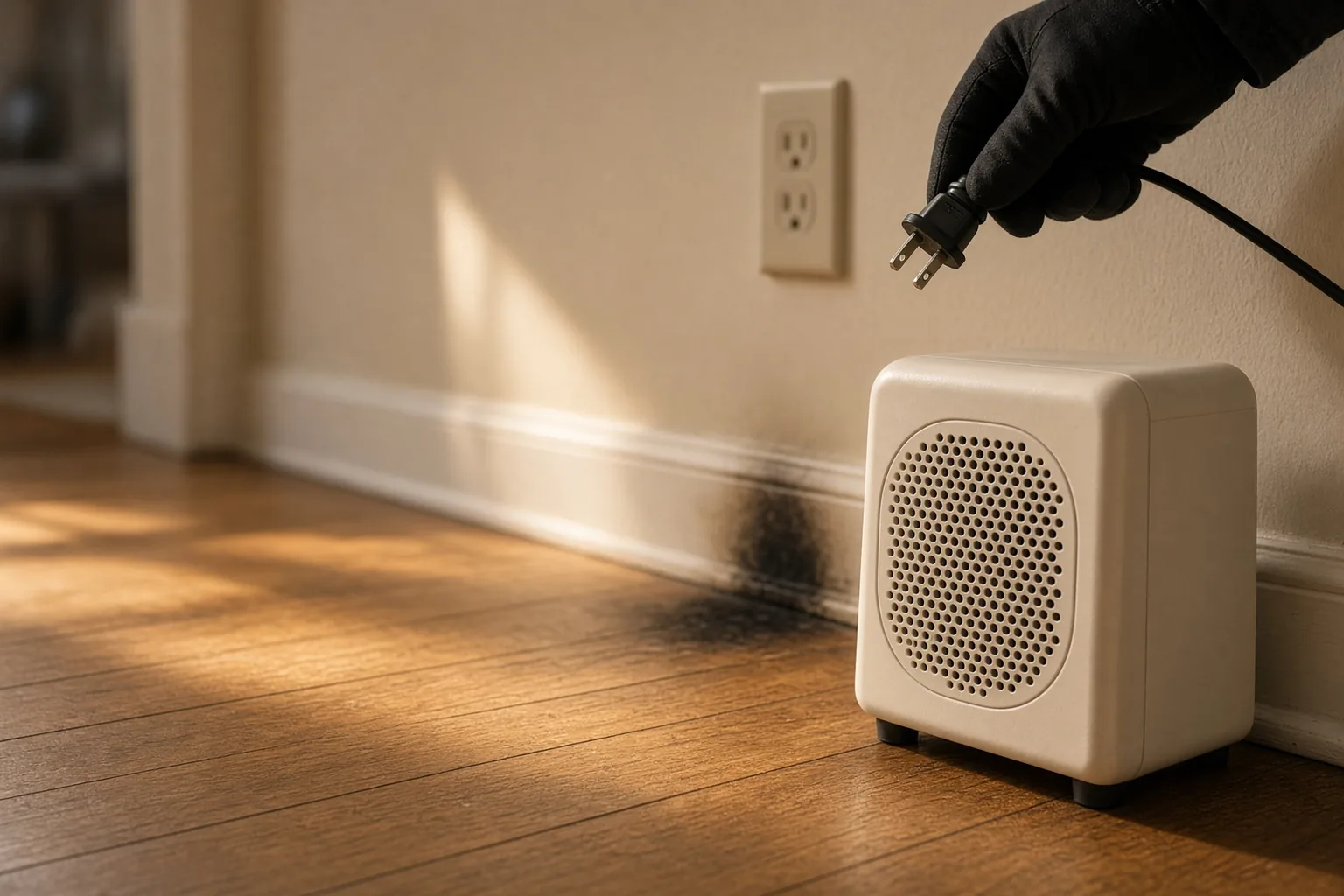
How often do portable heaters start fires, and how do those fires reach court?
The U.S. Fire Administration estimates 1,100 portable heater fires in residential buildings a year for 2017-2019, with 65 deaths and $51 million in losses. Fires with injuries or losses produce subrogation and product claims.
The figures come from the USFA Topical Fire Report Series, Volume 21, Issue 11, published in December 2021. Portable heater fires were 3 percent of residential heating fires but 41 percent of fatal residential heating fires. The fires peaked in January, at about 25 percent, and fell to 5 percent or less a month from April through September.
Where the contributing factor was recorded, "heat source too close to combustibles" accounted for 47.9 percent of the fires, an unspecified electrical failure or malfunction for 12.1 percent and unattended equipment for 10.0 percent. Bedrooms were the leading area of origin at 33.6 percent, and bedding was the leading item first ignited in bedroom fires.
Those three factors point at three different defendants. A heater placed next to a bed points at the occupant. An electrical malfunction points at the manufacturer or seller of the heater. A heater left running in an empty room points at whoever left it. The report of the opposing investigator usually picks one, and the review tests whether the data supports that choice over the others.
What does a report blaming a space heater have to show?
That the origin is at the heater, which fuel ignited first, how heat from the heater reached that fuel, what the heater's controls and safety devices were doing, and what excluded the other ignition sources at the origin.
A heater found in the area of origin is a candidate, not a cause. In Barnett v. ProCom Heating (N.D. Tex. 2018) Judge John McBryde quoted the reasoning the investigators had to meet: "Simply identifying a fuel or an ignition source by itself does not and cannot describe how a fire came to be."
The same court listed what the cause and origin expert could not say: the temperature of the flame, the ignition temperature of the material that burned, the distance between the flame and the material and the time of exposure. Each of those is a link in the ignition sequence. A report that skips them asks the court to infer the sequence from the presence of the heater.
For an electric heater the sequence differs by mechanism. Radiant or convective heat can ignite bedding or upholstery placed against the heater. An internal electrical failure can ignite the heater's own plastic parts. Failure of the cord, the plug or the receptacle starts the fire outside the heater body. The report has to say which mechanism it found and what physical evidence on the heater, the cord and the outlet supports it.
What happened when the expert could not explain the heater's safety devices?
The court excluded both experts. In Barnett the cause expert said the safety features were beyond his scope, and the court held that NFPA 921 requires the cause determination to account for safety devices.
The fire in Barnett broke out on February 11, 2014, and destroyed a hangar and its contents. The owner alleged that a ProCom heater "emitted a candling flame instead of concentrated hot air" because a loose set screw let the fan blades come off the motor shaft. The cause and origin expert met the owner at the scene on February 24, 2014, and took the heater to his laboratory.
On March 18, 2014, the two plaintiff experts removed the top cover and found the fan "not connected to the shaft of the motor, but lying in front of it," with the set screw backed out about .015 inches. The engineer did no testing to show that the screw could loosen in that way. The court called his theory "nothing more than ipse dixit."
On the safety devices the court wrote: "NFPA 921 requires that the cause determination for the fire account for the actions of safety devices." The court referred to the heater's "photoelectric or flame preempting devices." The cause expert testified that the safety features were beyond his scope, and the engineer said they were not an area he ordinarily practiced. Their report stated that the heater "either did not shut off, or shut off too slowly" while also saying they had insufficient information to evaluate those features. The court described the reasoning that a safety device failed because there was a fire as "the kind of circular reasoning" the rules exclude and held that "the analytical gap between the data and the opinion is too great."
Is a theory about the heater model enough to prove a defect?
No. In Ayala v. Enerco Group (5th Cir. 2014) the engineer listed five possible leak points in the heater model but conceded there was no evidence that this heater was defective. Summary judgment for the manufacturers was affirmed.
A portable propane heater exploded in a shed on February 2, 2011, and severely burned Louis Ayala III, who died in August 2011. His widow sued the manufacturers under the Louisiana Products Liability Act. The engineer concluded that the probable cause was a propane leak and identified five points in the heater where a leak could occur.
He did no structural analysis or destructive testing, and he could not exclude other leak sources, including a faulty propane cylinder and a failure by Mr. Ayala to properly secure the valve on the heater. The Fifth Circuit found the testimony "admittedly based on conjecture about the Mr. Heater product generally" and held that a plaintiff "must offer evidence of a defect based on more than mere conjecture." Because other reasonable causes remained, the court also refused to apply res ipsa loquitur.
The opinion is unpublished. Its facts set out the check a reviewer runs on any heater defect opinion: whether the expert examined this heater, found a physical defect in it and tied that defect to the ignition, or described ways in which a heater of that model could fail.
When does a dispute between heater experts go to the jury?
When both sides' experts used accepted methods and disagree on the facts. In Garris v. Pelonis Appliances (E.D. La. 2014) the court denied every motion to exclude and left the heater-or-cigarette question to the jury.
The fire began early on December 16, 2009, in the bedroom of an apartment, where a space heater stood on the floor next to the bed. The plaintiffs' certified fire investigator placed the origin inside the heater, with dust or lint as the probable first fuel, and their electrical engineer found the heater defective. The defense engineer found the remains of a cigarette lighter, said he could not exclude a cigarette, and testified that the heater was extremely unlikely to get hot enough to ignite the bedding.
Judge Jay C. Zainey held that "questions relating to the bases and sources of an expert's opinion affect the weight to be assigned that opinion" and that the deficiencies could be tested by cross-examination. He denied summary judgment because whether a defect existed was "an issue of fact to be decided by the jury."
Garris was decided under the Rule 702 standard before the 2023 amendment, which now requires the proponent to show the court that it is more likely than not that the opinion rests on sufficient facts or data and applies reliable methods to the facts of the case. A review prepared today addresses each of the four elements of the amended rule.
How does a reviewer check the examination of the heater itself?
By tracing every statement about the heater's position, switches, thermostat, cord and plug to a photograph, a scene note or a laboratory record, and checking whether the safety devices were examined and their condition explained.
The reviewer starts with the position of the heater before the scene was disturbed. Distance to the bed, the sofa or the curtains decides whether radiant heat could reach them, and that distance must come from photographs or measurements taken before the heater was moved. A distance reconstructed from memory weeks later carries less weight than one recorded at the scene.
The controls come next: the position of the power switch, the thermostat setting, the heat setting and the timer if the heater had one. The reviewer checks whether the investigator recorded them before handling the heater and whether fire damage could have moved them. The same applies to the tip-over and overheat devices, if the model had them. Barnett turned on the expert's failure to address what those devices did.
The cord, the plug and the receptacle are examined for melting, arcing and heat damage, and an extension cord or power strip between the heater and the wall is examined the same way. If the heater body was opened, the reviewer asks whether the examination was a joint one with notice to the manufacturer and the other interested parties, and whether the steps were photographed. Destructive examination without notice gives the other side a spoliation argument.
Which other ignition sources does the report have to exclude?
Every competent source at the origin: smoking materials, lamps and other appliances, the wiring and outlets serving the room, candles, and any device on the same circuit as the heater. The report states what data excluded each one.
Garris shows how a single item can reopen the cause: the defense engineer found the remains of a lighter at the origin and the case went to trial on the heater-or-cigarette question. Smoking materials and candles leave little residue, so the report should state what was searched for and where.
In Hickerson v. Pride Mobility Products (8th Cir. 2006) the dispute ran the other way. The fire that killed the plaintiff's wife started in the living room, where the remains of a power wheelchair lay at the origin. A space heater stood near the chair, but it was unplugged, and the plaintiff's investigator found that the chair was the only powered device at the origin. The Eighth Circuit held that the investigator could testify that he "inferred through process of elimination" that the chair caused the fire.
Elimination of that kind depends on what was actually checked. The reviewer lists each appliance and circuit at the origin, records what the investigator found about it, and marks every source the report dismissed without an examination. A heater excluded because it was unplugged needs a photograph of the plug and the receptacle; a heater blamed because it was plugged in needs the same.
What does a review of a space heater fire report contain?
The data behind the origin, the ignition sequence the report claims, the examination of the heater and its safety devices, the excluded alternatives with their data, the NFPA 921 edition applied and a list of unsupported statements.
The review follows the order of the opposing report and ties each point to a page and to a section of NFPA 921, Rule 26(a)(2)(B) or Rule 702. Counsel uses it for the rebuttal report, the deposition outline or a motion to exclude. The checks usually include the following items.
- The origin is identified from fire patterns, arc mapping or witness data, and the report says which.
- The first fuel is named, with its distance from the heater recorded before the heater was moved.
- The heat transfer mechanism is stated: radiant or convective heat, internal electrical failure, or failure of the cord, plug or receptacle.
- Switch, thermostat and timer positions are documented with a photograph or a scene note.
- The tip-over and overheat devices are examined and their condition is explained.
- The heater, cord and outlet were examined jointly or with notice to the manufacturer.
- Each alternative source at the origin is listed with the data that excluded it.
- The report discloses the facts and data considered under Rule 26(a)(2)(B)(ii).
What does IAE do when the opposing report blames a space heater?
IAE prepares reviews of the opposing investigator's report for subrogation, product liability, arson defense and coverage disputes in US courts, and expert reports on the client's questions. Up to 5 business days.
The review lists each hypothesis the opposing investigator considered, checks what data excluded the others and which NFPA 921 edition was applied, and traces every artifact to its examination. In a heater fire case the client sends the opposing report with its exhibits, the fire department report, the scene photographs, the heater, cord and outlet or their photographs if they were retained, the heater's model and manual if known, statements about who used the room, and states whether the scene and the removed artifacts still exist.
The secretariat confirms receipt the same day. Within one business day IAE confirms the format, the cost, the deadline and the specialist from its registry, and the client approves the candidate and the CV before work starts. The signed review is issued within up to 5 business days once the format and cost are confirmed; cases with tight deadlines have a 48-hour rush.
Every specialist is a member of the public IAE registry and passed the council's attestation under the published Criteria Matrix; the Member ID or QR code in the document opens the specialist's record. The specialist confirms in the document that he or she has no interest in the outcome. Materials are not passed to third parties without the client's consent. A review is evidence the court weighs with the other materials; neither IAE nor the reviewer guarantees the outcome, and IAE is not a law firm.
Sources
- U.S. Fire Administration, Portable Heater Fires in Residential Buildings (2017-2019), Topical Fire Report Series, Vol. 21, Issue 11 (December 2021)
- Barnett v. ProCom Heating, Inc., No. 4:17-CV-380-A (N.D. Tex. Apr. 2, 2018), Document 28 (Justia)
- Ayala v. Enerco Group, Inc., Nos. 13-30532 and 13-31246 (5th Cir. May 28, 2014) (unpublished)
- Garris v. Pelonis Appliances, Inc., No. 2:10-cv-01569 (E.D. La. Apr. 2, 2014), Document 212 (Justia)
- Hickerson v. Pride Mobility Products Corp., No. 06-1647 (8th Cir. Dec. 13, 2006) (FindLaw)
- Federal Rules of Evidence, Rule 702, Testimony by Expert Witnesses (LII, Cornell Law School)
- Federal Rules of Civil Procedure, Rule 26 (LII, Cornell Law School)
Read also
All articles
Clothes dryer fire: how does a reviewer check a report that blames lint, the owner or the dryer's design?
In the dryer fire litigation described below, the reports ended in one of two sentences: the owner let lint build up, or the dryer was built so that Sergei Voronin
Unattended cooking fire: how does a reviewer check a report that blames the stove?
Cooking causes about half of all residential building fires in the United States, and in the kitchen fire cases discussed below the dispute ranSergei Voronin
Careless smoking fire: how does a reviewer check a report that blames a cigarette?
A cigarette that starts a fire almost never survives it, so a report that blames careless smoking rests on circumstances: who smoked, where, whenSergei VoroninExpert report review
Ready to discuss your case?
Send the materials: the secretariat will confirm the format, cost, deadline and the specialist within one business day.
