
Expert report review
Fire started by a child playing with a lighter: how does a reviewer check the report?
When a fire report says a child was playing with a lighter or matches, the claim usually turns against the parents or the person supervising the child. Courts in the cases below asked two questions: did admissible evidence show that the child started the fire, and did the adults know of a dangerous habit. In a 2015 New York case a fire marshal's cause code of child play did not survive the first question.
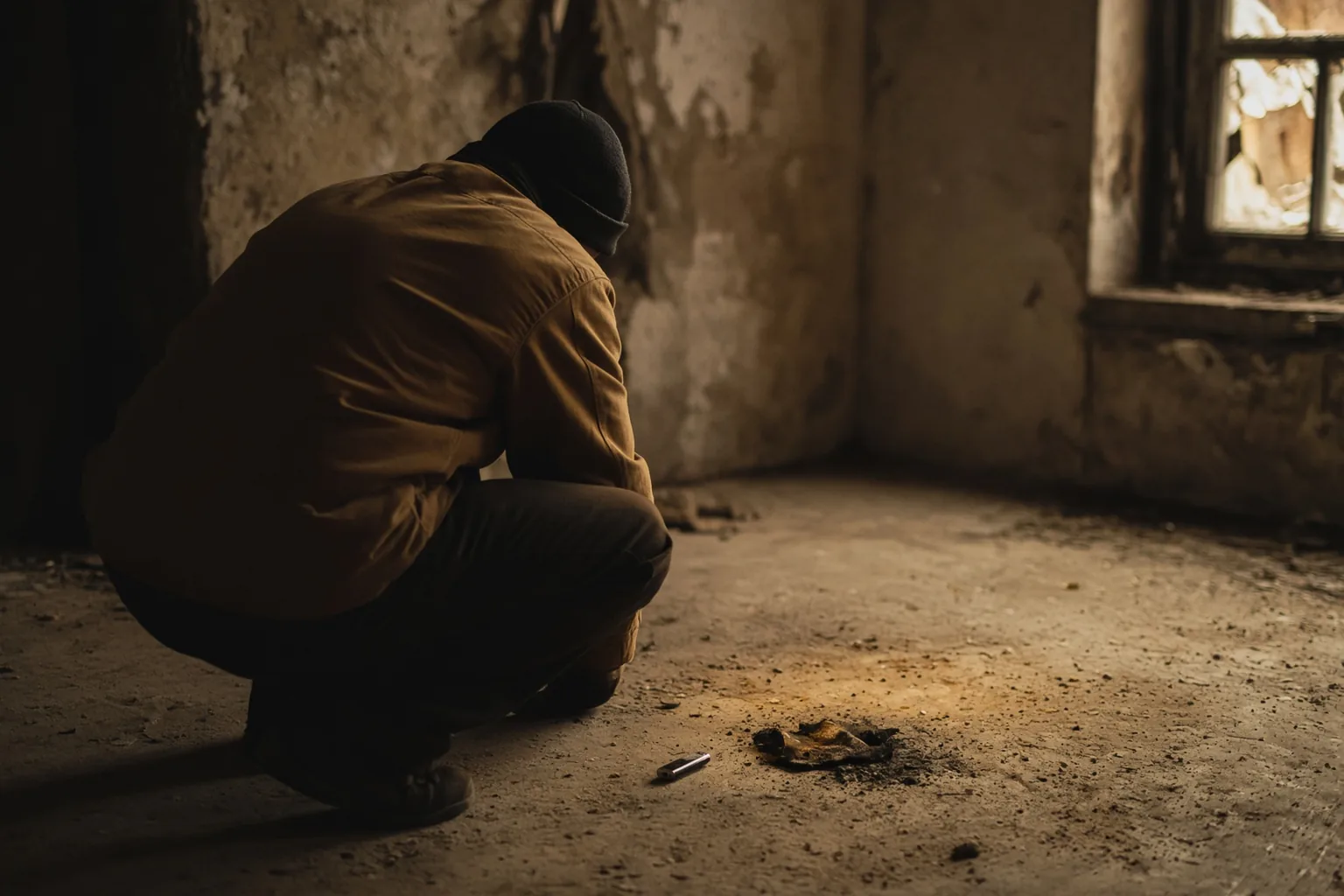
How often do children start fires with lighters and matches?
The Massachusetts Department of Fire Services says that about half of all youth-set fires are started with matches and lighters, and that children as young as two have started fires with lighters.
The Department of Fire Services gives that figure on its page about preventing children from playing with lighters and matches. It advises parents to use child-resistant lighters, not to disable the feature, and not to leave children under 12 alone or in charge of younger children.
Federal law addresses the lighter itself. Under 16 CFR 1210.3 a covered cigarette lighter must be "resistant to successful operation by at least 85 percent of the child-test panel." The mechanism must reset itself after each operation, must not impair safe operation of the lighter used in a normal and convenient manner, must work for the expected life of the lighter and must not be easily overridden or deactivated.
The panel is defined in 16 CFR 1210.4: 30 children, plus or minus 2, aged 42 through 44 months, 40 aged 45 through 48 months and 30 aged 49 through 51 months. Each child gets five minutes to try to operate the lighter, then an adult tester shows how it works, then the child gets another five minutes. A CPSC compliance summary from March 2005 explains that the rule covers disposable lighters, defined as lighters that cannot be refilled or as gas lighters with a Customs Value or factory price under $2.25, and novelty lighters regardless of price.
What does a report that blames child fire play have to show?
An origin where the child was, an ignition source the child had, a first fuel within reach and a time when the child was there, plus the data that excluded electrical, smoking and appliance causes at the same origin.
A child at home at the time of a fire is a fact, not a cause. The report has to connect the child to the origin with something more: a lighter or burnt matches found at the origin, a statement by the child or a witness about what the child did, or a burn pattern that fits the child's account.
The cases below show what that connection looks like when it holds. In Stewart v. Harvard (Ga. Ct. App. 1999) two boys, ten and eight, found a matchbook in the kitchen on January 2, 1996, struck matches to see who could hold one longest and carried them into the living room, where a natural Christmas tree stood. The surviving boy said that a lit match fell into the tree: "it went into the tree but we didn't know that; we just thought it ripped." The tree burned quickly, and the eight-year-old died of smoke inhalation.
In Midwestern Indemnity Co. v. Wiser (Ohio Ct. App. 2001) an eight-year-old found a lighter in a bedroom drawer on April 30, 1995 and played with it in his grandfather's garage, where hay was stored, and the hay caught fire. In both cases the source, the fuel and the child's presence at the origin were established. The disputes were about the adults.
Is a fire marshal's cause code of child play enough?
Not on its own. In Insurance Co. of Greater New York v. Rasmussen (N.Y. Sup. Ct. 2015) the court found that the marshal's child-play finding rested on hearsay, and that the physical evidence pointed to a television.
A fire broke out on January 6, 2012 in an apartment at 75-24 Bell Boulevard in Oakland Gardens, New York. The parents had left their nine-year-old daughter unsupervised in the apartment and were gone for about 40 minutes. The New York City Fire Marshal's report listed the cause as "Child Playing w/Matches/Lighter." Matches and lighters were found in the kitchen.
The building's insurer sued the parents as subrogee for $105,943.69 for negligent supervision. Justice Robert D. Kalish found that the marshal's conclusion rested on hearsay, not on an independent examination of physical evidence. The marshal's own observations, heavy charring of the television cabinet and a heavily damaged television with no electrical cord remaining, supported the parents' account that a malfunctioning television started the fire.
The court wrote that "The mere fact that there were matches and lighters in the kitchen of the apartment is insufficient" and that the claim that the child caused the fire "is pure speculation." At oral argument the insurer offered a new theory, that the child had pushed objects into the television, and the court disregarded it because no expert report supported it. Summary judgment went to the parents on July 22, 2015. The court gave a second, independent ground: the building's owner had waived its right to recover against the defendants under paragraph 4(d) of the proprietary lease.
For a reviewer the case sets the first check. The source of every statement about the child is traced: who said it, to whom and when. A cause code copied from a statement by a neighbor or a firefighter, with no physical evidence at the origin, is marked as hearsay, and the physical findings at the origin are read again for the cause they actually support.
How does a reviewer test what the child said?
By comparing each version of the child's account with the burn patterns, the position of the lighter or matches and the timeline, and by recording who questioned the child, when and with whom present.
A child's account can be incomplete. In Wiser, when his mother asked what happened, the boy said he did not know and only knew that smoke was coming from the garage. Earlier, when he was scolded for playing with matches, he had said he did not know why he played with "those things." His mother testified that it was "the first time that anything that he played with actually caught fire."
In Stewart the surviving boy's account placed the ignition in the Christmas tree and described a match that fell without the boys noticing. The other boy had also sprayed hair spray about four or five feet from the tree. A report built on such an account checks whether the burn patterns put the origin in the tree and not near the hair spray, and says why.
The reviewer lists every recorded statement of the child with its date and the person who took it. A statement taken weeks after the fire is marked as such and compared with anything the child said the same night. Where the report quotes a child but the scene data point elsewhere, as the television did in Rasmussen, the review sets the two side by side.
When are parents liable for a fire their child started?
Usually only when they knew of a dangerous habit and could control it, or gave the child the means. In Wiser and in Sanborn v. Stevens courts dismissed claims against parents for lack of such proof.
Ohio law in Wiser recognized three situations of parental liability, and the court found none of them. The father did not supply the lighter, which the boy found himself. There was no evidence that he consented to, directed or sanctioned the earlier misconduct. And the fire was not a foreseeable consequence of any parental negligence: the court wrote that "it cannot be said that the fire at appellant Rohrbough's house was a probable and foreseeable consequence." Summary judgment for the boy and his father was affirmed on June 25, 2001.
In Sanborn v. Stevens (Me. Super. Ct. Oct. 22, 2010) a fire on March 17, 2009 destroyed a four-unit apartment building and started in the defendants' apartment. The court found evidence that the fire "may have been caused by the carelessness" of a seven-year-old, but "There is no evidence to suggest that Ms. Nadeau's child had a propensity to play with matches," and no evidence that his mother knew or should have known of the need to control him. Judgment went to the mother on the negligence count under Restatement (Second) of Torts § 316.
In Rasmussen the court applied New York's rule from Holodook that parents generally are not liable for a child's torts, and its exception for a parent's control of dangerous instruments. The mother testified about the child's behavioral issues, and the court found nothing in that deposition that connected the child's behavior with the fire.
The Georgia court in Stewart reversed the trial court and directed summary judgment for both adults in that house. It also held that attractive nuisance did not apply because "[F]ire is not such a condition because even young children have a natural fear of it."
Can the lighter's maker be a defendant?
A claim against the maker turns on the lighter itself: whether it was covered by 16 CFR part 1210, whether its child-resistant mechanism worked and whether it had been disabled. Without the lighter, that claim has nothing to examine.
The federal standard sets a performance test, not a design. A lighter passes if at least 85 percent of the panel of children aged 42 through 51 months cannot operate it, and its mechanism resets after each use and is not easily overridden. A report that blames a lighter's design has to say which lighter it was, whether it fell under the rule as a disposable or novelty lighter and what examination of that lighter or an exemplar supports the claim.
The Massachusetts Department of Fire Services warns that disabling the child-resistant feature "makes the lighter a fire risk." A recovered lighter is therefore examined for a removed or jammed mechanism before any opinion about its design is offered.
In Stewart the opinion mentions a lighter that Mr. Harvard had noticed on a kitchen counter during earlier visits, but the fire was started with matches from a matchbook. The source actually used at the origin, not the one found elsewhere in the house, is the one the report has to identify.
Which other ignition sources does the report have to exclude?
Every competent source at the origin: appliances and their cords, wiring and outlets, heaters, candles and smoking materials. Rasmussen turned on a television at the origin that the child-play finding had not excluded.
A child at home does not exclude the other causes at the origin. In Rasmussen the charring of the television cabinet and the missing cord were the marshal's own findings, and they supported an electrical cause the report never ruled out.
The fuels at the origin matter as much as the sources. In Stewart a natural Christmas tree and a can of hair spray were within a few feet of each other, and in Wiser stored hay was the first fuel. The report names the first fuel and checks whether the child's ignition source could ignite it in the time the child was there.
The reviewer makes the usual table: each source at the origin, what the investigator examined, what excluded it. An outlet, a heater or a television dismissed because a child was present, without examination, goes into the review as an exclusion without data.
What does a review of a child fire play report contain?
The evidence that puts the child and the ignition source at the origin, every statement of the child with its source and date, the excluded alternatives with their data and the facts on supervision and prior fire play.
The review follows the order of the opposing report and ties each point to a page and to the record, so that counsel can use it for a rebuttal report, a deposition outline or a motion. The checks usually include these items.
- The origin is identified from burn patterns, and the report says which.
- The ignition source is identified at the origin itself, and a lighter found elsewhere in the house is listed separately.
- Each statement of the child is listed with the date, the questioner and the persons present.
- The cause code in the fire department report is traced to its source.
- Each other source at the origin is listed with the data that excluded it.
- A recovered lighter is examined for its type under 16 CFR part 1210 and for a disabled mechanism.
What does IAE do when the opposing report blames a child playing with fire?
IAE prepares reviews of the opposing investigator's report for subrogation, product liability, arson defense and coverage disputes in US courts, and expert reports on the client's questions. The signed review is issued within up to 5 business days.
The review lists each hypothesis the opposing investigator considered, checks what data excluded the others and which NFPA 921 edition was applied, and traces every artifact to its examination. In a child fire play case the client sends the opposing report with its exhibits, the fire department report, the scene photographs, the recorded statements of the child and the witnesses, the lighter or matches if they were kept, and states whether the scene and the removed artifacts still exist.
The secretariat confirms receipt the same day. Within one business day IAE confirms the format, the cost, the deadline and the specialist from its registry, and the client approves the candidate and the CV before work starts. The signed review is issued within up to 5 business days once the format and cost are confirmed; cases with tight deadlines have a 48-hour rush.
Every specialist is a member of the public IAE registry and passed the council's attestation under the published Criteria Matrix; the Member ID or QR code in the document opens the specialist's record. The specialist confirms in the document that he or she has no interest in the outcome. Materials are not passed to third parties without the client's consent. A review is evidence the court weighs with the other materials; neither IAE nor the reviewer guarantees the outcome, and IAE is not a law firm.
Sources
- Insurance Co. of Greater New York v. Rasmussen, 2015 NY Slip Op 31381(U) (Sup. Ct. N.Y. County July 22, 2015), New York Official Reports
- Stewart v. Harvard, 239 Ga. App. 388 (Ga. Ct. App. July 14, 1999) (Justia)
- Midwestern Indemnity Co. v. Wiser, 144 Ohio App. 3d 354 (Ohio Ct. App. June 25, 2001)
- Sanborn v. Stevens, No. CV-09-192 (Me. Super. Ct. Oct. 22, 2010) (Justia)
- 16 CFR 1210.3, Requirements for cigarette lighters (LII, Cornell Law School)
- 16 CFR 1210.4, Test protocol (LII, Cornell Law School)
- CPSC Office of Compliance, Requirements for Cigarette Lighters, 16 C.F.R. Part 1210 (March 2005)
- Massachusetts Department of Fire Services, Prevent children from playing with lighters and matches
Read also
All articles
Candle fire: how does a reviewer check a report that blames a candle?
A candle leaves little behind after a fire. In the cases below, the reports that blamed one rested on witnesses who saw it burning and an origin near Sergei Voronin
Clothes dryer fire: how does a reviewer check a report that blames lint, the owner or the dryer's design?
In the dryer fire litigation described below, the reports ended in one of two sentences: the owner let lint build up, or the dryer was built so thatSergei Voronin
Space heater fire: how does a reviewer check a report that blames the heater?
Portable heaters start about 1,100 residential building fires a year in the United States, and in the court cases below the dispute ran betweenSergei VoroninExpert report review
Ready to discuss your case?
Send the materials: the secretariat will confirm the format, cost, deadline and the specialist within one business day.
