
Examinations
Home inspector or structural engineer: who should look at a defect, and whose report holds up in a dispute?
A home inspector gives a written opinion on the condition of a home after a limited visual examination of its readily accessible systems; that is how section 468.8311 of the Florida Statutes defines home inspection services. A structural engineer investigates and evaluates the structure itself, which Florida's engineering statute treats as engineering. When a dispute turns on why a wall cracked or whether a floor is safe, the engineer's report addresses it.
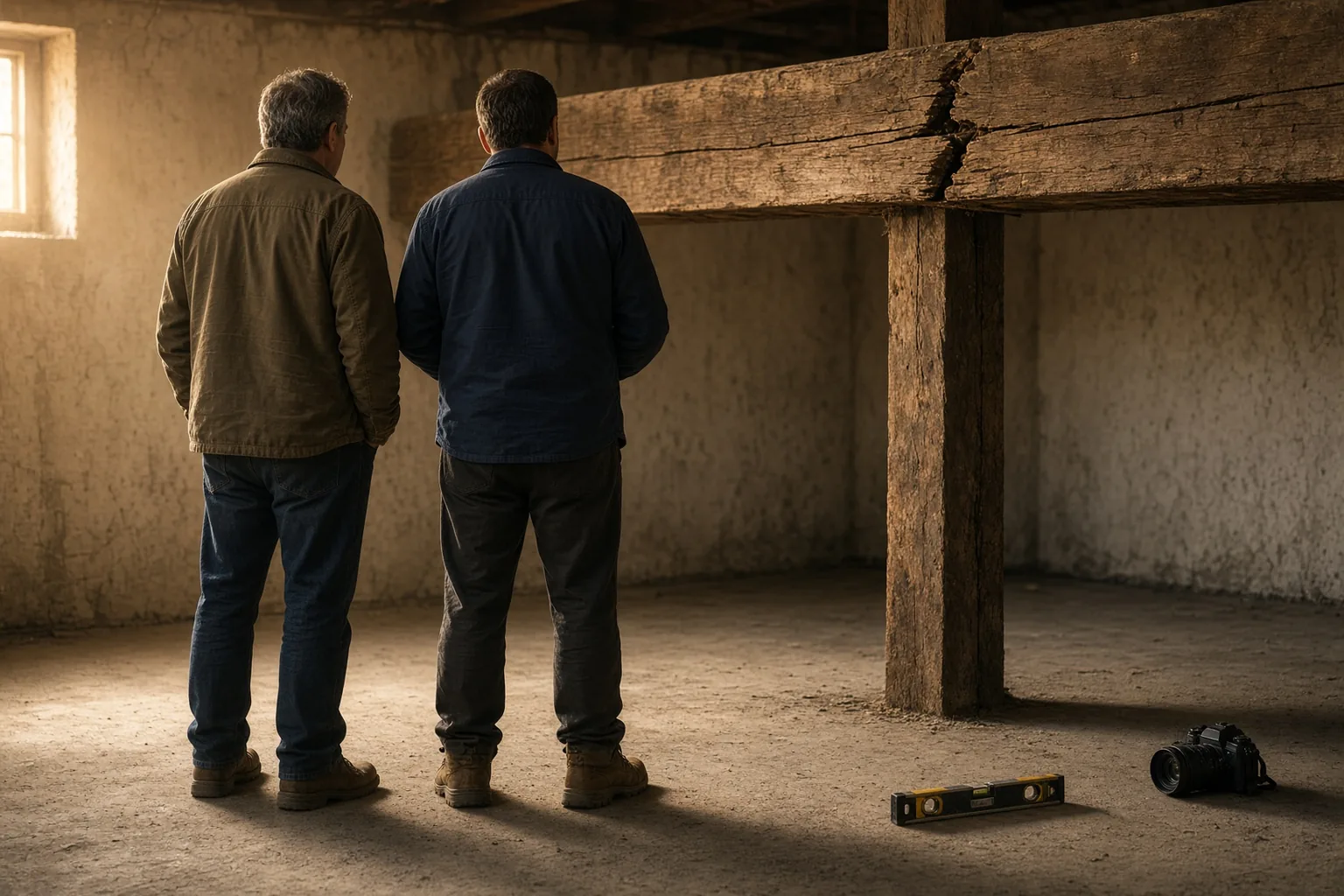
What is the difference between a home inspector and a structural engineer?
The home inspector surveys the whole home visually and reports its condition. The structural engineer investigates a specific structural question, such as the cause of cracking or the capacity of a beam, using engineering analysis.
Both visit the same house, often for the same reason: something looks wrong. The difference is in what each one is hired to answer. A home inspection covers many systems at once and stops at what can be seen. A structural engineer's investigation covers fewer elements and goes into cause, load and repair.
Florida writes that difference into two statutes. Part XV of chapter 468 licenses home inspectors and defines the service they offer. Chapter 471 governs engineering and defines engineering work. A dispute over a defect often needs to know which of the two documents is on the table, because they answer different questions.
What does a Florida home inspection cover?
A limited visual examination of readily accessible installed systems and components: structure, electrical, HVAC, roof covering, plumbing, interior and exterior components and site conditions that affect the structure, leading to a written opinion of condition.
Section 468.8311(4) defines home inspection services as "a limited visual examination of the following readily accessible installed systems and components of a home": the structure, electrical system, HVAC system, roof covering, plumbing system, interior components, exterior components, and site conditions that affect the structure. The examination is performed "for the purposes of providing a written professional opinion" of the condition of the home.
Three words in that definition set the limits: limited, visual and readily accessible. The inspector reports what can be seen without opening walls, lifting finished floors or calculating loads. A crack in drywall, a stain on a ceiling or a door that sticks goes into the report as an observation, often with a recommendation that a specialist evaluate it.
Section 468.8311(3) defines a home inspector as any person who provides or offers to provide home inspection services for a fee or other compensation. Part XV also contains sections titled Exemptions (section 468.831), Prohibitions; penalties (section 468.8319), Insurance (section 468.8322) and Home inspection report (section 468.8323).
Does a home inspection cover condominium common areas?
No. Section 468.8311(2) defines a home to include condominium and cooperative units, and states that the term does not include the common areas of condominiums or cooperatives.
The definition of home in section 468.8311(2) covers any residential real property, or manufactured or modular home, that is a single-family dwelling, and it reaches duplexes, triplexes, quadruplexes, condominium units and cooperative units. It adds: "The term does not include the common areas of condominiums or cooperatives."
Where the declaration makes the slabs, columns, balconies, exterior walls and roof common elements, a home inspection of a unit stops at the unit's interior and its installed systems. Questions about the structure of the building go to the association and to the engineers it retains.
For a buyer or owner in a dispute over a unit, that line decides who can speak to which defect. Water stains inside the unit can be documented by the inspector. Whether the water comes through a failed slab joint or a balcony belongs to an investigation of the common elements.
What does Florida law treat as engineering?
Section 471.005(7) defines engineering as service or creative work requiring engineering education, training and experience, including consultation, investigation, evaluation, planning and design of engineering works and systems, and the inspection of construction.
Section 471.005(7) of the Florida Statutes defines "engineering" as "any service or creative work, the adequate performance of which requires engineering education, training, and experience" in applying the mathematical, physical and engineering sciences. The listed services include "consultation, investigation, evaluation, planning, and design of engineering works and systems," "engineering surveys, and the inspection of construction."
That list describes what a structural investigation is: an evaluation of how the structure carries load, why it moved or cracked, and what repair design would restore it. The home inspection definition, by contrast, describes a visual survey that ends with an opinion on condition.
The two definitions overlap on one word, inspection. A home inspector inspects the condition of a home's accessible components. The engineering definition covers the inspection of construction as part of engineering work, which ties it to the engineer's analysis of the structure.
When does a defect need a structural engineer rather than a home inspector?
When the question is cause, safety or repair design: cracks that grow or run diagonally through masonry, floors that slope or sag, doors that bind after settlement, cracked slabs, beam deflection, or damage after a storm or nearby construction.
A home inspection report can end a structural observation with a referral to a specialist, because the definition of the service stops at a visual opinion. The engineer takes over at that point. Signs that call for an engineer include cracks that widen over time, diagonal cracks at window and door corners, floors out of level, separated trim and binding doors, cracked slabs and beams that visibly deflect.
The engineer's work answers three questions the inspection does not. What caused the movement: soil, overload, water, a design or construction error. Is the structure safe to use as it is. What repair, designed and specified, will correct it. For a dispute, a fourth question follows: how much the repair costs, which the engineer can price or hand to a cost estimator.
The order matters for evidence. Photographs and measurements taken at the first visit, with dates, show the condition before anyone repairs it. If the inspector's report already documents a crack, the engineer can measure the same crack later and state whether it has grown.
How do the two reports differ on paper?
The home inspection report lists observations across the home with recommendations. The engineer's report states the investigation, measurements or tests, the analysis of cause, an opinion on safety and a repair scope, signed by the engineer.
A home inspection report is organized by system: structure, roof covering, plumbing, electrical and so on. Each item is an observation of condition, sometimes with photos and a note to consult a specialist. It does not compute loads or test materials, because the service is defined as visual.
A structural engineer's report is organized around the question. It describes what was examined and measured, which tests were run, which documents were reviewed (plans, permits, prior reports), and how the engineer reached each conclusion. In a construction defect case the expert documents cracks, deflection, settlement and failed finishes, then compares the work with the plans, the specifications and the code edition in force at permit.
Both reports can be accurate. They are written for different uses: one for a purchase decision or a warranty list, the other for a cause and repair opinion that the other side will test.
Whose report holds up in court?
The one whose author is qualified for each opinion and whose method fits the question. Rule 702 requires qualification by knowledge, skill, experience, training or education, sufficient data and a reliable method for each opinion.
Rule 702 of the Federal Rules of Evidence lets a witness who is qualified as an expert by knowledge, skill, experience, training, or education testify in the form of an opinion if the proponent shows the court that it is more likely than not that the opinion will help the trier of fact, rests on sufficient facts or data, is the product of reliable principles and methods, and applies them reliably to the facts of the case. The rule was amended on December 1, 2023.
The 2023 committee note adds that each expert opinion "must stay within the bounds of what can be concluded from a reliable application" of the expert's basis and methodology. A home inspector can describe what was visible on the day of the inspection. An opinion on why a foundation moved, drawn from a visual walk-through, goes beyond what a limited visual examination supports, and the other side can challenge it on that ground.
A retained expert's report in federal court must meet Rule 26(a)(2)(B): all opinions with their basis and reasons, the facts or data considered, exhibits, qualifications with publications from the previous 10 years, prior testimony in the previous 4 years, and compensation. The 2000 committee note to Rule 702 lists as a factor whether the expert adequately accounted for obvious alternative explanations, which for a crack means soil, moisture, temperature and later alterations.
Should an owner use both, and in what order?
Often yes. The home inspection gives the overview and the dated record; the engineer answers the structural questions the inspection raises. In a dispute the engineer's report carries the cause and repair opinions.
For a purchase or a new-home warranty list, the home inspection is the broad survey. It finds the issues across roof, plumbing, electrical and finishes and records them with dates, which matters for notice deadlines under a warranty or a contract.
When the inspection flags the structure, the engineer goes deeper on those items. In litigation the engineer's report is the one that addresses cause, safety and repair, and the inspection report becomes one of the documents the engineer reviews and cites.
In a dispute the other side can ask whether anyone opened the work, measured it or tested it. A report that states what was opened, measured and tested, and what was only seen, answers that question before it is asked.
What does IAE do when a defect needs an engineer's opinion?
IAE prepares construction defect expert reports on the client's questions and reviews of the opposing expert's report for US courts. The signed document is issued in up to 5 business days after the format and cost are confirmed.
The IAE construction defects page covers where the water came in, whether the work meets the contract and the code, whether the structure is sound and what the repair will cost. The expert documents cracks, deflection, settlement and failed finishes, compares the work with the plans, the specifications and the code edition in force at permit, and prices the repair line by line, with defect repair kept apart from upgrades.
The client sends the home inspection report, photographs with dates, plans and permits if available, prior engineering reports and the correspondence with the builder or seller, and states the questions and the court. The secretariat confirms receipt the same day. Within one business day IAE confirms the format, the cost, the deadline and the specialist from its registry, and the client approves the candidate and the CV before work starts. Cases with tight deadlines have a 48-hour rush.
Every specialist is a member of the public IAE registry and can be verified by Member ID or QR code. The specialist confirms in the document that he or she has no interest in the outcome of the case. An expert report is evidence that the court weighs with the other materials; neither IAE nor the expert guarantees the outcome. IAE is not a law firm and does not advise on case strategy.
Sources
- Florida Statutes 2025, section 468.8311, Definitions (home inspection services), Florida Senate
- Florida Statutes 2017, chapter 468, part XV, Home Inspectors, list of sections (Florida Senate)
- Florida Statutes 2026, section 471.005, Definitions (engineering), Florida Senate
- Federal Rules of Evidence, Rule 702, with committee notes (uscode.house.gov)
- Federal Rules of Civil Procedure, Rule 26 (LII, Cornell Law School)
Read also
All articles

A neighbor's grading or paving sends water onto my property: who is responsible, and how does an expert prove the drainage change?
Whether a neighbor answers for water that runs onto your land depends on the surface water rule of the state. California asks whether each owner Sergei Voronin

Roof leaking after a roof replacement: how does an expert prove that the roofer's work caused it?
A roof that leaks a few weeks after it was replaced does not prove by itself that the roofer did bad work. The owner has to show where the waterSergei Voronin
Construction next door damaged my house: how does an expert tie the cracks to the neighboring work?
When excavation, pile driving or underpinning next door is followed by new cracks, tilting floors or sticking doors, the owner has to prove thatSergei VoroninExpert examinations
Ready to discuss your case?
Send the materials: the secretariat will confirm the format, cost, deadline and the specialist within one business day.
