
Examinations
How many handwriting samples does an examiner need for comparison?
No rule of evidence fixes the number of handwriting samples. OSAC Proposed Standard 2026-N-1046 of November 2026 asks for 10-20 repetitions of the questioned words or signature as a general guideline and at least 20 dictated signatures, and the Florida Department of Law Enforcement suggests 25 or more. ANSI/ASB Standard 070 sets no number: the examiner judges whether the known writing is sufficient and comparable and asks for more when it is not.
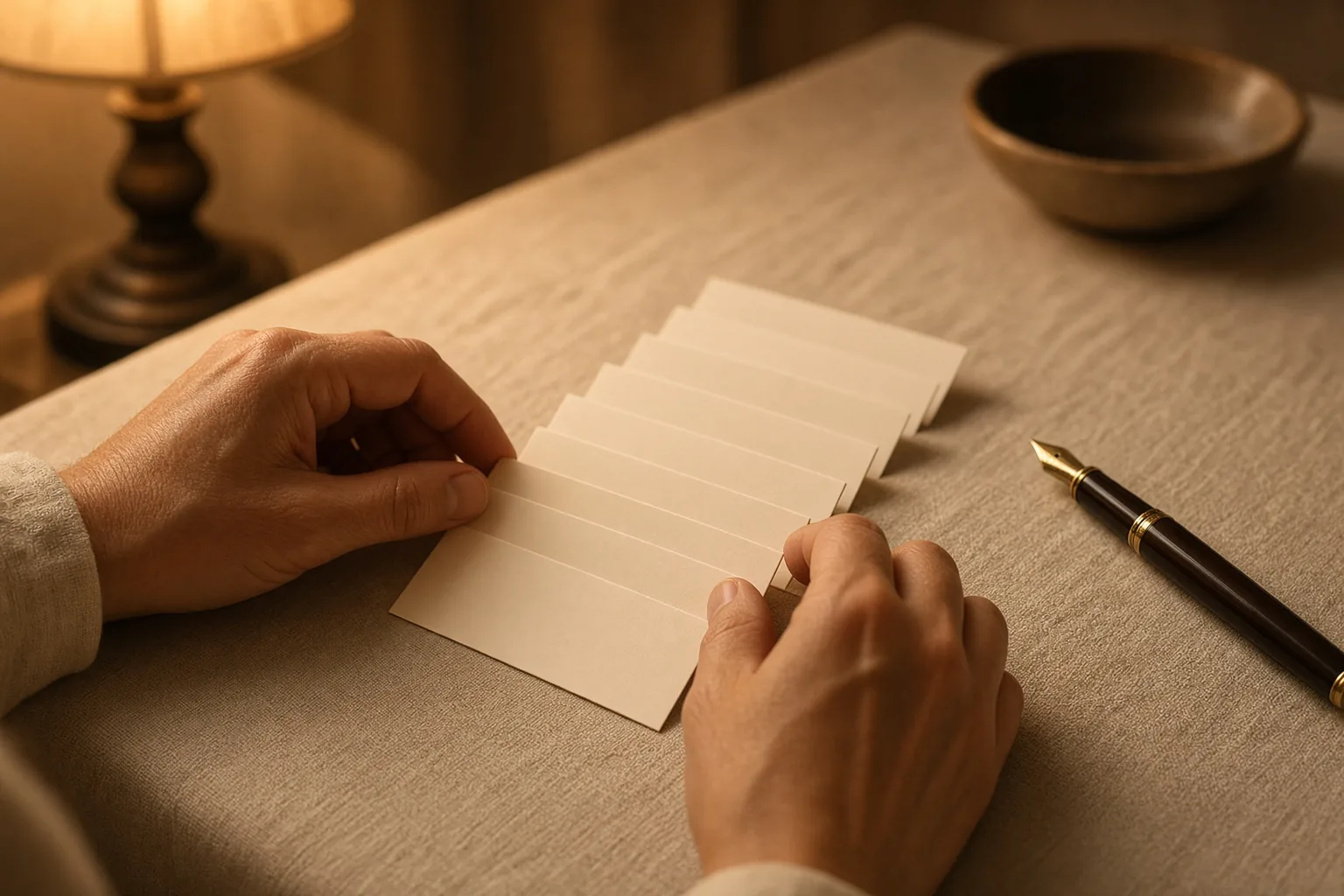
How many known signatures does a handwriting examiner need?
No rule of evidence sets a number. OSAC Proposed Standard 2026-N-1046 asks for at least 20 dictated signatures, and the Florida Department of Law Enforcement suggests 25 or more repetitions of the questioned signature.
The OSAC document is the Standard for the Collection of Known Handwriting in Forensic Document Examination, OSAC 2026-N-1046, version 1.0, dated November 2026. It was prepared by the Forensic Document Examination Subcommittee of the Organization of Scientific Area Committees for Forensic Science. The disclaimer on its first pages says it has completed an open comment period and will be submitted to a standards developing organization, so its wording may still change before it becomes a published standard.
Section 4.1.1 gives the general guideline: the collector should seek "a minimum of 10-20 repetitions of individual words, phrases, or signatures" that appear in the questioned writing, where possible. The same section ties the amount to the complexity of the questioned writing and to how consistent and how available the known writing is. For dictated samples, section 4.2.3.3 sets separate counts: at least 20 repetitions for a signature, 10-15 for a limited amount of questioned handwriting, and at least three, preferably more, for an extended amount.
The Florida Department of Law Enforcement crime laboratory answers the same question in its submission FAQ. For a questioned signature it asks for "25+ of the questioned signature with strong hand, 1 weak hand." For questioned checks it asks for 25 or more repetitions of the questioned text, for a questioned paragraph 10 or more repetitions, and for a questioned page three or more full repetitions with the strong hand plus one selected paragraph with the weak hand.
ANSI/ASB Standard 070, the 2022 Standard for Examination of Handwritten Items, contains no minimum. Under section 6.2.5 the examiner analyzes the submitted items to decide whether they are sufficient for the scope of the examination, and section 4.2.1 lists the quantity, complexity and comparability of writing among the limitations the examiner records.
What is the difference between requested and collected exemplars?
Requested exemplars are written for the case, usually by dictation. Collected, or course-of-business, writing was produced in ordinary life before anyone asked for it, for example in employment records or official documents.
OSAC 2026-N-1046 covers both kinds. Section 1.1 applies it to requested exemplars and to known course-of-business handwriting, and section 1.2 applies it to everyone who collects known handwriting for a document examination: law enforcement, investigators, legal professionals and examiners. Standard 070 draws the same line in section 6.4.3(c): known specimens may be written in the normal course of business or written at the request of the comparison.
Each kind covers a gap in the other. Requested writing can repeat the questioned words letter for letter, but the writer knows why he is writing and can slow down, change letter forms or switch hands. Course-of-business writing was produced with no such motive, but it rarely contains the same words and may date from years before or after the questioned document.
Section 4.3 of the OSAC document states that original, comprehensive course-of-business writing may remove the need for requested exemplars. When the writer is alive and available, both kinds can be gathered. When the writer has died or is incapacitated, only course-of-business writing remains, and section 4.3.1 accepts fewer than the usual 10-20 documents if that is all that exists.
Which documents make good collected exemplars?
Documents that match the questioned writing in content, style, writing instrument and writing surface, that were written around the same date, and whose writer can be proved, for example through documented provenance.
Section 4.1.3.1 of OSAC 2026-N-1046 asks the collector to prioritize known writing that is "as similar in format and manner of execution as practicable" to the questioned handwriting. Its subsections list the points of comparison. Content: the same words, numbers, symbols and names, and for a signature the same name. Writing instrument: felt-tip pen, pencil or gel pen as on the questioned item. Surface: lined paper, checks or forms. Style: hand printing or cursive, upper or lower case, and any alternative signature designs the writer uses. Conditions: standing, handcuffed or under the influence. Date: as close to the questioned writing as possible.
Standard 070 names the same limits from the examiner's side. Section 6.5.2.1 says comparability may be limited by the type of writing, writings that are not contemporaneous, differences in text content, capture methods, writing instruments and writing surfaces. Under section 6.4.3(a), known writing that mixes types, such as hand printing, cursive, numerals and signatures, is separated into groups of a single type.
For course-of-business writing, section 4.3.1 of the OSAC document asks for at least 10-20 documents that cover the writer's natural variation over a relevant period, and section 4.3.3 asks for documents comparable in content, writing style, instrument and surface. Section 4.1.4.1 lists ways to establish who wrote a known document: the collector saw it written, the writer admits it, a witness saw the act of writing, a witness recognizes the writing of a decedent, or the document has documented provenance, such as employment records or official documents.
Section 4.3.4 requires the collector to verify the provenance of each document: establish the chain of custody, confirm identifying details such as dates, names or account numbers, and obtain affidavits if needed. The same section warns that subjects may provide self-serving exemplars.
How close in time should the known writing be to the questioned document?
As close as possible. OSAC 2026-N-1046 asks for known writing from before, during and after the questioned date, and Standard 070 counts writing that is not contemporaneous among the limits on comparison.
Section 4.1.3.1.6 of the OSAC document states that "Known handwriting exemplars should be as contemporaneous as possible to the questioned handwriting," ideally from before, during and after its date. Section 4.3.5 tells the collector to prioritize documents created around the same time as the questioned document, because older writing may not match the writer's habits at the time the questioned item was written.
Standard 070 asks the examiner to consider the date of the known writing when analyzing it (section 6.4.7) and lists the lack of contemporaneous writing among the factors that limit comparability (6.5.2.1). If the questioned and known writing are not comparable, the examiner requests additional known writing under laboratory policy (6.5.2.3). If the requested contemporaneous writing is not obtained, the examiner continues as appropriate (6.5.2.4) and records the limitation.
Section 5.3 of the OSAC document lists factors that change handwriting: physical or medical conditions, emotional state, writing position, instrument, substrate, writing surface and the effects of alcohol or drugs. Section 5.4 suggests having the writer return at a later time, using a comfortable position or replicating the conditions of the questioned writing. A signature made in a hospital bed and a signature made at an office desk differ in position and surface, and the known writing is chosen with those conditions in mind.
How should requested exemplars be taken?
By dictation, without showing the writer the questioned document, with each repetition dictated separately, signatures on separate sheets and every finished sample removed from view. Section 4.2.3 of OSAC 2026-N-1046 sets these steps.
Section 4.2.2 covers materials. The collector provides plain or ruled paper, agency collection forms or blank forms similar to the questioned document, such as a blank check or deposit slip, and a ballpoint pen or an instrument similar to the one used on the questioned item. The note to section 4.2.2.2 explains that a ballpoint pen lets the examiner assess the direction of strokes and pen pressure. Section 4.2.2.3 says the collector should not provide an eraser.
Section 4.2.3.5 gives the reason for separate sheets: a list of signatures on one page invites deliberate distortion. Section 4.2.3.6 adds that the collector does not tell the writer the purpose of the collection, mixes common words into the dictated text, varies the order of dictation and has the writer fill out forms or sign names in natural contexts. The Florida laboratory adds one sample with the weak hand to each set.
The OSAC document lists the steps of the session in this order:
- The questioned document and its contents are not shown to the writer immediately before or during the collection (4.2.3.1).
- The writer is told to use the dominant hand, write in a normal way and match the case and style of the questioned item, such as cursive or hand printing (4.2.3.2).
- The collector dictates the words, numbers and names from the questioned writing at a comfortable pace, without spelling them out (4.2.3.3).
- Each repetition is dictated separately, and each completed sample is removed from the writer's view and numbered in sequence (4.2.3.3).
- Signatures are taken one per sheet, in a line, box or space like the one on the questioned document (4.2.3.5).
- The collector and the writer sign and date each sample page (4.2.3.4).
- The collector records the date, time and place of collection, the names of the collector and the writer, the case number and any unusual circumstances (4.1.6.1).
What if the writer disguises the exemplars?
The collector prolongs the session and takes more samples, and the examiner checks whether the writing is natural. OSAC lists heavy pressure, hesitations, inconsistent letter forms, the non-dominant hand and unreasonably slow or fast writing.
Section 5.2 of OSAC 2026-N-1046 describes intentional distortion. Its examples include unnatural hesitations, inconsistent letter forms, use of the non-dominant hand, copying a font, "Unreasonably slow writing, with grotesque letter formations" and "Unreasonably fast writing, with scrawled and illegible handwriting." The same section notes that a limited quantity of exemplars makes distortion more effective.
Section 4.2.3.6 sets the counter-measures: remove each exemplar after it is finished, do not disclose the purpose, mix common words with the questioned text, vary the order of dictation, prolong the collection and take additional samples if distortion is suspected, and collect samples from both hands if necessary.
In October 1979 the FBI Law Enforcement Bulletin published an article by Sgt. Joseph A. Fanciulli, a document examiner with the Lakewood, Colorado, Department of Public Safety, on taking handwriting samples. He wrote that "The basic rule to remember in the taking of handwriting samples is that no amount is too much," that disguised writing requires a larger number of exemplars, and that samples should then be taken with both the right and the left hand.
Standard 070 handles the problem at the examiner's bench. Under section 6.4.4 the examiner checks whether apparently distorted known writing is natural. If that cannot be established, the examiner assesses whether it is suitable, considers whether additional known writing would help and requests it, and discontinues the procedure with a report if the writing is unsuitable for any comparison.
Can photocopies or scans serve as known writing?
Yes, with limits. OSAC ranks originals first, asks for first-generation reproductions rather than copies of copies, and states that findings drawn from copies are more limited than findings from originals.
Section 4.1.2.1 of OSAC 2026-N-1046 asks for the best quality of known writing available. Digital reproductions, such as color scans in PDF, JPEG or TIFF format, are submitted in digital form, and section 4.1.2.1.2 says physical reproductions "should be submitted in first generation and should not be 'copies of a copy'." Section 5.5 explains the reason: copies lose fine detail, pen pressure and indentations.
Standard 070 section 6.4.2 has the examiner determine whether the known writing is original. If it is not, the examiner may request the original; if none is submitted and the reproduction is not clear enough and no better copy exists, the examiner may discontinue and report. The Florida laboratory examines machine copies of known documents but writes that "when originals can be obtained, they should be submitted."
How is known writing proved genuine in court?
Under Federal Rule of Evidence 901(b)(3) the examiner compares the questioned writing with an authenticated specimen, and the genuineness of the specimen is decided under Rule 104(b). Proof can come from admissions, witnesses or records.
Rule 901(a) requires the proponent to "produce evidence sufficient to support a finding that the item is what the proponent claims it is." Rule 901(b)(3) lists "A comparison with an authenticated specimen by an expert witness or the trier of fact." The Advisory Committee note to that example says it "sets no higher standard for handwriting specimens and treats all comparison situations alike, to be governed by Rule 104(b)."
The same note quotes 28 U.S.C. section 1731: "The admitted or proved handwriting of any person shall be admissible, for purposes of comparison, to determine genuineness of other handwriting attributed to such person." A known signature therefore enters the comparison either because the writer admits it or because it is proved, for example by a witness who saw it written or by the custodian of the records in which it was kept.
Under Rule 901(b)(2) a nonexpert may give an opinion that handwriting is genuine only on the basis of familiarity "not acquired for the current litigation." The note adds that testimony based on familiarity acquired for the litigation is reserved to the expert. A relative who has received letters from the writer for years can testify under (b)(2); a person who studied the signatures after the lawsuit was filed cannot.
Standard 070 links proof to the bench work. If the known writing contains inconsistencies that suggest more than one writer, the examiner contacts the submitter for authentication under section 6.4.3(b) and, if the question stays unresolved, discontinues work on the affected group. A list that names each known document, its date, where it was kept and who can prove it answers that question before the examination starts.
Who should gather the known writing, and how are documents held by others obtained?
The OSAC rules apply to whoever collects, including lawyers, but a set chosen only by one party may miss variation. Records held by the opposing party or by banks and employers are obtained under Civil Rules 34 and 45.
Standard 070 section 6.4.3(c) warns that known specimens collected solely by a stakeholder may not cover the writer's full range of variation. A set picked by the party who wants a particular answer invites the objection that signatures resembling the questioned one were left out. Section 4.3.4 of the OSAC document gives the same warning about self-serving exemplars supplied by the subject.
In federal civil cases a party may serve a request under Rule 34(a)(1)(A) to produce designated documents in the responding party's possession, custody or control, which covers signed contracts, letters and forms held by the other side. Rule 34(c) provides that a nonparty may be compelled to produce documents as provided in Rule 45. Under Rule 45(a)(1)(A)(iii) a subpoena can command a bank, employer or agency to produce designated documents, and under Rule 45(a)(1)(C) the command can be included in a subpoena for a deposition. Rule 45(d)(1) requires the party issuing a subpoena to take reasonable steps to avoid imposing undue burden or expense on the person subject to it.
Section 4.1.5 of the OSAC document asks collectors to handle known documents so that no marks are added and no writing, indentations or latent writing are removed, and to use non-woven gloves if further forensic examination is expected. Originals obtained from a custodian are best kept in the condition in which they arrived.
What happens when there are too few samples?
The examiner asks for more, limits the work or reports that no conclusion is possible, and records the limitation. OSAC section 5.6 names insufficient quantity, poor comparability and missing contemporaneous writing as the usual limits on findings.
Section 5.1 of OSAC 2026-N-1046 explains the risk: a limited set may fail to show the writer's full range of variation, which can lead to inconclusive or erroneous findings. Section 5.7 adds that writers with minimal handwriting skills show less individuality, so the subject should execute the writing many times more than a literate writer would.
Under Standard 070 the examiner requests additional known writing when questioned and known items are not comparable (6.5.2.3), may discontinue a procedure and report accordingly with the reasons documented (6.1), and documents the limitations of each conclusion (6.6). A note to section 6.5.5 states that treating a dissimilarity as evidence of a different writer is "a very high level of proof requiring extensive known specimens."
The quantity of known writing also decides admissibility. Since the 2023 amendment, Rule 702 requires the proponent to show the court that it is more likely than not that the testimony "is based on sufficient facts or data." The committee note to the amendment states that "each expert opinion must stay within the bounds of what can be concluded from a reliable application of the expert's basis and methodology" and that forensic experts should avoid assertions of absolute or one hundred percent certainty if the methodology is subjective. A conclusion drawn from five noncontemporaneous signatures is open to challenge on both points.
What does IAE do when a handwriting comparison needs known writing?
An examiner from the IAE registry prepares a report on your questions about a questioned signature or entry, or a review of the opposing examiner's report, in up to 5 business days after the format and cost are confirmed.
The IAE handwriting page lists the questions the examiner answers: whether the person named on a will, contract or check signed it, and whether the signature shows signs of simulation or tracing. Under ANSI/ASB Standard 070 (2022) the examiner checks whether questioned and known writing are originals and comparable, then weighs similarities and differences together. On known writing the page asks for original known writing of the same type and from about the same period as the questioned item.
Send the questioned document or its best available copy, the known writing with a note on where each item came from and its date, and a description of what needs to be established, through the form on the contact page or to info@iaexperts.com; the service page has a "Request a quote" button. The secretariat confirms receipt the same day and, within one business day, the format, the cost, the deadline and the examiner from the registry. You approve the candidate and the CV before work starts. The document is issued in up to 5 business days after the format and cost are confirmed, and cases with tight deadlines have a 48-hour rush.
Registry members passed the collegial attestation of the council under the published Criteria Matrix, and the Member ID in the report can be checked by QR code. The examiner confirms in the document that he or she has no interest in the outcome, and materials are not passed to third parties without your consent. The court weighs the report with the other evidence; neither IAE nor the examiner guarantees the outcome, and IAE is not a law firm and does not advise on case strategy.
Sources
- OSAC 2026-N-1046, Standard for the Collection of Known Handwriting in Forensic Document Examination, OSAC Proposed Standard, version 1.0, November 2026 (NIST)
- ANSI/ASB Standard 070, Standard for Examination of Handwritten Items, First Edition, 2022 (AAFS Standards Board)
- Florida Department of Law Enforcement, Document Examination submission FAQ
- Federal Rules of Evidence, Rule 901, Authenticating or Identifying Evidence, with Advisory Committee Notes (LII)
- Federal Rules of Evidence, Rule 702, Testimony by Expert Witnesses, with Committee Notes (LII)
- Federal Rules of Civil Procedure, Rule 34, Producing Documents and Tangible Things (LII)
- Federal Rules of Civil Procedure, Rule 45, Subpoena (LII)
- Fanciulli J. A., article on taking handwriting samples, FBI Law Enforcement Bulletin, October 1979 (NCJRS scan 63101)
Read also
All articles
Can a notarized signature be challenged as forged, and what does the handwriting examiner have to show?
A notary's stamp does not make a signature unchallengeable, but it changes the proof. In New York a certificate of acknowledgment raises Sergei Voronin
Block capitals: can a handwriting expert identify who hand printed a note or a form?
Anonymous notes, address labels and filled-in forms are often written in block capitals, and the writer may expect capitals to hide his or herSergei Voronin
Signed on a signature pad: can a handwriting expert examine an electronic handwritten signature?
A signature written with a stylus on a pad or tablet is still handwriting, and a handwriting examiner can compare it with known signatures. The imageSergei VoroninExpert examinations
Ready to discuss your case?
Send the materials: the secretariat will confirm the format, cost, deadline and the specialist within one business day.
