
Expert witnesses
Medical device product liability expert witness: premarket approval, Riegel v. Medtronic and parallel claims
In a medical device case the first expert question is regulatory: how the device reached the market. For a Class III device with FDA premarket approval, the Supreme Court held in Riegel v. Medtronic (2008) that 21 U.S.C. 360k(a) bars state common-law claims challenging the device's safety or effectiveness. A device cleared through the 510(k) process faced no such bar in Medtronic v. Lohr (1996). Claims that parallel federal requirements can survive both.
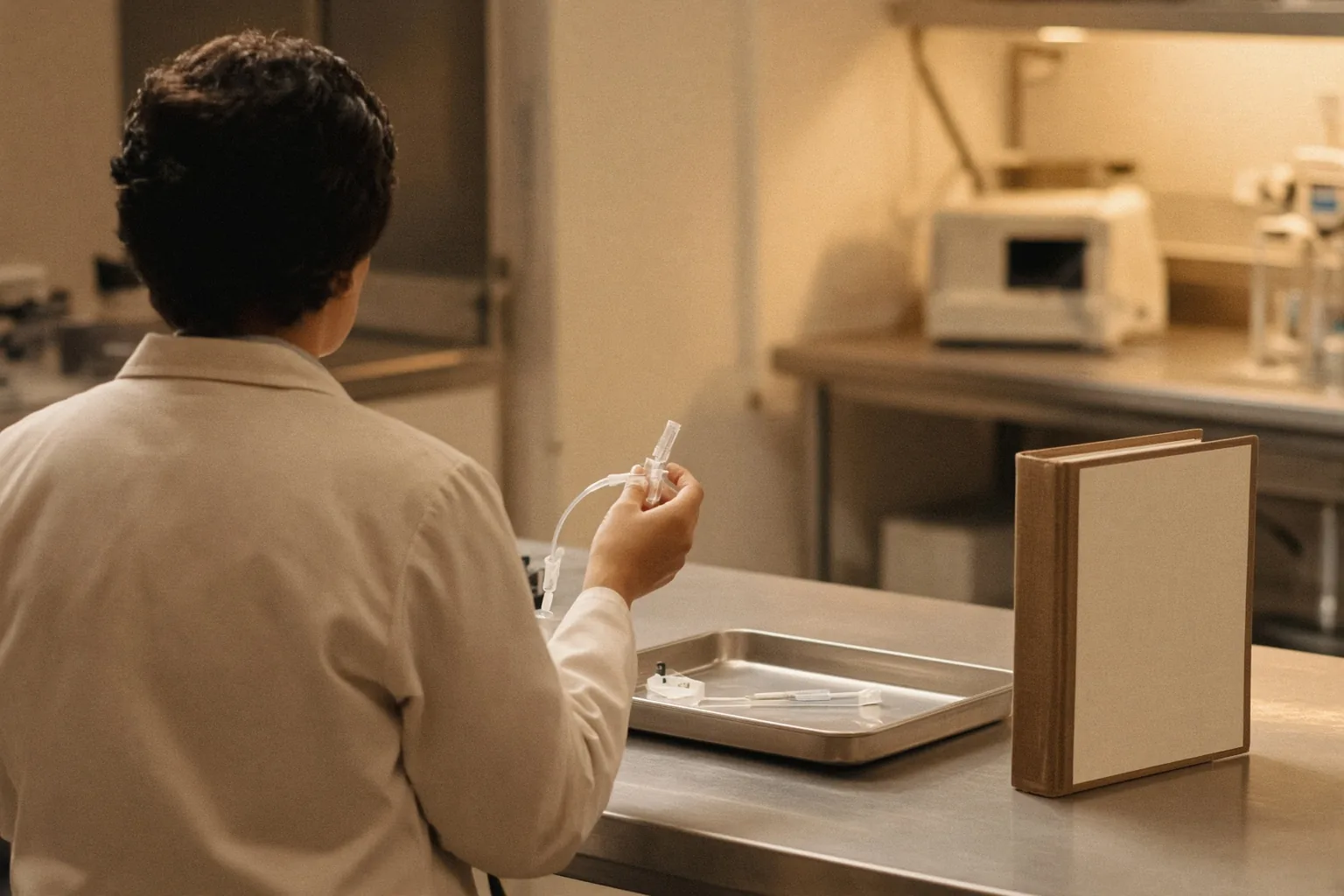
What does a medical device expert witness do in a product liability case?
The expert establishes how the device was approved or cleared, what the FDA required of it, and whether the device that injured the patient departed from those requirements. The answers decide which state-law claims survive preemption.
The Medical Device Amendments put a preemption clause into the Food, Drug, and Cosmetic Act. 21 U.S.C. 360k(a) provides that, except as provided in subsection (b), "no State or political subdivision of a State may establish or continue in effect with respect to a device intended for human use any requirement" that "is different from, or in addition to, any requirement applicable under this chapter to the device" and that "relates to the safety or effectiveness of the device or to any other matter included in a requirement applicable to the device under this chapter."
Two Supreme Court decisions read that clause in opposite directions for two kinds of devices. In Medtronic, Inc. v. Lohr (1996) the claims about a pacemaker lead cleared through the 510(k) process went forward. In Riegel v. Medtronic, Inc. (2008) the claims about a catheter with premarket approval were held preempted. The regulatory history of the device therefore comes before any engineering opinion about it.
The engineering and clinical work follows. The expert compares the failed device with its approved specifications and labeling, examines the failure mode and states whether the device that reached the patient was the device the FDA reviewed. Each of those findings links to a legal question discussed below.
Which FDA pathway did the device take, and why does it matter?
Premarket approval is the FDA's review of safety and effectiveness for Class III devices; the 510(k) process looks at substantial equivalence to a device already on the market. The Supreme Court treats the two very differently for preemption.
The FDA page on premarket approval describes PMA as "the FDA process of scientific and regulatory review to evaluate the safety and effectiveness" of Class III devices, which include "devices that support or sustain human life" and others of substantial importance to health or posing a potential unreasonable risk. The FDA calls PMA its "most stringent type of device marketing application." Approval depends on a finding that the application "contains sufficient valid scientific evidence to assure that the device is safe and effective." The governing regulation is 21 CFR Part 814.
A PMA has a non-clinical laboratory studies section, with information on microbiology, toxicology and related testing, and a clinical investigations section, with "study protocols, safety and effectiveness data" and related clinical information. Those sections are the record against which an expert later measures the device.
The 510(k) route is lighter. In Medtronic, Inc. v. Lohr, 518 U.S. 470 (1996), the Court noted that a 510(k) review took about 20 hours on average, against roughly 1,200 hours for a PMA review, and that the process "is focused on equivalence, not safety." Riegel repeats the 1,200-hour figure: the FDA "spends an average of 1,200 hours reviewing each application."
What did Riegel v. Medtronic decide?
On February 20, 2008 the Supreme Court held that 360k(a) bars common-law claims challenging the safety or effectiveness of a device marketed in the form that received premarket approval. The Riegels' claims about a ruptured balloon catheter were preempted.
The device was the Evergreen Balloon Catheter, a Class III device marketed by Medtronic. It received premarket approval in 1994, and changes to its label received supplemental approvals in 1995 and 1996. In 1996 Charles Riegel underwent coronary angioplasty. His right coronary artery was diffusely diseased and heavily calcified, and the label contraindicated use for "diffuse or calcified stenoses." The label set a rated burst pressure of eight atmospheres. The catheter was inflated five times, to 10 atmospheres, and ruptured on the fifth inflation. Mr. Riegel developed a heart block, was put on life support and underwent emergency bypass surgery.
The Riegels sued in April 1999 in the Northern District of New York under New York common law. The district court held preempted the claims of strict liability, breach of implied warranty and negligence in design, testing, inspection, distribution, labeling, marketing and sale, the negligent manufacturing claim to the extent it was not based on a federal violation, and Donna Riegel's consortium claim. It later granted summary judgment on the remaining claims, and the Second Circuit affirmed.
Justice Scalia wrote for the Court. According to the syllabus, Chief Justice Roberts and Justices Kennedy, Souter, Thomas, Breyer and Alito joined, Justice Stevens joined except for Parts III-A and III-B and concurred in part and in the judgment, and Justice Ginsburg dissented. The syllabus states the holding: "The MDA's pre-emption clause bars common-law claims challenging the safety or effectiveness of a medical device" marketed in a form that received FDA premarket approval.
Why does premarket approval preempt state claims when 510(k) clearance does not?
Because premarket approval imposes federal requirements specific to the device, and state tort duties are requirements too. A 510(k) finding of substantial equivalence creates no specific federal design requirement, so the claims in Lohr went forward.
In Riegel the Court first held that state tort law counts: "Absent other indication, reference to a State's 'requirements' includes its common-law duties." It then held that premarket approval "imposes 'requirements' under the MDA as we interpreted it in Lohr," and that, unlike general labeling duties, it "is specific to individual devices." After approval the manufacturer may not change design specifications, manufacturing processes, labeling or other attributes affecting safety or effectiveness without FDA permission; such changes need supplemental approval.
On that reading, a jury verdict that the approved design should have been different would impose a requirement "different from, or in addition to" the one the FDA set, which is the conflict 360k(a) forbids.
Lohr came out the other way. Lora Lohr relied on a pacemaker with a Medtronic Model 4011 lead, which the FDA had found "substantially equivalent" to pre-1976 devices in 1982. The pacemaker failed in 1990 and caused a complete heart block that required emergency surgery. Justice Stevens wrote the principal opinion, announced on June 26, 1996. The negligent design claims were not preempted, because the substantial equivalence finding did not create a specific federal design requirement, and the manufacturing and labeling claims were not preempted, because the federal rules on those subjects are general.
Which claims can survive for a device with premarket approval?
Claims premised on a violation of FDA requirements. Under Riegel, 360k does not bar a state damages remedy for them, and 21 CFR 808.1(d)(2) leaves in place state requirements substantially identical to federal ones.
Riegel puts it in one sentence: "§360k does not prevent a State from providing a damages remedy for claims premised on a violation of FDA regulations." Lohr said the same in 1996: "[n]othing in § 360k denies Florida the right to provide a traditional damages remedy for violations of common-law duties when those duties parallel federal requirements." The Court did not rule on the Riegels' own parallel-claims argument, because they had not raised it earlier in the case.
The FDA's regulation on preemption, 21 CFR 808.1(d), provides that state or local requirements are preempted only when the FDA has established "specific counterpart regulations" or there are "other specific requirements applicable to a particular device" that make divergent state requirements "different from, or in addition to, the specific Food and Drug Administration requirements." Under 808.1(d)(2), requirements "equal to, or substantially identical to," federal requirements are not preempted. Under 808.1(d)(1), state requirements of general applicability, such as general electrical codes and "the Uniform Commercial Code (warranty of fitness)," are not preempted when their purpose extends beyond devices.
The regulation does not decide a PMA case by itself. In Riegel the claim for breach of implied warranty was among those held preempted. A parallel claim names the federal requirement the device failed to meet, such as an approved specification or an approved manufacturing process, and the expert's evidence shows the departure from it.
Where does a parallel claim end after Buckman?
At claims that exist only because of the FDA's requirements. In Buckman (2001) the Court held fraud-on-the-FDA claims impliedly preempted, because the Act is enforced by the federal government under 21 U.S.C. 337(a).
In Buckman Co. v. Plaintiffs' Legal Committee, 531 U.S. 341 (2001), AcroMed sought FDA clearance for orthopedic bone screws for spinal use and was refused. With Buckman, a regulatory consultant, it divided the device into components and obtained 510(k) clearance for use in long bones. Patients injured by the screws sued Buckman under state tort law, alleging fraudulent representations to the FDA.
Chief Justice Rehnquist wrote for the Court on February 21, 2001: "the plaintiffs' state-law fraud-on-the-FDA claims conflict with, and are therefore impliedly pre-empted by federal law." The Court found "clear evidence that Congress intended that the MDA be enforced exclusively by the Federal Government," citing 21 U.S.C. 337(a), under which enforcement proceedings "shall be by and in the name of the United States." State fraud claims, it wrote, could push applicants to submit "a deluge of information that the Agency neither wants nor needs."
The Court separated these claims from the ones in Lohr, which arose from alleged failures of reasonable care: "the fraud claims exist solely by virtue of the FDCA disclosure requirements." It added that Lohr "does not and cannot stand for the proposition that any violation of the FDCA will support a state-law claim." A plaintiff's expert therefore ties a federal violation to a duty that state tort law recognizes on its own, such as the duty of care in manufacturing, rather than to what the company told the FDA.
What does the expert compare in a premarket approval case?
The failed device with the device the FDA approved: specifications, manufacturing process, labeling and approved supplements. In Riegel the label's rated burst pressure of eight atmospheres, against an inflation to 10, came from that record.
Riegel names the attributes that the manufacturer may not change without FDA permission: design specifications, manufacturing processes, labeling and other attributes affecting safety or effectiveness. They are also the points of comparison for an expert looking for a departure from federal requirements. A unit made outside the approved process, or a label different from the approved label, is the kind of fact on which a parallel claim rests.
The labeling matters in another way. In Riegel the label contraindicated use for diffuse or calcified stenoses and set the rated burst pressure at eight atmospheres, and the catheter was inflated to 10. Facts of this kind go to the conduct of the user as well as to the device, and both sides' experts read them from the approved labeling.
The comparison needs the regulatory record: the PMA approval, the approved labeling and the supplements approved after it. In Riegel, label changes approved as supplements in 1995 and 1996 came after the 1994 approval, so the version in force on the date of use is the one the expert compares.
Which experts does a medical device case need?
Three kinds cover these questions: a regulatory expert on the FDA pathway and record, an engineer on the failure, and a human factors or warnings specialist on the label and use.
The regulatory expert answers the threshold questions: whether the device had premarket approval or 510(k) clearance, which specifications and labeling the FDA approved, and which supplements were approved later. Under Riegel and Lohr these answers decide whether a design claim can proceed at all.
The engineer works on the device itself: materials, fracture surfaces, welds, electronics and the comparison with the approved specifications and with sound units of the same model. For a 510(k) device, a negligent design claim of the kind allowed in Lohr calls for the usual design defect analysis. For a PMA device, the engineering findings are aimed at a departure from what the FDA approved.
A human factors or warnings specialist addresses what the label and instructions told the user and how the device was used. The product liability expert witness page of IAE names medical device use errors under the 2026 FDA human factors guidance among the questions in this group.
How does IAE find an expert for a medical device case?
In the request choose the case type Product liability, name the device, its FDA pathway if known and the defect theory. Within 5 business days IAE sends 2-3 candidates with CVs, hourly rates and lists of prior testimony.
The product liability expert witness page covers defects in vehicles, medical devices, consumer products and industrial equipment and lists eight product liability specialties: failure analysis, materials science, electrical engineering, product design, vehicle crashworthiness, human factors, and warnings and instructions among them. The page groups metallurgists and materials engineers on part failure, engineers from the product's industry on design, and human factors and warnings specialists on labels and manuals.
The request form asks for the field of expertise, the case type, the state and court, the firm's side, the expert disclosure deadline, the parties and their counsel for the conflict check, and a short description of the case. For a device case the description can give the device name, whether it has premarket approval or 510(k) clearance, and the defect theory. Within 1 business day IAE replies whether it can search by the deadline. Each candidate confirms in writing that he or she has no ties to the parties or their counsel. Within 5 business days the firm receives 2-3 candidates with CVs, hourly rates, testimony in the last 4 years and publications in the last 10 years.
The search costs $2,000 per case, paid in advance, and candidate names and CVs come after payment. If no candidate fits, the second search is free; if IAE finds no candidates, it refunds the fee. The expert bills the firm directly or through IAE under the agency option at +$100 per hour. The expert's hourly rate never depends on the outcome of the case or on the content of testimony. IAE is not a law firm. Case strategy and the decision to retain an expert stay with the attorney.
Sources
- 21 U.S.C. 360k, State and local requirements respecting devices (LII, Cornell Law School)
- Riegel v. Medtronic, Inc., 552 U.S. 312 (2008), opinion of the Court (LII, Cornell Law School)
- Riegel v. Medtronic, Inc., No. 06-179 (2008), syllabus (LII, Cornell Law School)
- Medtronic, Inc. v. Lohr, 518 U.S. 470 (1996) (LII, Cornell Law School)
- Buckman Co. v. Plaintiffs' Legal Committee, 531 U.S. 341 (2001), full text of the opinions (FindLaw Caselaw)
- U.S. Food and Drug Administration, Premarket Approval (PMA)
- 21 CFR Part 808, Exemptions from Federal preemption of State and local medical device requirements (eCFR)
Read also
All articles

State of the art defense in product liability: what must the manufacturer's expert prove about the technology available when the product was made?
The state of the art defense asks what a manufacturer could have known and built on the day the product left its hands, not on the day of the injury Sergei Voronin

Toy injury expert witness: small parts, age grading and ASTM F963 in a children's product case
A toy injury case usually turns on a short list of questions: was the toy meant for a child under three, did any part fit inside the federal smallSergei Voronin
Machine guarding expert witness: what does the engineer examine when a worker is hurt by an unguarded machine?
When a worker is hurt at the point of operation of a machine, the case usually turns on the guard: how the machine was designed to keep hands outSergei VoroninExpert witnesses
Need an expert witness for your case?
Describe the question, the case type and the court. Within 5 business days you receive 2-3 candidates with CVs, hourly rates and lists of prior testimony.
