
Examinations
Water intrusion expert witness: how is the source of a leak proven?
A water intrusion expert answers three questions: where the water entered, which defect let it in and what the repair has to cover. ASTM E2128-26 has the investigator screen roofing, plumbing and condensation before blaming a wall. On November 12, 2025, the Eighth Circuit upheld the exclusion of an engineer who skipped testing the roof membrane and missed a failed seam reported by the insurer's engineer.
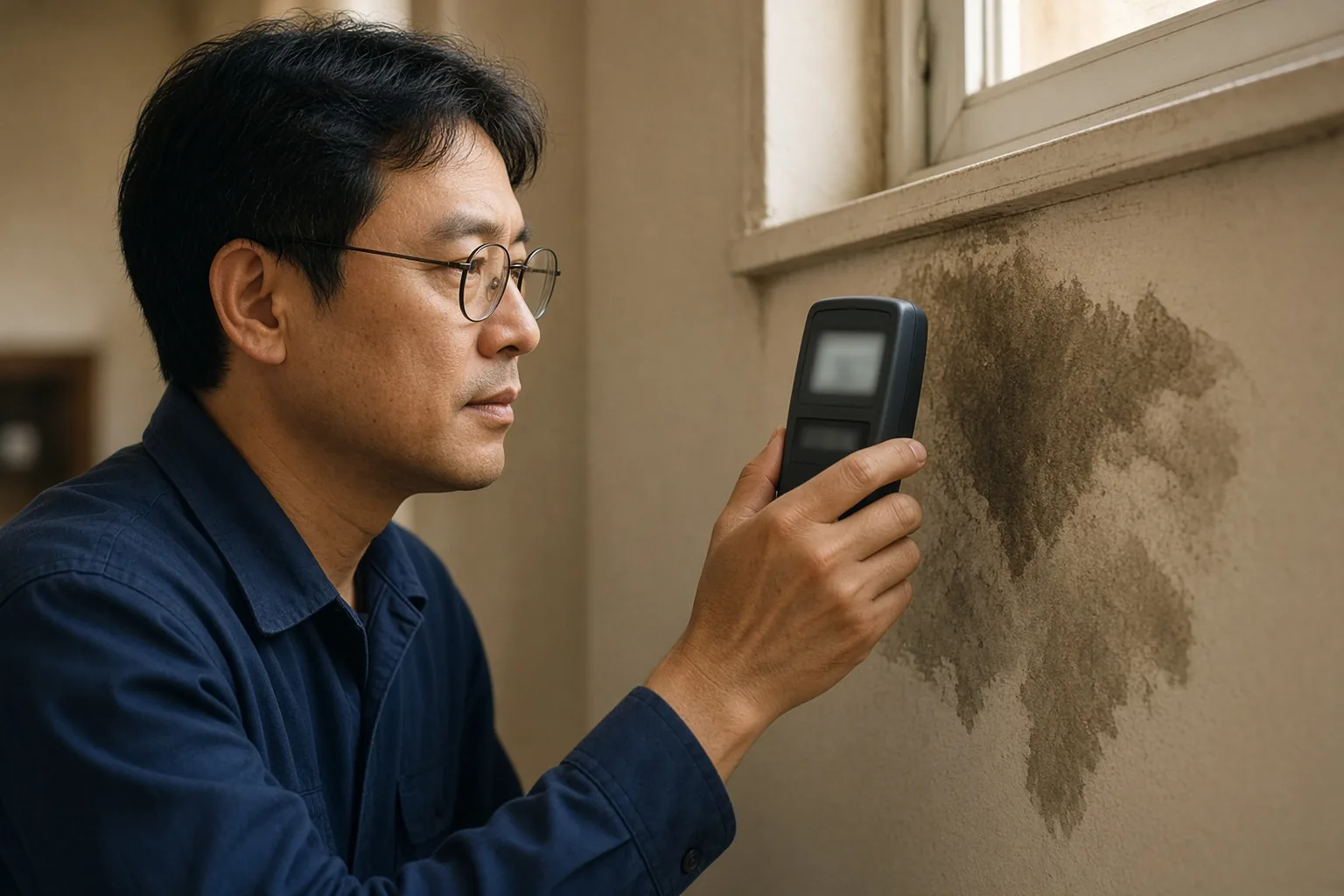
What does a water intrusion expert do?
The expert finds where water entered the building, names the failed component or defect, describes the damage it caused and defines the repair scope. In litigation these opinions go into a signed report under Rule 26.
For walls, ASTM International publishes E2128, Standard Guide for Evaluating Water Leakage of Building Walls. Its current edition, E2128-26, says in section 1.1 that it covers "methods for determining and evaluating causes of water leakage of exterior walls." The guide treats a wall as a system that includes its exterior and interior finishes, fenestration and structural components, so a leak at a window head is examined together with the cladding, flashing and framing around it.
Section 4.1.1 requires the evaluator to know basic physics and construction and wall design. A single case may need a building envelope consultant for the wall, a structural engineer for rotted framing or corroded reinforcement, a roofing specialist and a cost estimator. The questions in the case decide who signs which part of the report.
The questions follow the claims in the lawsuit. Did the original work, a later repair, a storm or a lack of maintenance let the water in? Which finishes, materials and contents did that water reach? What does it cost to repair the damage caused by that source, without paying for unrelated upgrades?
How does an expert find where the water came in?
By ruling sources out in order. ASTM E2128-26 starts with a preliminary assessment, because water inside a building may come from a roof, plumbing, condensation or an open window instead of the wall.
Section 4.1.3 of E2128-26 warns that "the presence of water might result from a roofing problem, a condensation problem, a plumbing problem" or another source outside the wall. A preliminary assessment may narrow the problem to one element or one part of the wall. The same section says a statement of the limits of the investigation should be included in the report, so the reader knows which areas were not opened or tested.
Section 4.3 sets the guide's own boundaries. E2128 does not address leakage through roofs, leakage below grade, or water that accumulates through water vapor migration and condensation. A roof leak, a basement leak or a condensation claim calls for other methods. A reviewer checks whether a report relies on E2128 for a source the guide excludes.
An opinion that names one source without excluding the others is exposed to the factor that the Advisory Committee added to Rule 702 in 2000: whether the expert "adequately accounted for obvious alternative explanations." In a leak case those alternative explanations are the roof, the plumbing, condensation and open openings that E2128 screens first.
Which water tests are used on windows, doors and walls?
Installed windows, doors, skylights and curtain walls are tested in place under ASTM E1105. Water is sprayed on the outdoor face while the outdoor air pressure is held higher than the indoor pressure.
Section 1.1 of ASTM E1105 describes a field test in which "water is applied to the outdoor face and exposed edges simultaneously" while the static air pressure at the outdoor face is higher than the pressure at the indoor face. The title of the standard names two ways to apply that pressure difference, uniform and cyclic. Section 1.2 says the method is intended primarily for determining resistance to water penetration and applies to any area of curtain wall or to windows, skylights or doors alone.
Section 5.2 calls the method a field procedure that measures the performance of a product once installed in the building. The standard adds that field results can differ from laboratory performance because of the supporting structure, the mounting and the sealing. Section 1.2 adds that the method can also test the joints between the tested assembly and the adjacent construction, where a window with a laboratory rating can still leak.
E2128-26 warns in section 1.2 that investigative techniques "may be intrusive, disruptive, or destructive" and that the investigator must plan for patching and selective reconstruction. Test openings, cut sheathing and removed trim are evidence once a claim exists, so the opening, what it revealed and how it was closed are recorded with photographs.
Can the expert test a building the other side controls?
Yes, through a Rule 34 request. A party may ask for entry onto land or property the other side possesses or controls to inspect, measure, survey, photograph, test or sample it.
Rule 34(a)(2) of the Federal Rules of Civil Procedure covers entry "onto designated land or other property possessed or controlled by the responding party" so that the requesting party may inspect, measure, survey, photograph, test or sample the property or any designated object or operation on it. The request "must specify a reasonable time, place, and manner for the inspection and for performing the related acts."
The responding party must answer in writing within 30 days after being served, unless the parties stipulate to another time under Rule 29 or the court orders one. A water test with cut openings changes the building, so the request describes each test location, the openings planned and the patching that E2128-26 expects.
An earlier IAE article on construction defect expert witnesses covers Rule 34 site inspections, subpoenas to non-parties and the use of other people's inspection data in more detail.
How does a court test a leak expert's opinion?
Under Federal Rule of Evidence 702 the party offering the expert must show the court that each opinion more likely than not rests on sufficient facts or data and on reliable methods reliably applied to the building.
Rule 702 has four conditions: specialized knowledge that will help the trier of fact, testimony based on sufficient facts or data, testimony that is the product of reliable principles and methods, and a reliable application of those principles and methods to the facts of the case. The Supreme Court's order of April 24, 2023 amended the rule, and the amendment took effect on December 1, 2023. The committee note says that rulings treating the sufficiency of an expert's basis as a question of weight are "an incorrect application of Rules 702 and 104(a)."
Engineers are covered. In Kumho Tire Co. v. Carmichael, decided March 23, 1999, Justice Breyer wrote for the Court that the gatekeeping obligation "applies to all expert testimony," technical and experience-based testimony included. The district court in that case excluded a tire failure analyst who relied on visual and tactile inspection, and the Supreme Court held that the exclusion was not an abuse of discretion. The Court described the aim as an expert who employs "the same level of intellectual rigor that characterizes the practice of an expert in the relevant field."
The 2023 committee note also limits conclusions: "each expert opinion must stay within the bounds of what can be concluded from a reliable application of the expert's basis and methodology." If an expert water-tested two windows on the north elevation, an opinion about every window in the building has to explain how the two results support it.
What happened in Bliv v. Charter Oak?
On November 12, 2025, the Eighth Circuit affirmed the exclusion of an engineer who blamed hail for water intrusion without testing the roof membrane and without addressing a failed seam that the insurer's engineer had reported.
Bliv, Inc. and Real Bliv, LLC sued The Charter Oak Fire Insurance Company over water intrusion at their building (No. 24-3123, appeal from the Eastern District of Missouri). Their engineer concluded that hail damage caused the loss. The insurer's engineer attributed the leaks to long-term wear and tear. The district court excluded the plaintiffs' engineer and granted summary judgment to the insurer. Judges Loken, Kelly and Erickson heard the appeal, and Judge Erickson wrote the opinion affirming the judgment.
The court accepted that the engineer was qualified and looked at the basis of the opinion. In its words, "Instead of testing portions of the roof to support his opinion, Johnson chose to eliminate alternative causes." He ruled out failed roofing seams as a cause, yet he had not seen the supplemental report in which the insurer's engineer identified a failed seam. A later declaration did not address the defects in the parapet wall. The court concluded that the opinion "relied on incomplete information."
The panel acknowledged that some of the district court's findings were open to question and that another judge might have treated the problems as matters of weight. It still held that there was "a reasoned basis to find" that the engineer failed to consider or account for critical information, so the exclusion was not an abuse of discretion. Without the engineer, the plaintiffs had no admissible evidence to answer the insurer's causation opinion.
What must the expert's report contain, and when is it due?
A retained expert's report under Rule 26(a)(2)(B) states all opinions with their basis and reasons, the facts or data considered, exhibits, qualifications with publications from 10 years, testimony from 4 years and compensation.
Absent a stipulation or a court order, Rule 26(a)(2)(D)(i) puts expert disclosures "at least 90 days before the date set for trial or for the case to be ready for trial." A report intended solely to contradict or rebut the other side's expert evidence on the same subject is due within 30 days after the other party's disclosure under Rule 26(a)(2)(D)(ii). When a scheduling order sets other dates, those dates control.
In a leak case the facts or data considered include the records of each test: where it ran, what pressure difference was applied, when water first appeared on the interior side, and the photographs of the openings. E2128-26 asks for a statement of the limits of the investigation, which tells the court what the expert did not open, test or see.
Under Rule 26(b)(4)(A) the other side may depose the expert once the report is provided. Under Rule 26(b)(4)(E)(i) the court must require the party seeking that discovery to pay the expert a reasonable fee for the time spent responding, unless manifest injustice would result.
What does a review of the opposing leak report check?
Whether the report screens other sources, whether the suspected component was tested in place, whether the expert read every report in the file, and whether each repair line traces back to a defect the expert found.
The first check follows E2128-26: did the expert record a preliminary assessment and rule out roofing, plumbing and condensation before blaming the wall, and does the report state the limits of the investigation? The second follows Rule 702(b): were the facts or data sufficient, including the other side's reports and the deposition testimony? Bliv v. Charter Oak turned on that point.
The third check is method. Was the window or wall tested in place under ASTM E1105, or does the opinion rest on stains, odor and visual signs alone? In Kumho Tire the district court found a visual and tactile method unreliable as applied, and the Supreme Court let that ruling stand. The fourth check is scope. The repair estimate should list each damaged element, give quantities and keep defect repair apart from upgrades, so the court can match each dollar to a cause.
Under Rule 26(b)(4)(D) the other side ordinarily may not discover the opinions of an expert retained for the litigation who is not expected to testify, so a review written for counsel stays protected unless the party decides to call the reviewer at trial. If it becomes a rebuttal report, it needs the six items of Rule 26(a)(2)(B) and the 30-day deadline of Rule 26(a)(2)(D)(ii) applies unless the court set another date.
What does IAE do in a water intrusion case?
IAE prepares an expert report on the questions agreed with the client about water intrusion, defects and code, scope and cost, and reviews the opposing construction expert's report. The signed document is issued in up to 5 business days.
The construction defects page lists three groups of questions. For water intrusion the expert checks under ASTM E2128-26 whether the water came from the roof, plumbing or condensation before testing the wall, and windows and doors are tested in place under ASTM E1105. For defects and code the expert documents cracks, deflection, settlement and failed finishes and compares the work with the plans, the specifications and the code edition in force at permit. For scope and cost the expert lists each damaged element, measures quantities on site or from photos and prices the repair line by line.
The client sends the materials and describes the task. The secretariat confirms receipt the same day. Within one business day IAE confirms the format, the cost, the deadline and the specialist from its registry, and the client approves the candidate and the CV before work starts. The signed PDF is issued in up to 5 business days after the format and cost are confirmed, and cases with tight deadlines have a 48-hour rush.
Every specialist is a member of the public IAE registry and can be verified by Member ID or QR code. The specialist confirms in the document that he or she has no interest in the outcome of the case. A report is evidence that the court weighs with the rest of the record. Neither IAE nor the expert guarantees the outcome, and IAE is not a law firm and does not advise on case strategy.
Sources
- ASTM E2128-26, Standard Guide for Evaluating Water Leakage of Building Walls (ASTM store page)
- ASTM E1105, Standard Test Method for Field Determination of Water Penetration of Installed Exterior Windows, Skylights, Doors, and Curtain Walls (ASTM store page)
- Bliv, Inc. v. The Charter Oak Fire Insurance Co., No. 24-3123 (8th Cir. Nov. 12, 2025)
- Federal Rules of Evidence, Rule 702, Testimony by Expert Witnesses, with Committee Notes (LII)
- Supreme Court of the United States, order of April 24, 2023 amending Federal Rules of Evidence 106, 615 and 702
- Kumho Tire Co. v. Carmichael, 526 U.S. 137 (1999) (LII)
- Federal Rules of Civil Procedure, Rule 26, Duty to Disclose; General Provisions Governing Discovery (LII)
- Federal Rules of Civil Procedure, Rule 34, Producing Documents, Electronically Stored Information, and Tangible Things, or Entering onto Land (LII)
Read also
All articles
A neighbor's grading or paving sends water onto my property: who is responsible, and how does an expert prove the drainage change?
Whether a neighbor answers for water that runs onto your land depends on the surface water rule of the state. California asks whether each owner Sergei Voronin
Roof leaking after a roof replacement: how does an expert prove that the roofer's work caused it?
A roof that leaks a few weeks after it was replaced does not prove by itself that the roofer did bad work. The owner has to show where the waterSergei Voronin
Construction next door damaged my house: how does an expert tie the cracks to the neighboring work?
When excavation, pile driving or underpinning next door is followed by new cracks, tilting floors or sticking doors, the owner has to prove thatSergei VoroninExpert examinations
Ready to discuss your case?
Send the materials: the secretariat will confirm the format, cost, deadline and the specialist within one business day.
