
Expert witnesses
Design defect expert witness: proving a safer alternative design
In a design defect case the expert testifies that the design itself, shared by every unit built to it, caused the harm, and that another design would have avoided it. Texas and Ohio write the test into statute. Federal appeals courts in the Sixth and Tenth Circuits have affirmed the exclusion of engineers who proposed a safer design for a forklift without designing or testing one.
What does a design defect expert witness do?
The expert compares the product's design with designs that were available when it left the manufacturer, weighs risks against benefits, and testifies whether a specific alternative would have prevented or reduced the harm.
A manufacturing claim concerns one unit that departed from its design. A design claim concerns the design itself, so the expert works from the drawings, the design history, the manufacturer's tests, the standards in force when the product was made, competing products and the failed unit.
Much of that material sits with the manufacturer. Under Rule 34(a)(1) a party may ask another party "to produce and permit the requesting party or its representative to inspect, copy, test, or sample" designated documents, electronically stored information and tangible things in its possession, custody or control. The request describes each item with reasonable particularity and specifies a reasonable time, place and manner, and the written response is due within 30 days after service. Under Rule 34(c), a nonparty such as a component supplier may be compelled to produce documents and things through a Rule 45 subpoena.
An engineer who has designed products of the same type can say which alternatives existed at the relevant date, how they performed and what they cost.
What must a claimant prove about a safer alternative design in Texas?
Under section 82.005 of the Texas Civil Practice and Remedies Code, the claimant proves by a preponderance of the evidence that a safer alternative design existed and that the defect was a producing cause of the injury, damage or death.
The Fifth Circuit quoted the statute's definition in Navarro v. Soaring Helmet Corp. (No. 10-50678, June 20, 2011). A safer alternative design is "a product design other than the one actually used that in reasonable probability" would have "prevented or significantly reduced the risk of the claimant's personal injury, property damage, or death" without substantially impairing the product's utility, and "was economically and technologically feasible at the time the product left the control of the manufacturer or seller."
Each part of that definition is a separate task for the expert. The alternative must be a real design, it must have changed the outcome in this accident or significantly reduced the risk, it must keep the product useful, and it must have been feasible on the date the product left the manufacturer or seller, not on the date of trial.
Ricardo Navarro died on May 30, 2005, after losing control of his motorcycle near Fredericksburg, Texas. He wore a Vega Summit XPV full-face helmet that had a full-face outer shell and a half-shell inner liner. The plaintiffs' expert, Dr. Stalnaker, pointed to the Laser helmet, similar in price, with padding extending down the sides into the chin bar, and testified that an additional liner would have saved Navarro's life. Defense counsel noted that Stalnaker had tested the Vega helmet but none of the others. The jury returned a defense verdict, and the Fifth Circuit affirmed in an unpublished opinion.
How does Ohio decide whether a design is defective?
Under Ohio Revised Code 2307.75, a design is defective if its foreseeable risks exceeded its benefits when it left the manufacturer, and it is not defective if no practical, technically feasible alternative would have prevented the harm.
Section 2307.75(B) lists five risk factors: the nature and magnitude of the risks in light of intended and reasonably foreseeable uses, modifications or alterations; users' likely awareness of the risks; the likelihood that the design would cause harm; the extent to which the design conformed to any applicable public or private product standard in effect when the product left the manufacturer's control; and the extent to which it is more dangerous than a reasonably prudent consumer would expect.
Section 2307.75(C) lists three benefit factors: the intended or actual utility of the product, including performance or safety advantages of the design; "the technical and economic feasibility, when the product left the control of its manufacturer, of using an alternative design or formulation"; and the foreseeable risks of the alternative design itself.
Two defenses limit the claim. Under division (E), a product is not defective if the harm came from an inherent characteristic that cannot be eliminated without substantially compromising the product's usefulness and that the ordinary person recognizes. Under division (F), a product is not defective if "a practical and technically feasible alternative design or formulation was not available that would have prevented the harm" without substantially impairing the product's usefulness or intended purpose. The current text has been in effect since April 7, 2005.
Does the expert have to design and test the alternative?
The cases look for a specific design and evidence that it works. Petersen v. Raymond (10th Cir. 2021) and Newell Rubbermaid v. Raymond (6th Cir. 2012) affirmed exclusion of experts who proposed a forklift door without designing or testing one.
The two Raymond cases turned on the same question: whether a stand-up forklift with an open operator compartment should have had a rear door. In both, the operator's foot or leg left the compartment and was crushed, and in both the plaintiff's engineer said a door would have prevented it.
Neither engineer had designed and tested a specific door on the forklift at issue. The Tenth Circuit wrote in Petersen that Rule 702 "did not require Plaintiff's expert to do the testing himself," but because he "offered no specific design, he did not test any specific design on the Raymond forklift, nor did he cite testing done by others of a specific design on the Raymond forklift." In Newell the Sixth Circuit counted the lack of testing among the flaws in the expert's method. Without the expert, each plaintiff lost the design claim on summary judgment.
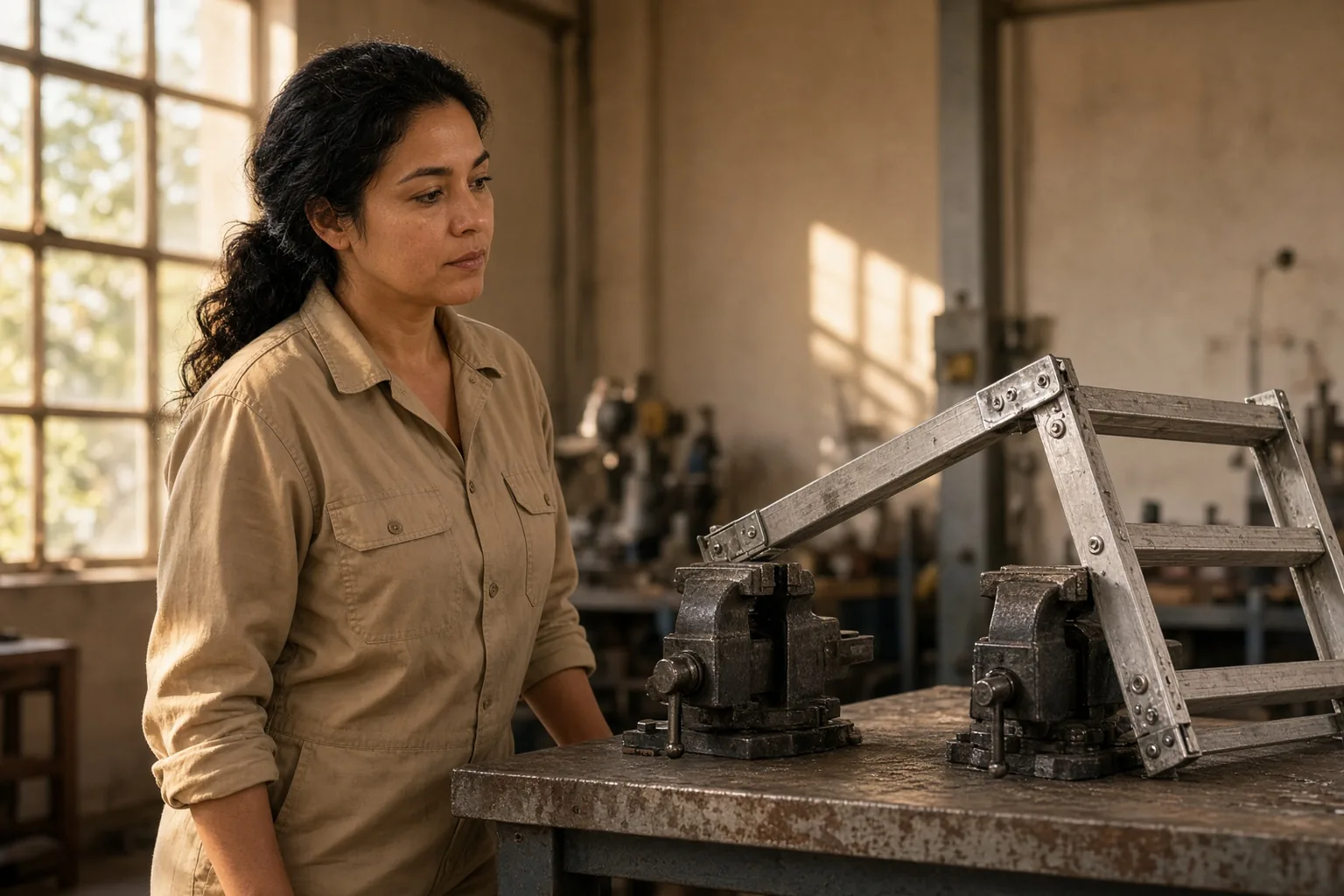
A federal district court in Texas excluded two ladder experts on similar grounds. The plaintiff argued that the experts "were not required to build and test a prototype." The court answered that neither expert had tested whether the ladder was unreasonably dangerous as designed, and neither had tested his hypothesis with an exemplar ladder.
What did the courts say in the forklift door cases?
The Tenth Circuit held that the expert never committed to a definitive, testable design. The Sixth Circuit found the method unsound because of anecdotal evidence, improper extrapolation, ignored alternative causes and no testing.
In Petersen v. The Raymond Corporation (10th Cir., No. 20-4026, April 22, 2021, published), Nathan Petersen lost control of a Raymond Model 4200 stand-up counterbalance lift truck, and his left leg slid out of the open compartment and was crushed against warehouse racking. His expert said the truck would be safer with "a door" and listed latching, spring-loaded, magnet-controlled and interlocked versions without choosing one or giving its material, cost or attachment. Asked whether he had engineering drawings of a door for that forklift, he answered no.
Judge Carson wrote for the panel that "the true issue is not numerosity, it is design specificity," and that "by not committing, Plaintiff's expert made it impossible to compare the benefits and risks of any phantom design." The exclusion and the summary judgment under Utah law were affirmed.
In Newell Rubbermaid, Inc. v. The Raymond Corporation (6th Cir., No. 10-3912, April 3, 2012), an employee driving a Raymond Dockstocker had her left foot trapped between the forklift and a robot cage. The expert, Benjamin T. Railsback, proposed a latching or spring-loaded rear guard door, but "he never actually tested either of these alternative designs" and had never driven a Raymond forklift. The district court had found four problems with the method: anecdotal evidence, improper extrapolation, failure to consider other causes and lack of testing. Judge Gilman, writing for the Sixth Circuit, agreed: "Railsback's methods are clearly not scientifically sound."
Newell had also pleaded the consumer-expectations theory of the pre-2005 Ohio statute. The Sixth Circuit held that the theory did not require expert testimony under Ohio law, but affirmed summary judgment on it because Newell offered no evidence of what consumers expected and no evidence of feasibility. A plaintiff, the court wrote, cannot simply sit back and point to gaps in the defendant's argument.
How does the expert prove that the alternative was feasible and affordable?
With facts about the alternative's performance and cost when the product left the manufacturer. In Fosberg v. Tricam (N.D. Tex. 2021), a statement that changes would not significantly increase cost was too conclusory, and both experts were excluded.
In Fosberg v. Tricam Industries, Inc. (N.D. Tex., No. 4:20-CV-126-A, February 10, 2021), the plaintiff alleged that a leg of a Gorilla ladder, model GLA-SX, buckled inward and that the ladder collapsed under him. One expert suggested that a steel blind rivet in place of the aluminum one "would more than double the shear load capacity at the rivet." He also mentioned a thicker front rail, larger rivets and additional bracing without describing them or saying why they were needed.
On cost, the expert offered only that the changes "would not be expected to significantly increase the cost of the ladder." The court called this conclusory and wrote that facts are needed to show economic feasibility. The second expert also pointed to the rivet, had done no testing and did not address economic feasibility. The court granted the motions to exclude both experts.
The Texas definition and Ohio's division (C)(2) fix the same date for feasibility: when the product left the manufacturer's control. Evidence of feasibility therefore comes from that period: designs on the market, published standards, component prices and the manufacturer's own engineering records.
Can the engineer testify about what consumers expect?
Only with a basis beyond engineering judgment. In Navarro the trial court barred the engineer's opinion that consumers would be deceived by the helmet's appearance. He had conducted no surveys, and the Fifth Circuit affirmed.
Stalnaker's opinion rested on the fact that the helmet looked as if it covered the entire head. The Fifth Circuit held that "no adequate basis was offered" for the view that he could judge consumer expectations better than the jurors could.
Consumer expectations are still part of the Ohio risk analysis: division (B)(5) asks how far the design is "more dangerous than a reasonably prudent consumer would expect when used in an intended or reasonably foreseeable manner." Division (B)(2) adds the users' likely awareness of the risks, "whether based on warnings, general knowledge, or otherwise."
The trial judge in Navarro also limited evidence about other helmets, concerned that the jurors "would receive much confusing evidence," while letting Stalnaker testify that he found a helmet with better protection at a comparable price. Citing Rule 403, the Fifth Circuit wrote that a district court "is entitled to determine that certain evidence is cumulative" and concluded that the judge "did not improperly restrict" the family's efforts to show an available alternative.
How does the court test the engineer's method?
Under Rule 702 and Kumho Tire (1999), the judge screens engineering testimony for reliability. Since the 2023 amendment, the proponent must establish that each reliability condition is met more likely than not.
Kumho Tire Co. v. Carmichael, decided on March 23, 1999, extended the judge's gatekeeping to engineers and other experts with technical or other specialized knowledge. The facts of that tire case and the Court's reasoning are set out in the IAE article on product liability expert witnesses. In the forklift and ladder cases the courts applied that screening to the alternative design itself.
In Petersen the expert was asked whether he had engineering drawings of a door for the forklift, and he answered no. In Fosberg the court found that both ladder experts would in substance tell the jury that the ladder failed and therefore must have been defective, and held that such testimony does not meet Rule 702.
Rule 702, as amended in 2023, requires the proponent to establish that it is more likely than not that the testimony rests on sufficient facts or data and is the product of reliable principles and methods, reliably applied to the case.
What should a design defect expert's report contain?
Every opinion with its basis, the facts or data considered and exhibits under Rule 26(a)(2)(B). For a design claim the exhibits include the alternative design, its test results and its cost when the product left the manufacturer.
Rule 26(a)(2)(B) requires a complete statement of all opinions and the basis and reasons for them, the facts or data considered, the exhibits used to summarize or support them, the expert's qualifications with publications from the previous 10 years, the cases with testimony in the previous 4 years and the compensation.
In Petersen and Fosberg the courts faulted the absence of a single defined alternative with drawings, its material and attachment, tests on the product or an exemplar, and its cost. Ohio division (B)(4) adds the public or private standards in force when the product left the manufacturer.
Under Rule 26(b)(4)(A), a party may depose an expert whose opinions may be presented at trial, and when a report is required the deposition takes place only after the report is provided.
How does IAE find a design defect expert?
In the IAE request, choose the case type Product liability, name the product and state that the claim is a design defect. Within 5 business days IAE sends 2-3 candidates with CVs, hourly rates and prior testimony lists.
The product liability expert witness page lists engineers from the product's industry who address which other designs were available when the product left the manufacturer. The request also asks for the state and court, which determine whether a statute like section 82.005 or section 2307.75 applies, the side, the expert disclosure deadline, and the parties and their counsel for the conflict check. Please leave out privileged or sealed information.
Within 1 business day IAE replies whether it can search in that field by that deadline. Each candidate confirms in writing that he or she has no ties to the parties or their counsel, and the candidate file includes testimony in the last 4 years and publications in the last 10 years.
The search costs $2,000 per case, paid in advance, and candidate names and CVs come after payment. If no candidate fits, the second search is free; if IAE finds no candidates, it refunds the fee. The expert's hourly rate never depends on the outcome of the case or on the content of testimony. Under the agency option the expert bills through IAE, with $100 per hour added to the hourly rate, 40% added to fixed fees, minimum charges and surcharges, and expenses billed at cost, on one invoice.
IAE is not a law firm. Case strategy and the decision to retain an expert stay with the attorney.
Sources
- Ohio Revised Code 2307.75, Product defective in design or formulation
- Navarro v. Soaring Helmet Corp., No. 10-50678 (5th Cir. June 20, 2011) (unpublished), quoting Tex. Civ. Prac. & Rem. Code 82.005
- Petersen v. The Raymond Corporation, No. 20-4026 (10th Cir. April 22, 2021)
- Newell Rubbermaid, Inc. v. The Raymond Corporation, No. 10-3912 (6th Cir. April 3, 2012)
- Fosberg v. Tricam Industries, Inc., No. 4:20-CV-126-A (N.D. Tex. February 10, 2021)
- Kumho Tire Co. v. Carmichael, 526 U.S. 137 (1999) (LII)
- Federal Rules of Evidence, Rule 702 (LII)
- Federal Rules of Civil Procedure, Rule 26 (LII)
- Federal Rules of Civil Procedure, Rule 34 (LII)
Read also
All articles
State of the art defense in product liability: what must the manufacturer's expert prove about the technology available when the product was made?
The state of the art defense asks what a manufacturer could have known and built on the day the product left its hands, not on the day of the injury Sergei Voronin
Toy injury expert witness: small parts, age grading and ASTM F963 in a children's product case
A toy injury case usually turns on a short list of questions: was the toy meant for a child under three, did any part fit inside the federal smallSergei Voronin
Machine guarding expert witness: what does the engineer examine when a worker is hurt by an unguarded machine?
When a worker is hurt at the point of operation of a machine, the case usually turns on the guard: how the machine was designed to keep hands outSergei VoroninExpert witnesses
Need an expert witness for your case?
Describe the question, the case type and the court. Within 5 business days you receive 2-3 candidates with CVs, hourly rates and lists of prior testimony.
